IṢẸ́ ỌNÀ
ẸWÀ ÀTI ÌLERA
IṢẸ́ ỌWỌ́
ÀṢÀ ÀTI ÌTÀN
ÌṢERÉ
ÀYÍKÁ
OÚNJẸ ÀTI OHUN MÍMU
REVERSE ENGINEERING
SÁYẸ́ǸSÌ
ERÉ ÌDÁRAYÁ
ÌMỌ̀-Ẹ̀RỌ
ÀWỌN OHUN WÍWỌ̀
The Pressing Colander: Knives, Loops and a Plunger Over a Perforated Bowl
Making jelly starts with getting the juice out of cooked fruit: pressing it through a colander by hand with a spoon is slow and leaves much behind.
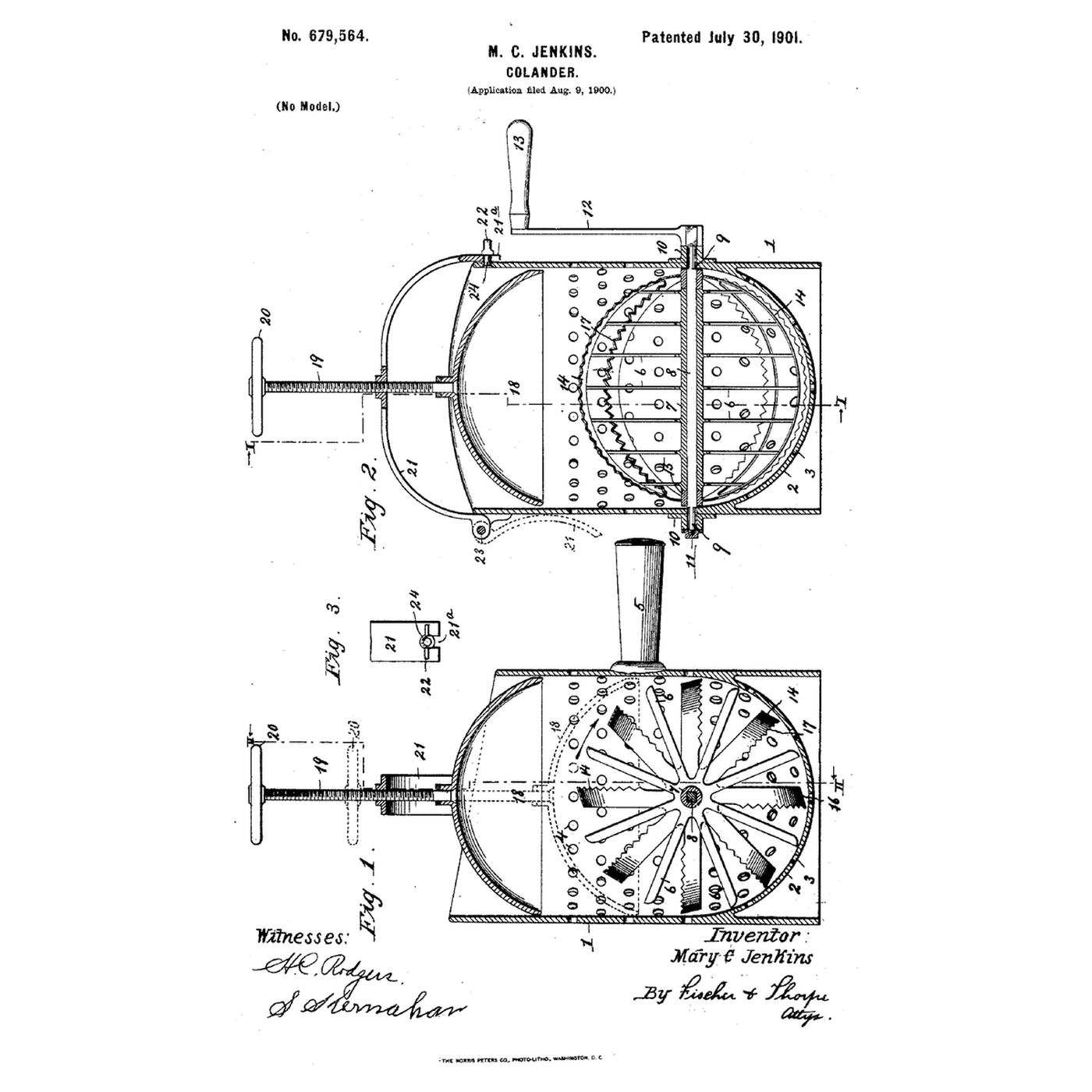
Mary C. Jenkins of Kansas City, Kansas, received US 679,564, dated 30 July 1901 (filed 9 August 1900), for a colander "for the purpose of cutting up raw or cooked fruits and pressing out their juices preparatory to making jellies, syrups, apple-float": a perforated cylinder with a hemispherical bottom, a crank-turned shaft carrying knives and pressing loops, and a plunger on a screw that presses the fruit to the dasher and keeps it from being thrown out.
This rung models how pressure and pulp fineness set the juice flow, then presses cooked apples with and without pressing and weighs the juice.
Olùbẹ̀rẹ̀
About 2 hours
Ìlànà
1
1
Pressure, pulp and juice
Pressure, pulp and juice
Ń ṣí ìwé Jupyter…
2
2
Pressing food through holes
Pressing food through holes
The ricer presses cooked potato through a perforated cup. The embedded blueprint shows it.
3
3
Read US 679,564
Read US 679,564
"My invention relates to improvements in colanders; and my object is to provide a utensil of this character for the purpose of cutting up raw or cooked fruits and pressing out their juices preparatory to making jellies, syrups, apple-float, &c."
"The face portions 16 of said loops are arranged to present an inclined surface to the hemispherical bottom in order that when rotating in the direction indicated by the arrow in Fig. 1 they will catch and press the fruit against the bottom 2 and force the juice through the perforations thereof, while the serrated rear edges 17 of the loops will thoroughly macerate the smaller particles of fruit not cut by the knives by pressing them against said bottom 2. In order that the dasher may the more effectually perform its work, I press the fruit in contact therewith by a vertically-operating plunger, which also prevents the fruit or a portion thereof from being cast out of the cylinder by the rotating dasher."
4
4
Press cooked apples two ways
Press cooked apples two ways
Quarter and simmer six apples in a little water until soft; let them cool until safe to handle. Divide into two equal weights.
Put the first half in a colander over a bowl and let it drain for ten minutes without pressing; weigh the juice. Put the second half in and press it with a spoon or a masher for ten minutes, stirring as Jenkins's loops do; weigh that juice. Compare juice per 100 g of fruit. Keep hands off hot fruit; it holds heat.
Àwọn ohun èlò fún ìgbésẹ̀ yìí:
 Ápù6 ẹyọ
 Omi0.5 lítà
Àwọn irinṣẹ́ tí a nílò:
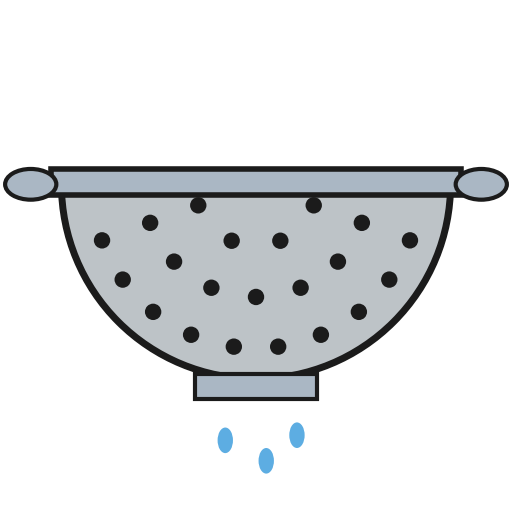 Àgbọ̀n ìṣẹ́ oníhò
 Abọ́
 Òṣùwọ̀n Díjítà Pípé
 Aago Ìdúró
5
5
A colander that clogs or lets pulp through
A colander that clogs or lets pulp through
Pressing colander troubleshooting.
Flow
Loading...
6
6
History and honest limits
History and honest limits
**Mary C. Jenkins** of Kansas City, Kansas, filed US 679,564 on 9 August 1900; it is dated 30 July 1901. The cylinder may be "glass, porcelain, or other suitable material".
**Honest limits.** The patent gives no sizes. Viscosity, permeabilities, pressures, area and pulp thickness in the notebook are examples; Darcy's law is only a rough guide for a squeezed pulp.
Àwọn irinṣẹ́ tó nílò
4- Àyè
- Àyè
Blueprint tó jọra
Àwọn blueprint wọ̀nyí pín ìmọ̀ — ọ̀nà, ohun-èlò tàbí ìlànà
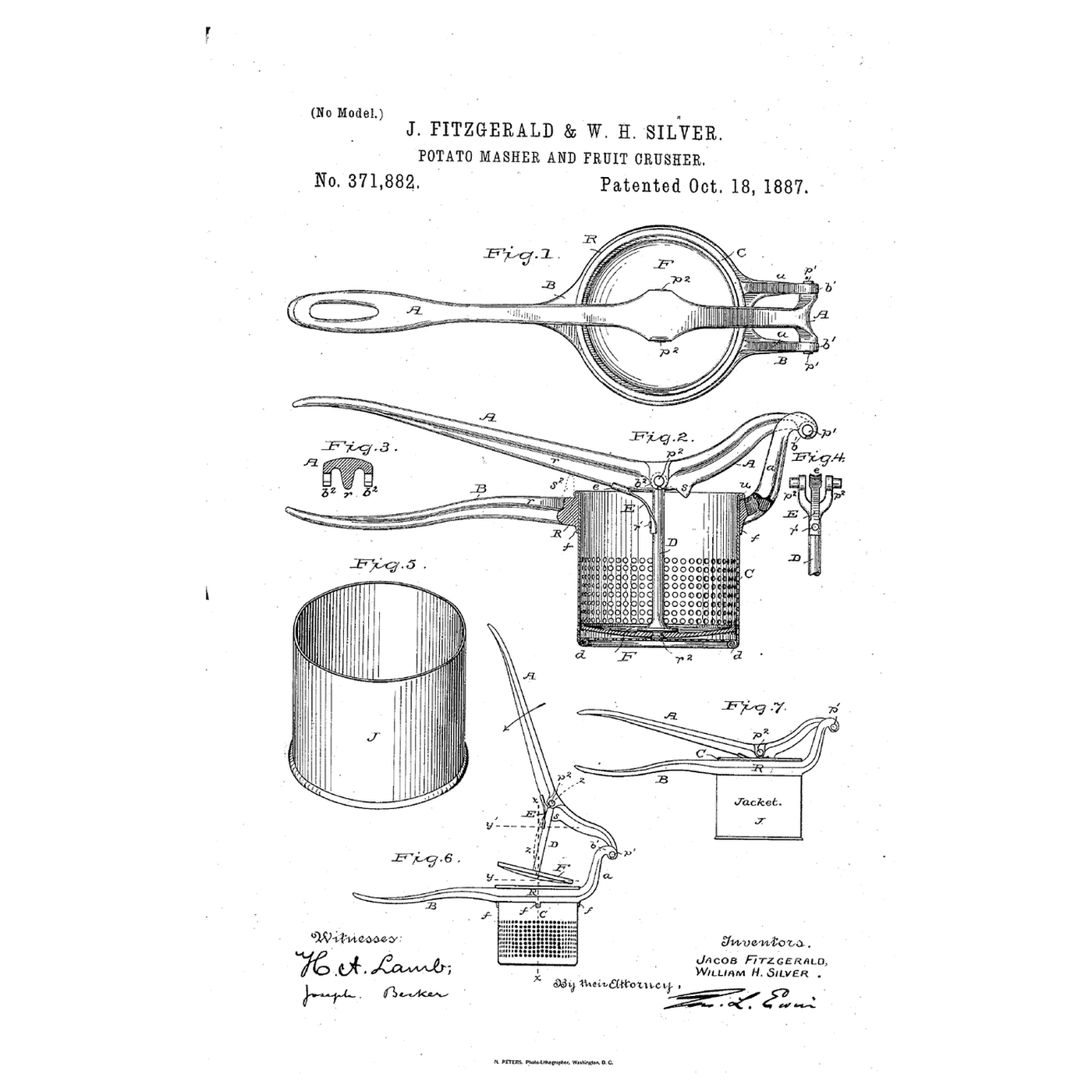
The Potato Ricer: A Perforated Cup and a Lever-Worked Follower
láti ọwọ́ TheChef
OÚNJẸ ÀTI OHUN MÍMU
38
0
0
0
0
0
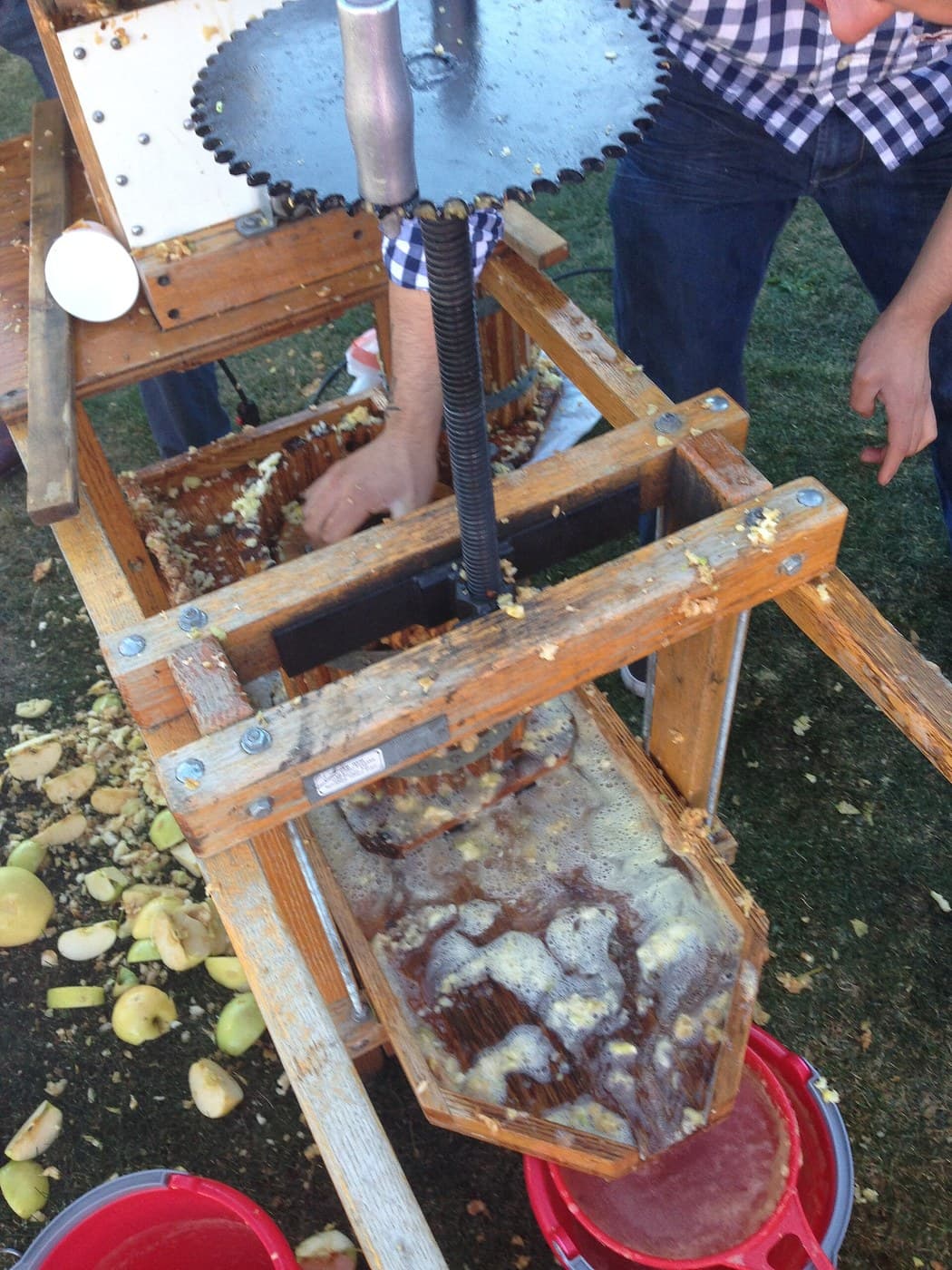
Apple Cider Pressing
láti ọwọ́ Alchometer
OÚNJẸ ÀTI OHUN MÍMU
42
0
0
0
1
0

The Flour Sifter: A Crank That Breaks the Lumps
láti ọwọ́ YourGrandma
OÚNJẸ ÀTI OHUN MÍMU
47
0
0
0
0
0
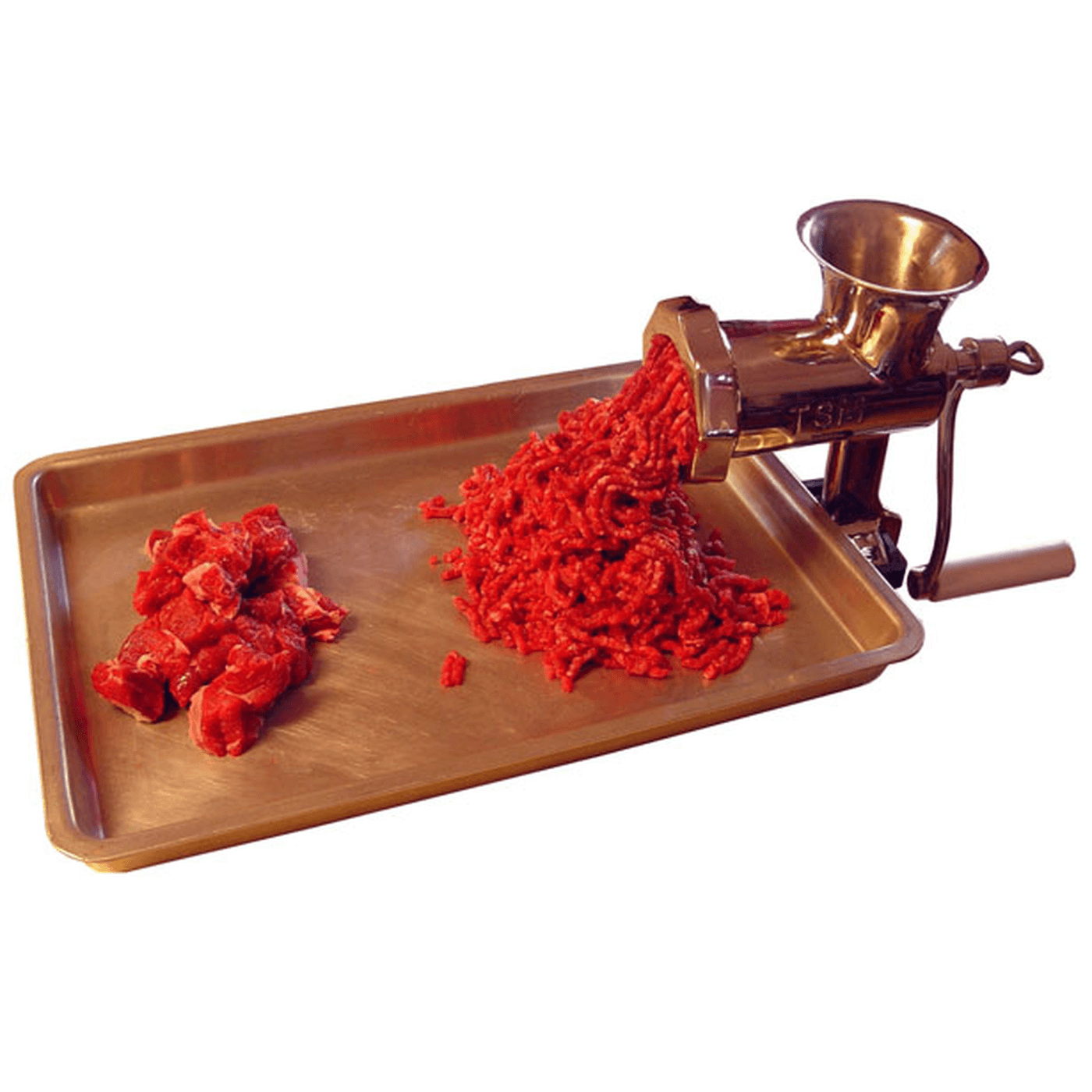
The Meat Mincer: A Screw That Feeds a Knife
láti ọwọ́ TheChef
OÚNJẸ ÀTI OHUN MÍMU
15
0
0
0
0
0
CC0 Àgbègbè Gbogbogbò
Blueprint yìí ti jáde lábẹ́ CC0. O lè ṣe àdàkọ, yí padà, pín, àti lò láìsí ìyọ̀ǹda.
Ṣàtìlẹ́yìn Olùṣẹ́dá nípa rírà àwọn ọjà nipasẹ̀ Blueprint wọn Ẹ̀san Olùṣẹ́dá tí àwọn Olùtajà gbé kalẹ̀, tàbí ṣẹ̀dá àtúnṣe tuntun ti Blueprint yìí kí o sì fi sínú Blueprint rẹ gẹ́gẹ́ bí ìsopọ̀ láti pín owó-wíwọlé.