IṢẸ́ ỌNÀ
ẸWÀ ÀTI ÌLERA
IṢẸ́ ỌWỌ́
ÀṢÀ ÀTI ÌTÀN
ÌṢERÉ
ÀYÍKÁ
OÚNJẸ ÀTI OHUN MÍMU
REVERSE ENGINEERING
SÁYẸ́ǸSÌ
ERÉ ÌDÁRAYÁ
ÌMỌ̀-Ẹ̀RỌ
ÀWỌN OHUN WÍWỌ̀


The Pressure-Fed Fountain Paint Brush: Air Pushes the Paint, a Finger Stops It
Painting from a pot means stopping every few strokes to reload the brush.
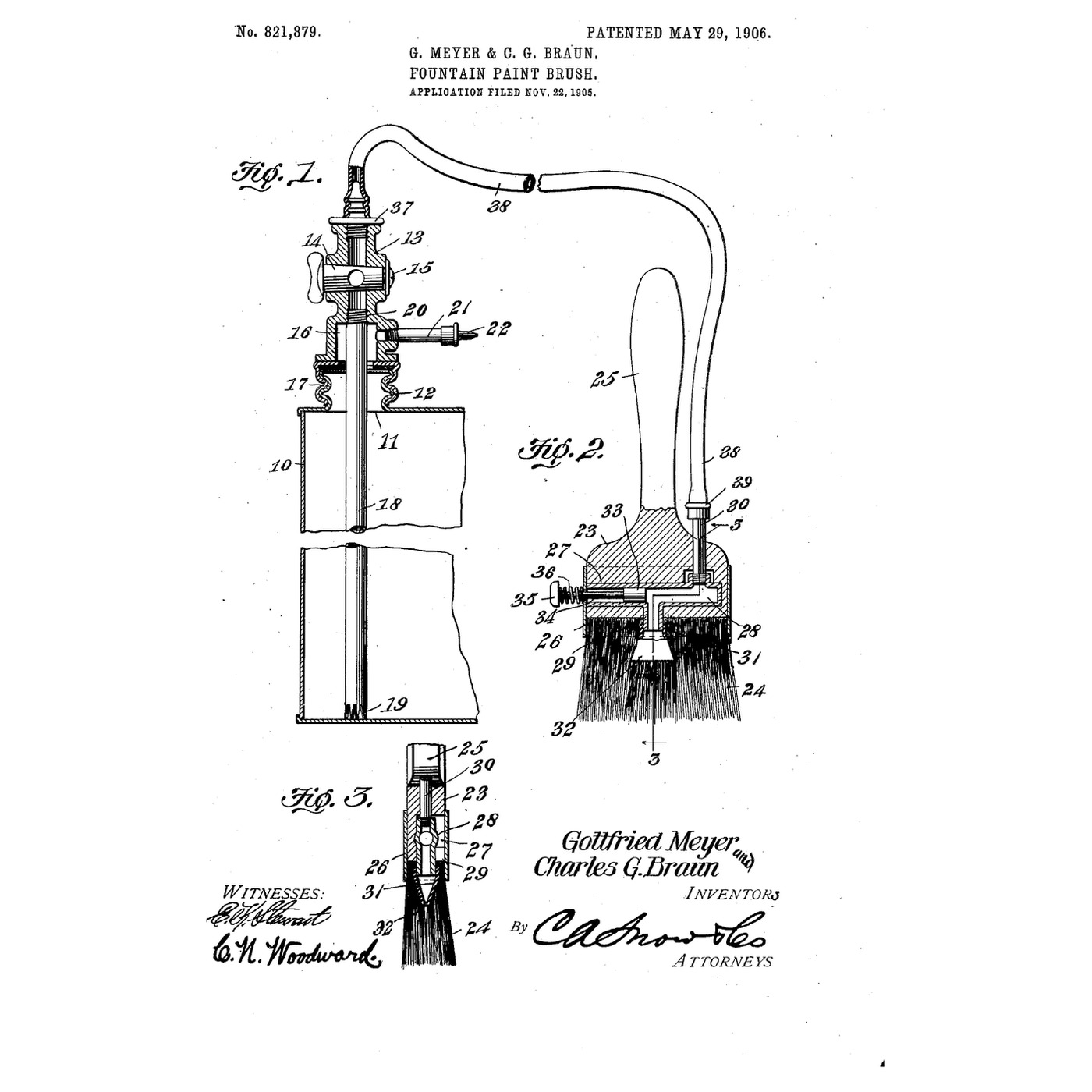
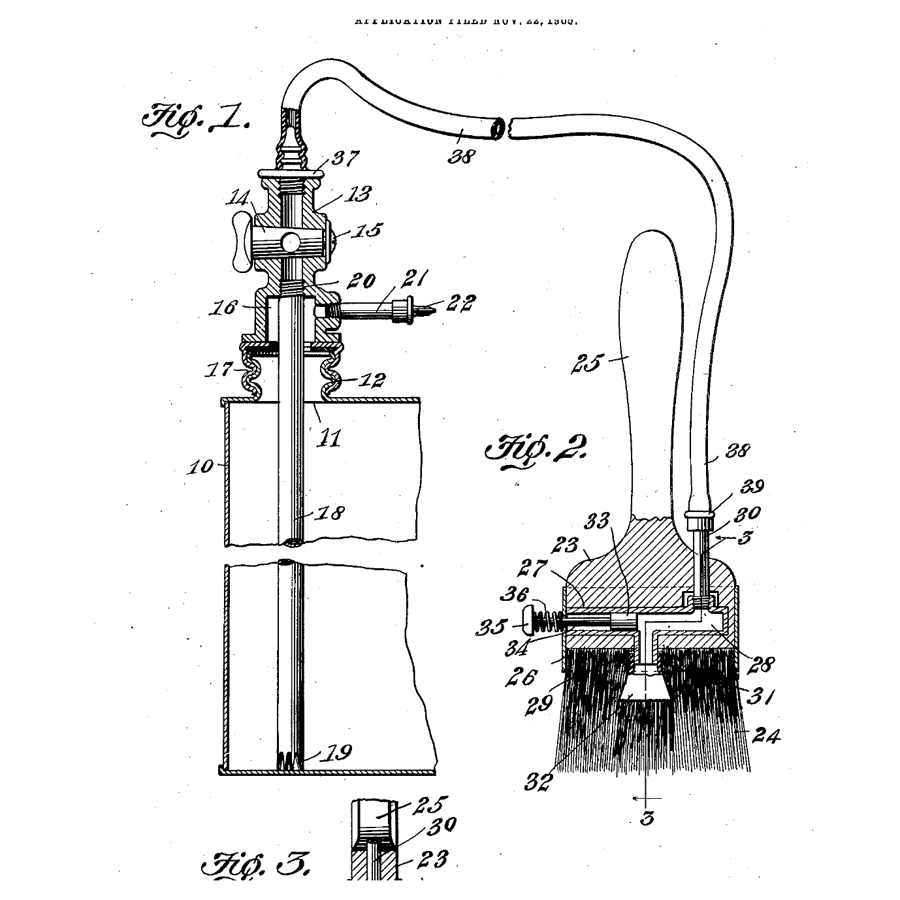
Gottfried Meyer and Charles G. Braun of Philadelphia received US 821,879, patented 29 May 1906, for a fountain paint brush: a reservoir pressurised through an air pipe with a check valve sends paint along a hose to a tube in a recess of the brush head and out through a flattened flexible web among the bristles; a spring holds a plunger open, and the forefinger pushes its knob to cut the paint off.
This rung works out how paint thickness and pressure set the flow, then builds the tank from a bottle and a tyre valve, feeds a brush, and measures the flow.
Àárín
About 3 hours
Ìlànà
1
1
Flow through the hose
Flow through the hose
Ń ṣí ìwé Jupyter…
2
2
A one-way valve before it
A one-way valve before it
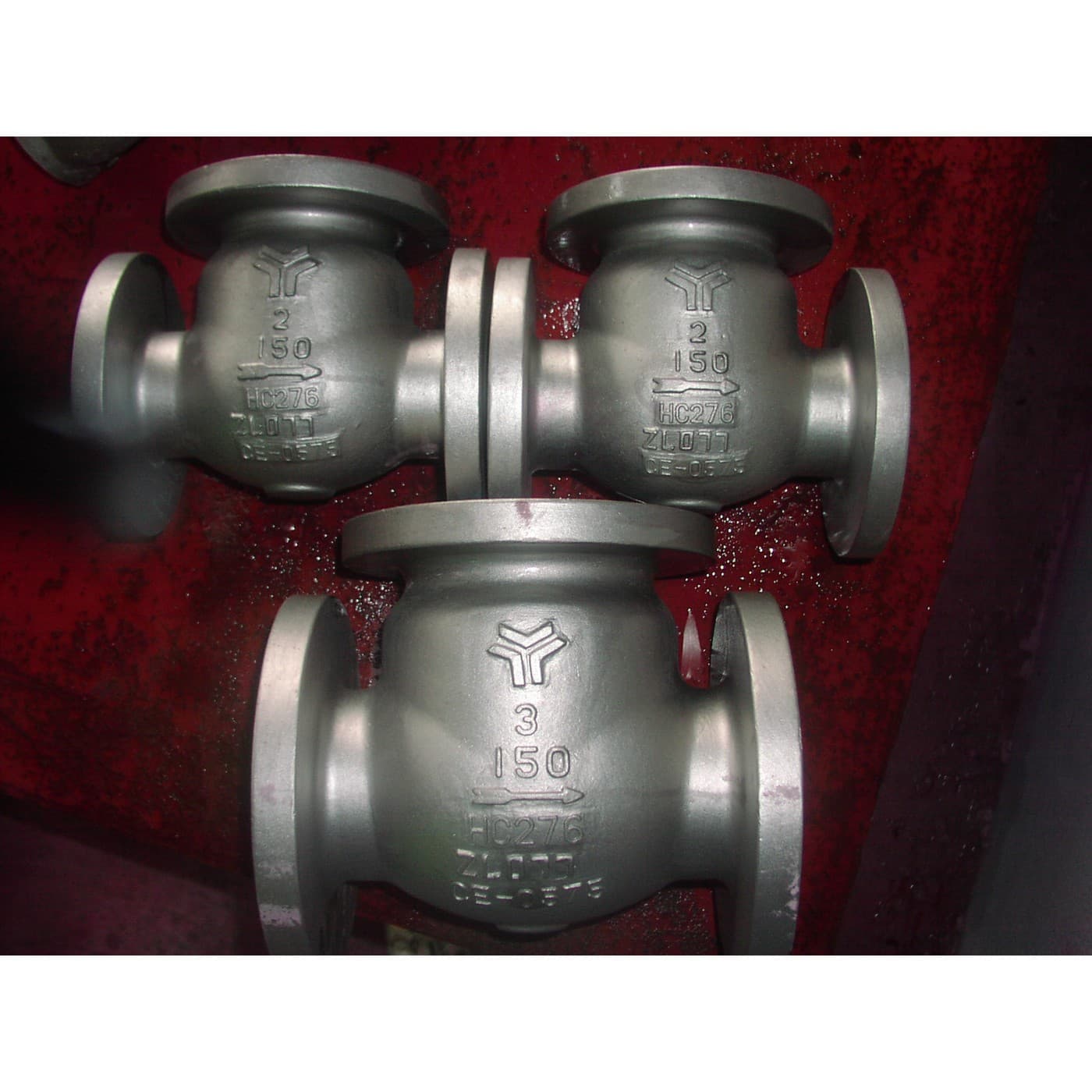
The embedded blueprint lets flow pass one way only. Meyer and Braun put one on the air pipe so the pumped air stays in the paint tank.
3
3
Read US 821,879
Read US 821,879
"The knob 35 is disposed in convenient position for the fore or index finger of the hand which holds the brush, and the valve or plunger 33 can thus be easily maintained in its closed or inward position and the supply of paint cut off when not required."
"The air-pressure causes the paint to flow to the brush no matter in what position the latter may be held and the flow is under complete control of the operator, as above noted."
4
4
Fit the cap
Fit the cap
Drill a 1.5 L PET bottle's cap for a tyre valve and for vinyl tubing. Seat the valve, and push the tubing through until it touches the bottom. Seal both with epoxy.
Àwọn ohun èlò fún ìgbésẹ̀ yìí:
 Ìgò PET (ohun mímu olóhùn)1 ẹyọ
 Fáfù táyà1 ẹyọ
 Ọ̀pá vinyl tí ó mọ́1 ẹyọ
 Ẹpọ́ksì Ẹ̀yà Méjì1 ẹyọ
Àwọn irinṣẹ́ tí a nílò:
 Ẹ̀rọ Ìlùkòkò Aláìlókùn
 Àkójọ Orí Ìlùkòkò
 Ọ̀bẹ Iṣẹ́ Ọwọ́
5
5
Feed the brush
Feed the brush
Drill a 6 mm hole down through the stock of a 70 mm brush from the set, beside the handle. Push silicone tubing through it into the bristles and flatten its last 30 mm with a cable tie.
Àwọn ohun èlò fún ìgbésẹ̀ yìí:
 Ìdìpọ̀ búrọ́ọ̀ṣì1 ẹyọ
 Ọ̀pọ̀n Sílíkọ́nì1 ẹyọ
 Ìdì okùn1 ẹyọ
Àwọn irinṣẹ́ tí a nílò:
 Ìdìmú TábìlìẸ̀rọ Ìlùkòkò AláìlókùnÀkójọ Orí Ìlùkòkò
6
6
Make the finger valve
Make the finger valve
Screw a hardwood block to the handle over the tubing. Fit an M5 screw through it with a spring under the head, so the screw rests off the tube and a press of the forefinger pinches it shut.
Àwọn ohun èlò fún ìgbésẹ̀ yìí:
 Àwọn dowel igi líle1 ẹyọ
 Skurú ẹ̀rọ1 ẹyọ
 Àkójọ Ìsúnkì Ìtẹ̀1 ẹyọ
Àwọn irinṣẹ́ tí a nílò:
 Ayùn IrinẸ̀rọ Ìlùkòkò AláìlókùnÀkójọ Orí Ìlùkòkò
 Ìṣù àwọn ohun ìyí skurú
7
7
Join and pressurise
Join and pressurise
Join the bottle's tubing to the brush's with a 1.5 m length. Half fill the bottle with acrylic paint thinned with water, cap it, and pump to 0.2 bar on the gauge.
Àwọn ohun èlò fún ìgbésẹ̀ yìí:
 Ìṣètò àwọ̀ acrylic1 ẹyọ
 Omi1 ẹyọ
Àwọn irinṣẹ́ tí a nílò:
 Ẹ̀rọ ìfẹ́fẹ́ bàísíkù
 Ẹ̀rọ Ìwọ̀n Ìtẹ̀
8
8
The patent drawing
The patent drawing
US 821,879 drawing sheet, public domain (expired patent).
9
9
Measure the flow
Measure the flow
Hold the brush over the measuring cylinder for 30 s and read the paint. Repeat at 0.4 bar, with the brush upside down, and with the button pressed.
Àwọn irinṣẹ́ tí a nílò:
 Òpó ìwọ̀n
 Aago ÌdúróẸ̀rọ Ìwọ̀n Ìtẹ̀
10
10
A brush that floods, starves or will not stop
A brush that floods, starves or will not stop
Pressure-fed fountain paint brush troubleshooting.
Flow
Loading...
11
11
History and honest limits
History and honest limits
**Gottfried Meyer** and **Charles G. Braun** of Philadelphia filed US 821,879 on 22 November 1905; it was patented 29 May 1906. Their reservoir has a valve casing with a detachable plug valve; a pipe reaches the bottom with lateral apertures; a sheet-metal band closes the recess in the brush head; all parts detach for cleaning when the colour is changed.
**Honest limits.** A pinch on silicone tubing stands in for their plunger in a tube, and a PET bottle at low pressure for their reservoir. The notebook treats paint as a simple liquid. Your flows are the result.
Àwọn ohun-èlò
12- Àyè
- 1 ẹyọÀyè
- 1 ẹyọÀyè
- 1 ẹyọÀyè
- 1 ẹyọÀyè
- 1 ẹyọÀyè
- 1 ẹyọÀyè
- 1 ẹyọÀyè
- 1 ẹyọÀyè
- 1 ẹyọÀyè
- 1 ẹyọÀyè
- 1 ẹyọÀyè
Àwọn irinṣẹ́ tó nílò
10- 1 vendor sell this, none ship to you yetÀyè
- Àyè
- Àyè
- Àyè
- Àyè
Blueprint tó jọra
Àwọn blueprint wọ̀nyí pín ìmọ̀ — ọ̀nà, ohun-èlò tàbí ìlànà
One Way Only: The Check Valve and the Bang It Makes
láti ọwọ́ Martin
Àwọn Irinṣẹ́
32
0
0
0
0
0
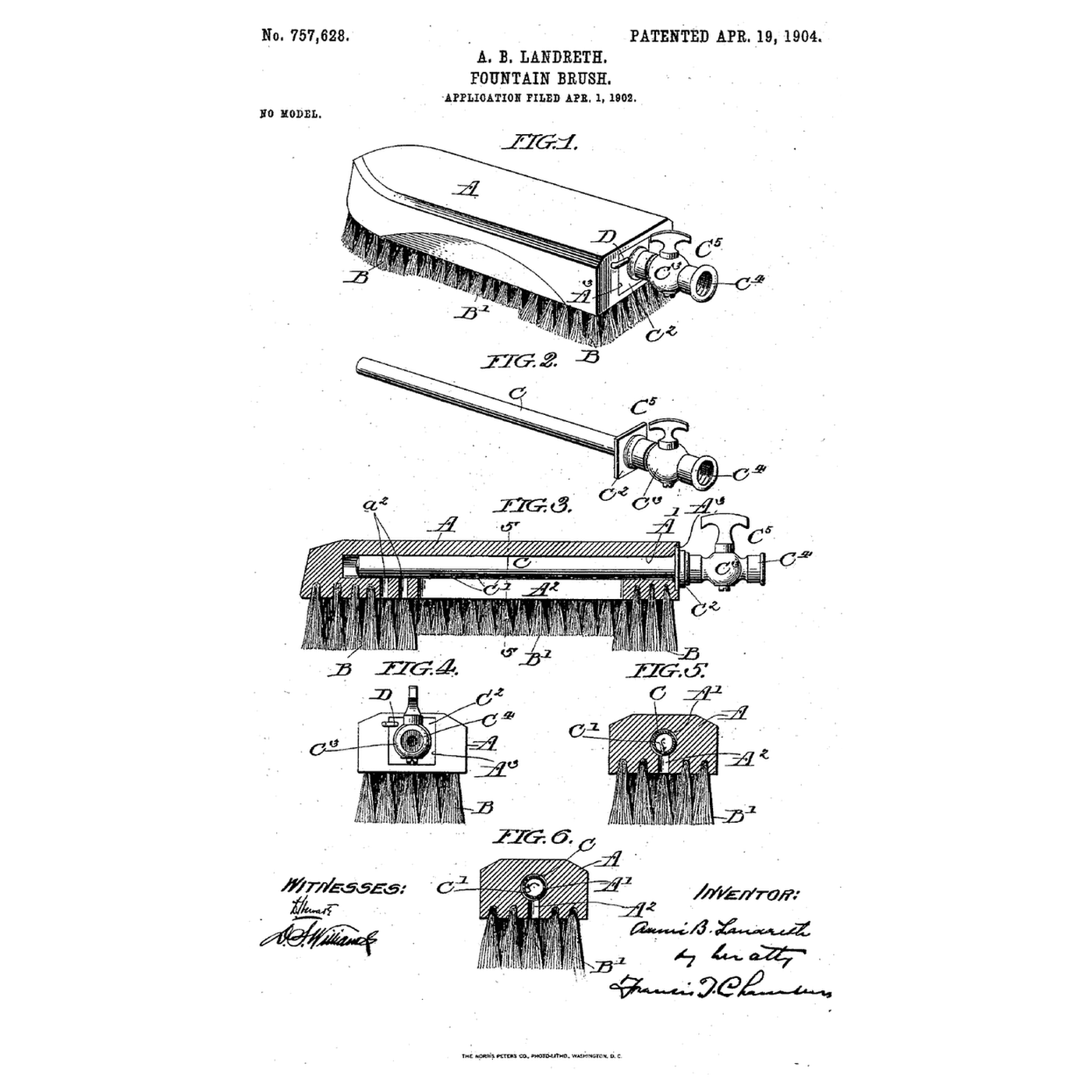
The Tube-in-the-Back Fountain Brush: Turn the Tube and the Jets Become a Soak
láti ọwọ́ YourGrandma
Ìmọ̀ Ẹ̀rọ
31
0
0
0
0
0
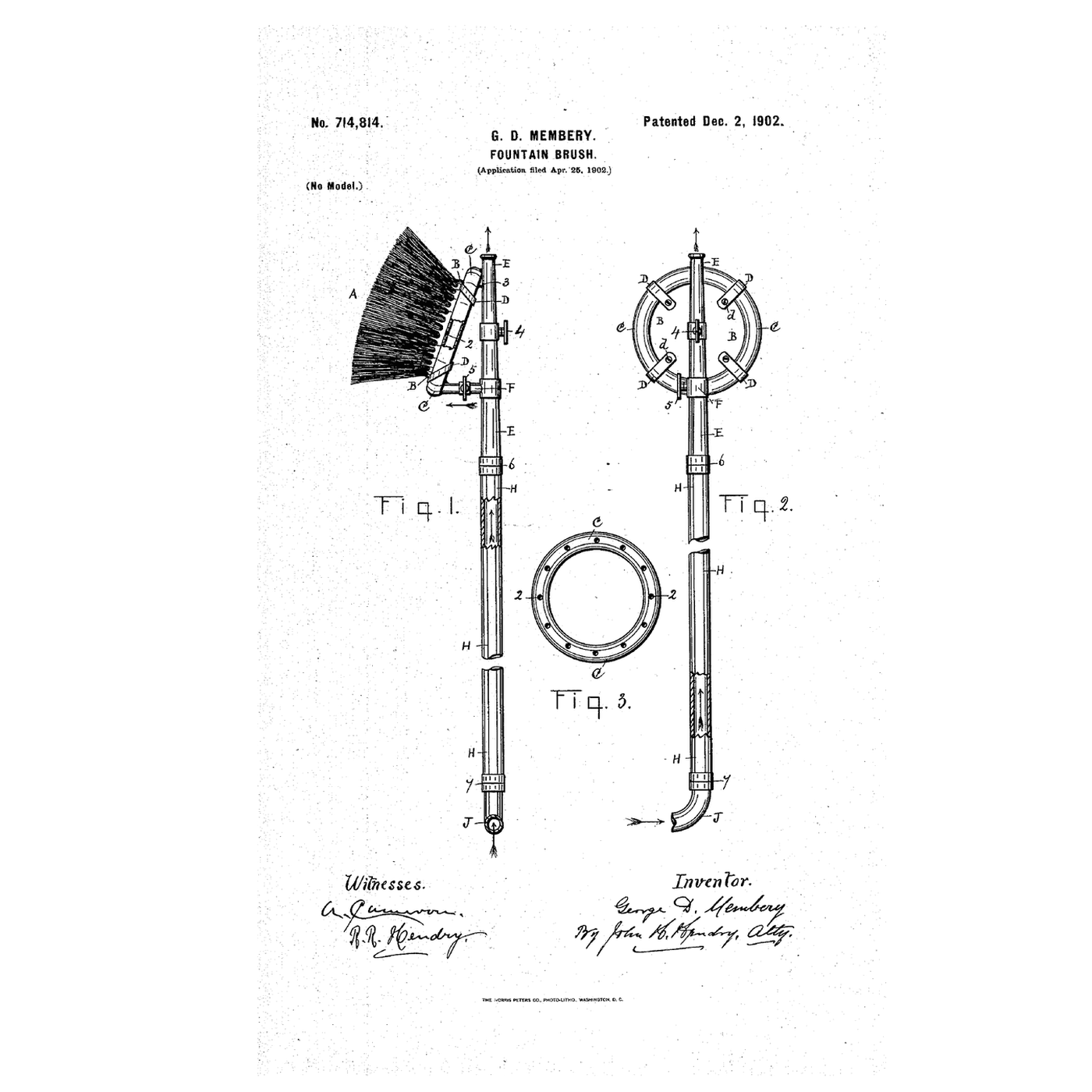
The Long-Handled Fountain Brush: A Ring of Holes Wets the Bristles From the Ground
láti ọwọ́ Martin
Ìmọ̀ Ẹ̀rọ
17
0
0
0
0
0
CC0 Àgbègbè Gbogbogbò
Blueprint yìí ti jáde lábẹ́ CC0. O lè ṣe àdàkọ, yí padà, pín, àti lò láìsí ìyọ̀ǹda.
Ṣàtìlẹ́yìn Olùṣẹ́dá nípa rírà àwọn ọjà nipasẹ̀ Blueprint wọn Ẹ̀san Olùṣẹ́dá tí àwọn Olùtajà gbé kalẹ̀, tàbí ṣẹ̀dá àtúnṣe tuntun ti Blueprint yìí kí o sì fi sínú Blueprint rẹ gẹ́gẹ́ bí ìsopọ̀ láti pín owó-wíwọlé.