IṢẸ́ ỌNÀ
ẸWÀ ÀTI ÌLERA
IṢẸ́ ỌWỌ́
ÀṢÀ ÀTI ÌTÀN
ÌṢERÉ
ÀYÍKÁ
OÚNJẸ ÀTI OHUN MÍMU
REVERSE ENGINEERING
SÁYẸ́ǸSÌ
ERÉ ÌDÁRAYÁ
ÌMỌ̀-Ẹ̀RỌ
ÀWỌN OHUN WÍWỌ̀
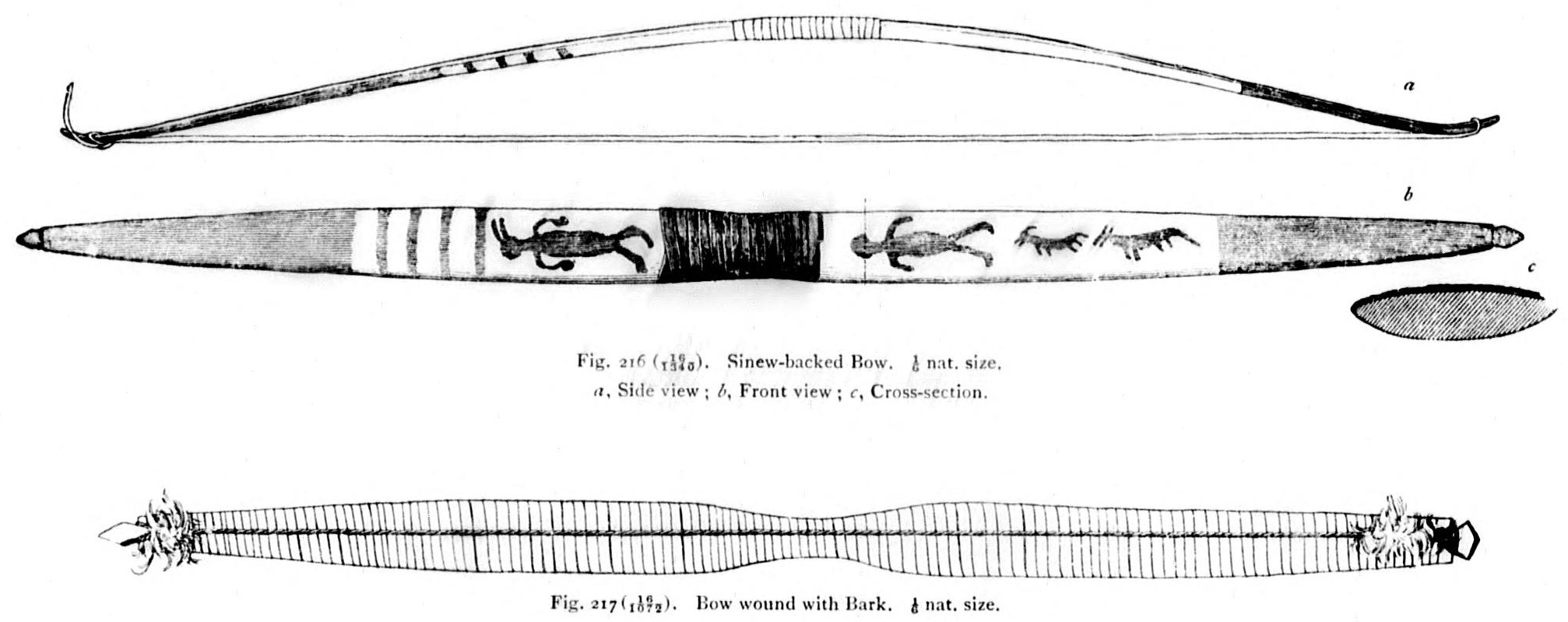

Thompson (Nlaka'pamux) Sinew-Backed Bow: Juniper Stave, Sinew Glued to the Belly Then Bent Back, Cherry-Bark Grip (Teit, 1900)
The best hunting bow of the Thompson (Nlaka'pamux) people, from James Teit: a juniper stave with deer sinew glued along its hollow side, then bent right over by two men so the sinewed side becomes the back, giving a bow that lies flat unstrung; the grip narrowed and wrapped with bitter-cherry bark, and a string of deer back-sinew.
Ilọsíwájú
A week or two, mostly glue drying
Ìlànà
1
1
Read Teit
Read Teit
"When the glue has set, two men bend the bow over so that what was originally the concave side becomes the back of the bow."
2
2
Shape the stave
Shape the stave
Shape a stave of juniper (the Lower Thompsons also used hemlock, yew and dogwood), flat in section (Fig. 216 c), the middle a little narrower for the hand. Ours: about 1.2-1.4 m long.
Àwọn ohun èlò fún ìgbésẹ̀ yìí:
 Ọ̀pá igi líle1 ẹyọ
Àwọn irinṣẹ́ tí a nílò:
 Ọ̀bẹ Ìfàsẹ́yìn
 Ọ̀bẹ
3
3
Glue on the sinew
Glue on the sinew
Lay deer sinew in glue along the stave's concave side and let the glue set fully. Ours: shred dried back sinew into fibres, soak it, lay it overlapping in warm hide glue, and let it dry a week or more.
Àwọn ohun èlò fún ìgbésẹ̀ yìí:
 Okùn iṣan ẹranko1 ẹyọ
 Ìlẹ̀mọ́ awọ ẹranko1 ẹyọ
 Omi1 ẹyọ
Àwọn irinṣẹ́ tí a nílò:
 Kẹ́tù Irin
 Ihò iná
4
4
Bend it over
Bend it over
Two people bend the bow over against its curve so the sinewed side becomes the back. Teit's Fig. 216 lies perfectly flat with the string off and takes its working curve when strung.
Àwọn irinṣẹ́ tí a nílò:
 Okùn
5
5
Grip, string and finish
Grip, string and finish
Wrap the narrow middle with what Teit calls bird-cherry bark (ours: taken as bitter cherry, Prunus emarginata). Make a string of twisted deer back-sinew (Apocynum twine served when sinew was short). Bows were often painted, or had incised lines filled with red on the flat inner side.
Àwọn ohun èlò fún ìgbésẹ̀ yìí:
 Bitter Cherry Bark1 ẹyọ
 Òwú Iṣan Ẹranko1 ẹyọ
Àwọn irinṣẹ́ tí a nílò:
Ọ̀bẹ6
6
Troubleshooting
Troubleshooting
Bow troubleshooting.
Flow
Loading...
7
7
History and honest limits
History and honest limits
From James Teit, *The Thompson Indians of British Columbia*, **Memoirs of the American Museum of Natural History, Jesup North Pacific Expedition** vol. I part IV (1900), pp. 239-241 and Figs. 216-221 (checked on the archive.org scan cihm_16242). He also describes bows wrapped with cherry bark instead of sinew (weaker), a snakeskin-covered birch bow, plain bows for birds, and a hand-guard for the thumb. Length, sinew preparation and glue are ours.
Àwọn ohun-èlò
6- 1 ẹyọÀyè
- 1 ẹyọÀyè
- 1 ẹyọÀyè
- 1 ẹyọÀyè
- 1 ẹyọÀyè
- 1 ẹyọÀyè
Ìtọ́nisọ́nà yìí ń ṣe
Blueprint tó jọra
Àwọn blueprint wọ̀nyí pín ìmọ̀ — ọ̀nà, ohun-èlò tàbí ìlànà
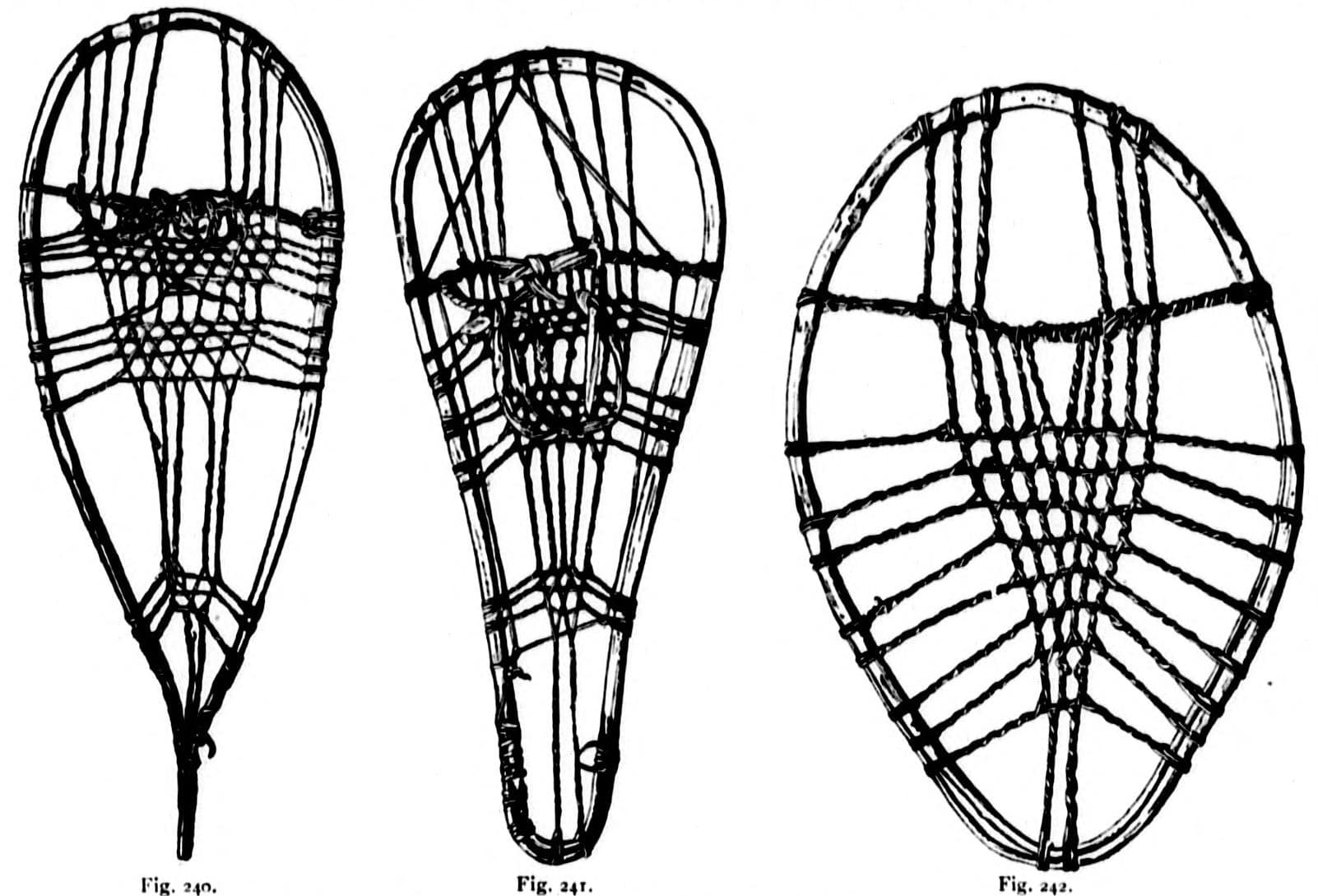
Thompson (Nlaka'pamux) Snowshoes: One-Piece Maple or Yew Frames Steamed in Pairs, Netted with Twisted Raw Deer-Hide (Teit, 1900)
láti ọwọ́ Woody
Iṣẹ́ Igi
12
0
0
0
0
0

Thompson (Nlaka'pamux) Salmon Bag-Net: Dogbane Twine Netted on a Gauge, Hung from Horn Rings on a Hoop that Closes with the Catch (Teit, 1900)
láti ọwọ́ Tex
Aṣọ àti Awọ
7
0
0
0
0
0
CC0 Àgbègbè Gbogbogbò
Blueprint yìí ti jáde lábẹ́ CC0. O lè ṣe àdàkọ, yí padà, pín, àti lò láìsí ìyọ̀ǹda.
Ṣàtìlẹ́yìn Olùṣẹ́dá nípa rírà àwọn ọjà nipasẹ̀ Blueprint wọn Ẹ̀san Olùṣẹ́dá tí àwọn Olùtajà gbé kalẹ̀, tàbí ṣẹ̀dá àtúnṣe tuntun ti Blueprint yìí kí o sì fi sínú Blueprint rẹ gẹ́gẹ́ bí ìsopọ̀ láti pín owó-wíwọlé.