IṢẸ́ ỌNÀ
ẸWÀ ÀTI ÌLERA
IṢẸ́ ỌWỌ́
ÀṢÀ ÀTI ÌTÀN
ÌṢERÉ
ÀYÍKÁ
OÚNJẸ ÀTI OHUN MÍMU
REVERSE ENGINEERING
SÁYẸ́ǸSÌ
ERÉ ÌDÁRAYÁ
ÌMỌ̀-Ẹ̀RỌ
ÀWỌN OHUN WÍWỌ̀
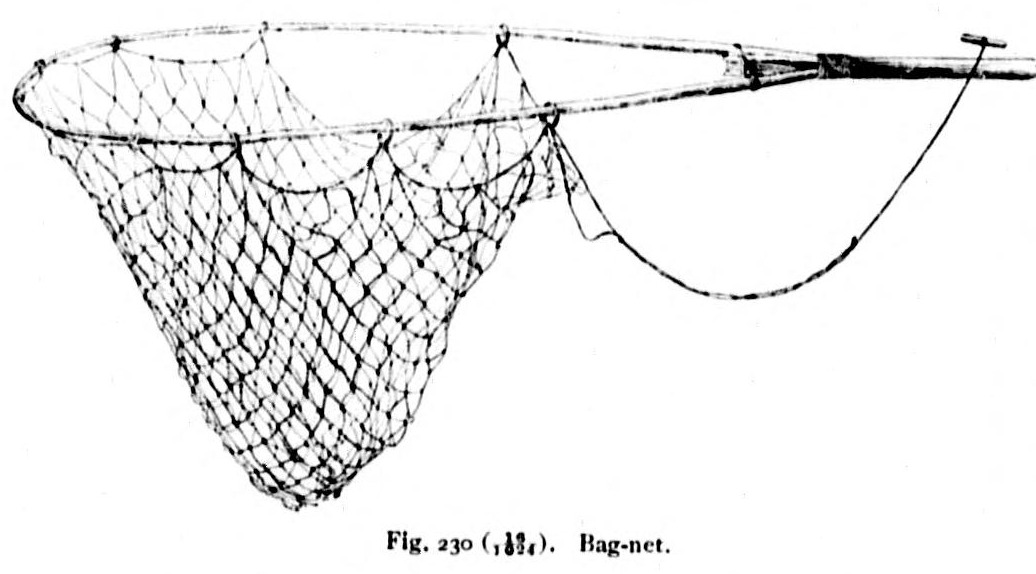

Thompson (Nlaka'pamux) Salmon Bag-Net: Dogbane Twine Netted on a Gauge, Hung from Horn Rings on a Hoop that Closes with the Catch (Teit, 1900)
The Thompson (Nlaka'pamux) salmon dip-net James Teit recorded on the rivers of British Columbia: a bag of thigh-spun dogbane twine with even, double-knotted meshes, its mouth as wide as a man's outstretched arms, hung from small horn rings slid round a fir or cedar hoop on a long handle; let go of the purse string and the fish's weight pulls the rings together and traps it.
Àárín
Several days
Ìlànà
1
1
Read Teit
Read Teit
"He lets go the piece of stick, when the weight of the fish causes the horn rings to come together, and thus close the mouth of the net."
2
2
Make the twine
Make the twine
Clean dogbane bark fibre over a board edge and roll it on the thigh into two-stranded twine (see the tule-mat blueprint). A net takes a great deal.
Àwọn ohun èlò fún ìgbésẹ̀ yìí:
 Dogbane Bark Fibre1 ẹyọ
Àwọn irinṣẹ́ tí a nílò:
 Ọ̀bẹ
3
3
Net the bag
Net the bag
Net a deep bag in large meshes, tying each with a double knot over a wooden netting stick so every mesh is the same size (ours: a netting needle to carry the twine, meshes about 8 cm). Make the mouth about as wide round as a man's arms held out in a circle with the middle fingers touching.
Àwọn ohun èlò fún ìgbésẹ̀ yìí:
Dogbane Bark Fibre1 ẹyọÀwọn irinṣẹ́ tí a nílò:
 Ọ̀pá ìdíwọ̀n ojú àwọ̀n
 Ọkọ̀ tàbí abẹ́rẹ́ igi fún ìhun àwọ̀n
4
4
Hoop and handle
Hoop and handle
Bend a hoop of fir or cedar and fix it to a long straight handle of the same wood.
Àwọn ohun èlò fún ìgbésẹ̀ yìí:
 Ọ̀pá igi tútù1 ẹyọ
 Ọ̀pá willow1 ẹyọ
Àwọn irinṣẹ́ tí a nílò:
 ÀákéỌ̀bẹ
5
5
Rings and purse string
Rings and purse string
Make small horn rings (ours: antler slices bored through), slip them onto the hoop and tie the bag's mouth to them. Tie a string to the bag with a small stick at its end as a handle (ours: run it through the rings so pulling holds the mouth open).
Àwọn ohun èlò fún ìgbésẹ̀ yìí:
 Ègé roboto tínrín ìwo àgbọ̀nrín1 ẹyọDogbane Bark Fibre1 ẹyọ
 Èèkàn igi1 ẹyọ
Àwọn irinṣẹ́ tí a nílò:
 Ọ̀kọ̀ EgungunỌ̀bẹ
6
6
Fish it
Fish it
From a platform built out from the bank where fish hug the shore, dip the net and let it drift down with the current, holding the stick. When you feel a fish, let go: the rings slide together and close the mouth. Draw it ashore, pull the stick to open the bag and tip the fish out. For small fish the meshes were tied straight to the hoop instead.
Àwọn irinṣẹ́ tí a nílò:
Ọ̀pá igi tútù7
7
Troubleshooting
Troubleshooting
Bag-net troubleshooting.
Flow
Loading...
8
8
History and honest limits
History and honest limits
From James Teit, *The Thompson Indians of British Columbia*, **Memoirs of the American Museum of Natural History, Jesup North Pacific Expedition** vol. I part IV (1900), pp. 190-191, 249-250 and Figs. 134, 230 (checked on the archive.org scan cihm_16242; p. 249 from the text layer). Caught fish were kept in a ring of boulders on the bank. Mesh size, ring size and number, handle length and how the string is rigged are ours.
Àwọn ohun-èlò
5- 1 ẹyọÀyè
- 1 ẹyọÀyè
- 1 ẹyọÀyè
- Àyè
- 1 ẹyọÀyè
Ìtọ́nisọ́nà yìí ń ṣe
Blueprint tó jọra
Àwọn blueprint wọ̀nyí pín ìmọ̀ — ọ̀nà, ohun-èlò tàbí ìlànà
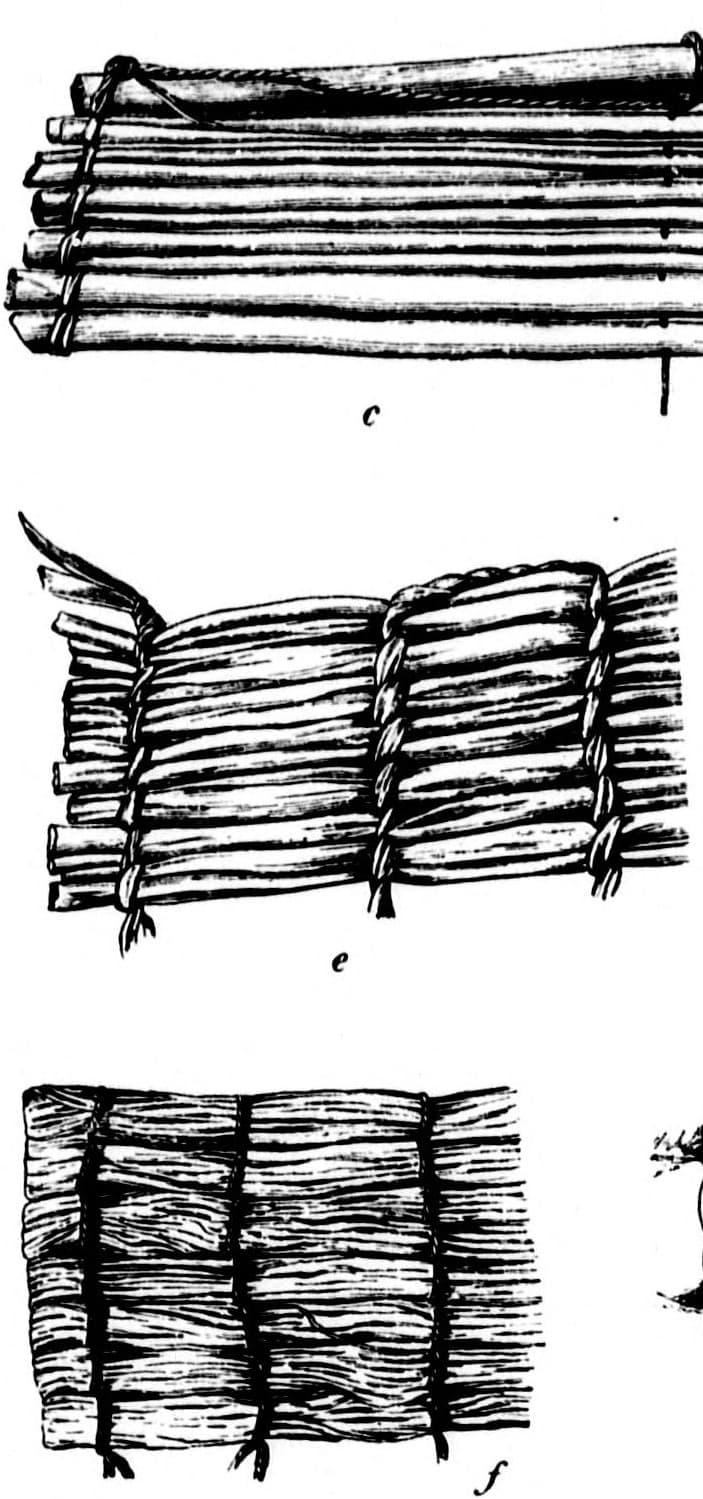
Thompson (Nlaka'pamux) Tule Mat: Dogbane Fibre Cleaned on a Board Edge, Thigh-Spun, Reeds Strung Across (Teit, 1900)
láti ọwọ́ Tex
Aṣọ àti Awọ
7
0
0
0
0
0
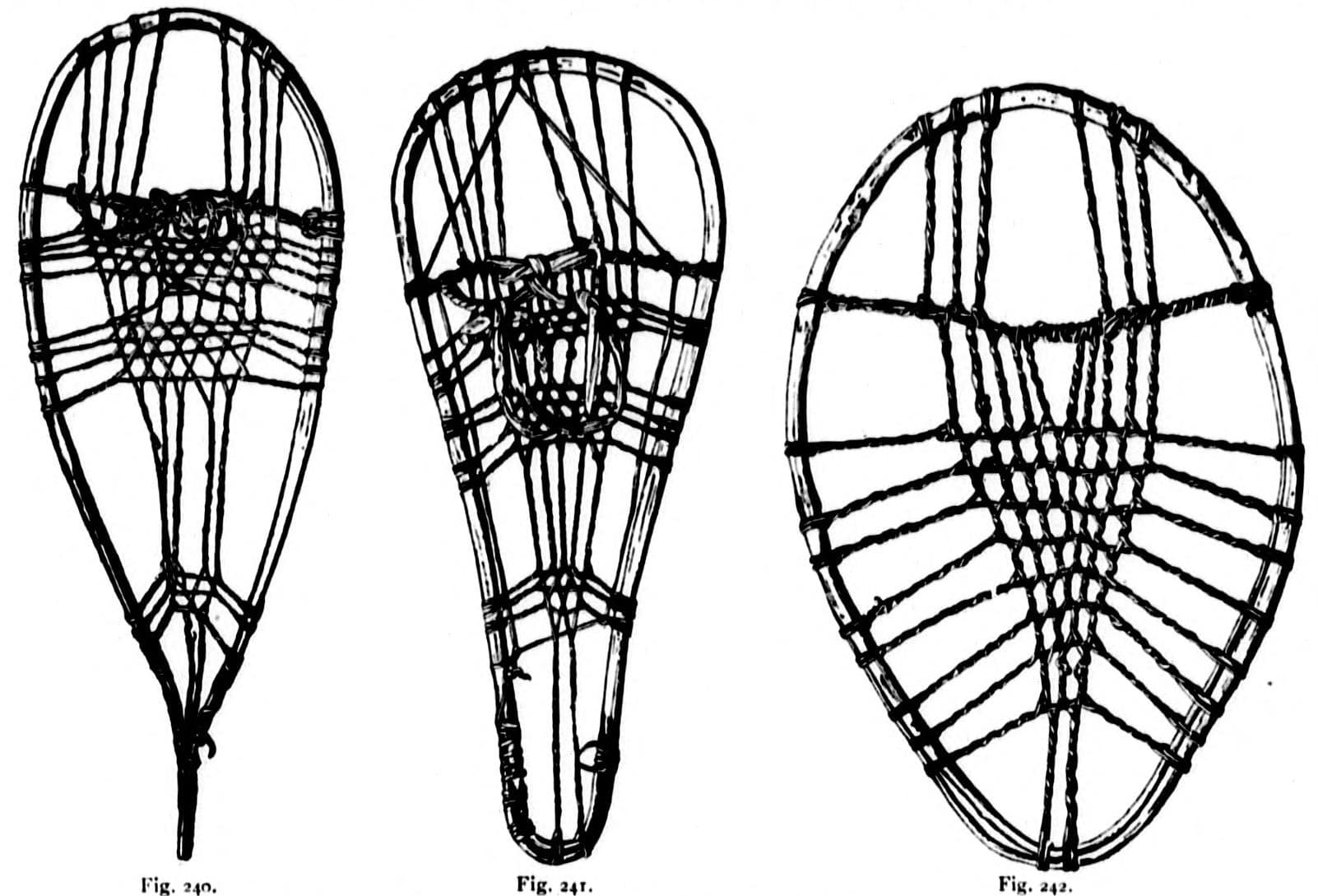
Thompson (Nlaka'pamux) Snowshoes: One-Piece Maple or Yew Frames Steamed in Pairs, Netted with Twisted Raw Deer-Hide (Teit, 1900)
láti ọwọ́ Woody
Iṣẹ́ Igi
12
0
0
0
0
0
CC0 Àgbègbè Gbogbogbò
Blueprint yìí ti jáde lábẹ́ CC0. O lè ṣe àdàkọ, yí padà, pín, àti lò láìsí ìyọ̀ǹda.
Ṣàtìlẹ́yìn Olùṣẹ́dá nípa rírà àwọn ọjà nipasẹ̀ Blueprint wọn Ẹ̀san Olùṣẹ́dá tí àwọn Olùtajà gbé kalẹ̀, tàbí ṣẹ̀dá àtúnṣe tuntun ti Blueprint yìí kí o sì fi sínú Blueprint rẹ gẹ́gẹ́ bí ìsopọ̀ láti pín owó-wíwọlé.