IṢẸ́ ỌNÀ
ẸWÀ ÀTI ÌLERA
IṢẸ́ ỌWỌ́
ÀṢÀ ÀTI ÌTÀN
ÌṢERÉ
ÀYÍKÁ
OÚNJẸ ÀTI OHUN MÍMU
REVERSE ENGINEERING
SÁYẸ́ǸSÌ
ERÉ ÌDÁRAYÁ
ÌMỌ̀-Ẹ̀RỌ
ÀWỌN OHUN WÍWỌ̀
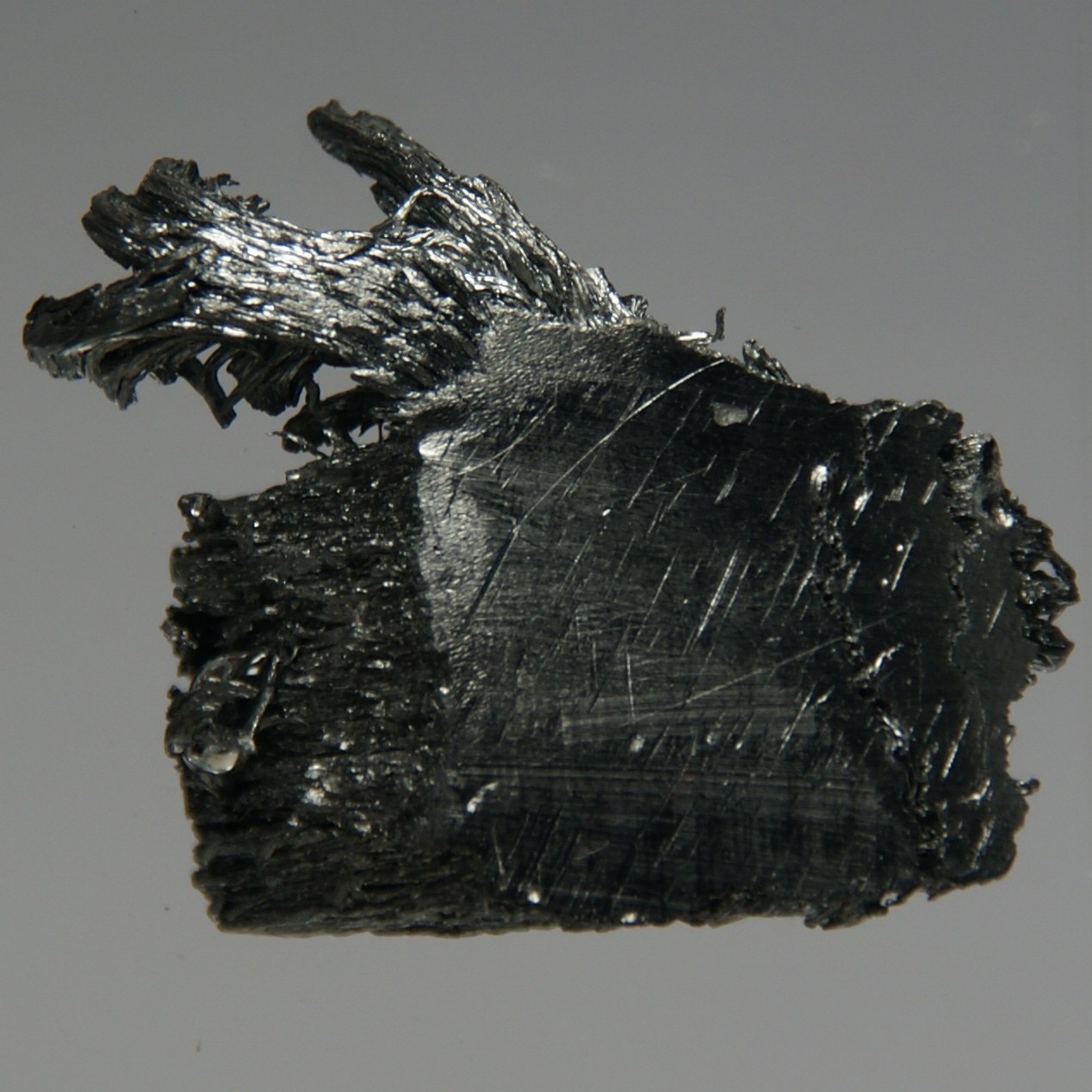

Thulium: Oxide Reduced with Aluminium in Flowing Argon and the Vapour Condensed (CN 104152695 B)
Pellets of thulium oxide and aluminium are fed into an induction furnace at 1700 °C. The aluminium takes the oxygen and stays behind as slag. Thulium boils off as vapour, and a stream of argon carries it into a water-cooled tank where it condenses to metal.
Result: thulium metal, 99.5 % of the thulium recovered. No vacuum pump is needed: the moving argon sweeps the vapour away as fast as it forms.
Source: Zhang, Dou et al. (Northeastern University), Chinese patent CN 104152695 B (2014), Example 1. Not given: batch size, the form of the aluminium, pellet size, the purity of the thulium. Picture: Wikimedia Commons.
Ilọsíwájú
1 day
Ìlànà
1
1
Weigh and mix
Weigh and mix
Weigh thulium oxide and aluminium, both over 99.0 % pure, in the molar ratio 1 : 2.2: 10 % more aluminium than the reaction needs (ours: about 15.4 g of aluminium to 100 g of oxide). Mix them evenly.
Àwọn ohun èlò fún ìgbésẹ̀ yìí:
 Ọ̀sáídì thulium100 g
Àwọn irinṣẹ́ tí a nílò:
 Aluminium
 Òǹwọ̀n ìwúwo
2
2
Press into pellets
Press into pellets
Press the mix in a roller press at 100 kg/cm² into lumpy pellets.
Àwọn irinṣẹ́ tí a nílò:
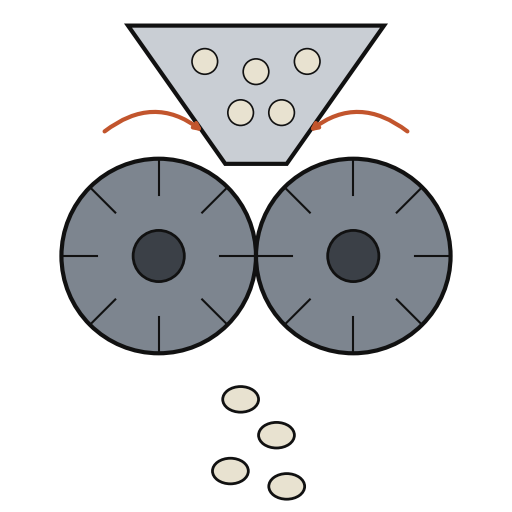 Ẹ̀rọ ìtẹ̀ rólà
3
3
Reduce in flowing argon
Reduce in flowing argon
Run argon (99.95 %) through a medium-frequency induction furnace (the patent's coil is 220 mm across) at 5 L/min; ours: set the flow with a rotameter. Feed the pellets in continuously and hold them at 1700 °C for 30 min. The thulium leaves as vapour mixed with the argon; draw the slag off continuously.
Àwọn irinṣẹ́ tí a nílò:
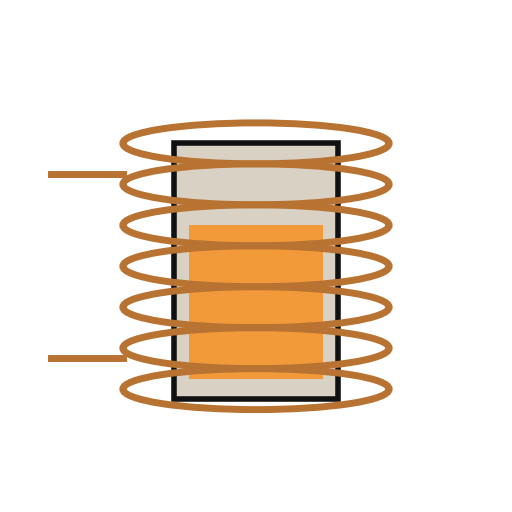 Ìléru induction
 Argon
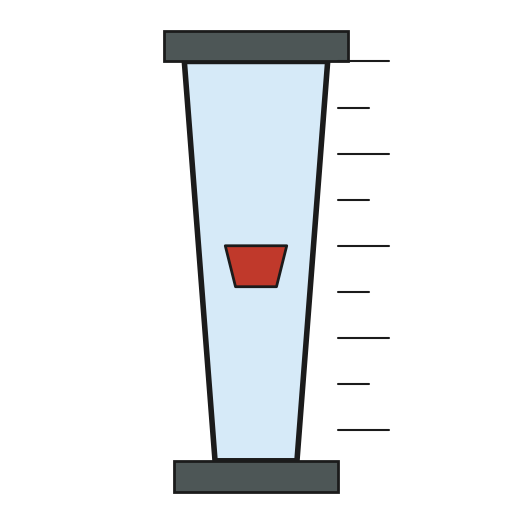 Ẹ̀rọ ìwọ̀n ìṣàn olóhun-afófó
4
4
Condense the thulium
Condense the thulium
Let the argon carry the vapour out of the furnace through a sealed pipe straight into a condensing tank cooled by circulating water. The thulium condenses there as metal: 99.5 % recovered. Example 2 of the patent runs at 1500 °C for 60 min with 15 L/min of argon (pellets pressed at 150 kg/cm²) and reports 99.2 %.
Àwọn irinṣẹ́ tí a nílò:
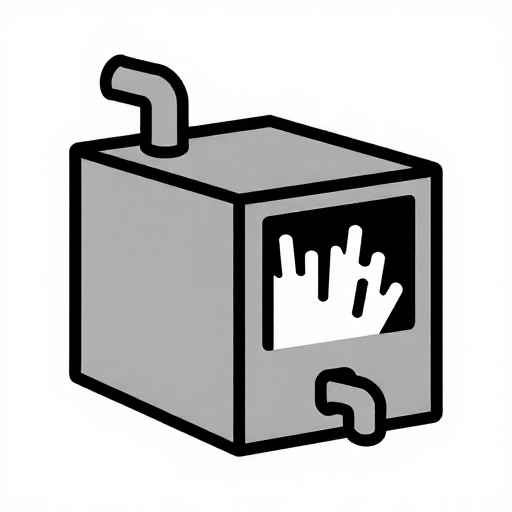 Iyàrá ìsọdomi èéfín
 Omi Ìtutù
Àwọn ohun-èlò
1- 100 gÀyè
Àwọn irinṣẹ́ tó nílò
8- Àyè
- Àyè
- Àyè
- Àyè
Ìtọ́nisọ́nà yìí ń ṣe

Blueprint tó jọra
Àwọn blueprint wọ̀nyí pín ìmọ̀ — ọ̀nà, ohun-èlò tàbí ìlànà
Léwu
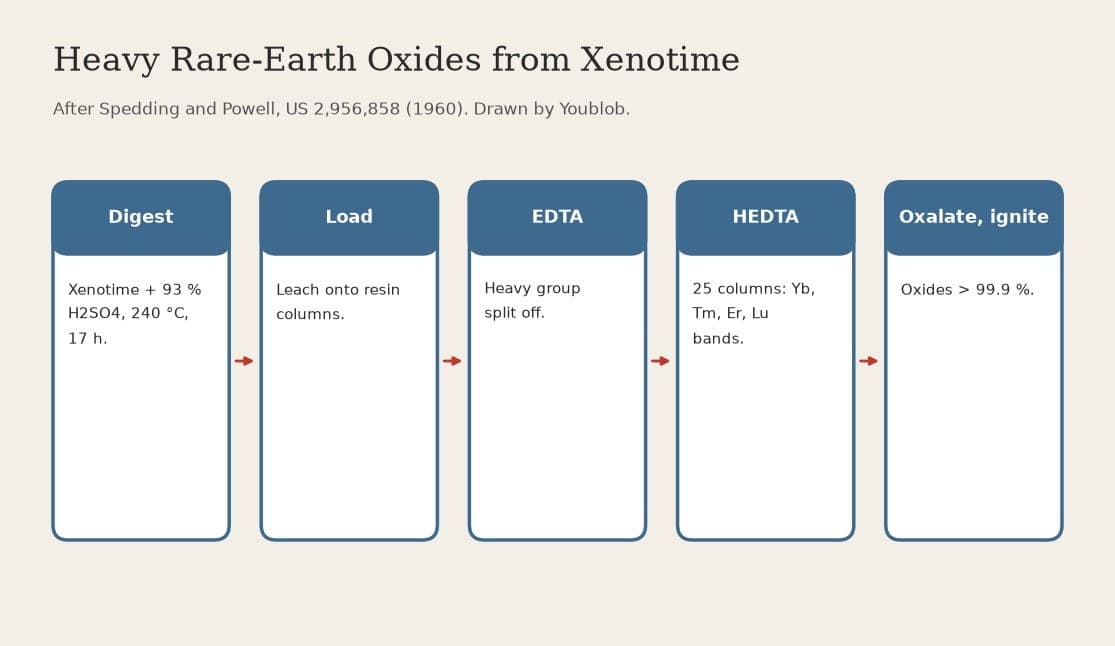
Erbium, Ytterbium, Thulium and Lutetium Oxides: Xenotime Separated on Ion Exchange Columns with EDTA and HEDTA (Spedding and Powell, US 2,956,858)
láti ọwọ́ Charlie
Inorganic
2
0
0
0
0
0
Léwu
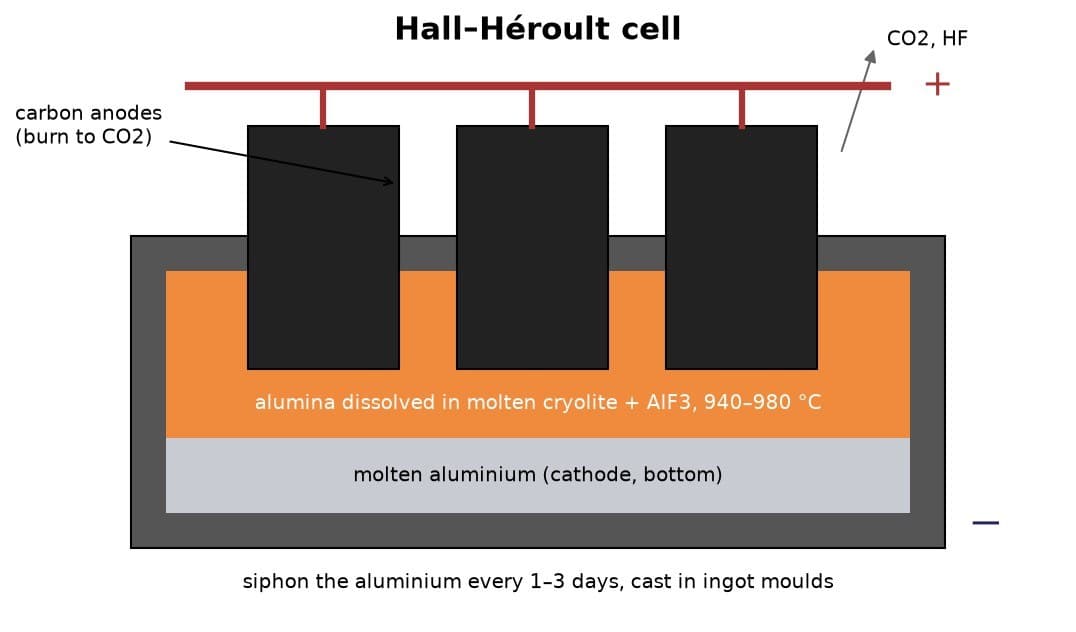
Aluminium by Hall–Héroult Electrolysis: Alumina in Molten Cryolite
láti ọwọ́ Forge
Iṣẹ́ Irin
6
0
0
0
0
0

Argon: Air Led over Calcium Carbide and Calcium Chloride at 800 °C (Fischer and Ringe, Thorpe 1912)
láti ọwọ́ Charlie
Inorganic
0
0
0
0
0
0
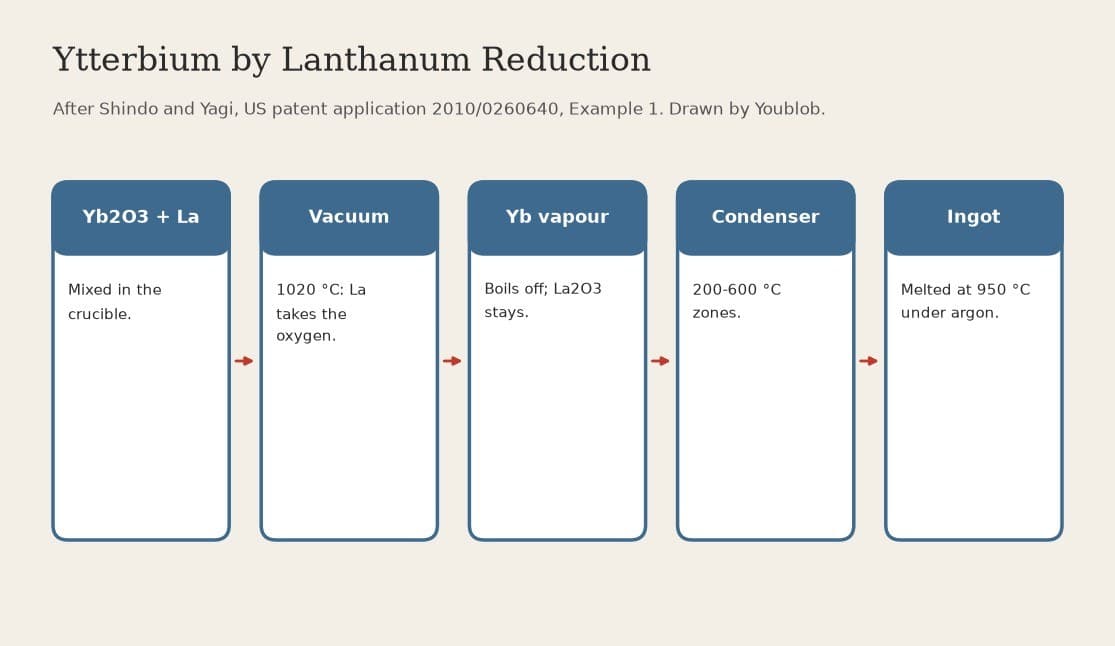
Ytterbium: Oxide Reduced by Lanthanum at 1020 °C in Vacuum, Metal Distilled Off (Shindo and Yagi, US 2010/0260640)
láti ọwọ́ Charlie
Inorganic
1
0
0
0
0
0
CC0 Àgbègbè Gbogbogbò
Blueprint yìí ti jáde lábẹ́ CC0. O lè ṣe àdàkọ, yí padà, pín, àti lò láìsí ìyọ̀ǹda.
Ṣàtìlẹ́yìn Olùṣẹ́dá nípa rírà àwọn ọjà nipasẹ̀ Blueprint wọn Ẹ̀san Olùṣẹ́dá tí àwọn Olùtajà gbé kalẹ̀, tàbí ṣẹ̀dá àtúnṣe tuntun ti Blueprint yìí kí o sì fi sínú Blueprint rẹ gẹ́gẹ́ bí ìsopọ̀ láti pín owó-wíwọlé.