IṢẸ́ ỌNÀ
ẸWÀ ÀTI ÌLERA
IṢẸ́ ỌWỌ́
ÀṢÀ ÀTI ÌTÀN
ÌṢERÉ
ÀYÍKÁ
OÚNJẸ ÀTI OHUN MÍMU
REVERSE ENGINEERING
SÁYẸ́ǸSÌ
ERÉ ÌDÁRAYÁ
ÌMỌ̀-Ẹ̀RỌ
ÀWỌN OHUN WÍWỌ̀
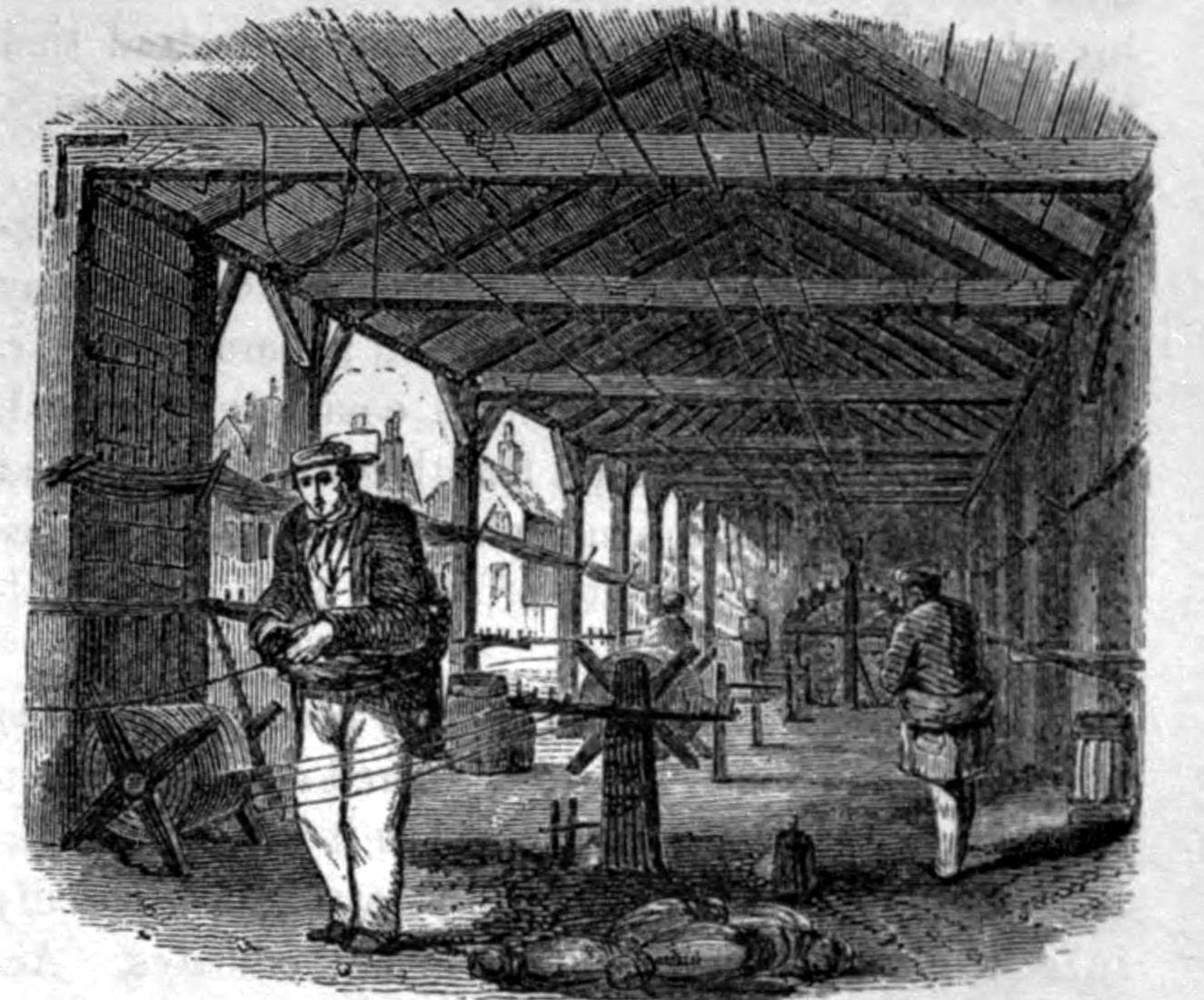


Hawser-Laid Hemp Rope in a Rope-Walk: Heckled, Hand-Spun Yarns, Optional Tarring, Laid With a Top (Tomlinson, 1854)
How 19th-century rope was made, from Tomlinson's Cyclopaedia of Useful Arts (1854): hemp heckled, spun by hand into 160-fathom yarns by spinners walking backward down a rope-walk from a wheel of whirling hooks, optionally tarred in hot tar and squeezed through a gage, then laid into three strands and closed into hawser-laid rope behind a grooved wooden top.
Ilọsíwájú
Several days
Ìlànà
1
1
Rope-walk numbers
Rope-walk numbers
Ń ṣí ìwé Jupyter…
2
2
Read the Cyclopaedia of Useful Arts
Read the Cyclopaedia of Useful Arts
"The fibres are first spun into yarns, the yarns into strands, the strands into a rope."
3
3
Heckle the hemp
Heckle the hemp
Weigh out enough hemp for one yarn of 160 fathoms. Throw it loosely over the points of the heckle and draw it toward you, repeating until all the fibres are combed straight; a little oil on the points helps (he names whale-oil; fish oil here). Tie the combed fibres into a tow of about 3-1/2 lb.
Àwọn ohun èlò fún ìgbésẹ̀ yìí:
 Okùn hẹ́mpù1 ẹyọ
 Òróró ẹja1 ẹyọ
Àwọn irinṣẹ́ tí a nílò:
 Òòyà okùn — gbígbóná
 Òǹwọ̀n ìdọ́gba
4
4
Spin the yarn
Spin the yarn
At the head of the walk turn the wheel of whirl-hooks. Wrap the tow round your body with the bight in front, draw out fibres, twist them and hook the bight on a whirl. Walk backward down the walk (about 2 miles an hour), holding the fibres in a piece of thick woollen cloth between the middle fingers, feeding an even, flat skein with the left hand, and throwing the yarn over the rafter hooks as you go. At the foot, reel the yarn in, keeping it tight. Yarns run from 1/12 to over 1/8 in thick.
Àwọn ohun èlò fún ìgbésẹ̀ yìí:
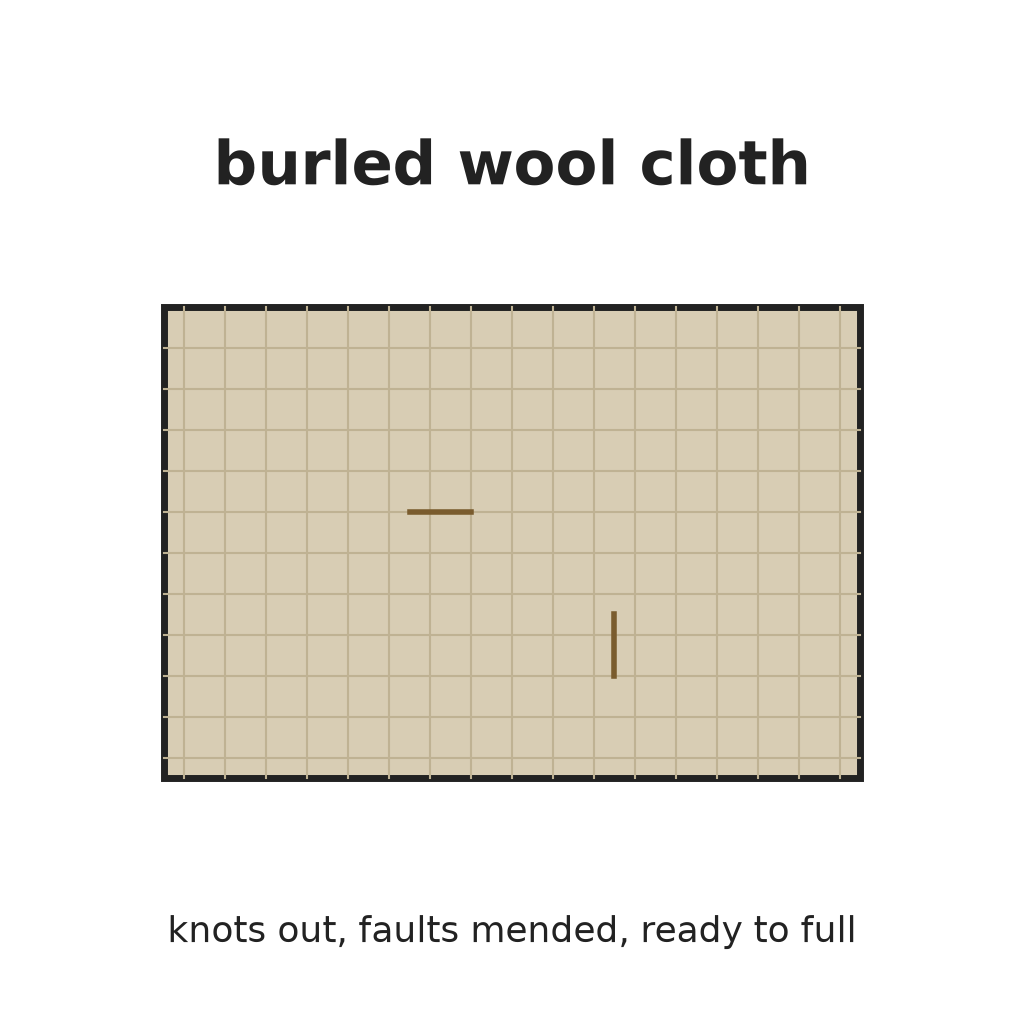 Aṣọ irun àgùntàn tí a mú ìsorí kúrò1 ẹyọ
Àwọn irinṣẹ́ tí a nílò:
 Ẹ̀rọ ìṣe okùn
 Èèkàn igi
5
5
Tar the yarns (optional)
Tar the yarns (optional)
Warp 300 to 400 yarns straight and parallel into a haul about 100 yd long. Dip it in tar heated to about 212 F in a copper and drag it through a grip or gage that presses the tar in and wipes off the excess. The yarn should come out bright brown: too hot chars it, too cold leaves it black; a scum closing over the tar shows the right heat. Tarred rope resists wet but is weaker.
Àwọn ohun èlò fún ìgbésẹ̀ yìí:
 Pine Tar1 ẹyọ
Àwọn irinṣẹ́ tí a nílò:
 Ìkòkò Ńlá
6
6
Lay the strands
Lay the strands
Count out the yarns for the rope and divide them into three on the bearers. Hang them on the hooks of the tackle-board at the head and the weighted sledge at the foot, stretch them tight, and heave the hooks round against the twist of the yarn until each strand is 'full hard', the sledge creeping up the walk as the yarns shorten.
Àwọn irinṣẹ́ tí a nílò:
Ẹ̀rọ ìṣe okùnÈèkàn igi7
7
Close the rope
Close the rope
Put the three strands on the middle hook and into the grooves of the top, with woolders and soft-rope tails. Force the top back to the sledge, turn the head hooks as before and the sledge hook the contrary way, easing the load so the top is driven forward and the strands close behind it into rope. Wrap the tails round the rope to steady the top, and mark the strands at each beam to keep the hardness even.
Àwọn irinṣẹ́ tí a nílò:
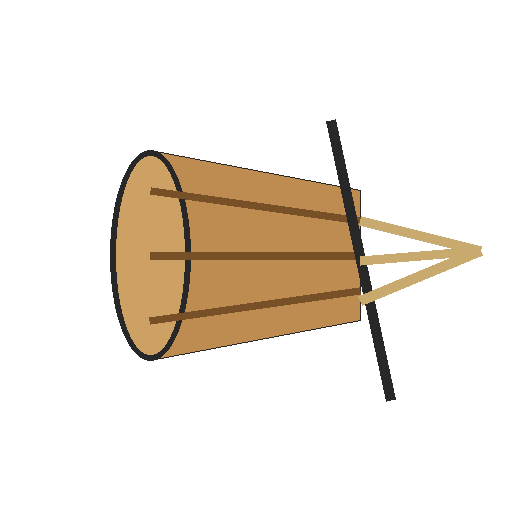 Rope Laying TopẸ̀rọ ìṣe okùn
8
8
Troubleshooting
Troubleshooting
Rope troubleshooting.
Flow
Loading...
9
9
History and honest limits
History and honest limits
From Charles Tomlinson (ed.), **Cyclopaedia of Useful Arts** (1854), vol. II, "Rope" (checked on the archive.org scan cyclopdiaofuse02tomlrich, pp. 564-568). He names whale-oil for the heckle; fish oil is our substitute and labelled so. The tools are ours.
Àwọn ohun-èlò
4- 1 ẹyọÀyè
- 1 ẹyọÀyè
- 1 ẹyọÀyè
Ìtọ́nisọ́nà yìí ń ṣe
Blueprint tó jọra
Àwọn blueprint wọ̀nyí pín ìmọ̀ — ọ̀nà, ohun-èlò tàbí ìlànà
CC0 Àgbègbè Gbogbogbò
Blueprint yìí ti jáde lábẹ́ CC0. O lè ṣe àdàkọ, yí padà, pín, àti lò láìsí ìyọ̀ǹda.
Ṣàtìlẹ́yìn Olùṣẹ́dá nípa rírà àwọn ọjà nipasẹ̀ Blueprint wọn Ẹ̀san Olùṣẹ́dá tí àwọn Olùtajà gbé kalẹ̀, tàbí ṣẹ̀dá àtúnṣe tuntun ti Blueprint yìí kí o sì fi sínú Blueprint rẹ gẹ́gẹ́ bí ìsopọ̀ láti pín owó-wíwọlé.