IṢẸ́ ỌNÀ
ẸWÀ ÀTI ÌLERA
IṢẸ́ ỌWỌ́
ÀṢÀ ÀTI ÌTÀN
ÌṢERÉ
ÀYÍKÁ
OÚNJẸ ÀTI OHUN MÍMU
REVERSE ENGINEERING
SÁYẸ́ǸSÌ
ERÉ ÌDÁRAYÁ
ÌMỌ̀-Ẹ̀RỌ
ÀWỌN OHUN WÍWỌ̀
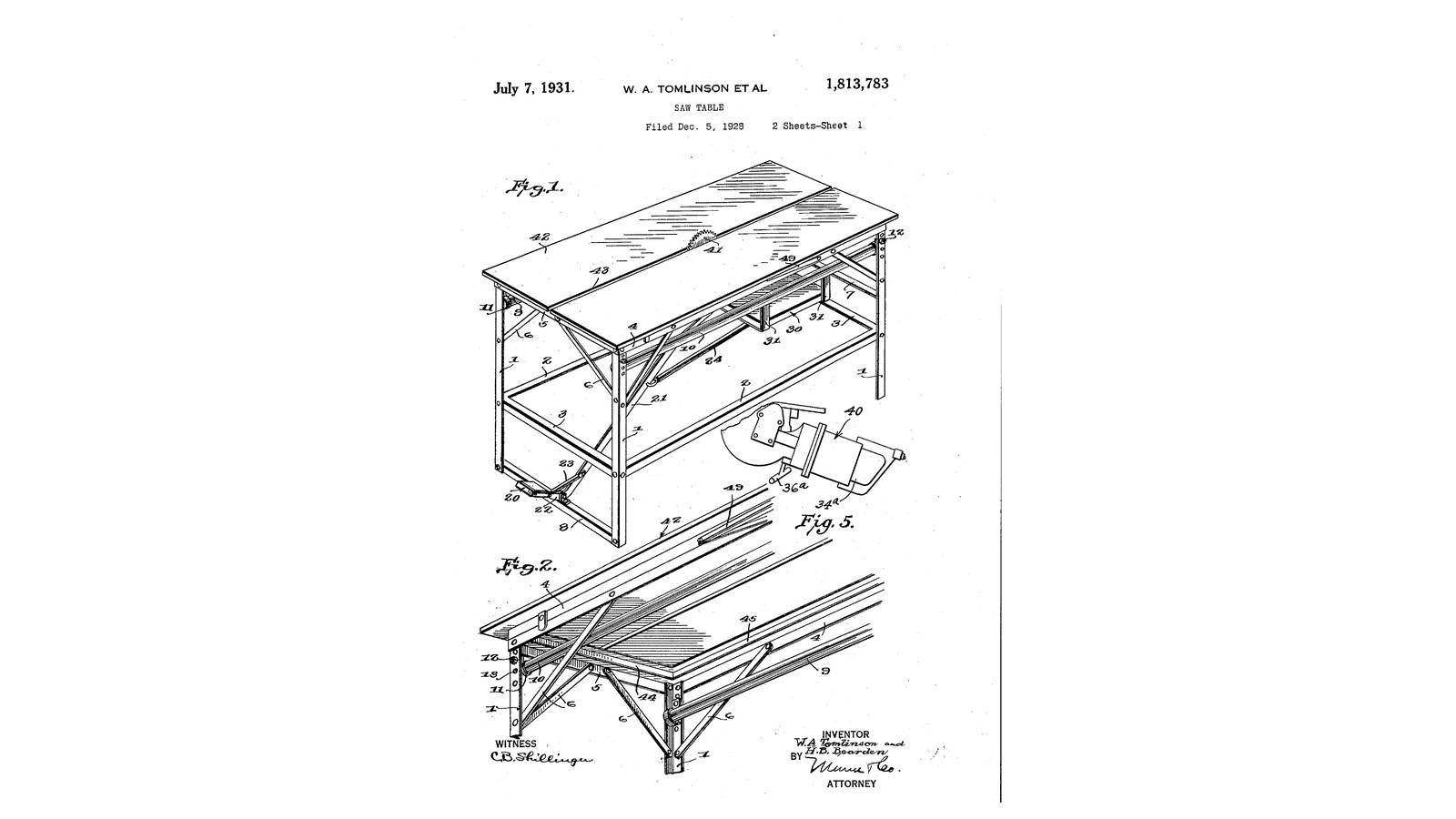

Tube-Track Pedal Saw Table: Any Portable Saw Clamped Upside Down on a Carriage Rolling Inside Slotted Tubes (Tomlinson & Bearden, 1931)
William A. Tomlinson and Howell B. Bearden of Phoenix, Arizona, received US 1,813,783, dated 7 July 1931, for a table that turns any portable power saw into a table saw. The saw is clamped upside down on a carriage, its blade through the slot of a top hinged at the rear. The carriage rolls on ball-bearing rollers inside two steel tubes slotted along their undersides. A pedal pushes it forward through the work, leaving both hands free, and a spring brings it back. With the pedal left alone it works as a fixed saw, and the saw unbolts for hand use.
The patent gives no sizes; every size here is ours.
Ilọsíwájú
About 4 days
Ìlànà
1
1
Pedal, link and travel
Pedal, link and travel
Ń ṣí ìwé Jupyter…
2
2
Read US 1,813,783
Read US 1,813,783
"By using the pedal in the manner above set forth both hands of the operator will be free for manipulating the work, which is especially desirable when pattern work is to be sawed."
3
3
Angle-iron frame
Angle-iron frame
Bolt a frame of steel angle 900 x 500 mm, 850 high: four corner legs 1, side and end bars 2, 3 halfway up and 4, 5 at the top, flat-bar diagonal braces 6 at the top corners, a cross bar 7 between the rear legs above the middle bars, and a cross bar 8 between the front legs at the bottom. Drill a vertical row of 9 mm holes 13, 25 mm apart, near the top of each leg, for the track hangers.
Àwọn ohun èlò fún ìgbésẹ̀ yìí:
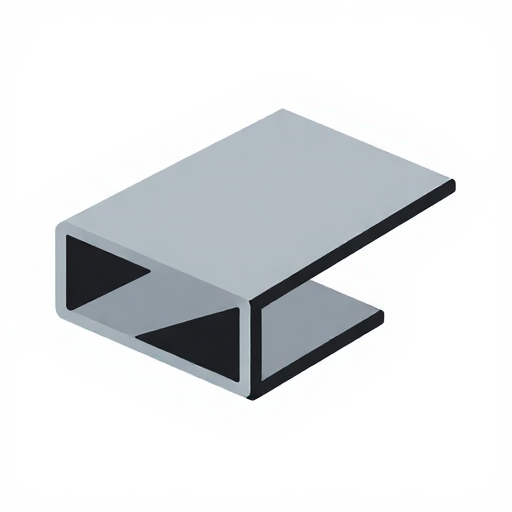 Irin igun ti irin rírọ̀6 ẹyọ
 Ọ̀pá Pẹrẹsẹ Irin Pẹ́lẹ́1 ẹyọ
 Àkójọ bọ́ọ̀lù onígun mẹ́fà40 ẹyọ
 Nọ́ọ̀tì Onígun Mẹ́fà40 ẹyọ
 Wáṣà Pẹrẹsẹ40 ẹyọ
Àwọn irinṣẹ́ tí a nílò:
 Ayùn Irin
 Ẹ̀rọ ìlọ̀ onígun
 Ẹ̀rọ Ìlùkòkò Onídúró
 Àkójọ Orí Ìlùkòkò
 Igi Àmì Àárín
 Igun Àpapọ̀
 Okùn Ìdíwọ̀n
 Kọ́kọ́rọ́ tí a lè ṣàtúnṣe
 Gíláàsì ààbò
4
4
Slotted tube tracks
Slotted tube tracks
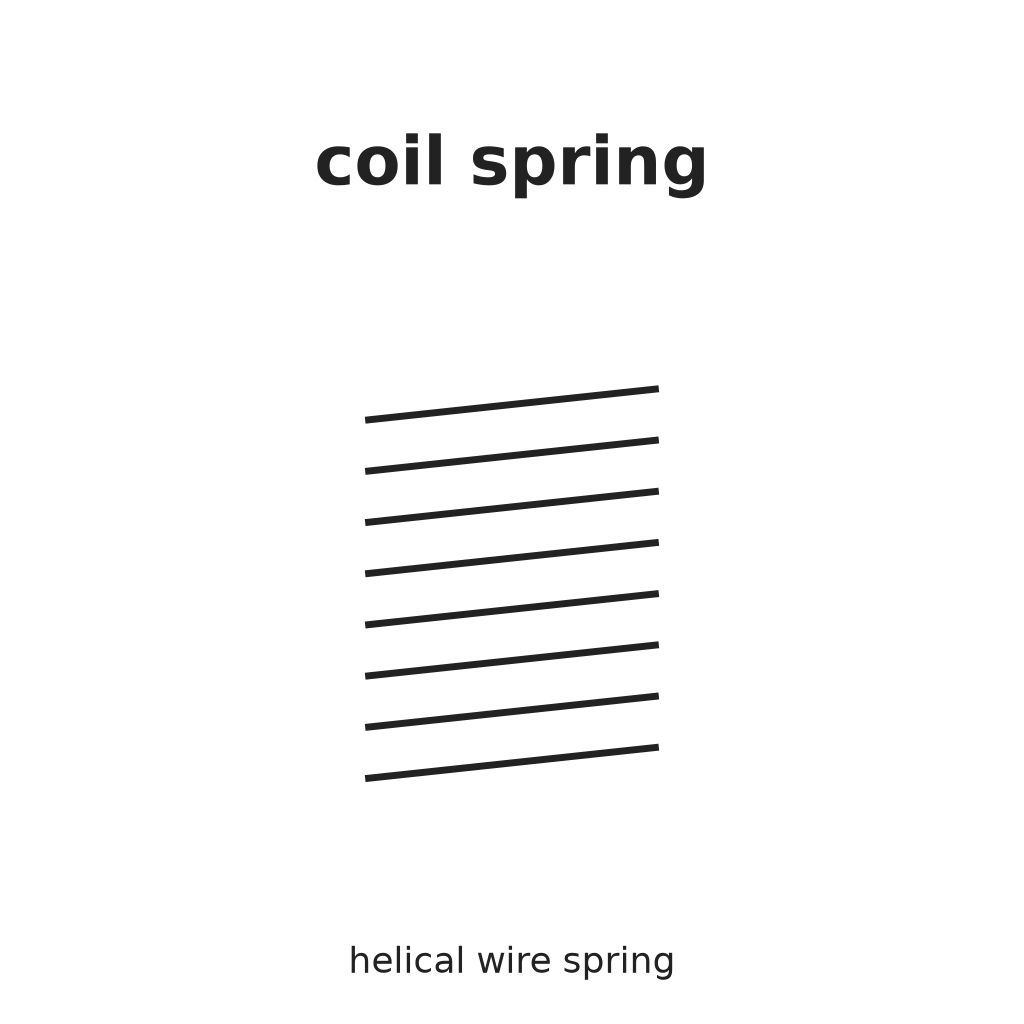
Cut two 900 mm lengths of 42 mm steel tube 9, 10 and cut a 10 mm slot 14 along the underside of each, stopping 20 mm short of the ends; file the slot's edges smooth. Bolt a flat-bar hanger 11 to each end of each tube and hang the tubes along the frame's sides from the legs with bolts 12 through the row of holes, at the height that suits your saw. Put a short coil spring 39 in each end of each tube as a buffer.
Àwọn ohun èlò fún ìgbésẹ̀ yìí:
 Ọ̀pá yíká irin rírọ̀2 ẹyọỌ̀pá Pẹrẹsẹ Irin Pẹ́lẹ́1 ẹyọ
 Coil Spring4 ẹyọÀkójọ bọ́ọ̀lù onígun mẹ́fà8 ẹyọNọ́ọ̀tì Onígun Mẹ́fà8 ẹyọ
Àwọn irinṣẹ́ tí a nílò:
Ayùn IrinẸ̀rọ ìlọ̀ onígun Àkójọ Ìfá
 Ìdìmú TábìlìẸ̀rọ Ìlùkòkò OnídúróÀkójọ Orí ÌlùkòkòKọ́kọ́rọ́ tí a lè ṣàtúnṣe
 Òṣùwọ̀n Kálípà Díjítà Ìnṣì 6Gíláàsì ààbò
5
5
Carriage and rollers
Carriage and rollers
Cut the carriage 30 from 5 mm steel plate, as wide as between the tubes. At each corner bolt an upright flat-bar standard 31 that reaches up through a tube's slot, and on its top a short bar 33 across inside the tube carrying a 22 mm ball bearing 32 at each end on an M8 bolt with a lock nut. Slide the rollers into the tubes from the ends, the standards hanging down through the slots, and bolt them to the carriage.
Àwọn ohun èlò fún ìgbésẹ̀ yìí:
 Pẹpẹ irin rírọ̀1 ẹyọỌ̀pá Pẹrẹsẹ Irin Pẹ́lẹ́1 ẹyọ
 Bearing Bọ́ọ̀lù8 ẹyọÀkójọ bọ́ọ̀lù onígun mẹ́fà16 ẹyọ
 Ẹ̀kù Ìdìmú Onínáílọ́ọ̀nù8 ẹyọWáṣà Pẹrẹsẹ16 ẹyọ
Àwọn irinṣẹ́ tí a nílò:
Ayùn IrinẸ̀rọ ìlọ̀ onígunẸ̀rọ Ìlùkòkò OnídúróÀkójọ Orí ÌlùkòkòÀkójọ ÌfáÌdìmú TábìlìKọ́kọ́rọ́ tí a lè ṣàtúnṣe6
6
Pedal and springs
Pedal and springs
Pivot a lever 21 of steel flat bar on the front bottom cross bar 8, with an arm 22 to the side carrying the pedal 20 and a brace 23 from arm to lever. Join the lever's top to the carriage's front with a flat-bar link 24. Hook a return spring 25a from the rear cross bar 7 to the lever partway up.
Àwọn ohun èlò fún ìgbésẹ̀ yìí:
Ọ̀pá Pẹrẹsẹ Irin Pẹ́lẹ́2 ẹyọ Ọ̀pá rírọ irin rírọ̀1 ẹyọ
 Orísun ìfà1 ẹyọÀkójọ bọ́ọ̀lù onígun mẹ́fà4 ẹyọẸ̀kù Ìdìmú Onínáílọ́ọ̀nù4 ẹyọ
Àwọn irinṣẹ́ tí a nílò:
Ayùn IrinẸ̀rọ Ìlùkòkò OnídúróÀkójọ Orí ÌlùkòkòÌdìmú TábìlìKọ́kọ́rọ́ tí a lè ṣàtúnṣe7
7
Mount the saw and the top
Mount the saw and the top
Turn the circular saw upside down on the carriage and bolt it by its base plate with bolts and wing nuts, so it lifts off for hand use; his T-bolt 34 and hook bolts 36 gripped the saw's handles, which modern saws do not suit. Make the top 42 of plywood on a steel angle frame 44, slotted along the blade's path, and hinge its rear edge to the frame so it swings up to reach the saw. Fit a catch 47 to lock it down and a folding flat-bar brace 49 to prop it up.
Àwọn ohun èlò fún ìgbésẹ̀ yìí:
 Ayùn ìyíká1 ẹyọÀkójọ bọ́ọ̀lù onígun mẹ́fà4 ẹyọ
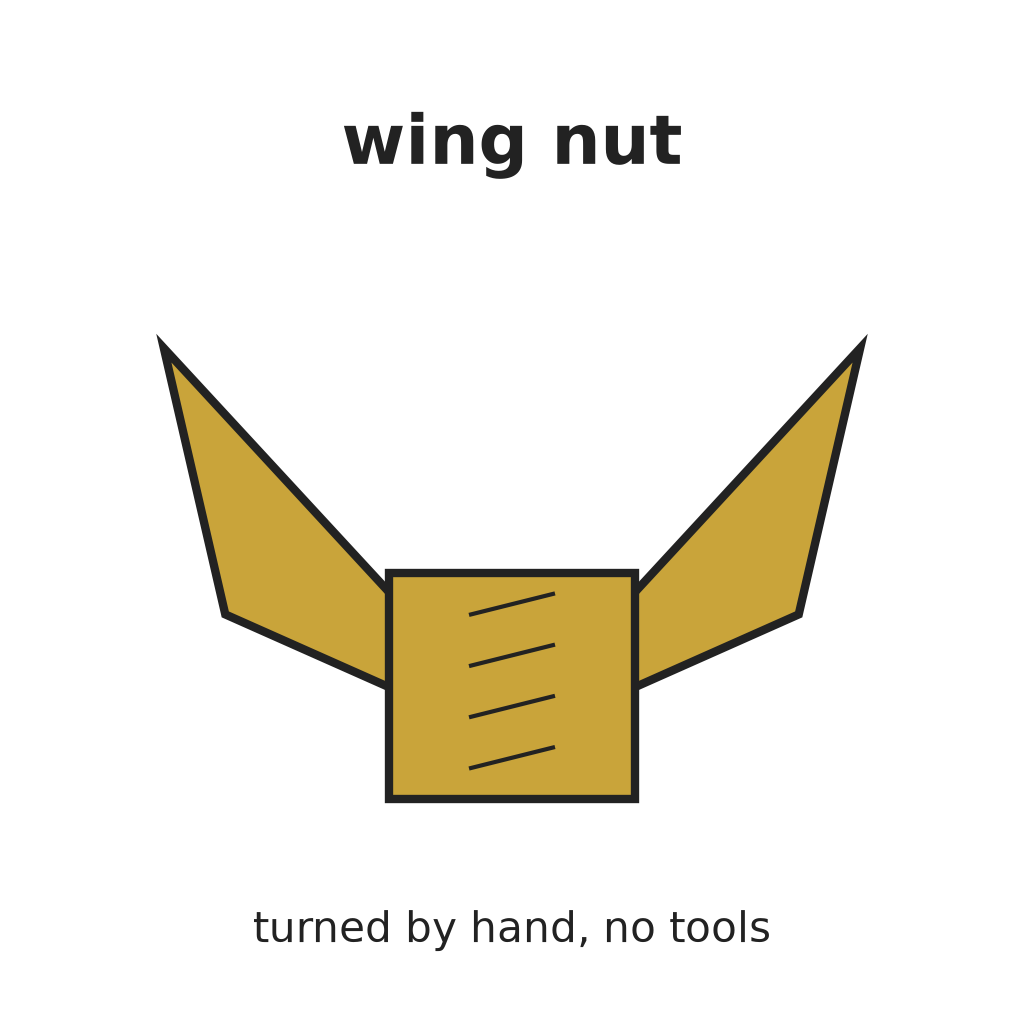 Nọ́ọ̀tì apá4 ẹyọ
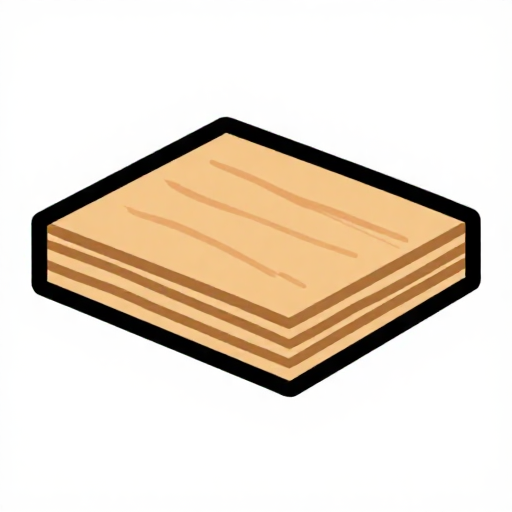 Àwo igi tí a lẹ̀ pọ̀1 ẹyọIrin igun ti irin rírọ̀1 ẹyọ
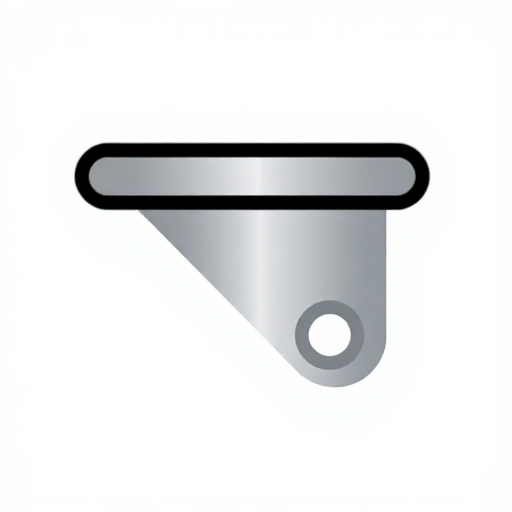 Ìdìmú ẹnu-ọ̀nà2 ẹyọ
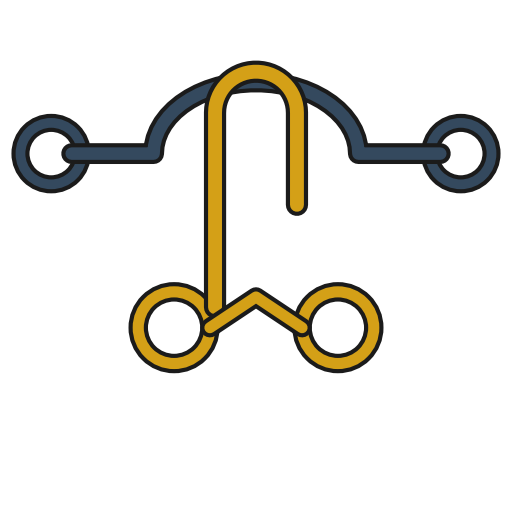 Ìkọ̀ àti ojú1 ẹyọỌ̀pá Pẹrẹsẹ Irin Pẹ́lẹ́1 ẹyọ
 Ìṣó igi16 ẹyọ
Àwọn irinṣẹ́ tí a nílò:
 Ayùn Jígísò
 Ẹ̀rọ Ìlùkòkò AláìlókùnÀkójọ Orí ÌlùkòkòAyùn IrinKọ́kọ́rọ́ tí a lè ṣàtúnṣeIgun Àpapọ̀
8
8
Cut
Cut
Lock the top down. Set the saw's depth so the blade stands 10 mm above the board. Place the board on the top in front of the blade, start the saw and press the pedal: the carriage rolls the running blade through it while both hands hold the work. Let the pedal up and the spring returns it. For ripping, leave the carriage still and feed the board.
Àwọn irinṣẹ́ tí a nílò:
Gíláàsì ààbò Ààbò etí (ìbòjú etí, SNR 30 dB)
9
9
Troubleshooting
Troubleshooting
Tube-track saw table troubleshooting.
Flow
Loading...
10
10
History and honest limits
History and honest limits
**William A. Tomlinson** and **Howell B. Bearden** of Phoenix, Arizona, US 1,813,783, dated 7 July 1931, filed 5 December 1928. They claimed a top with a slot, "laterally spaced longitudinally extending tubular tracks" below it, "slotted longitudinally on their lower faces", and a saw carriage with upstanding roller-carrying hangers in the tracks, their shanks through the slots. Their saw is held by its handles; ours by its base plate. Their frame is angle iron, as ours. They give no sizes; every size here is ours.
Àwọn ohun-èlò
18- Àyè
- Àyè
- Àyè
- 48 ẹyọÀyè
- 56 ẹyọÀyè
- 2 ẹyọÀyè
- 4 ẹyọÀyè
- 1 ẹyọÀyè
- Àyè
- 12 ẹyọÀyè
- 1 ẹyọÀyè
- 1 ẹyọÀyè
- 1 ẹyọÀyè
- 4 ẹyọÀyè
- 1 ẹyọÀyè
- 2 ẹyọÀyè
- 1 ẹyọÀyè
- 16 ẹyọÀyè
Àwọn irinṣẹ́ tó nílò
15- Àyè
- 1 vendor sell this, none ship to you yetÀyè
- Àyè
- 1 vendor sell this, none ship to you yetÀyè
- Àyè
- Àyè
- Àyè
- 1 vendor sell this, none ship to you yetÀyè
- 1 vendor sell this, none ship to you yetÀyè
Ìtọ́nisọ́nà yìí ń ṣe
Blueprint tó jọra
Àwọn blueprint wọ̀nyí pín ìmọ̀ — ọ̀nà, ohun-èlò tàbí ìlànà
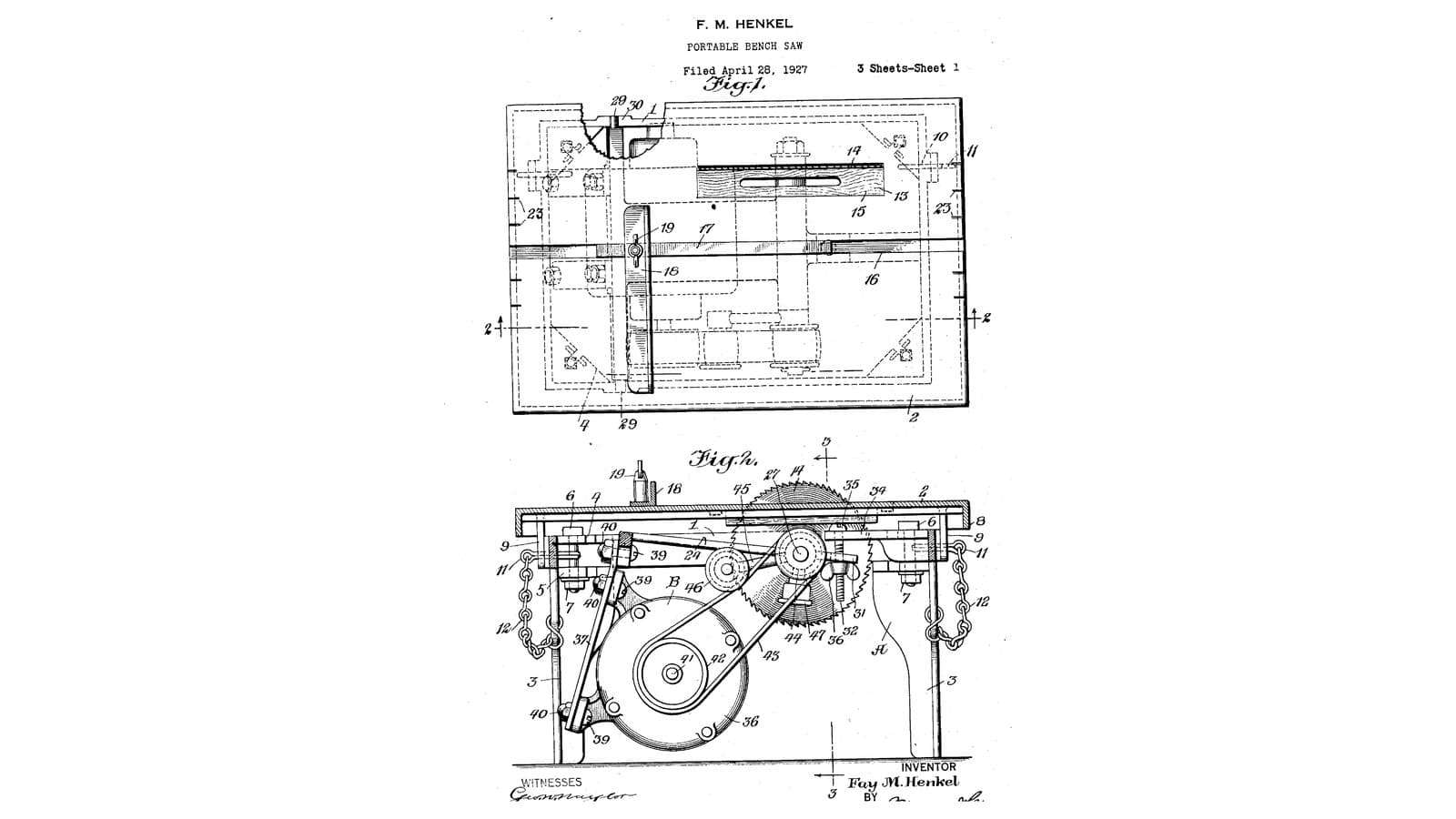
Portable Bench Saw: A Lift-Out Power Unit on Trunnions, Its Motor on Spring Bars, Under a Tilting Platform (Henkel, 1928)
láti ọwọ́ Forge
Iṣẹ́ Igi
16
0
0
0
0
0
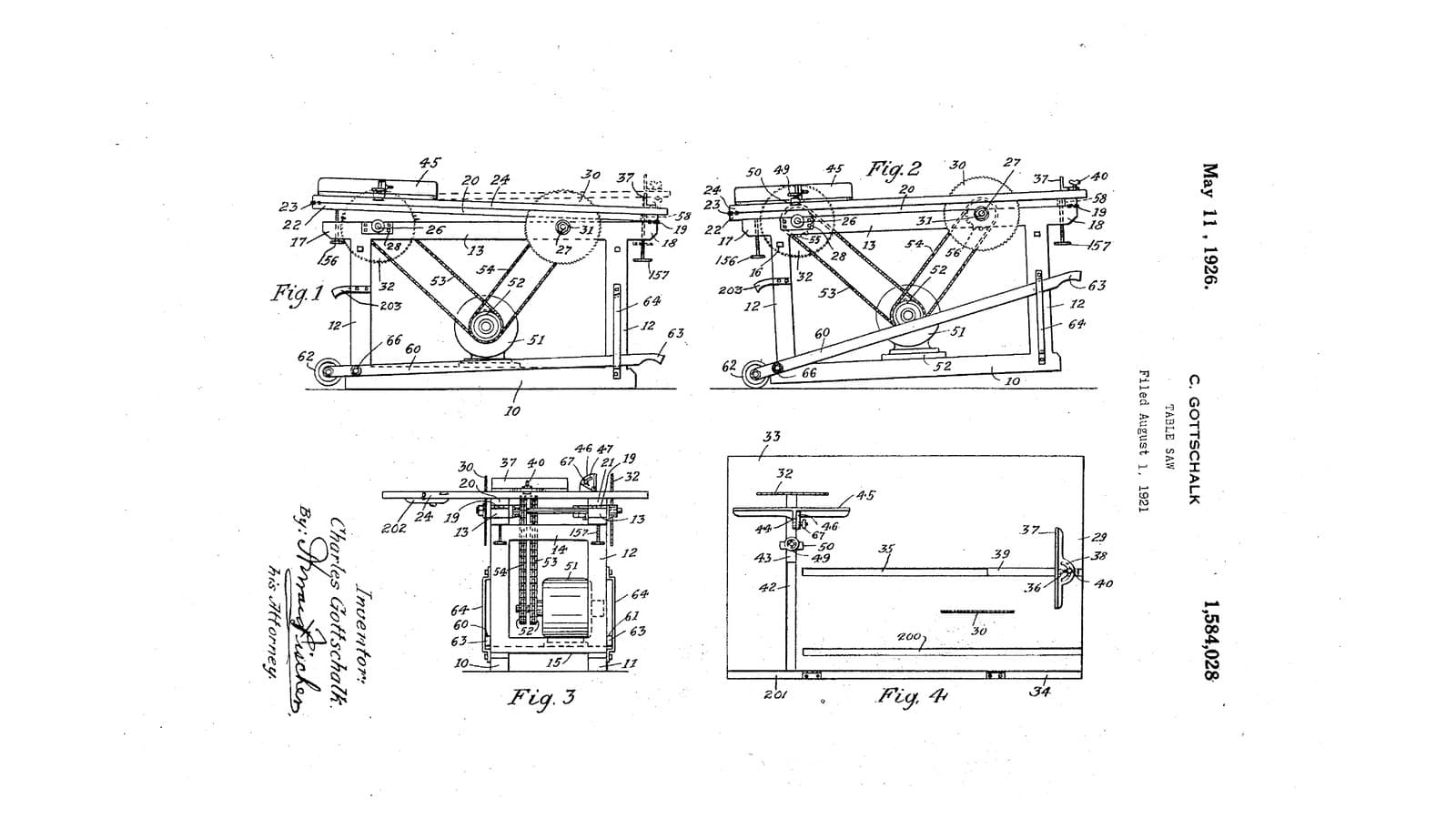
Twin-Saw Table: A Rip Saw and a Crosscut Saw at Opposite Corners, One Motor, Each Depth Set by Tilting the Top (Gottschalk, 1926)
láti ọwọ́ Forge
Iṣẹ́ Igi
10
0
0
0
0
0
CC0 Àgbègbè Gbogbogbò
Blueprint yìí ti jáde lábẹ́ CC0. O lè ṣe àdàkọ, yí padà, pín, àti lò láìsí ìyọ̀ǹda.
Ṣàtìlẹ́yìn Olùṣẹ́dá nípa rírà àwọn ọjà nipasẹ̀ Blueprint wọn Ẹ̀san Olùṣẹ́dá tí àwọn Olùtajà gbé kalẹ̀, tàbí ṣẹ̀dá àtúnṣe tuntun ti Blueprint yìí kí o sì fi sínú Blueprint rẹ gẹ́gẹ́ bí ìsopọ̀ láti pín owó-wíwọlé.