IṢẸ́ ỌNÀ
ẸWÀ ÀTI ÌLERA
IṢẸ́ ỌWỌ́
ÀṢÀ ÀTI ÌTÀN
ÌṢERÉ
ÀYÍKÁ
OÚNJẸ ÀTI OHUN MÍMU
REVERSE ENGINEERING
SÁYẸ́ǸSÌ
ERÉ ÌDÁRAYÁ
ÌMỌ̀-Ẹ̀RỌ
ÀWỌN OHUN WÍWỌ̀
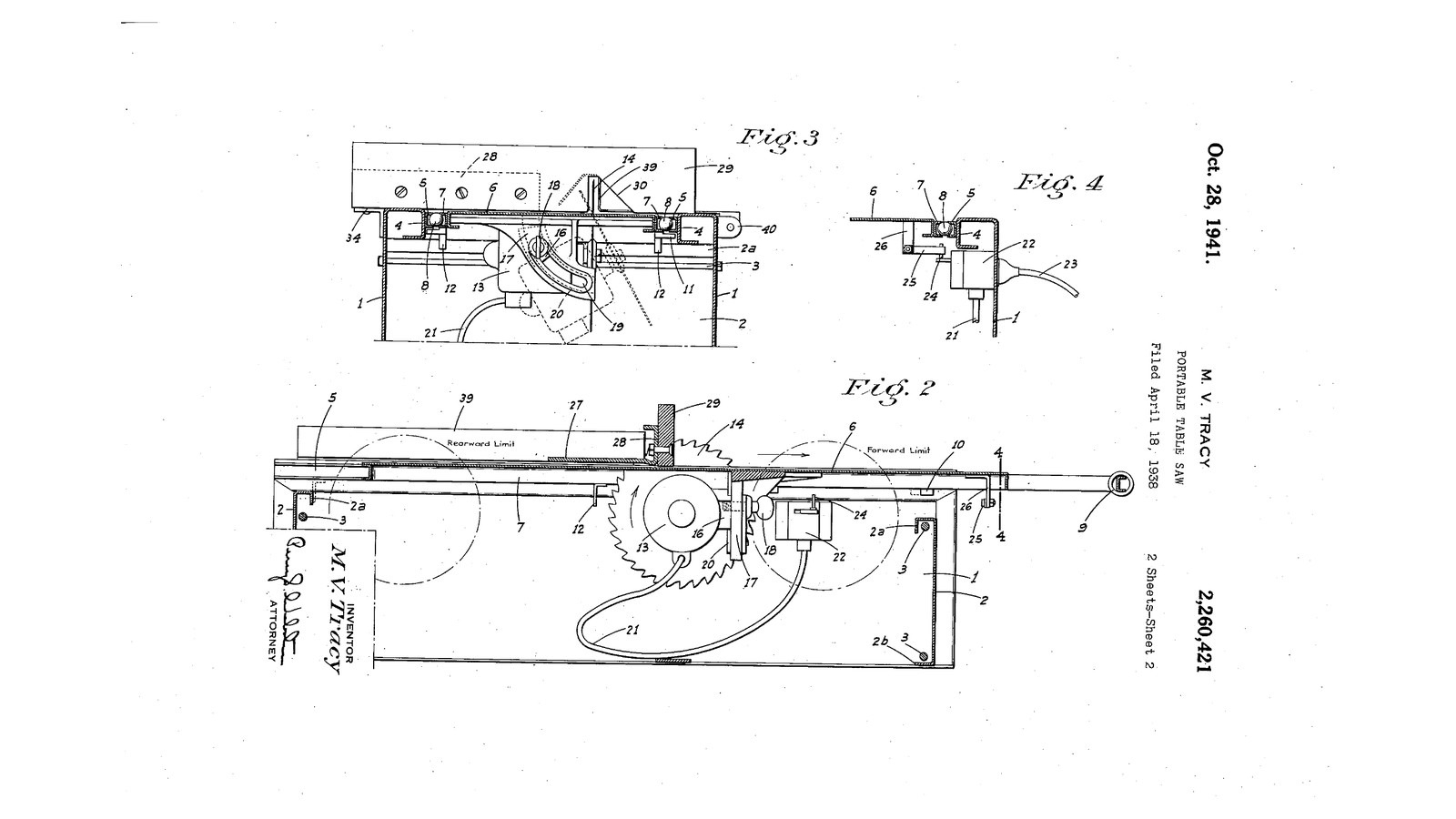

Sliding-Table Saw That Switches Itself: A Hand Saw Under a Table on Balls, Turned On and Off by the Stroke (Tracy, 1941)
Mearl V. Tracy of Sacramento received US 2,260,421, dated 28 October 1941, for a light table saw to take onto a building job. An ordinary electric hand saw hangs under a table that slides on steel balls in channels. The work is held against a fixed fence and the table carries the saw through it. A springy finger on the table trips a snap switch, starting the saw just before it reaches the work and stopping it as the table comes back. One fence on a graduated plate serves as rip fence and mitre gauge.
The patent gives no sizes; every size here is ours, and our box is plywood where his is sheet metal.
Àárín
About 3 days
Ìlànà
1
1
Where the switch must trip
Where the switch must trip
Ń ṣí ìwé Jupyter…
2
2
Read US 2,260,421
Read US 2,260,421
"The finger 25 is so disposed as to engage trigger 24 and close the switch when the table is advanced and just before the saw reaches the work under which the table slides, and to reengage the trigger and open the switch as the table retracts and approaches a fully retracted position."
3
3
The box frame
The box frame
Make an open-topped box of 18 mm plywood 900 mm long, 450 wide and 300 high, the end panels 2 standing 40 mm lower than the sides 1, glued and screwed. Bolt a steel channel section 5 along the inside top of each side, its open face inwards, as his channels on the beams 4.
Àwọn ohun èlò fún ìgbésẹ̀ yìí:
 Àwo igi tí a lẹ̀ pọ̀1 ẹyọ
 Ẹ̀yà irin oníhun U2 ẹyọ
 Àkójọ bọ́ọ̀lù onígun mẹ́fà8 ẹyọ
 Nọ́ọ̀tì Onígun Mẹ́fà8 ẹyọ
 Ìṣó igi30 ẹyọ
 Ìdìpọ̀ Igi1 ẹyọ
Àwọn irinṣẹ́ tí a nílò:
 Ayùn Jígísò
 Ẹ̀rọ Ìlùkòkò Aláìlókùn
 Àkójọ Orí Ìlùkòkò
 Ìdìmú oní-ọ̀pá
 Igun Àpapọ̀
 Okùn Ìdíwọ̀n
 Ayùn Irin
 Kọ́kọ́rọ́ tí a lè ṣàtúnṣe
4
4
The sliding table
The sliding table
Cut the table 6 from 18 mm plywood 600 x 400 mm with a saw slot 15 down its middle, and bolt a steel channel section 7 along each side edge, its open face outwards opposite the box's channel, reaching 100 mm past the table's front for the handle. Lay 10 mm steel balls 8 between each pair of opposed channels, three a side, spaced along, and slide the table in so it runs level with the box's top. Fit a hardwood handle 9 across the angles' front ends, and stops 10, 11 and 12 to limit the stroke to 450 mm.
Àwọn ohun èlò fún ìgbésẹ̀ yìí:
Àwo igi tí a lẹ̀ pọ̀1 ẹyọẸ̀yà irin oníhun U2 ẹyọ Bọ́ọ̀lù ìyípo1 ẹyọ
 Pátákó Igi Líle1 ẹyọÀkójọ bọ́ọ̀lù onígun mẹ́fà8 ẹyọNọ́ọ̀tì Onígun Mẹ́fà8 ẹyọÌṣó igi12 ẹyọ
Àwọn irinṣẹ́ tí a nílò:
Ayùn JígísòẸ̀rọ Ìlùkòkò AláìlókùnÀkójọ Orí ÌlùkòkòAyùn Irin Àkójọ ÌfáKọ́kọ́rọ́ tí a lè ṣàtúnṣeIgun Àpapọ̀
5
5
Hang the saw under the table
Hang the saw under the table
Bolt the circular saw by its own base plate under the table, the blade up through the slot, the saw's depth set so the blade stands 10 mm above the thickest work. For angle cuts use the saw's own bevel adjustment, which does what his arcuate bracket 17 did. Tape or lock the saw's trigger on, so the new switch alone controls it.
Àwọn ohun èlò fún ìgbésẹ̀ yìí:
 Ayùn ìyíká1 ẹyọÀkójọ bọ́ọ̀lù onígun mẹ́fà4 ẹyọ
Àwọn irinṣẹ́ tí a nílò:
Ẹ̀rọ Ìlùkòkò AláìlókùnÀkójọ Orí ÌlùkòkòKọ́kọ́rọ́ tí a lè ṣàtúnṣeIgun Àpapọ̀6
6
The self-acting switch
The self-acting switch
Screw a lever microswitch rated for the saw's current inside one side panel, its lever 24 pointing up into the path of the table, with an outlet for the saw's plug and a supply cord through the panel, as his switch box 22 and socket; have it wired by an electrician. Bend a finger 25 of spring steel and screw it on a bracket 26 under the table, set so that, as the table goes forward, it flips the lever on 60 mm into the stroke, and as the table comes back it flips it off 40 mm before the end. Check it with the saw unplugged: you should hear the click each way.
Àwọn ohun èlò fún ìgbésẹ̀ yìí:
 Ohun ìkúnlẹ̀ kékeré (tí ọ̀pá ń darí)1 ẹyọ
 Ọ̀pá irin orísun1 ẹyọ
 Ọ̀pá Pẹrẹsẹ Irin Pẹ́lẹ́1 ẹyọÌṣó igi6 ẹyọ
Àwọn irinṣẹ́ tí a nílò:
 Ìlàǹkàn irin
 Ìdìmú TábìlìẸ̀rọ Ìlùkòkò AláìlókùnÀkójọ Orí Ìlùkòkò
 Ìṣù àwọn ohun ìyí skurú
7
7
Rip fence and mitre gauge
Rip fence and mitre gauge
Cut a half-round steel plate 27 to lie over the front of the box beside the saw, turn its straight edge up as a flange 28 and bolt a hardwood fence 29 to it, notched 30 for the blade. Pivot a link 31 on top of the plate and a link 32 under it at the centre of its arc; pivot a third link 33 on 31's end; take 32 and 33 back to a flange on the side of the box. Mark the plate in degrees and drill rows of holes along the arcs, and set the fence with a pin through link 31 into a hole, clamped by two wing-nut clamps 35, 36.
Àwọn ohun èlò fún ìgbésẹ̀ yìí:
 Ìwé Irin Pẹ́lẹ́1 ẹyọPátákó Igi Líle1 ẹyọỌ̀pá Pẹrẹsẹ Irin Pẹ́lẹ́2 ẹyọ
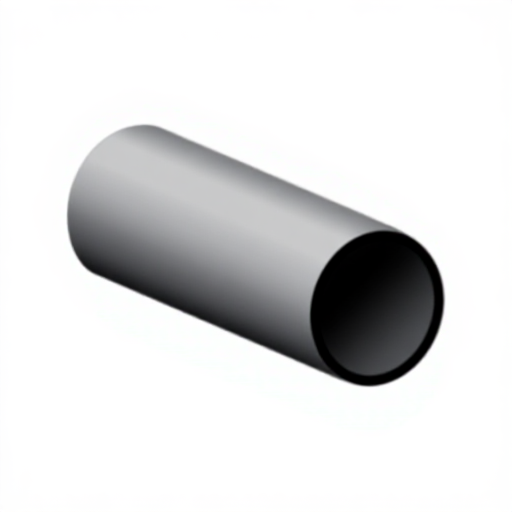 Ọ̀pá rírọ irin rírọ̀1 ẹyọÀkójọ bọ́ọ̀lù onígun mẹ́fà6 ẹyọ
 Nọ́ọ̀tì apá2 ẹyọ
Àwọn irinṣẹ́ tí a nílò:
Ìlàǹkàn irinAyùn IrinÌdìmú Tábìlì Ẹ̀rọ Ìlùkòkò OnídúróÀkójọ Orí Ìlùkòkò
 Ẹ̀rọ Ìwọ̀n Igun
 Abẹ́rẹ́ Ìkọ Ìlà
 Igi Àmì ÀárínÀkójọ Ìfá
8
8
Cut
Cut
With the table fully back, hold a board against the fence with one hand and push the handle with the other. The saw starts by itself before the blade reaches the board, cuts through, and stops as you bring the table back.
Àwọn irinṣẹ́ tí a nílò:
 Gíláàsì ààbò
 Ààbò etí (ìbòjú etí, SNR 30 dB)
9
9
Troubleshooting
Troubleshooting
Sliding table saw troubleshooting.
Flow
Loading...
10
10
History and honest limits
History and honest limits
**Mearl V. Tracy** of Sacramento, California, assignor of one-half to Marion M. Tracy, US 2,260,421, dated 28 October 1941, filed 18 April 1938. His one claim is the switch: a snap switch with a trigger moved one way or the other by "a resilient finger mounted on the table" that then passes and leaves the trigger, near but before each end of the stroke. He removed the hand saw's shoe and fixed its mounting block on an arcuately slotted bracket; modern saws differ, so we mount it by its base plate and use its own bevel adjustment. His box is sheet metal with the channels on bent beams; ours is plywood with steel channel sections. He gives no sizes; every size here is ours.
Àwọn ohun-èlò
15- 1 ẹyọÀyè
- 2 ẹyọÀyè
- Àyè
- 16 ẹyọÀyè
- 48 ẹyọÀyè
- 1 ẹyọÀyè
- 1 ẹyọÀyè
- 1 ẹyọÀyè
- 1 ẹyọÀyè
- 1 ẹyọÀyè
- Àyè
- 1 ẹyọÀyè
- 1 ẹyọÀyè
- 2 ẹyọÀyè
Àwọn irinṣẹ́ tó nílò
18- 1 vendor sell this, none ship to you yetÀyè
- 1 vendor sell this, none ship to you yetÀyè
- Àyè
- 1 vendor sell this, none ship to you yetÀyè
- Àyè
- Àyè
- Àyè
- Àyè
- Àyè
Ìtọ́nisọ́nà yìí ń ṣe
Blueprint tó jọra
Àwọn blueprint wọ̀nyí pín ìmọ̀ — ọ̀nà, ohun-èlò tàbí ìlànà
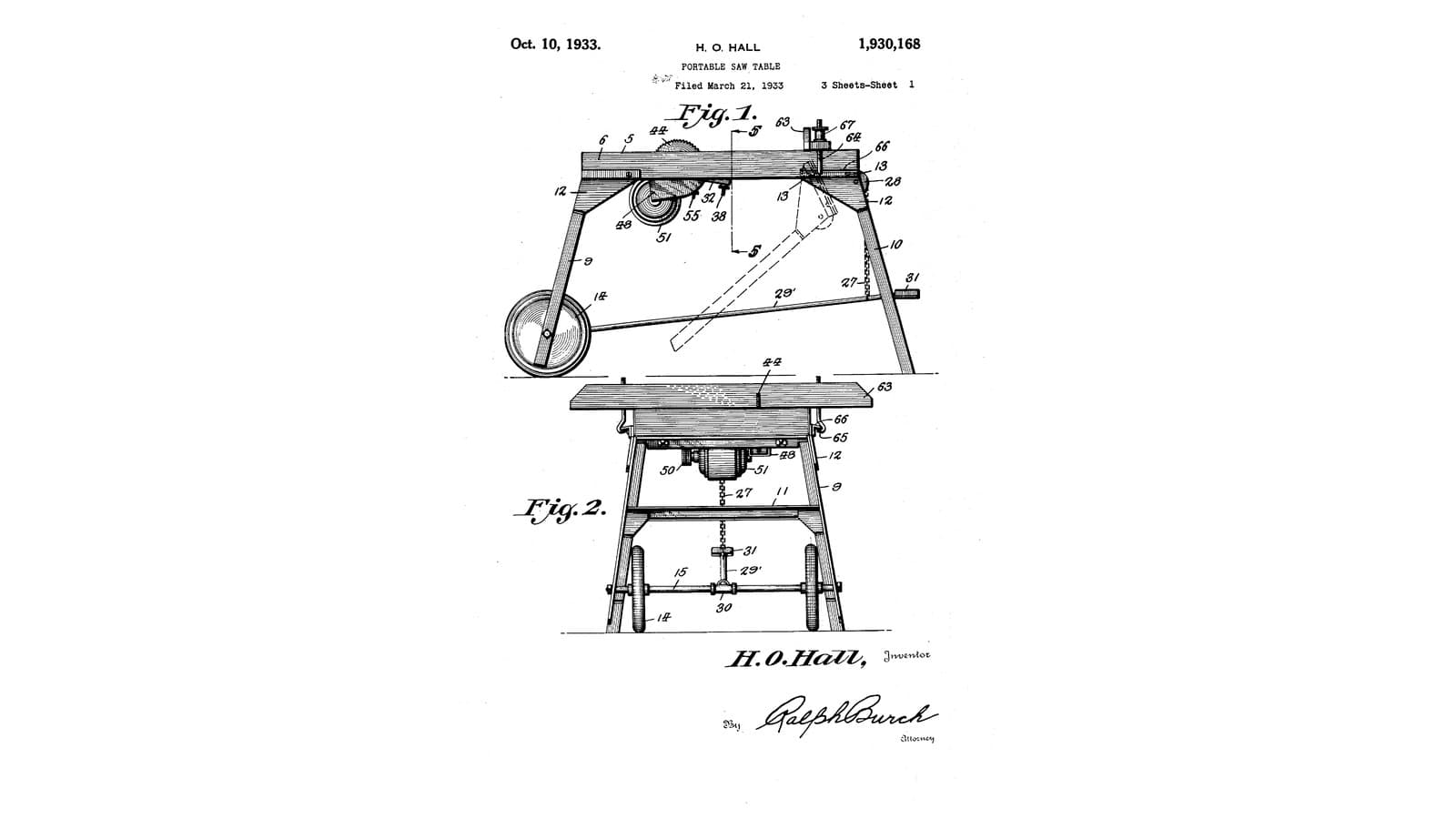
Foot-Fed Carriage Saw Table: The Saw Rides on Balls Under the Table, a Foot Lever Pulls It Through the Work (Hall, 1933)
láti ọwọ́ Forge
Iṣẹ́ Igi
10
0
0
0
0
0
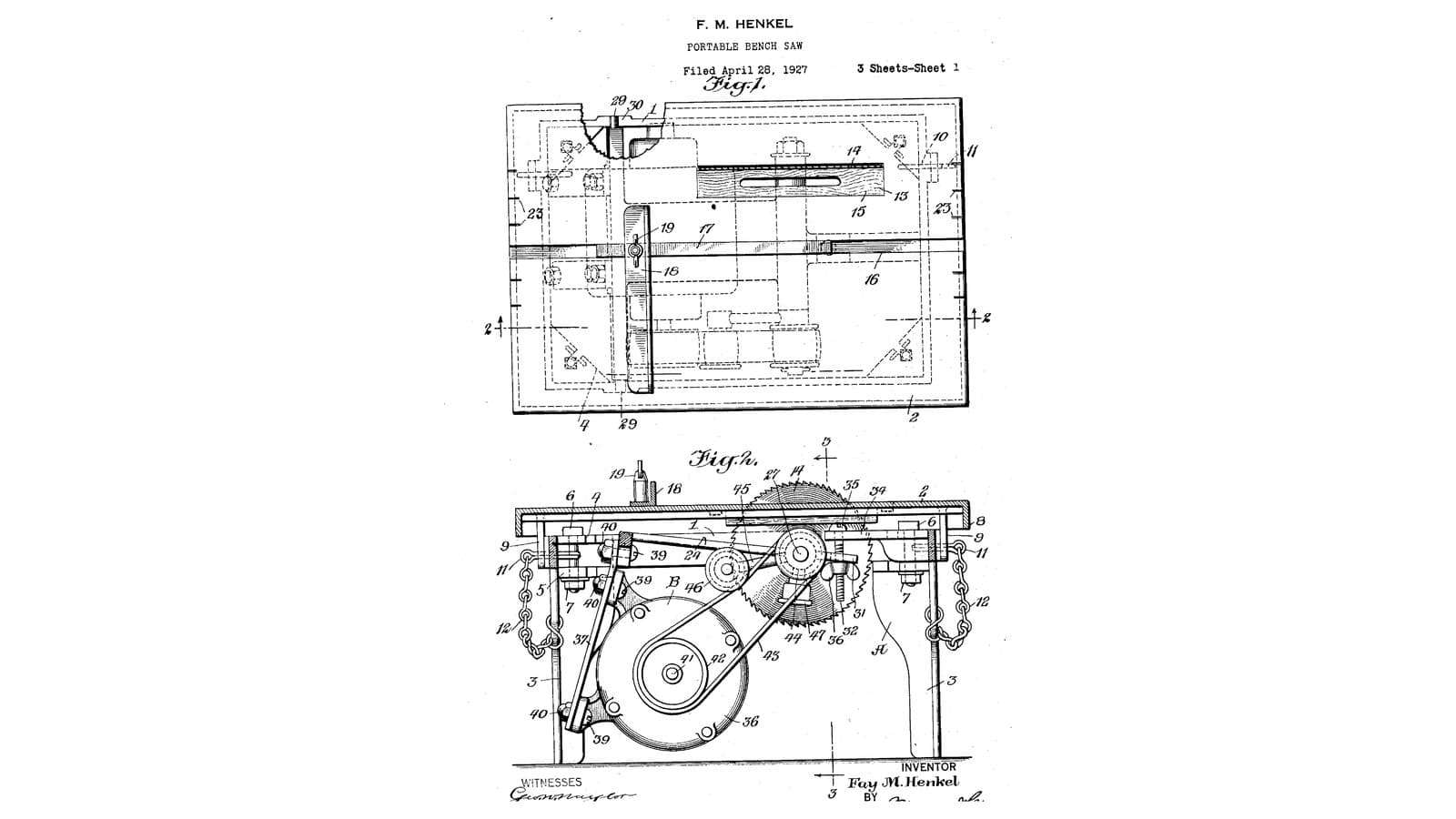
Portable Bench Saw: A Lift-Out Power Unit on Trunnions, Its Motor on Spring Bars, Under a Tilting Platform (Henkel, 1928)
láti ọwọ́ Forge
Iṣẹ́ Igi
16
0
0
0
0
0
CC0 Àgbègbè Gbogbogbò
Blueprint yìí ti jáde lábẹ́ CC0. O lè ṣe àdàkọ, yí padà, pín, àti lò láìsí ìyọ̀ǹda.
Ṣàtìlẹ́yìn Olùṣẹ́dá nípa rírà àwọn ọjà nipasẹ̀ Blueprint wọn Ẹ̀san Olùṣẹ́dá tí àwọn Olùtajà gbé kalẹ̀, tàbí ṣẹ̀dá àtúnṣe tuntun ti Blueprint yìí kí o sì fi sínú Blueprint rẹ gẹ́gẹ́ bí ìsopọ̀ láti pín owó-wíwọlé.