
IṢẸ́ ỌNÀ
ẸWÀ ÀTI ÌLERA
IṢẸ́ ỌWỌ́
ÀṢÀ ÀTI ÌTÀN
ÌṢERÉ
ÀYÍKÁ
OÚNJẸ ÀTI OHUN MÍMU
REVERSE ENGINEERING
SÁYẸ́ǸSÌ
ERÉ ÌDÁRAYÁ
ÌMỌ̀-Ẹ̀RỌ
ÀWỌN OHUN WÍWỌ̀
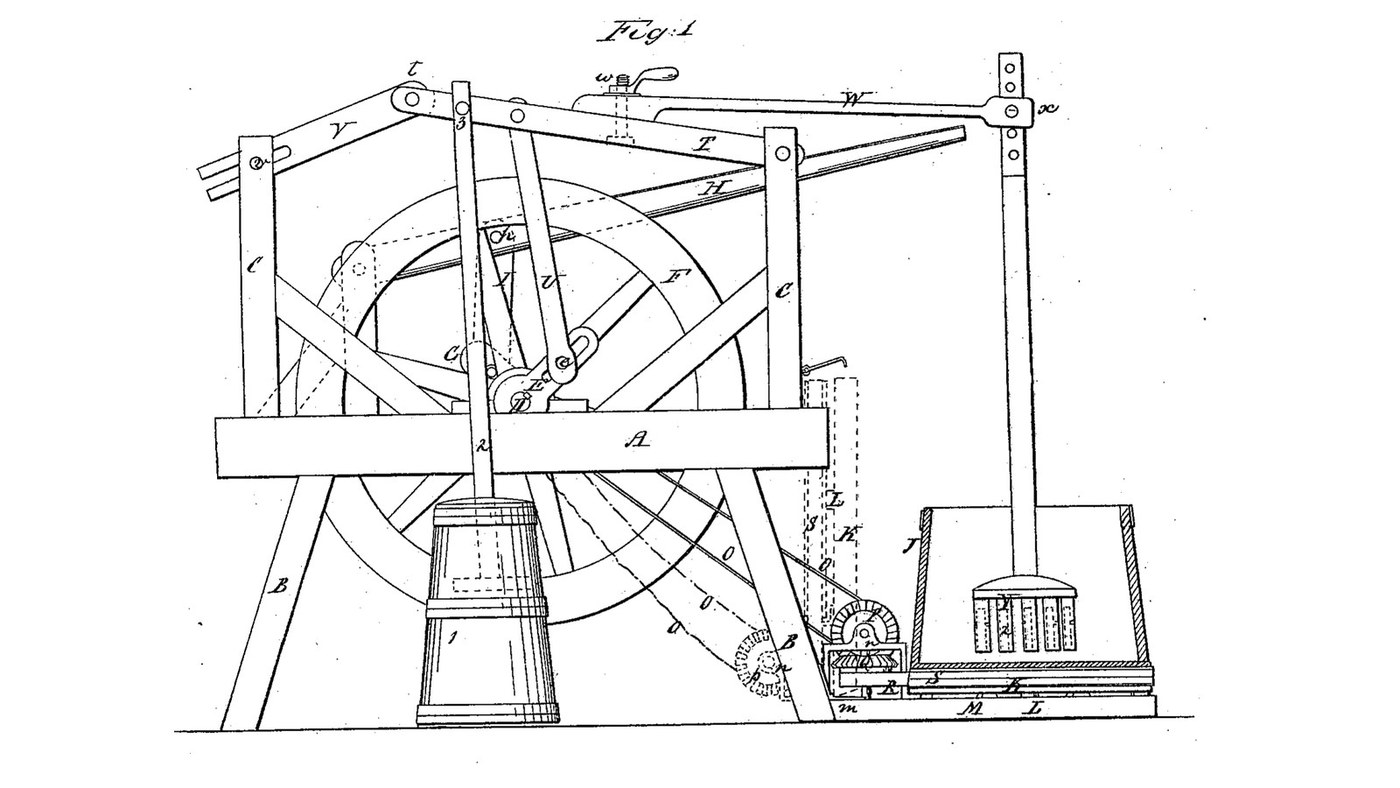
Washing Machine with Churn: One Crank Pounds the Wash, Turns the Tub and Works a Dash Churn (Wagoner & Severson, 1859)
YourGrandma

Ṣẹ́dá nipasẹ̀

YourGrandma

11. Oṣù Kọkànlá 2026IS
12
0
0
0
0

Washing Machine with Churn: One Crank Pounds the Wash, Turns the Tub and Works a Dash Churn (Wagoner & Severson, 1859)

John Wagoner and Abram Severson Jr. of Guilderland Center, New York, received US 25,152, dated 16 August 1859, for a washing machine. A crank shaft with a heavy balance wheel rocks a long lever. A springy beam on the lever carries a pounder into the tub, and a belt and a pair of bevel wheels turn the tub slowly under it. The tub stands on a hinged platform: folded up it slackens the belt, and let down the tub's weight tightens it. A pin on the lever also works the dash of a churn standing beside the machine, with or without the washing. The patent gives no sizes; every size here is ours.
Ilọsíwájú
About 5 days, plus printing

Ìlànà

1

Crank pin, strokes and tub speed

Ń ṣí ìwé Jupyter…
2

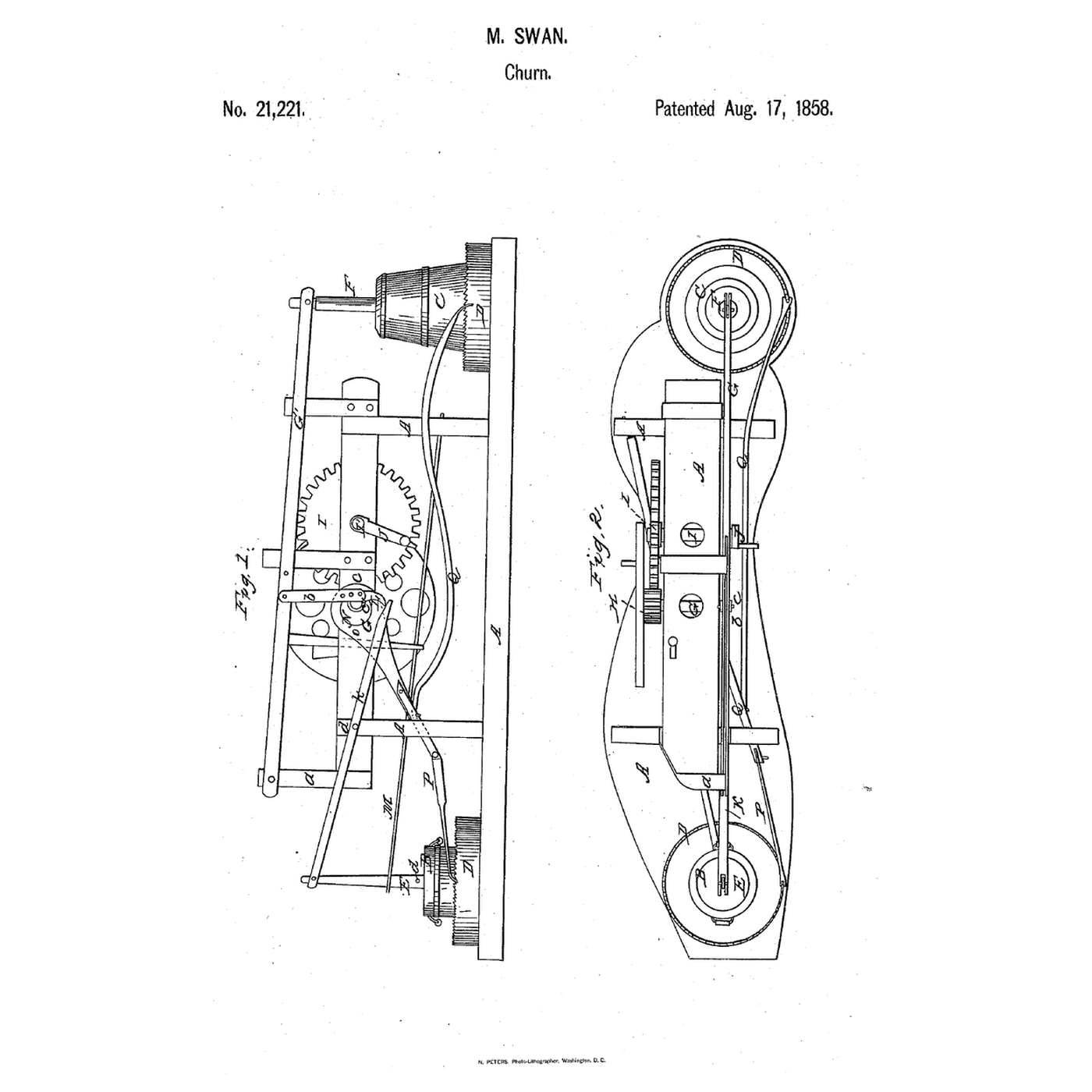
One crank working a churn and a washtub, a year before

Swan's machine lifted a plunger by a cam. Here a springy beam carries the pounder, and the tub's own weight tightens the belt that turns it.
3

Read US 25,152

"In addition to what has now been described our machine is adapted to operate a churn very effectively either alone or simultaneously with the washing operation." "We place the center of our tube J out of the plane of the motion of the levers T and V. Our pounder therefore inclines to strike on one side of J and not in the center thereby increasing the uniformity of the effect on the contents."
4

Print the pulley for shaft D

Flat-faced pulley 120 mm across and 40 mm wide, bored 31 mm for shaft D. PETG, 0.2 mm layers, 40 % infill, 4 walls.
Fáìlì ÀpẹrẹSTLCC0 - Free
5

Print pulley R

Flat-faced pulley 100 mm across and 40 mm wide, bored 21 mm for the lower bevel wheel's shaft. PETG, 0.2 mm layers, 40 % infill, 4 walls.
Fáìlì ÀpẹrẹSTLCC0 - Free
6

Frame A, legs B and uprights C

From 70 x 70 mm timber cut three stringers 1500 mm, two cross pieces 630 mm, four legs 700 mm, an upright 830 mm and an upright 720 mm. Bolt the cross pieces across the tops of the legs and the stringers on the cross pieces, 210 mm apart, so the frame's top is 840 mm from the floor. Bolt the long upright to the outside of the front stringer 100 mm from the left end and the short one 100 mm from the right end. Chisel an opening 50 x 260 mm through the left upright, from 440 to 700 mm above the stringer, and bore it across 560 mm up for pin v (a 16 mm bolt).

Àwọn ohun èlò fún ìgbésẹ̀ yìí:

Igi rírọ̀ 70x70 mmIgi rírọ̀ 70x70 mm11 m
Bọ́ọ̀tù orí róbótóBọ́ọ̀tù orí róbótó16 ẹyọ
Wáṣà PẹrẹsẹWáṣà Pẹrẹsẹ16 ẹyọ
Ẹ̀kù Ìdìmú Onínáílọ́ọ̀nùẸ̀kù Ìdìmú Onínáílọ́ọ̀nù16 ẹyọ

Àwọn irinṣẹ́ tí a nílò:

Ayùn Ọwọ́Ayùn Ọwọ́
Ẹ̀rọ Ìlùkòkò AláìlókùnẸ̀rọ Ìlùkòkò Aláìlókùn
Àkójọ Orí ÌlùkòkòÀkójọ Orí Ìlùkòkò
Àkójọ orí kànnàkànnàÀkójọ orí kànnàkànnà
Ìṣó ihò ìdìÌṣó ihò ìdì
Òòlù IgiÒòlù Igi
Igun-òsùwọ̀n tí ó dúróIgun-òsùwọ̀n tí ó dúró
Okùn Ìdíwọ̀nOkùn Ìdíwọ̀n
Kọ́kọ́rọ́ tí a lè ṣàtúnṣeKọ́kọ́rọ́ tí a lè ṣàtúnṣe
Ìdìmú oní-ọ̀páÌdìmú oní-ọ̀pá
7

Shaft D, balance wheel F and crank E

Bolt three bearing blocks on the stringers' tops 650 mm from the left end and pass a 30 mm steel shaft D through them, 710 mm long. Build the balance wheel from three layers of 20 mm hardwood segments glued crossways: 840 mm across, a 100 mm rim and four spokes, 50 mm thick in all. Fit it on D between the front and middle stringers, the printed pulley between the middle and back stringers, and a hand crank 240 mm long on the back end. On the front end fit crank E, a hardwood arm 20 mm thick with a slot from 50 to 125 mm out, and a 20 mm bolt in the slot for the crank pin e.

Àwọn ohun èlò fún ìgbésẹ̀ yìí:

Ọ̀pá irin tí kò ń yáỌ̀pá irin tí kò ń yá1 ẹyọ
Ìdìmú bííyárìnÌdìmú bííyárìn3 ẹyọ
Pátákó Igi LílePátákó Igi Líle3 ẹyọ
Ìdìpọ̀ IgiÌdìpọ̀ Igi1 ẹyọ
Àkójọ bọ́ọ̀lù onígun mẹ́fàÀkójọ bọ́ọ̀lù onígun mẹ́fà13 ẹyọ
Ẹ̀kù Ìdìmú Onínáílọ́ọ̀nùẸ̀kù Ìdìmú Onínáílọ́ọ̀nù13 ẹyọ
Shaft CollarShaft Collar2 ẹyọ

Àwọn irinṣẹ́ tí a nílò:

Ayùn JígísòAyùn Jígísò
Kọ́mpasiKọ́mpasi
Ayùn tábìlìAyùn tábìlì
Ẹ̀rọ Ìlùkòkò AláìlókùnẸ̀rọ Ìlùkòkò Aláìlókùn
Àkójọ orí kànnàkànnàÀkójọ orí kànnàkànnà
Ẹ̀rọ ìgbẹ́ igiẸ̀rọ ìgbẹ́ igi
Ìdìmú oní-ọ̀páÌdìmú oní-ọ̀pá
Ayùn IrinAyùn Irin
Kọ́kọ́rọ́ tí a lè ṣàtúnṣeKọ́kọ́rọ́ tí a lè ṣàtúnṣe
8

Lever T, link U and rod V

Cut lever T from hardwood 40 x 70 mm, 1195 mm long. Bolt it to the front of the right upright, 610 mm above the stringer, free to rock. Join it to the crank pin by link U, hardwood 20 x 40 mm with its pin holes 560 mm apart, 715 mm from T's pivot. At T's left end join rod V, hardwood 30 x 40 mm, slotted 22 mm wide for 220 mm, and pass it through the left upright's opening astride pin v. Fix a steel pin 3, 24 mm and 370 mm long, through T 1015 mm from its pivot, sticking out at the front for the churn.

Àwọn ohun èlò fún ìgbésẹ̀ yìí:

Pátákó Igi LílePátákó Igi Líle2 ẹyọ
Àkójọ bọ́ọ̀lù onígun mẹ́fàÀkójọ bọ́ọ̀lù onígun mẹ́fà4 ẹyọ
Wáṣà PẹrẹsẹWáṣà Pẹrẹsẹ8 ẹyọ
Ẹ̀kù Ìdìmú Onínáílọ́ọ̀nùẸ̀kù Ìdìmú Onínáílọ́ọ̀nù4 ẹyọ
Ọ̀pá irin tí kò ń yáỌ̀pá irin tí kò ń yá1 ẹyọ

Àwọn irinṣẹ́ tí a nílò:

Ayùn tábìlìAyùn tábìlì
Ẹ̀rọ ìgbẹ́ igiẸ̀rọ ìgbẹ́ igi
Ẹ̀rọ Ìlùkòkò AláìlókùnẸ̀rọ Ìlùkòkò Aláìlókùn
Àkójọ Orí ÌlùkòkòÀkójọ Orí Ìlùkòkò
Àkójọ orí kànnàkànnàÀkójọ orí kànnàkànnà
Ayùn IrinAyùn Irin
Bébà ÌfáBébà Ìfá
Kọ́kọ́rọ́ tí a lè ṣàtúnṣeKọ́kọ́rọ́ tí a lè ṣàtúnṣe
Okùn Ìdíwọ̀nOkùn Ìdíwọ̀n
9

Spring beam W and the pounder

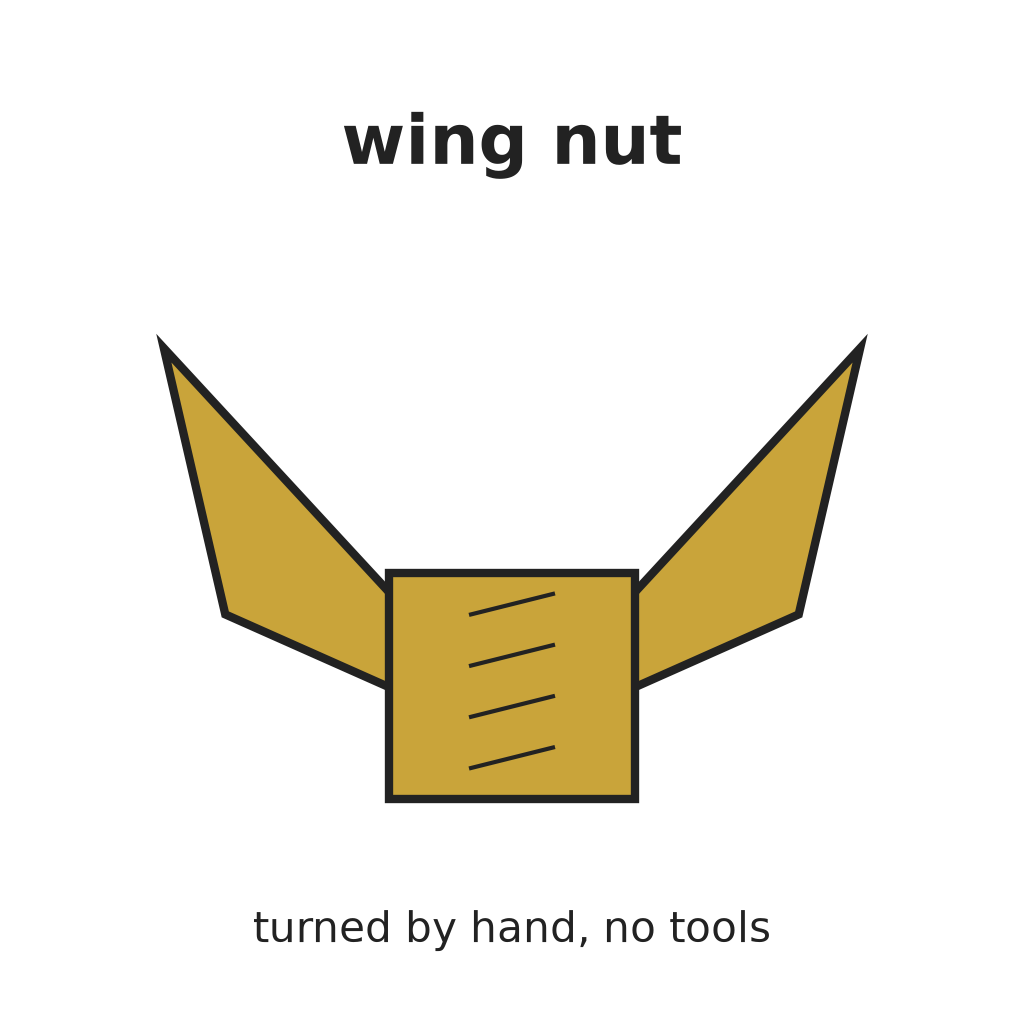
Cut the spring beam W from ash 30 x 40 mm, 1210 mm long. Lay it on T's top, its left end against a block glued on T, bolt it through T 415 mm left of the pivot with a wing nut (the hand nut w), and let it run past the upright to overhang the frame by 510 mm. Make rod X from hardwood 40 x 40 mm, 1090 mm long, with four holes at its top for height. Under it glue a hardwood head 200 x 120 mm with five legs 30 x 36 mm, 160 mm long, each slotted (Z) and bored across (z). Hang X from W's end on a bolt so it swings freely, in front of W.

Àwọn ohun èlò fún ìgbésẹ̀ yìí:

Pátákó igi ashPátákó igi ash1 ẹyọ
Pátákó Igi LílePátákó Igi Líle1 ẹyọ
Ìdìpọ̀ IgiÌdìpọ̀ Igi1 ẹyọ
Àkójọ bọ́ọ̀lù onígun mẹ́fàÀkójọ bọ́ọ̀lù onígun mẹ́fà2 ẹyọ
Nọ́ọ̀tì apáNọ́ọ̀tì apá1 ẹyọ
Wáṣà PẹrẹsẹWáṣà Pẹrẹsẹ4 ẹyọ

Àwọn irinṣẹ́ tí a nílò:

Ayùn tábìlìAyùn tábìlì
Ẹ̀rọ ìgbẹ́ igiẸ̀rọ ìgbẹ́ igi
Ẹ̀rọ Ìlùkòkò AláìlókùnẸ̀rọ Ìlùkòkò Aláìlókùn
Àkójọ Orí ÌlùkòkòÀkójọ Orí Ìlùkòkò
Ìṣó ihò ìdìÌṣó ihò ìdì
Òòlù IgiÒòlù Igi
Bébà ÌfáBébà Ìfá
Ìdìmú oní-ọ̀páÌdìmú oní-ọ̀pá
10

Hinged platform M, bevel wheels and platform K

Make platform M from 40 mm hardwood, 860 x 860 mm, and hang it on two strap hinges (the butts m) at the feet of the right-hand legs. On M, 100 mm from the hinges, fit a 20 mm vertical shaft in a flange bearing with pulley R and the lower bevel wheel on it. In a hardwood post fit a 20 mm cross shaft with the upper bevel wheel and a 240 mm hardwood pulley P in line with the pulley on D. 480 mm from the hinges, 340 mm towards the front, set a 24 mm shaft L in a hardwood block that slides in a slot along M, with a compression spring pushing it away from R. Glue platform K, 660 mm across and 40 mm thick, bore it for L, and set four 40 mm hardwood wheels l under its edge.

Àwọn ohun èlò fún ìgbésẹ̀ yìí:

Pátákó Igi LílePátákó Igi Líle4 ẹyọ
Ìdìpọ̀ IgiÌdìpọ̀ Igi1 ẹyọ
Ìdìmú pẹpẹ irinÌdìmú pẹpẹ irin2 ẹyọ
Bẹ́ríìngì onífíláǹjìBẹ́ríìngì onífíláǹjì3 ẹyọ
Ìdì gear bevel (irin, 1:1)Ìdì gear bevel (irin, 1:1)1 ẹyọ
Ọ̀pá irin tí kò ń yáỌ̀pá irin tí kò ń yá1 ẹyọ
Shaft CollarShaft Collar3 ẹyọ
Àkójọpọ̀ orísun ìtẹ̀mọ́lẹ̀Àkójọpọ̀ orísun ìtẹ̀mọ́lẹ̀1 ẹyọ
Àwọn dowel igi líleÀwọn dowel igi líle1 ẹyọ
Ìṣó igiÌṣó igi40 ẹyọ
Àkójọ bọ́ọ̀lù onígun mẹ́fàÀkójọ bọ́ọ̀lù onígun mẹ́fà4 ẹyọ
Ẹ̀kù Ìdìmú Onínáílọ́ọ̀nùẸ̀kù Ìdìmú Onínáílọ́ọ̀nù4 ẹyọ
Okùn PETGOkùn PETG1 ẹyọ

Àwọn irinṣẹ́ tí a nílò:

Ẹ̀rọ ìtẹ̀ 3D oníwàyà (FDM)Ẹ̀rọ ìtẹ̀ 3D oníwàyà (FDM)
Ayùn JígísòAyùn Jígísò
Kọ́mpasiKọ́mpasi
Ẹ̀rọ ìgbẹ́ igiẸ̀rọ ìgbẹ́ igi
Ẹ̀rọ Ìlùkòkò AláìlókùnẸ̀rọ Ìlùkòkò Aláìlókùn
Àkójọ Orí ÌlùkòkòÀkójọ Orí Ìlùkòkò
Àkójọ orí kànnàkànnàÀkójọ orí kànnàkànnà
Ayùn IrinAyùn Irin
Ìdìmú oní-ọ̀páÌdìmú oní-ọ̀pá
Kọ́kọ́rọ́ tí a lè ṣàtúnṣeKọ́kọ́rọ́ tí a lè ṣàtúnṣe
11

Belts O and S, and the fold

Put belt S round pulley R and platform K's rim. Fold M up against the frame, run a string round the pulley on D and pulley P, and choose belt O just short enough that, with M let down and empty, it holds M at a slight angle; "The belt O is sufficiently short to hold the platform M at a slight angle until the weight of J is added thereto." Set the wooden tub J on K: its weight should pull M flat and the belt tight. Oil the wood.

Àwọn ohun èlò fún ìgbésẹ̀ yìí:

Bẹ́líìtì ìwakọ̀Bẹ́líìtì ìwakọ̀2 ẹyọ
Àwokòtò igiÀwokòtò igi1 ẹyọ
Òróró Ọ̀gbọ̀ Tí A SèÒróró Ọ̀gbọ̀ Tí A Sè1 ẹyọ

Àwọn irinṣẹ́ tí a nílò:

Okùn Ìdíwọ̀nOkùn Ìdíwọ̀n
12

The build in 3D

FreeCAD model of this build: the frame, shaft D with the balance wheel and crank E, lever T with link U and rod V, the spring beam W and the pounder in the tub (front of the tub cut away), the hinged platform M with the bevel wheels, pulleys and belts, and the churn on pin 3. The crank was turned through 18 positions.
Fáìlì ÀpẹrẹBLENDCC0 - Free
13

Wash

Put warm water, soap and the clothes in the tub, and set the pounder's height so its feet clear the tub's bottom by the clothes. Turn the hand crank steadily. The pounder rises and falls on one side of the tub while the tub turns under it, so every part of the wash comes under it in turn. Move the crank pin out in its slot for a longer stroke, in for a shorter one. Lift the clothes out to rinse and wring.

Àwọn irinṣẹ́ tí a nílò:

OmiOmi
Ọṣẹ pẹlẹbẹỌṣẹ pẹlẹbẹ
14

Churn on pin 3

Make the dash 2: a hardwood rod 35 mm across, 1250 mm long, bored at the top to hang on pin 3, with two crossed blades 220 x 30 x 20 mm at the bottom. Stand the churn under pin 3, beside the machine, pour in about 10 litres of cream at about 15 °C (checked with the thermometer), a third of its height, pass the dash through the lid and hang it on pin 3. Turn the crank, with or without the wash, timing it. When the butter comes, lift the dash off the pin, drain the buttermilk, wash the butter in cold water, salt and weigh it.

Àwọn ohun èlò fún ìgbésẹ̀ yìí:

Ọ̀rá wàrà tó nípọnỌ̀rá wàrà tó nípọn10 l
Iyọ̀ Òkun RúkèrúdòIyọ̀ Òkun Rúkèrúdò1 ẹyọ
Pátákó Igi LílePátákó Igi Líle1 ẹyọ
Àwọn dowel igi líleÀwọn dowel igi líle1 ẹyọ

Àwọn irinṣẹ́ tí a nílò:
Ìkòkò ìgbọn bọ́tàÌkòkò ìgbọn bọ́tà
Ẹ̀rọ ìwọ̀n ooru oníhun tí ó dúró sí inúẸ̀rọ ìwọ̀n ooru oníhun tí ó dúró sí inú
Aago ÌdúróAago Ìdúró
Òṣùwọ̀n Díjítà Ilé ÌdánáÒṣùwọ̀n Díjítà Ilé Ìdáná
Àwo ìdàpọ̀ ńlá ti irin tí kò ń yáÀwo ìdàpọ̀ ńlá ti irin tí kò ń yá
OmiOmi
Ẹ̀rọ Ìlùkòkò AláìlókùnẸ̀rọ Ìlùkòkò Aláìlókùn
Àkójọ orí kànnàkànnàÀkójọ orí kànnàkànnà
Ayùn Ọwọ́Ayùn Ọwọ́
15

Troubleshooting

Washing machine troubleshooting.

Flow

Loading...
16

History and honest limits

**John Wagoner and Abram Severson, Jr.** of Guilderland Center, New York, US 25,152, 16 August 1859, "Washing-Machine". They claimed mounting the platform K and the pulleys and gearing P Q R on the hinged platform M, so turning M up slackens belt O and turning it down lets the tub's weight tighten it. The patent gives no sizes; every size here is ours. Their hand lever H and rod I, a second way to turn D, are not built: we turn D by a crank, which the patent allows. The spring that urges K's centre against belt S is "not represented" in their drawing; ours is a compression spring in a slot.

Àwọn ohun-èlò

24

Àwọn irinṣẹ́ tó nílò

24

Àwọn fáìlì àpẹrẹ

3

CC0 Àgbègbè Gbogbogbò

Blueprint yìí ti jáde lábẹ́ CC0. O lè ṣe àdàkọ, yí padà, pín, àti lò láìsí ìyọ̀ǹda.

Ṣàtìlẹ́yìn Olùṣẹ́dá nípa rírà àwọn ọjà nipasẹ̀ Blueprint wọn Ẹ̀san Olùṣẹ́dá tí àwọn Olùtajà gbé kalẹ̀, tàbí ṣẹ̀dá àtúnṣe tuntun ti Blueprint yìí kí o sì fi sínú Blueprint rẹ gẹ́gẹ́ bí ìsopọ̀ láti pín owó-wíwọlé.

Ìfọ̀rọ̀wérọ̀

(0)

Wọlé láti dara pọ̀ mọ́ ìfọ̀rọ̀wérọ̀

Ń gbé àwọn ọ̀rọ̀ wọlé...