
Pakikipagtulungan
SINING
BEAUTY AT WELLNESS
CRAFTS
KULTURA AT KASAYSAYAN
LIBANGAN
KAPALIGIRAN
PAGKAIN AT INUMIN
REVERSE ENGINEERING
AGHAM
ISPORTS
TEKNOLOHIYA
MGA WEARABLE
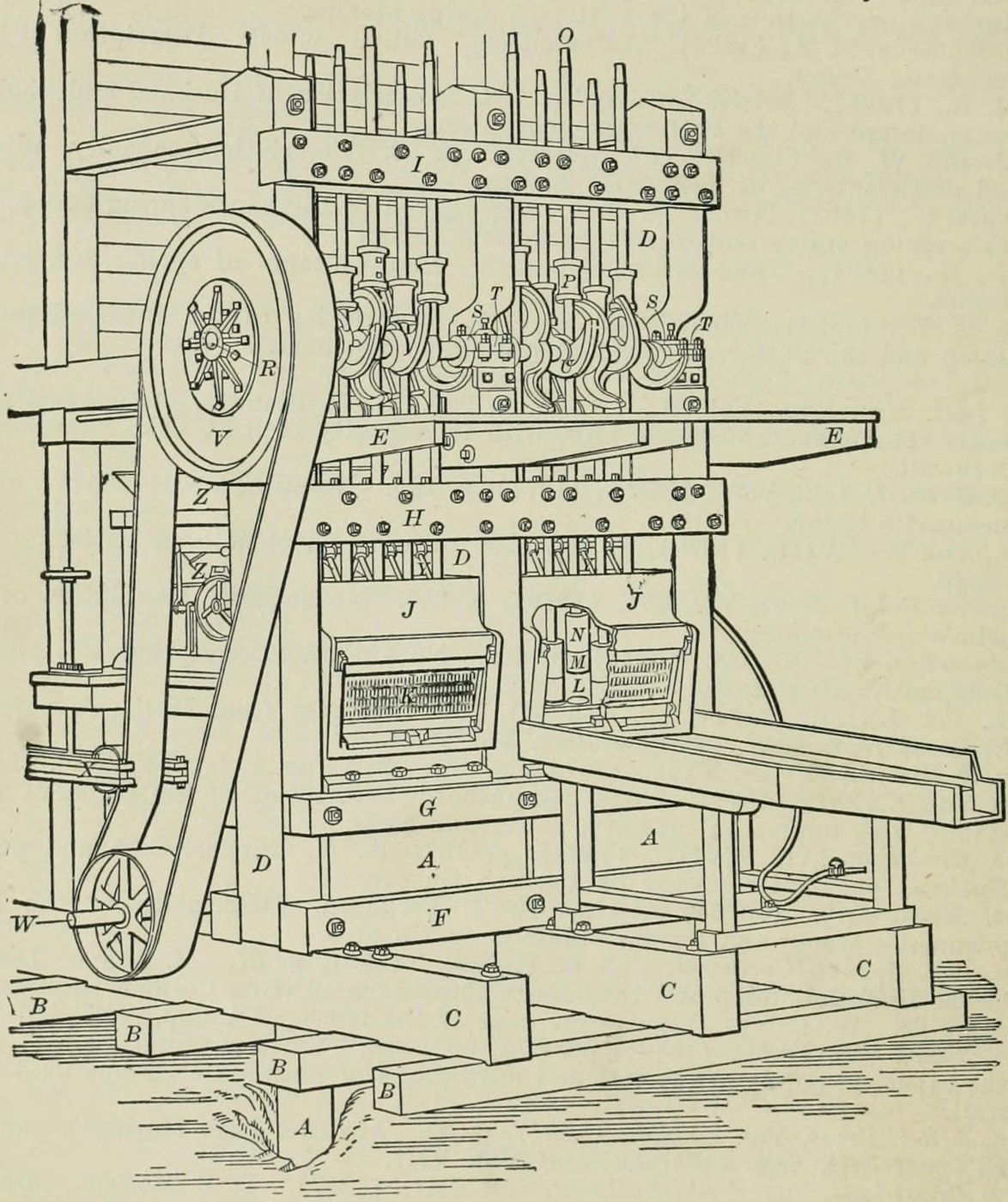
Stamp Mill: California Five-Stamp Battery (Richards, Ore Dressing 1903)
Forge

Nilikha ni

Forge

3. Nobyembre 2026NO
7
0
0
0
0

Stamp Mill: California Five-Stamp Battery (Richards, Ore Dressing 1903)

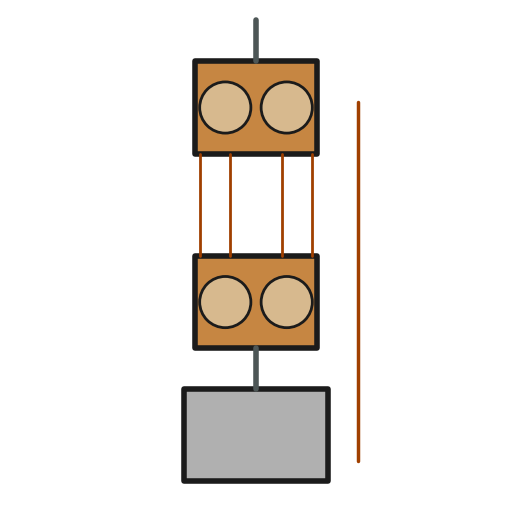
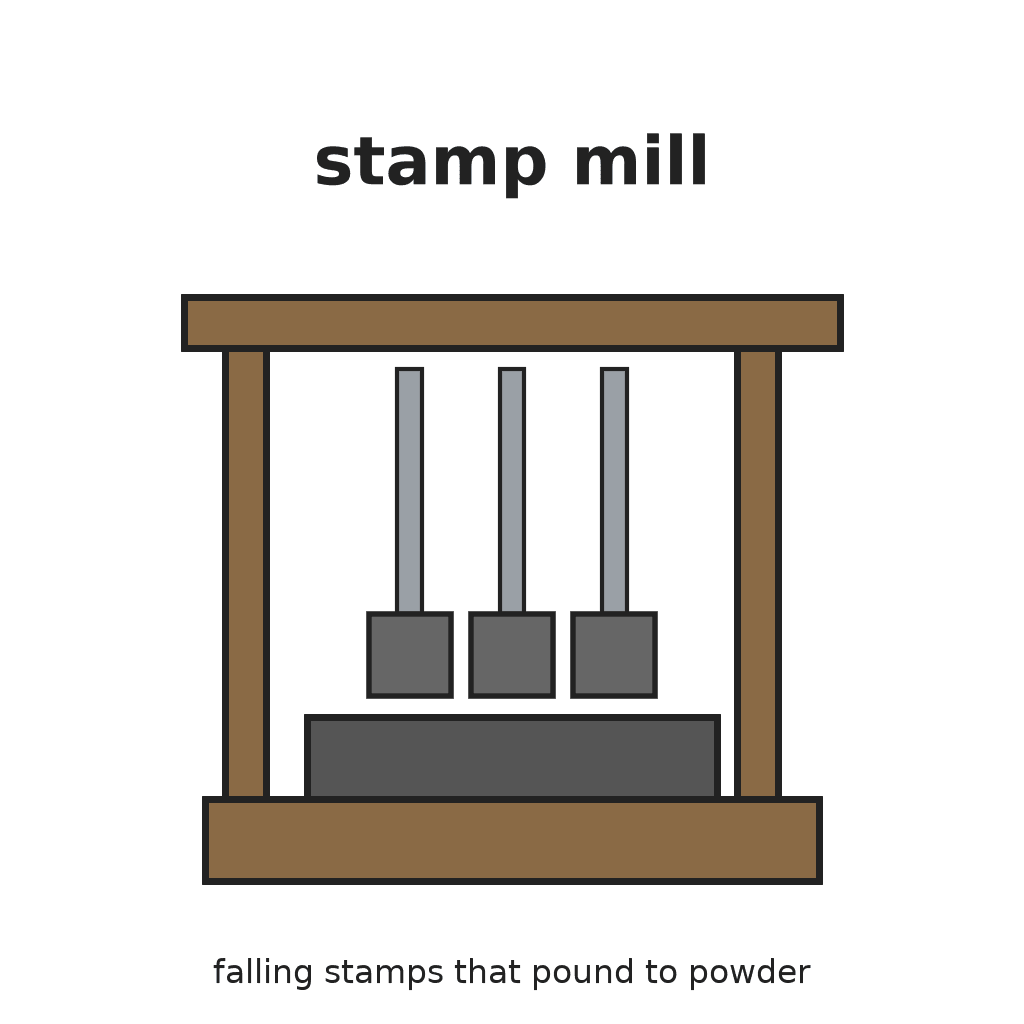
The gravity stamp mill: five heavy iron stamps stand in a cast-iron mortar on a timber block. Cams on a turning shaft lift each stamp by its tappet and let it fall by its own weight onto the ore on a die. Water washes the crushed ore out through a screen. Result: a stamp battery that pounds ore to sand, at 80 to 110 drops a minute. Source: R. H. Richards, Ore Dressing, vol. I (1903), Chapter V, Gravity Stamps. Unknown: one complete set of sizes; Richards gives the range found in the mills. Picture: Fig. 90 of the book.
Abantado
Unknown

Mga Tagubilin

1

Dig and level the foundation

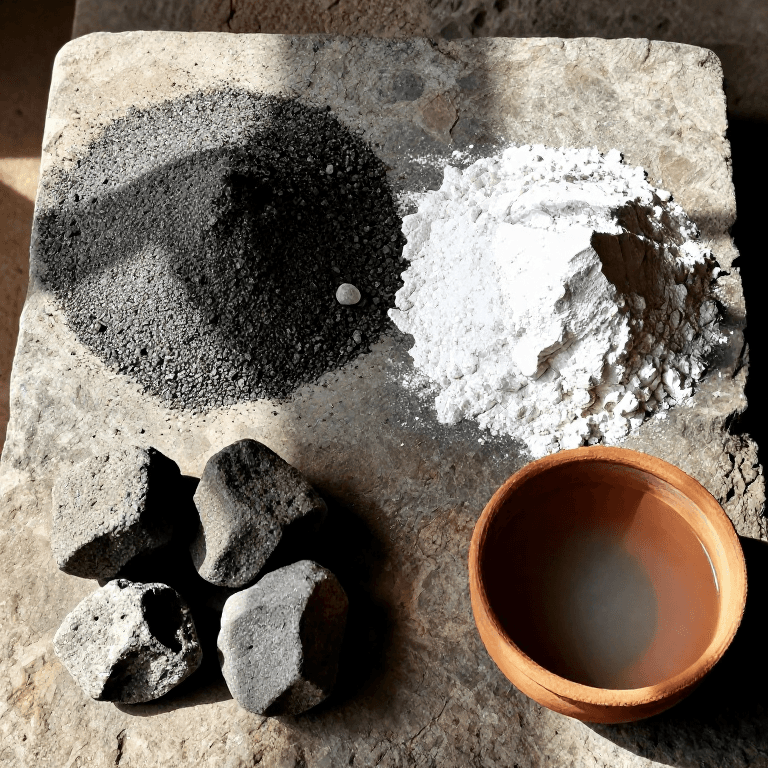
Dig a trench in gravel, or blast one in rock, about 2 feet longer than the mortar block at each end and about 2 feet wider at each side. Level the bottom with tamped concrete, sand or clay. Concrete should be at least 30 inches thick, or it may crumble. Two layers of 2-inch plank spiked together may go on top.

Mga materyales para sa hakbang na ito:
KongkretoKongkreto1 levelling layer
Tablang kahoyTablang kahoy1 two layers of 2-inch plank

Mga kailangang kasangkapan:

PalaPala
MartilyoMartilyo
2

Stand the mortar block

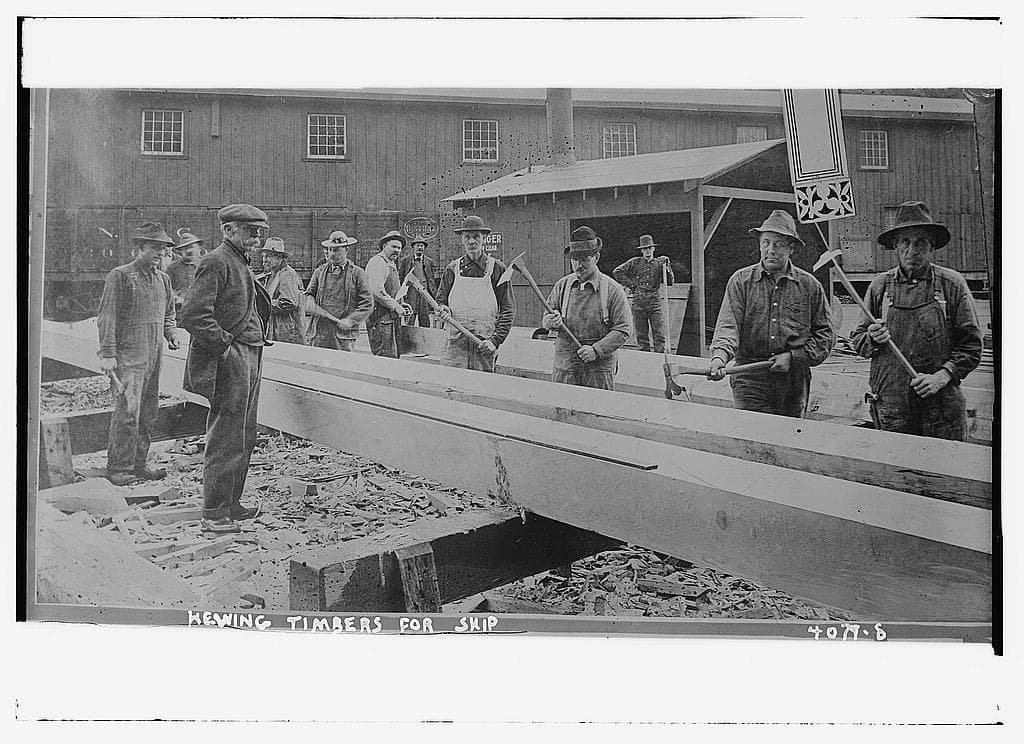
Stand timbers or planks on end in the trench as the mortar block, sized for one five-stamp mortar. The mills used everything from 30 x 30 inch squared timbers to 2 x 12 inch planks bolted together. Set vertical bolts 3 to 4 feet long into the block to hold the mortar down. Not given: the bolts' metal.

Mga materyales para sa hakbang na ito:

Kahoy na parisukat ang gilidKahoy na parisukat ang gilid1 mortar block
Hindi alam na metalHindi alam na metal1 hold-down bolts

Mga kailangang kasangkapan:
Set ng liyabeSet ng liyabe
Hindi alam na sukatHindi alam na sukat
3

Build the frame

On mud sills and cross sills, stand the posts (end posts 12 x 24 inches in most mills) with buckstaves, a platform, and lower and upper guide timbers. The guides keep the stamp stems vertical. Fit finger bars on a jack shaft between the posts, so each stamp can be propped up under its tappet. The frame carries the cam shaft and the drive.

Mga materyales para sa hakbang na ito:
Kahoy na parisukat ang gilidKahoy na parisukat ang gilid1 sills, posts, guide timbers, platform
Hindi alam na metalHindi alam na metal1 bolts and jack shaft

Mga kailangang kasangkapan:

Set ng liyabeSet ng liyabe
Hindi alam na sukatHindi alam na sukat
4

Set the mortar, dies and screen

Bed the cast-iron mortar on tarred blankets or sheet rubber on the mortar block, for an even bearing, and bolt it down. Put the dies in its bottom: cylinders on square foot plates that fill the floor of the mortar. Mount a screen of punched Russia sheet iron in a wooden frame over the opening in front.

Mga materyales para sa hakbang na ito:

Mga hulmang bakalMga hulmang bakal1 mortar and five dies

Manipis na likas na gomaManipis na likas na goma1 packing
Russia iron sheetRussia iron sheet1 screen

Mga kailangang kasangkapan:

Set ng liyabeSet ng liyabe
5

Make the five stamps

Each stamp has four parts. The shoe is chilled cast iron, its butt cast in heavy chills and its shank in sand. The boss is tough cast iron, the shoe's diameter and often 18 inches long, with sockets for the shoe shank and the stem and two keyways for knock-out wedges. The stem is solid wrought iron or mild steel, turned true and tapered at both ends so it can be reversed. The tappet is cast iron, with a flange above and below, locked on the stem by a gib and keys. Put the extra weight in the boss. Louis designs for 11 to 14 pounds of stamp per square inch of die; the mills used stamps of 650 to 1,100 pounds.

Mga materyales para sa hakbang na ito:

Mga hulmang bakalMga hulmang bakal1 shoes, bosses, tappets
Baras na pandayang bakalBaras na pandayang bakal1 stems, gibs, keys

Mga kailangang kasangkapan:

Torno para sa MetalTorno para sa Metal
Hindi alam na sukatHindi alam na sukat
6

Fit the cam shaft and drive

Turn a wrought-iron or steel cam shaft true, with a key seat, and key on five cams. Each cam usually has two arms with spiral lifting faces, cast iron with chilled faces or cast steel. Drive the shaft by a rubber belt from the main shaft, over a pulley of wood built on a cast-iron hub and flanges, with a tightener. Not given: the engine or wheel that turns the main shaft.

Mga materyales para sa hakbang na ito:
Baras na pandayang bakalBaras na pandayang bakal1 cam shaft
Mga hulmang bakalMga hulmang bakal1 cams, pulley hub and flanges
Tablang kahoyTablang kahoy1 pulley rim
Sinturong pampaandarSinturong pampaandar1 rubber belt

Mga kailangang kasangkapan:

Torno para sa MetalTorno para sa Metal
Set ng liyabeSet ng liyabe
7

Add the water and the feed

Run one or two 1-inch water pipes into the back of the mortar, each with a plug cock that stays where it is set. Feed ore from the bin by a chute to an automatic feeder. One stamp trips the feeder when the ore layer on its die gets too thin, and a hand screw adjusts the point where it trips. Ore can also be fed by hand with a shovel.

Mga materyales para sa hakbang na ito:

Tubo ng TubigTubo ng Tubig1 water pipes
Hindi kilalang balbulaHindi kilalang balbula1 plug cocks
Hindi alam na metalHindi alam na metal1 feeder and chute

Mga kailangang kasangkapan:

Set ng liyabeSet ng liyabe
PalaPala
8

Set up each stamp

Lay a 3-inch plank on the dies and set the bosses on it. Lower the stems into them and tap each stem down with a hammer, a board guarding its top, then drop it a few times at a very low drop. Hoist the stamp, put the shoe in place with wooden staves around its shank, and drop it on the plank to drive the shoe home; the staves swell when wet and hold it. Swap the plank for a block as high as the drop. Slip the tappet on, turn the cam until the tappet rests on its point, drive the keys home and drop the stamp gently a few times.

Mga materyales para sa hakbang na ito:
Mga kalang kahoyMga kalang kahoy1 staves

Mga kailangang kasangkapan:

Tablang kahoyTablang kahoy
MartilyoMartilyo
Kalo at lubid na pambuhatKalo at lubid na pambuhat
9

Run the battery

Drop the stamps in order 1, 3, 5, 2, 4 (numbered from the left, standing behind the battery), so no two neighbours fall one after the other. The California practice is 80 to 110 drops a minute with a 5 to 9 inch drop. The cams turn the stamps as they lift, which evens out wear on shoes and dies. Lubricate the cams; soft soap with graphite is best. As shoes and dies wear, reset the tappets to restore the drop, and keep the height of discharge, from die to screen, the same.

Mga kailangang kasangkapan:

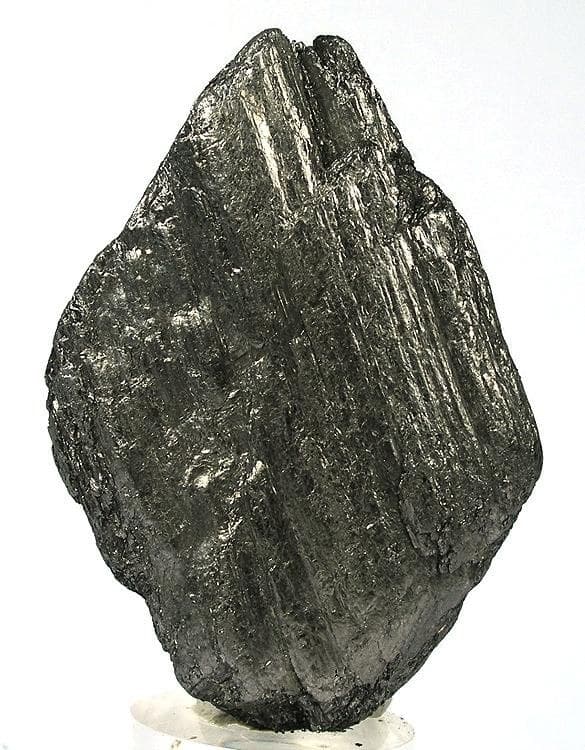
Pulbos na GrapaytPulbos na Grapayt
Hindi kilalang materyalHindi kilalang materyal
Set ng liyabeSet ng liyabe

Mga Materyales

12

Mga Kinakailangang Kasangkapan

10

Ang blueprint na ito ay gumagawa ng

Kaugnay na Blueprint

Ang mga blueprint na ito ay nagbabahagi ng kaalaman — mga teknik, materyales, o prinsipyo
CC0 Pampublikong Domain

Ang blueprint na ito ay inilabas sa ilalim ng CC0. Malaya kang kumopya, magbago, mamahagi, at gumamit nang walang pahintulot.

Suportahan ang Maker sa pamamagitan ng pagbili ng mga produkto sa kanilang Blueprint Komisyon ng Maker itinakda ng mga Vendor, o lumikha ng bagong bersyon ng Blueprint na ito at isama bilang koneksyon sa iyong Blueprint upang ibahagi ang kita.

Talakayan

(0)

Mag-login upang sumali sa talakayan

Naglo-load ng mga komento...