فن
خوبصورتی اور تندرستی
دستکاری
ثقافت اور تاریخ
تفریح
ماحول
خوراک اور مشروبات
ریورس انجینئرنگ
سائنسز
کھیل
ٹیکنالوجی
پہننے والے آلات
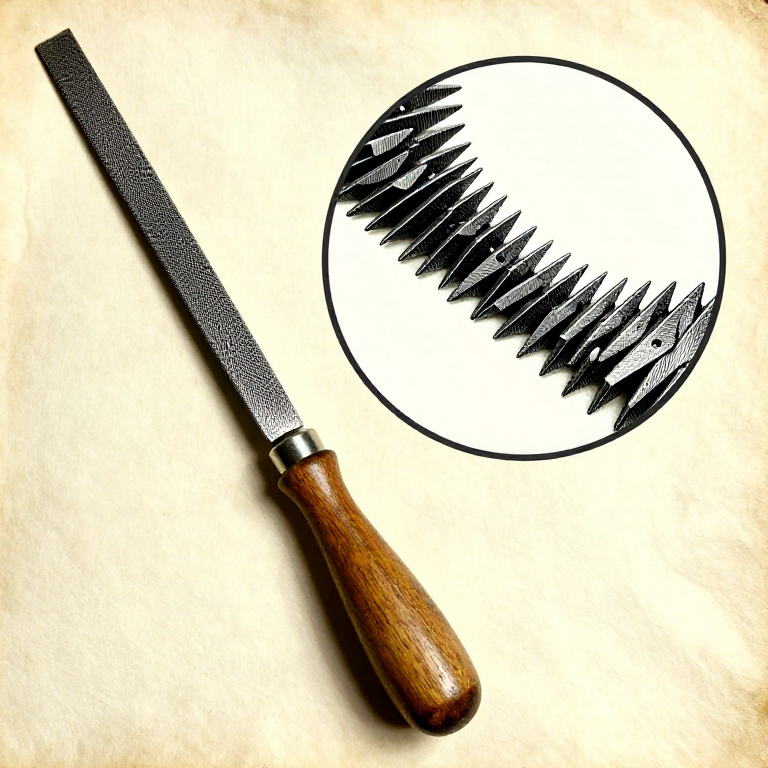


What a File Actually Is: Rows of Tiny Chisels
A file is not an abrasive. It is a hardened steel bar carrying hundreds of tiny chisels, each one cutting a chip exactly the way a plane iron does, and everything a file does well or badly follows from that.
It explains why a file only cuts on the push stroke, why dragging it back wears the teeth for nothing, why it stops cutting when the gullets fill, and why one file glides uselessly over hardened steel while another bites. None of that is true of sandpaper.
Two hundred and thirty-six blueprints on Youblob list a file among their tools and not one of them explains how to use it. This is the first of eight rungs that close that.
نیا سیکھنے والا
2 hours
ہدایات
1
1
Look at the teeth and see the chisels
Look at the teeth and see the chisels
Put a file under a loupe with the light raking along it. Each tooth is a tiny wedge with a cutting edge across the top and an open space behind it — the gullet — where the chip goes.
The teeth all lean the same way: forward, toward the tip. That is why a file cuts on the PUSH and does nothing on the pull, and why lifting it on the return stroke costs nothing but saves the teeth. Dragging a loaded file backwards under pressure drags trapped chips across the work and scores it.
The other thing visible under the loupe is that the teeth are in rows running diagonally, not straight across. A straight row would cut a groove its own width; the diagonal makes each tooth land on fresh metal.
درکار اوزار:
 دھات کی ریتی
 مکبر لوپ
2
2
Single cut, double cut, and rasp
Single cut, double cut, and rasp
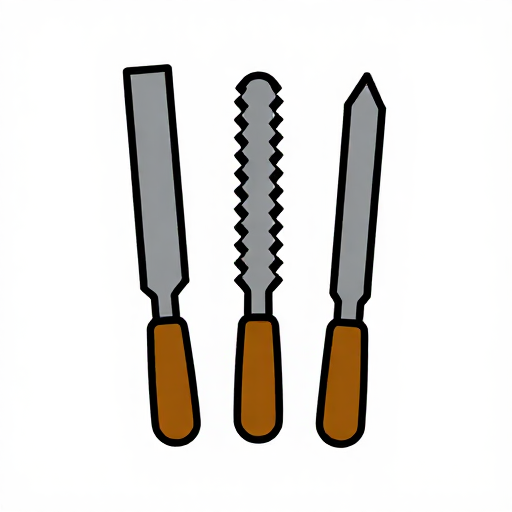
SINGLE CUT has one set of parallel diagonal rows. Each tooth is a long straight edge, it takes a wide shallow chip and leaves a smooth surface — this is what a finishing file and a saw file use.
DOUBLE CUT adds a second set of rows crossing the first, which breaks the long edges into a grid of small pointed teeth. Each takes a small deep chip, so it removes metal far faster and leaves a rougher surface. Most general-purpose hand files are double cut.
A RASP is neither: its teeth are individually raised punched points, widely spaced, with huge gaps between them. That makes it useless on metal and ideal on wood, where the chip is bulky and would instantly clog a file.
درکار اوزار:
دھات کی ریتی باریک ریتی
 موٹی ریتیمکبر لوپ
3
3
Cut, grade and length — reading the name of a file
Cut, grade and length — reading the name of a file
Jupyter نوٹ بک لوڈ ہو رہی ہے…
درکار اوزار:
 ریتیوں کا سیٹ
 حساب کرنے والا آلہ
4
4
A file is harder than almost anything you will file
A file is harder than almost anything you will file
File teeth are hardened to around 65 HRC and left untempered, which makes them harder than nearly all working steel and also extremely brittle.
Two consequences. First, a file will cut mild steel, brass, aluminium, cast iron and most tool steel in the annealed state, but it skates uselessly on anything hardened — a hardened blade, a bearing race, a file. That is in fact the classic workshop hardness test: if a file bites, the part is soft.
Second, never use a file as a lever or a pry bar and never strike it. It will snap without bending, and it does so suddenly. Fit a handle before using one: the bare tang is a spike aimed at your palm, and it is the single commonest workshop injury with this tool.
درکار اوزار:
دھات کی ریتی نرم فولاد کی سلاخ
 شفاف حفاظتی عینک
درکار اوزار
8- پلیس ہولڈر
- پلیس ہولڈر
- پلیس ہولڈر
- پلیس ہولڈر
- پلیس ہولڈر
- پلیس ہولڈر
- پلیس ہولڈر
- پلیس ہولڈر
متعلقہ بلیو پرنٹ
یہ بلیو پرنٹ علم بانٹتے ہیں — تکنیک، مواد یا اصول
CC0 پبلک ڈومین
یہ بلیو پرنٹ CC0 کے تحت جاری کیا گیا ہے۔ آپ اجازت لیے بغیر اس کام کو نقل، ترمیم، تقسیم اور کسی بھی مقصد کے لیے استعمال کرنے کے لیے آزاد ہیں۔
میکر کی حمایت کریں ان کے بلیو پرنٹ کے ذریعے پروڈکٹس خرید کر جہاں وہ میکر کمیشن وینڈرز کی طرف سے مقرر، کماتے ہیں، یا اس بلیو پرنٹ کی نئی تکرار بنائیں اور آمدنی شیئر کرنے کے لیے اسے اپنے بلیو پرنٹ میں کنکشن کے طور پر شامل کریں۔