


Casting a Bronze Socketed Spearhead — Bivalve Mould Method
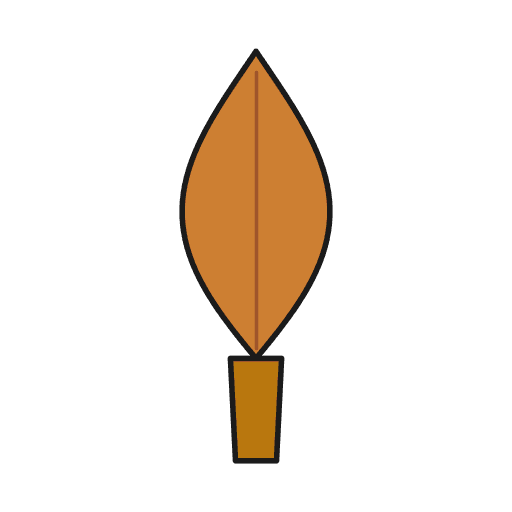
The socketed spearhead was a major advance over the flat tanged point — the hollow socket allowed the shaft to be inserted directly into the head, creating a stronger and more aerodynamic weapon. This design appeared across the Bronze Age world from approximately 2000 BCE and remained in use for over a thousand years.
Creating the socket requires a bivalve mould with a clay core inserted between the two stone halves. The core occupies the space where the socket will be, so when the bronze solidifies around it and the core is broken out, a hollow tube remains. This is one of the earliest examples of core-casting — a technique that later evolved into the lost-wax process for complex hollow sculptures.
The leaf-shaped blade is cast with a raised midrib for rigidity, then the edges are cold-hammered and ground sharp. Two small holes at the socket base allow a pin or binding to lock the shaft in place.
Instrukcje
Prepare the bivalve mould
Prepare the bivalve mould
Materiały do tego kroku:
 Blok steatytowy2 sztuk
Form the clay core for the socket
Form the clay core for the socket
Materiały do tego kroku:
 Glina ogniotrwała200 g
 Piasek drobny100 g
Assemble the mould with core
Assemble the mould with core
Materiały do tego kroku:
 Paski surowej skóry1 m
Pre-heat the assembled mould
Pre-heat the assembled mould
Melt and pour the bronze
Melt and pour the bronze
Materiały do tego kroku:
 Węgiel drzewny4 kg
Potrzebne narzędzia:
 Szczypce do tygla
Cool and separate the mould halves
Cool and separate the mould halves
Remove the clay core
Remove the clay core
Potrzebne narzędzia:
 Odnoga poroża
Remove sprue and grind the parting line
Remove sprue and grind the parting line
Potrzebne narzędzia:
 Piaskowiec (ścierny)
Cold-hammer and sharpen the blade edges
Cold-hammer and sharpen the blade edges
Potrzebne narzędzia:
 Tłuk kamienny
 Płyta kamienna
 Osełka
Drill the rivet holes and haft
Drill the rivet holes and haft
Materiały
6- 2 sztukZastępnik
- 200 gZastępnik
- 100 gZastępnik
- Zastępnik
- 4 kgZastępnik
- 1 sztukaZastępnik
Wymagane narzędzia
6- Zastępnik
- Zastępnik
- Zastępnik
- Zastępnik
- Zastępnik
- Zastępnik
Materiały z połączonych planów
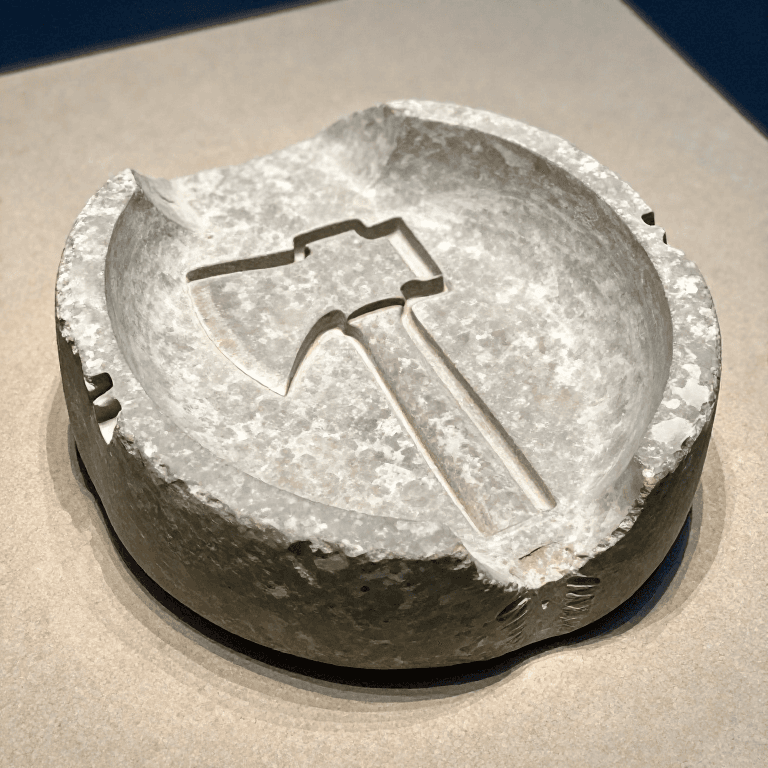
Według tego planu powstaje
Powiązane blueprinty
Te blueprinty dzielą się wiedzą — technikami, materiałami lub zasadami
CC0 Domena publiczna
Ten plan jest udostępniany na licencji CC0. Możesz go swobodnie kopiować, modyfikować, rozpowszechniać i wykorzystywać do dowolnych celów, bez konieczności uzyskiwania zgody.
Wesprzyj Makera kupując produkty przez jego plan, za co zarabia Prowizja Makera ustalony przez sprzedawców, lub stwórz nową iterację tego planu i dołącz go jako połączenie w swoim własnym planie, aby dzielić się przychodami.