Współpraca
SZTUKA
Piękno i dobre samopoczucie
RZEMIOSŁO
KULTURA I HISTORIA
ROZRYWKA
ŚRODOWISKO
JEDZENIE I NAPOJE
INŻYNIERIA ODWROTNA
NAUKI
LEKKOATLETYKA
TECHNOLOGIA
URZĄDZENIA DO NOSZENIA
Hot-Water Cylinder Churn: Cream Is Crushed Between a Warm Turning Cylinder and an Adjustable Plate, Then Falls to a Dasher
Buttercup

Autor

Buttercup

11. listopad 2026IE
5
0
0
0
0

Hot-Water Cylinder Churn: Cream Is Crushed Between a Warm Turning Cylinder and an Adjustable Plate, Then Falls to a Dasher

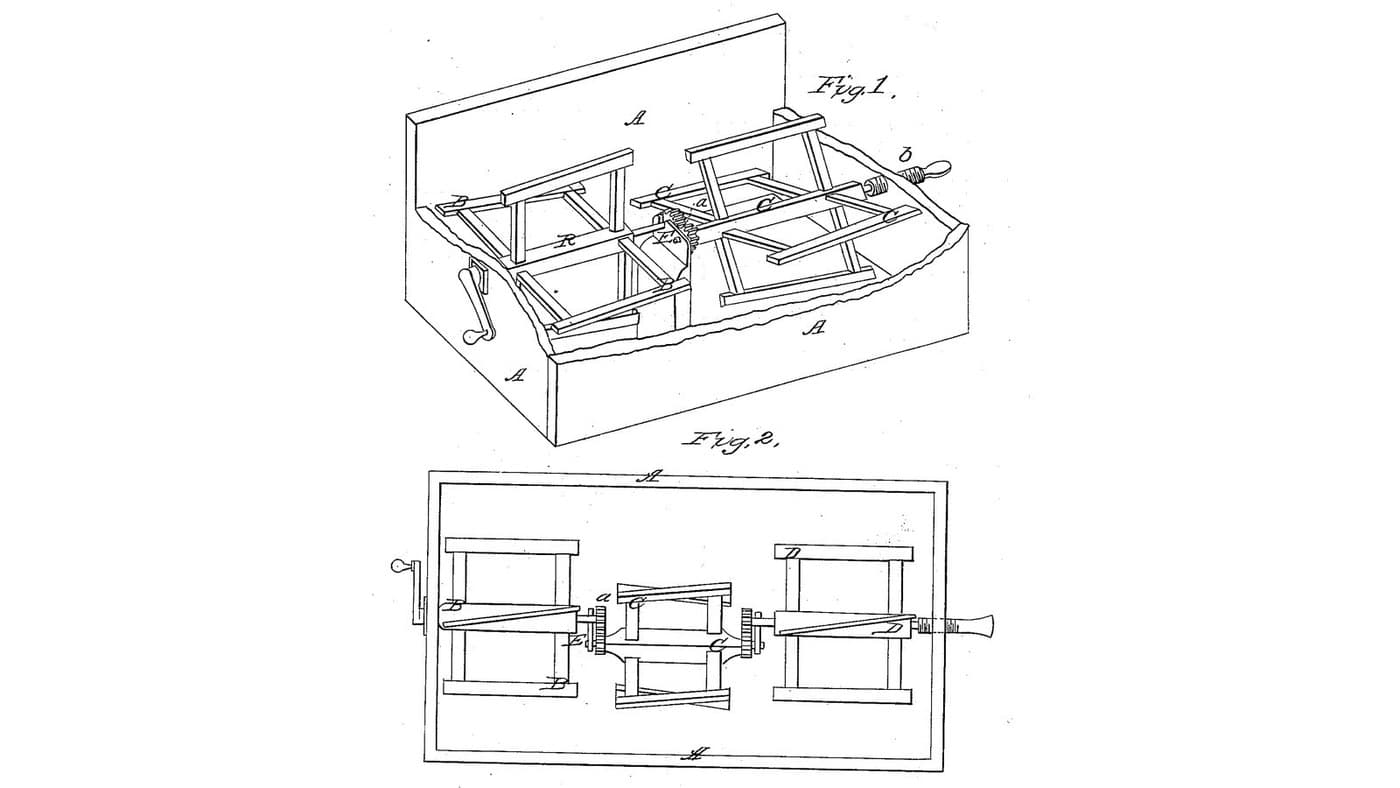
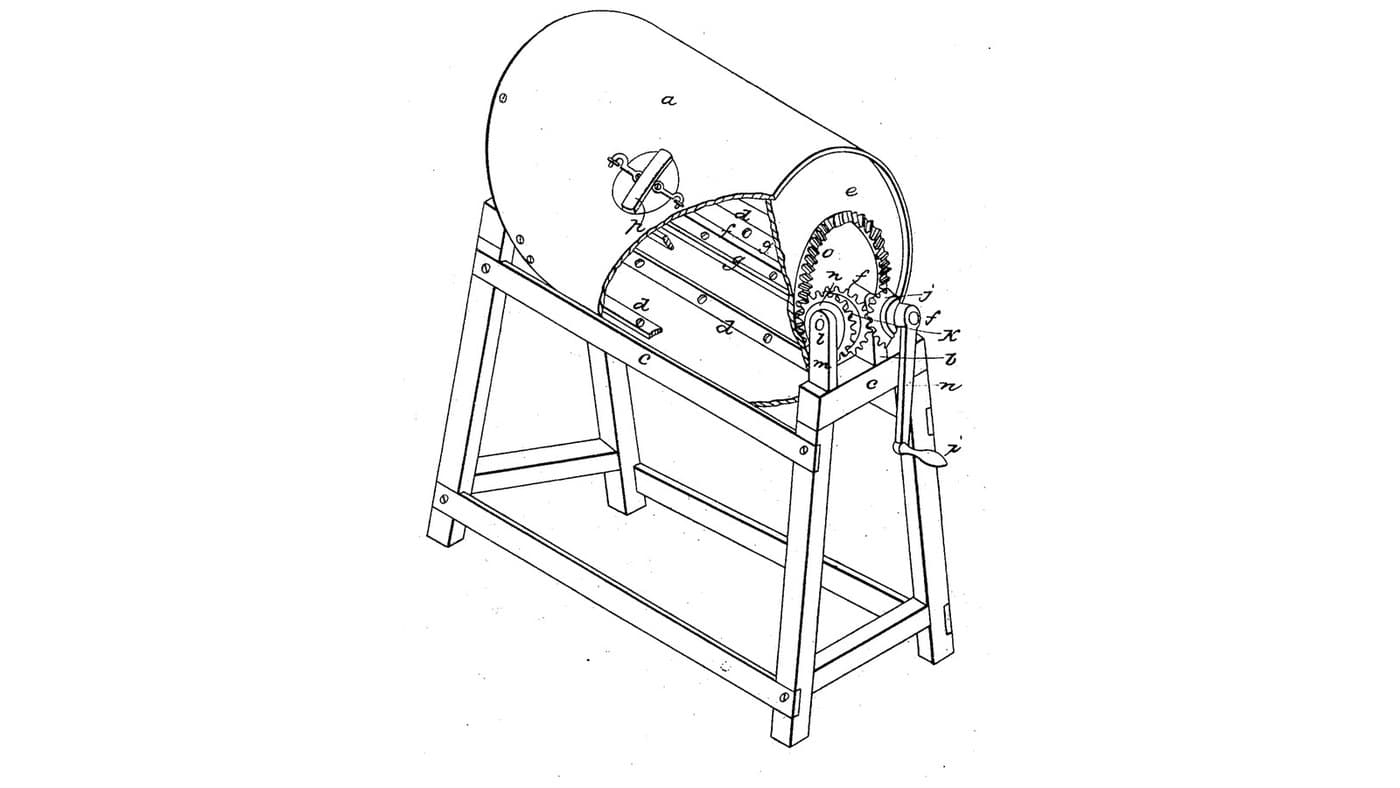
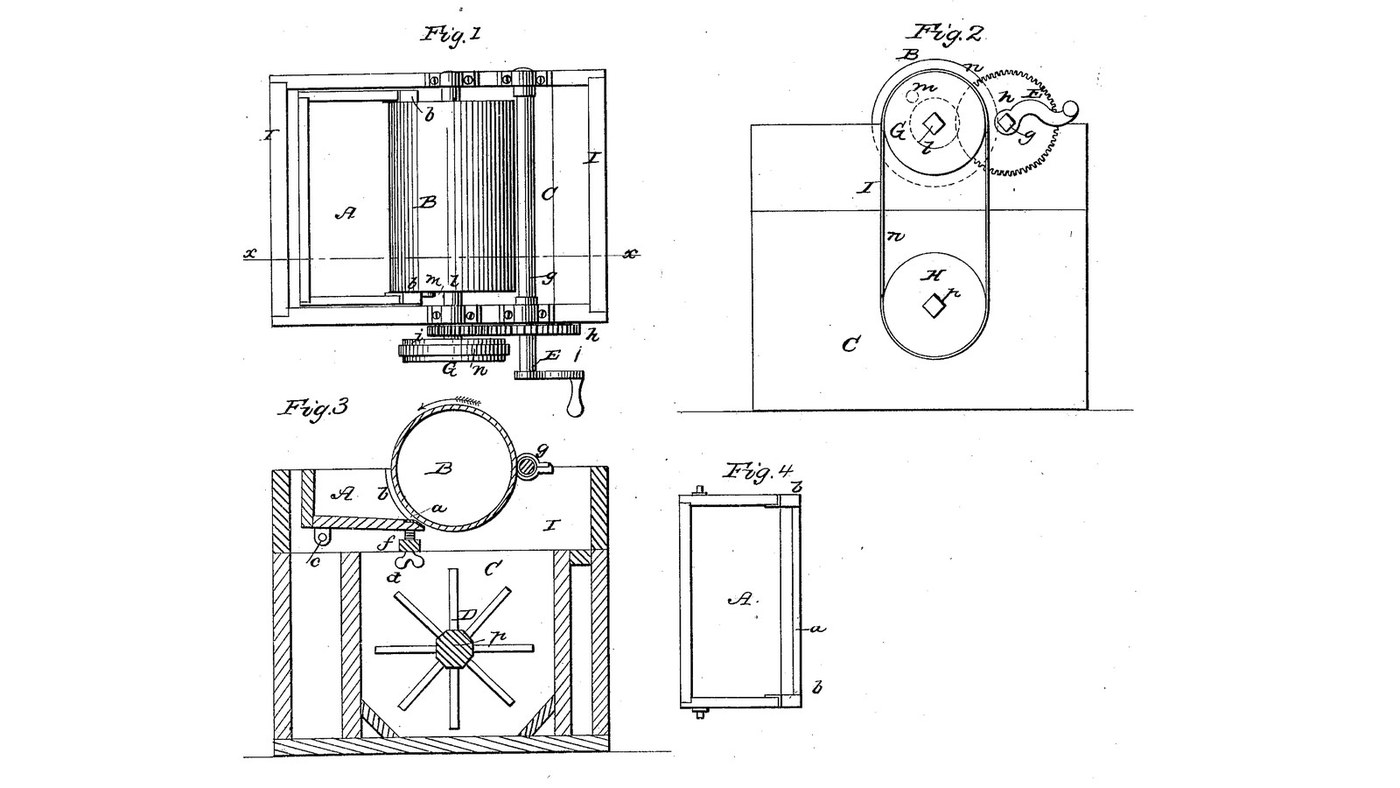
Jason W. Hardie of New York received US 27,446, dated 13 March 1860, for a churn. Cream in a hopper is drawn between a turning cylinder filled with hot water and a plate set close against it, which crushes the butter globules and warms them only for that moment; it falls in a thin sheet into the churn body, losing the heat again, and a dasher driven by a band from the cylinder gathers the butter. The patent gives no sizes and no water temperature; every size here is ours.
Zaawansowany
About 3 days, plus printing

Instrukcje

1

Warm for a moment only

Wczytywanie notatnika Jupyter…
2

A turning cylinder churn, one month before

Ward churns inside his cylinder. Hardie works the cream on the outside of his, against a plate.
3

Read US 27,446

"It is desirable to have the butter globules warmed only at the moment they are acted on, and to heat the milk or cream as little, and as little time, as possible, to make good butter." ... "And the cream, after passing under the cylinder, falls in a thin sheet, or in small streams, or drops, through the air, into the churn body beneath, thereby again parting with much of the heat acquired from the cylinder."
4

Print the cog-wheel h

Spur gear, module 2.5, 60 teeth, 18 mm wide, with a hub 30 mm across; bored 16.4 mm. PETG, 0.2 mm layers, 40 % infill, 4 walls.
Plik projektowySTLCC0 - Free
5

Print the pinion i

Spur pinion, module 2.5, 16 teeth, 18 mm wide, with a hub 30 mm across; bored 16.4 mm. PETG, 0.2 mm layers, 40 % infill, 4 walls.
Plik projektowySTLCC0 - Free
6

Print the pulleys G and H

Pulley 100 mm across with a round groove for an 8 mm belt; bored 16.4 mm. Print two. PETG, 0.2 mm layers, 40 % infill, 4 walls.
Plik projektowySTLCC0 - Free
7

Churn body C and frame I

From 20 mm hardwood board make the body 400 x 350 mm inside and 350 deep; glue and screw it and seal the inside joints with silicone sealant. Bore the two long walls 16.8 mm across, 120 mm above the floor and on the centre line, for the dasher's shaft p. For the frame I cut two cheeks 440 x 230 mm that stand on the body's long walls, joined by cleats so the frame lifts off. Bore both cheeks 16.8 mm for the cylinder's shaft l, 40 mm from the centre and 120 mm above the body's top edge, and 16.8 mm for the winch shaft g, 95 mm from l at 45 degrees up and outward. Screw a hardwood cross-piece f, 40 x 20 mm, between the cheeks under the plate's place, and fit a nut in it for the thumb-screw d.

Materiały do tego kroku:

Deska z drewna liściastegoDeska z drewna liściastego4 sztuk
Klej do drewnaKlej do drewna1 sztuka
Wkręty do drewnaWkręty do drewna40 sztuk
Uszczelniacz silikonowyUszczelniacz silikonowy1 sztuka
Nakrętka sześciokątnaNakrętka sześciokątna1 sztuka

Potrzebne narzędzia:
Pilarka stołowaPilarka stołowa
WyrzynarkaWyrzynarka
Wiertarko-wkrętarka akumulatorowaWiertarko-wkrętarka akumulatorowa
Zestaw wiertełZestaw wierteł
Ścisk stolarski listwowyŚcisk stolarski listwowy
Zestaw wkrętakówZestaw wkrętaków
Miara zwijanaMiara zwijana
Papier ściernyPapier ścierny
8

Cylinder B, shaft l and stopper m

Cut 300 mm of stainless tube 160 mm across. Cut two end discs from 15 mm HDPE sheet to fit inside it; bore both 16 mm on the centre for a 16 mm stainless shaft, 500 mm long, and one 20 mm, 50 mm off centre, for a rubber stopper. Press the discs into the tube on the shaft, screw them through the tube with stainless screws, and seal the discs and the shaft's passage with silicone sealant so the cylinder holds water.

Materiały do tego kroku:

Rura ze stali nierdzewnejRura ze stali nierdzewnej1 sztuka
Płyta HDPEPłyta HDPE1 sztuka
Pręt ze stali nierdzewnejPręt ze stali nierdzewnej1 sztuka
Korki gumoweKorki gumowe1 sztuka
Śruby maszynoweŚruby maszynowe12 sztuk
Uszczelniacz silikonowyUszczelniacz silikonowy1 sztuka

Potrzebne narzędzia:

Piła do metaluPiła do metalu
WyrzynarkaWyrzynarka
Wiertarko-wkrętarka akumulatorowaWiertarko-wkrętarka akumulatorowa
Zestaw wiertełZestaw wierteł
Pilniki (pilnik ręczny)Pilniki (pilnik ręczny)
Zestaw wkrętakówZestaw wkrętaków
9

Hopper A, plate a, packing strips b and thumb-screw d

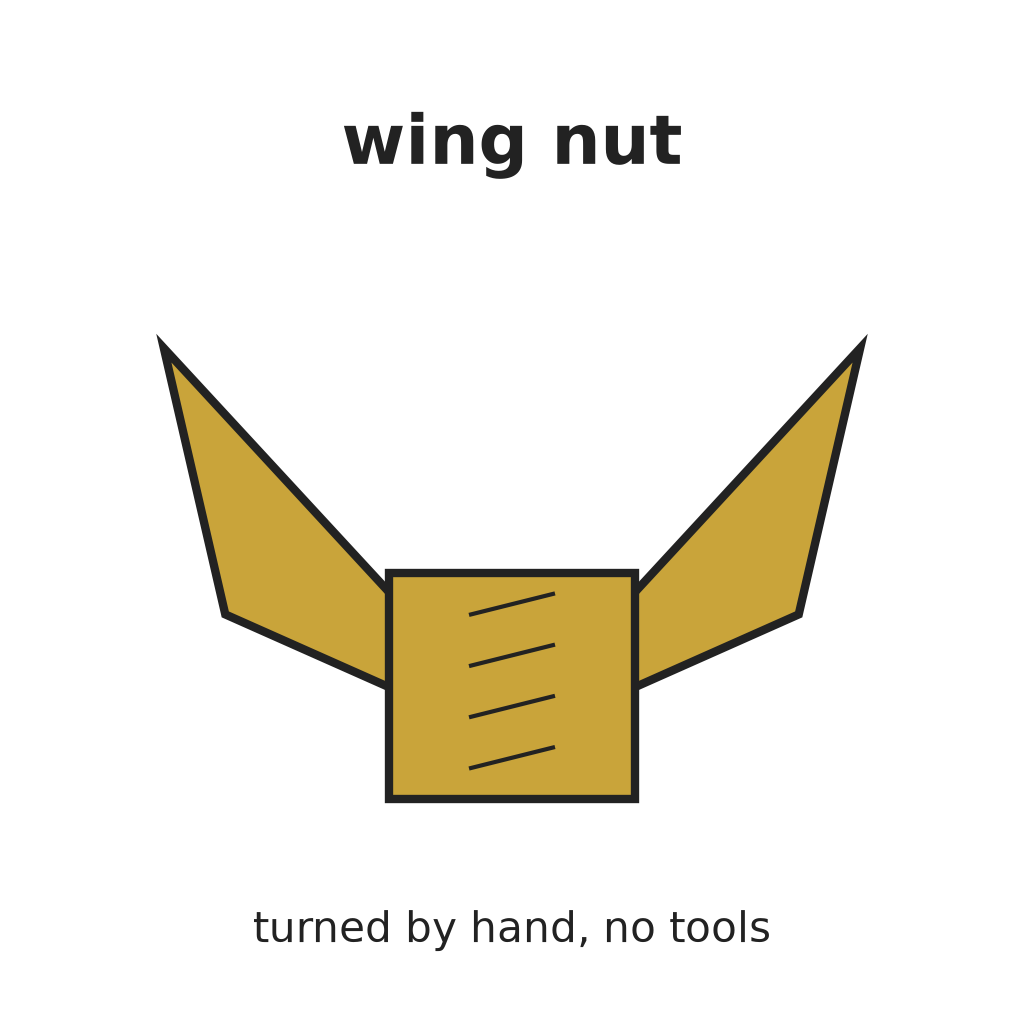
Make a hardwood hopper 302 mm long inside, to take the cylinder: an outer wall, two end walls and a bottom sloping down to the cylinder, its inner edge cut to the cylinder's curve. Bend a strip of stainless sheet to the curve and screw it over that edge as the plate a. Screw HDPE strips on the end walls' inner faces as packing b, to run against the cylinder's ends. Hang the hopper's outer bottom corner on a 10 mm stainless pin c through the cheeks. Cut 60 mm of threaded rod with a wing nut locked on one end as the thumb-screw d; run it up through the cross-piece's nut to bear under the hopper, and turn it until the plate is about 1.5 mm from the cylinder.

Materiały do tego kroku:

Deska z drewna liściastegoDeska z drewna liściastego1 sztuka
Blacha ze stali nierdzewnejBlacha ze stali nierdzewnej1 sztuka
Płyta HDPEPłyta HDPE1 sztuka
Pręt ze stali nierdzewnejPręt ze stali nierdzewnej1 sztuka
Pręt gwintowanyPręt gwintowany1 sztuka
Nakrętka skrzydełkowaNakrętka skrzydełkowa1 sztuka
Nakrętka sześciokątnaNakrętka sześciokątna1 sztuka
Wkręty do drewnaWkręty do drewna16 sztuk
Klej do drewnaKlej do drewna1 sztuka

Potrzebne narzędzia:

Pilarka stołowaPilarka stołowa
WyrzynarkaWyrzynarka
Nożyce do blachyNożyce do blachy
Imadło warsztatoweImadło warsztatowe
Wiertarko-wkrętarka akumulatorowaWiertarko-wkrętarka akumulatorowa
Zestaw wiertełZestaw wierteł
Piła do metaluPiła do metalu
Klucz nastawnyKlucz nastawny
Zestaw wkrętakówZestaw wkrętaków
10

Dasher D, gears, winch E and band n

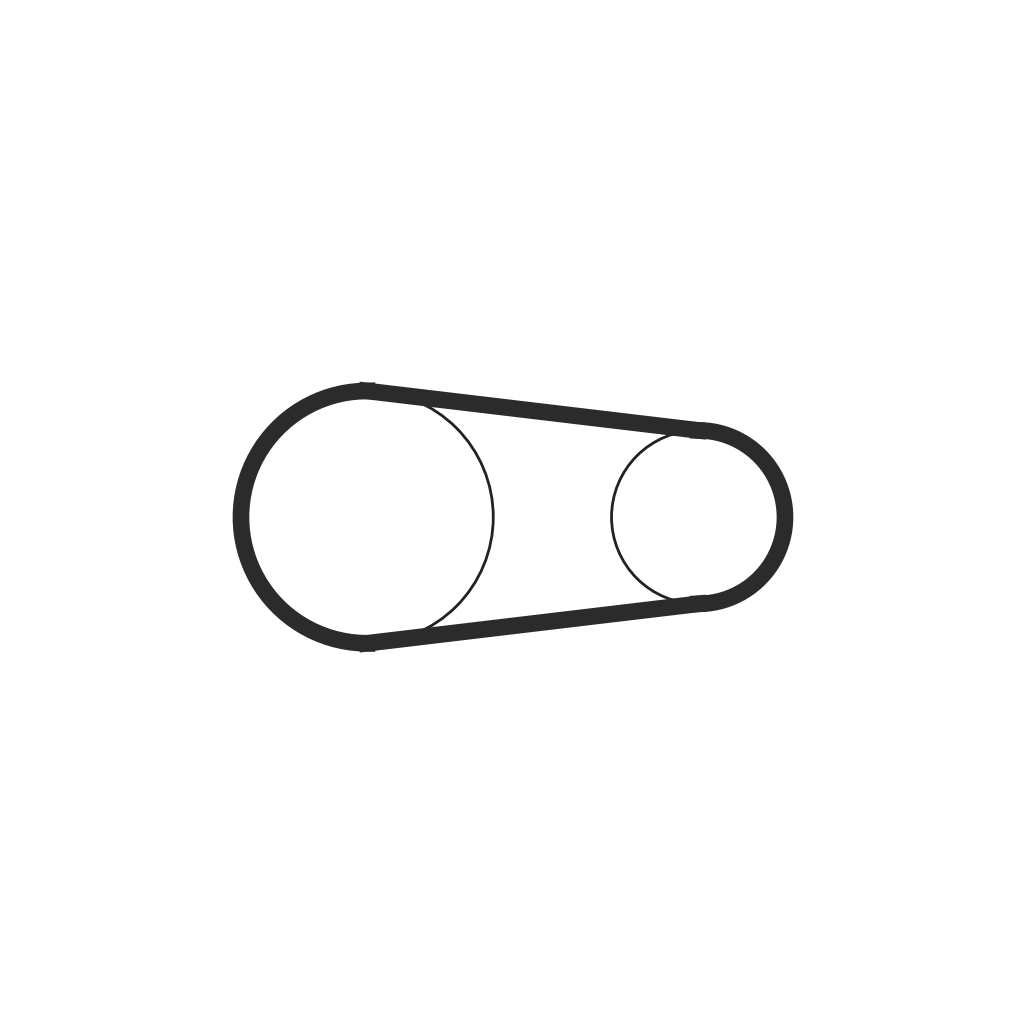
Pass a 16 mm stainless shaft p through the body's walls and fit the dasher on it: a hardwood hub with eight 12 mm dowel arms reaching 100 mm, in three sets along the shaft. Fit the cylinder's shaft in the cheeks with the pinion i on one end and the pulley G on the other, the cog-wheel h on the winch shaft g meshing the pinion, and a hardwood crank with a dowel handle on g as the winch E. Fit the pulley H on the dasher shaft's end, under G, and join them with a round belt. Hold every shaft with collars.

Materiały do tego kroku:

Pręt ze stali nierdzewnejPręt ze stali nierdzewnej2 sztuk
Deska z drewna liściastegoDeska z drewna liściastego1 sztuka
Kołki z twardego drewnaKołki z twardego drewna2 sztuk
Klej do drewnaKlej do drewna1 sztuka
Filament PETGFilament PETG1 sztuka
Pas napędowyPas napędowy1 sztuka
Shaft CollarShaft Collar6 sztuk
ZawleczkaZawleczka2 sztuk

Potrzebne narzędzia:

Drukarka 3D z filamentem (FDM)Drukarka 3D z filamentem (FDM)
Piła do metaluPiła do metalu
Pilniki (pilnik ręczny)Pilniki (pilnik ręczny)
Wiertarko-wkrętarka akumulatorowaWiertarko-wkrętarka akumulatorowa
Zestaw wiertełZestaw wierteł
Imadło warsztatoweImadło warsztatowe
Klucz nastawnyKlucz nastawny
11

The build in 3D

FreeCAD model of this build, partly cut away: the body C with the dasher D, the frame I, the cylinder B on its shaft with the pinion i and cog-wheel h on the winch shaft, the hopper A with its plate a against the cylinder, the pivot c and thumb-screw d, and the band n from pulley G to pulley H.
Plik projektowyBLENDCC0 - Free
12

Churn

Fill the cylinder with warm water from the kettle through the stopper's hole and close it; the patent gives no temperature, so check it with the thermometer and note it with the time the butter takes. Pour about 6 litres of heavy cream at about 15 °C into the hopper and turn the winch steadily, timing it; add cream to the hopper as it runs through. When the butter has gathered on the dasher, lift off the frame, take out the butter, tip the buttermilk into a bowl, wash the butter in cold water until it runs clear, salt and weigh it.

Materiały do tego kroku:

Śmietanka kremówkaŚmietanka kremówka6 l
WodaWoda1 sztuka
Sól morska gruboziarnistaSól morska gruboziarnista1 sztuka

Potrzebne narzędzia:
Czajnik elektrycznyCzajnik elektryczny
Termometr z sondą pozostawianą w potrawieTermometr z sondą pozostawianą w potrawie

StoperStoper
Cyfrowa waga kuchennaCyfrowa waga kuchenna
Duża misa ze stali nierdzewnejDuża misa ze stali nierdzewnej
13

Troubleshooting

Hot-water cylinder churn troubleshooting.

Flow

Loading...
14

History and honest limits

**Jason W. Hardie** of New York, US 27,446, 13 March 1860 (signed 25 October 1859), "Churn". He disclaimed cylinders working against each other, plane rubbing surfaces, and hot water in the dasher or the main body of cream, and claimed the hollow revolving cylinder with hot water and an adjustable fixed surface against it. He gives no water temperature and no sizes; every size here is ours, our gears and pulleys are printed and sit on opposite ends of the cylinder, where his are on one end.

Materiały

21

Wymagane narzędzia

19

Pliki projektowe

4

CC0 Domena publiczna

Ten plan jest udostępniany na licencji CC0. Możesz go swobodnie kopiować, modyfikować, rozpowszechniać i wykorzystywać do dowolnych celów, bez konieczności uzyskiwania zgody.

Wesprzyj Makera kupując produkty przez jego plan, za co zarabia Prowizja Makera ustalony przez sprzedawców, lub stwórz nową iterację tego planu i dołącz go jako połączenie w swoim własnym planie, aby dzielić się przychodami.

Dyskusja

(0)

Zaloguj się aby dołączyć do dyskusji

Ładowanie komentarzy...