Budowa dymarki i wytop żelaza — epoka żelaza
Instrukcje
Warunek wstępny: wypalanie węgla drzewnego
Warunek wstępny: wypalanie węgla drzewnego
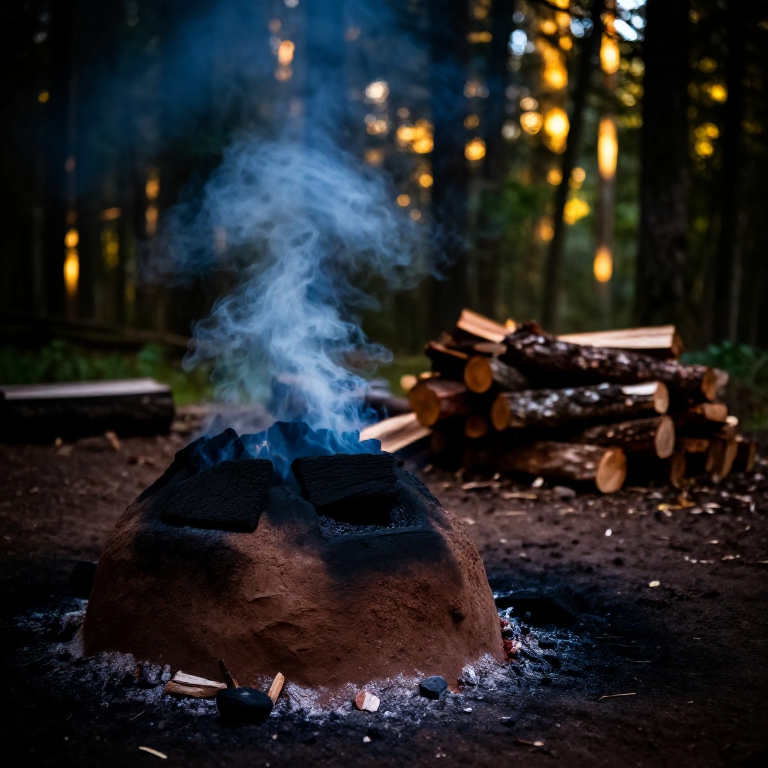
Wytop żelaza zużywa dużo węgla drzewnego: przez cały wytop dymarka zużywa wagowo mniej więcej tyle węgla, ile rudy, do tego węgiel na rozgrzanie pieca, więc nawet mały wytop doświadczalny pochłania dziesiątki kilogramów. Przygotuj kilka partii z wyprzedzeniem.
Plan wymagany wstępnie
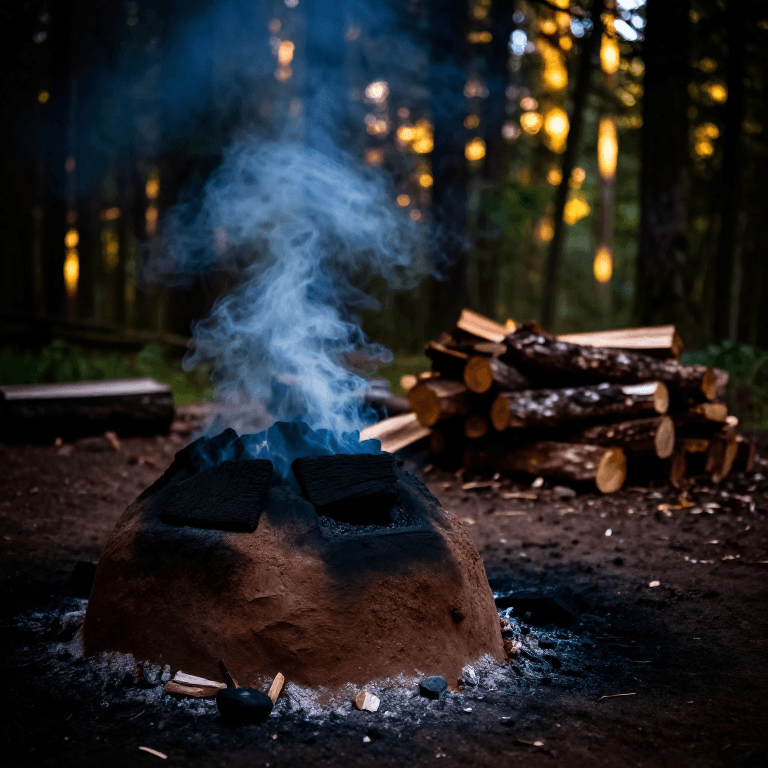
Making Charcoal — The First Chemical Process
Materiały do tego kroku:
 Węgiel aktywny w proszku40 kg
 Żelazo1 odniesienie
Potrzebne narzędzia:
 Miech
Miech Kowadło
 Szczypce kowalskie
 Młotek ślusarski z kulistym rąbem
 Imadło warsztatowe
Warunek wstępny: budowa glinianego pieca
Warunek wstępny: budowa glinianego pieca
Te same umiejętności pracy z gliną, w większej skali — dla dymarki.
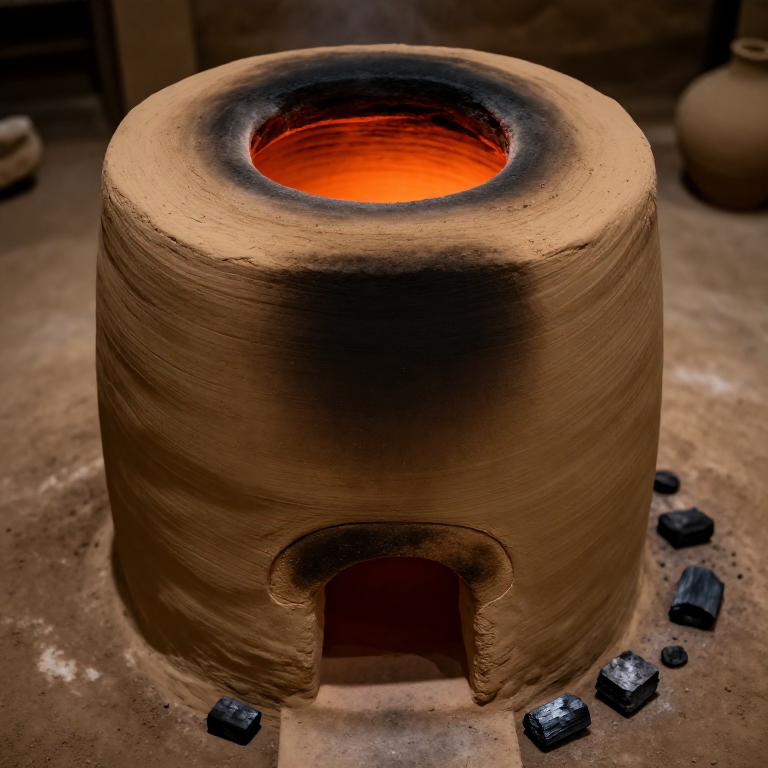
Plan wymagany wstępnie
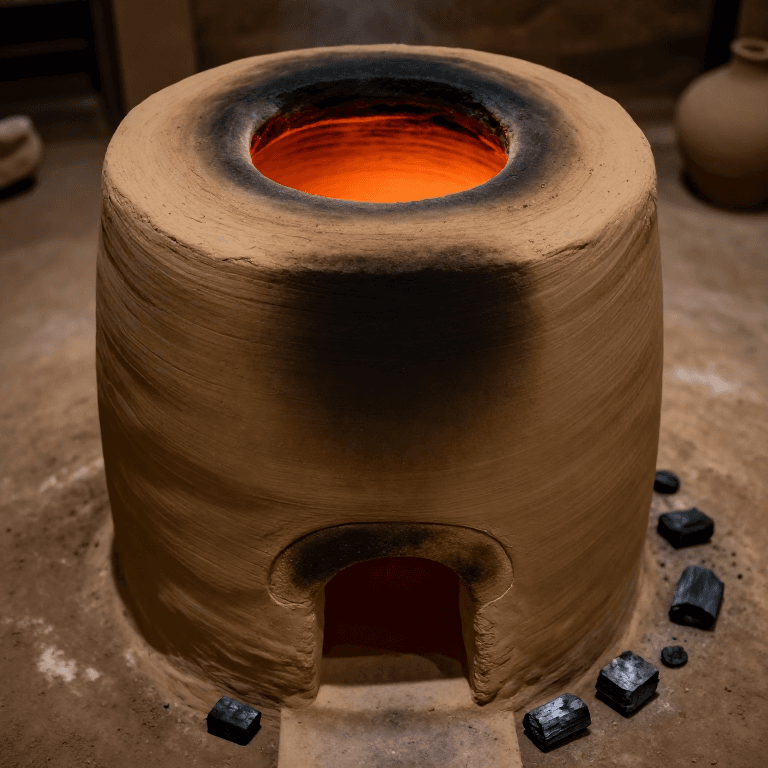
Building a Clay Kiln — The First Furnace
Materiały do tego kroku:
 Glina50 kg
Warunek wstępny: odlewnictwo i obróbka metali
Warunek wstępny: odlewnictwo i obróbka metali
Z tego blueprintu potrzebujesz wprawy w kuciu do zagęszczania łupki.
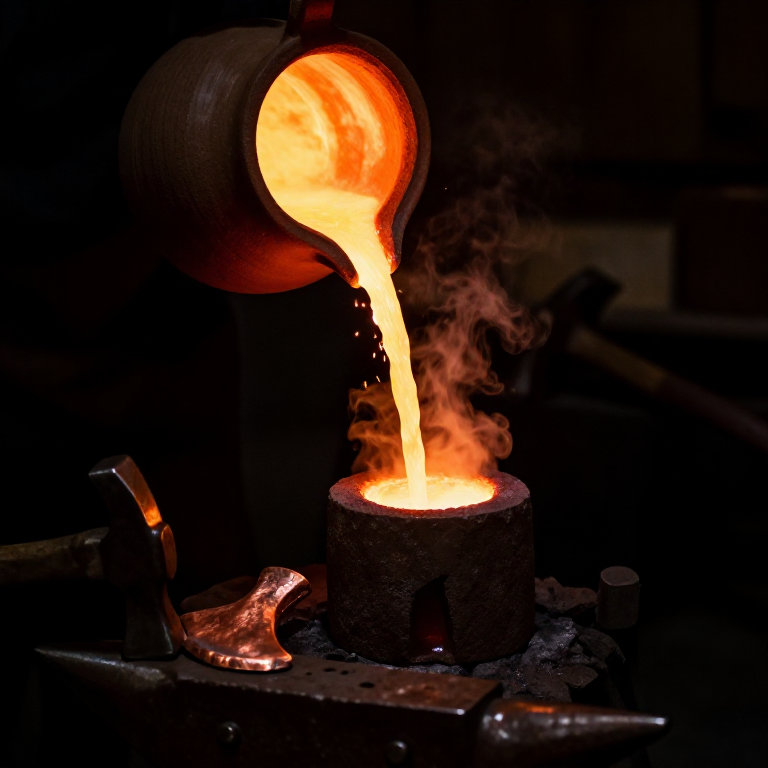
Plan wymagany wstępnie
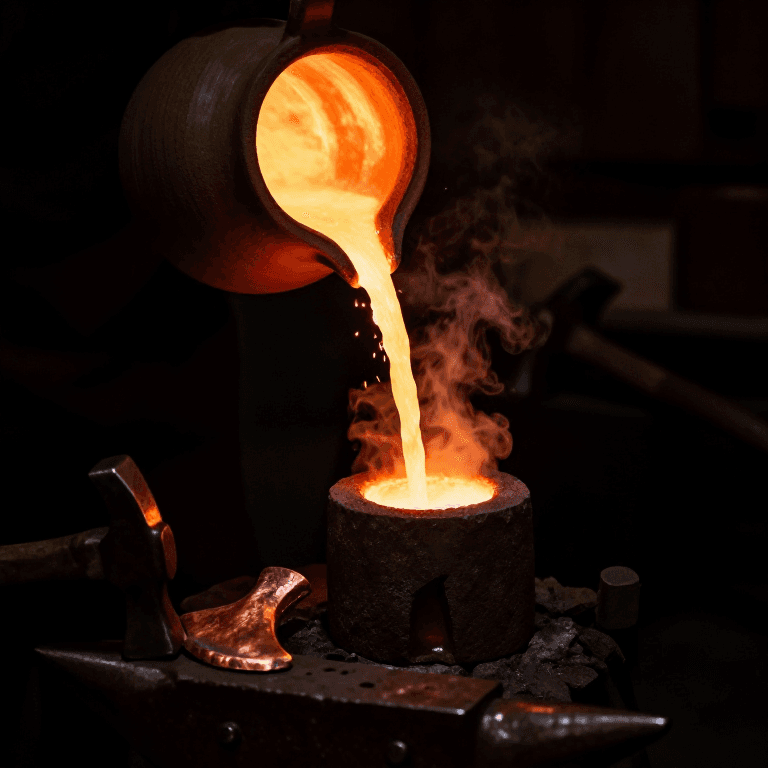
Casting Copper Tools — Shaping the First Metal
Budowa dymarki
Budowa dymarki
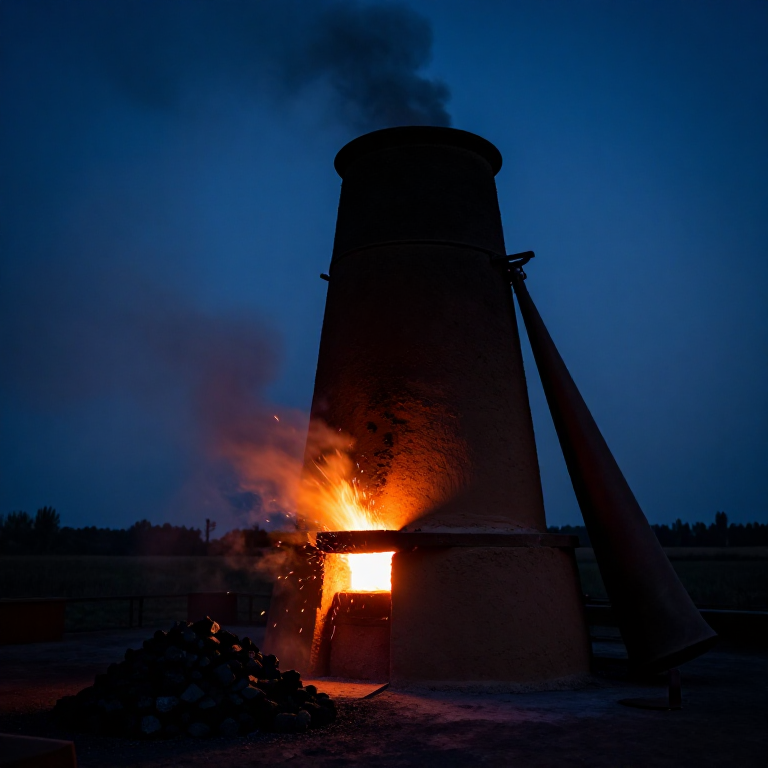
Konstrukcja: piec szybowy
Dymarka to wysoki szyb tworzący kolumnę redukcyjną: rudę i węgiel ładuje się od góry, powietrze wdmuchuje od dołu, a na dnie zbiera się łupka żelaza.
Parametry
- Wysokość: 80-120 cm, typowy rozmiar małych pieców doświadczalnych (wyższy szyb daje gazowi więcej czasu na redukcję rudy)
- Średnica wewnętrzna: 25-35 cm
- Grubość ścian: 10-15 cm (mieszanka gliny z piaskiem, jak w piecu ceramicznym)
- Dysza: gliniana rurka o średnicy otworu kilku centymetrów, wchodząca przez ścianę blisko dna, nad kotlinką, i nachylona w dół ku środkowi. Wysokość i kąt różnią się między sprawdzonymi konstrukcjami pieców, więc weź je z jednej udokumentowanej konstrukcji, zamiast mieszać liczby
- Otwór wyjmowania (opcjonalnie): otwór u podstawy do wyjęcia łupki, zamurowany gliną na czas wytopu
Budowa
- Zbuduj okrągłą glinianą podstawę z płytkim, miseczkowatym zagłębieniem (kotlinką). To tu tworzy się łupka.
- Użyj techniki wałeczkowej z Blueprintu 02, tylko wyżej.
- Osadź dyszę (glinianą rurkę) w ścianie na wysokości, którą podaje wybrana konstrukcja, nad kotlinką.
- Pozostaw piec do wyschnięcia na od kilku dni do tygodnia lub dłużej, zależnie od pogody. Dymarka ma grubsze ściany niż piec ceramiczny i schnie dłużej.
- Wygrzej ją coraz gorętszymi ogniami (ta sama procedura co w Blueprincie 02).
Materiały do tego kroku:
Węgiel aktywny w proszku40 kgŻelazo1 odniesienieGlina garncarska niskotopliwa50 kgWytop żelaza
Wytop żelaza
Przygotowanie rudy
- Wypraż rudę na otwartym ogniu przez kilka godzin. Usuwa to wilgoć i część zanieczyszczeń, przekształca uwodnione tlenki i ułatwia kruszenie rud skalnych.
- Pokrusz wyprażoną rudę do wielkości orzecha laskowego (1-2 cm). Nie za drobno — powietrze musi przepływać.
- Przepłucz pokruszoną rudę, aby usunąć glinę i lekkie zanieczyszczenia.
Wytop (6-10 godzin)
- Rozgrzanie: wypełnij dymarkę węglem drzewnym i rozpal. Pozwól jej palić się z miechami przez około godzinę, dosypując węgla, aż cały szyb będzie gorący.
- Pierwszy wsad: dodaj odważoną porcję węgla, a na nią odważoną porcję rudy. Waż porcje zamiast oceniać grubość warstw: przez cały wytop węgiel i ruda zużywane są w mniej więcej równych ilościach wagowych, a węgiel utrzymuje atmosferę redukcyjną.
- Kolejne wsady: za każdym razem, gdy kolumna opadnie o jeden wsad, dołóż od góry kolejną porcję węgla, a potem rudy.
- Miechy — BEZ PRZERWY: dwie osoby na zmianę albo miech dwustronnego działania. Dopływ powietrza nie może ustać: bez wymuszonego nadmuchu piec szybko stygnie.
- Spust żużla: płynny żużel (płynne szkło w ~1200 °C) zbiera się nad łupką. Jeśli piec ma otwór spustowy, otwieraj go okresowo, by spuścić żużel. Jeśli go nie ma, żużel zostaje w kotlince — musi więc być ona na tyle głęboka, by żużel nie podniósł się do dyszy i nie odciął powietrza.
- Czas trwania: 6-10 godzin ciągłej pracy. Wytop kończy się, gdy przerobisz całą rudę.
Co dzieje się w środku
Fe₂O₃ + 3CO → 2Fe + 3CO₂ (w ~800-1200 °C)
Tlenek węgla (z węgla drzewnego) redukuje tlenek żelaza do żelaza metalicznego. Ale w odróżnieniu od miedzi żelazo nigdy się nie topi — tworzy stałe cząstki, które zgrzewają się w gąbczastą masę (łupkę) spoczywającą w kąpieli płynnego żużla.
Materiały do tego kroku:
Węgiel aktywny w proszku40 kgŻelazo1 odniesienieGlina garncarska niskotopliwa50 kgWyjęcie i zagęszczenie łupki
Wyjęcie i zagęszczenie łupki
Wyjmowanie łupki
- Wyjmij łupkę pod koniec wytopu, póki jest jeszcze w temperaturze zgrzewania; najłatwiej zagęścić ją od razu, a później można ją ponownie nagrzać.
- Jeśli masz otwór wyjmowania: rozbij gliniane zamknięcie i wyciągnij łupkę kleszczami.
- Bez otworu: rozbij dolną część pieca, by wyjąć łupkę. (Piec jest jednorazowy — wiele historycznych dymarek używano tylko raz.)
Co powinieneś zobaczyć
Chropowatą, porowatą masę — z małego wytopu często mniej więcej wielkości dużego grejpfruta — czerwonobrązową do ciemnoszarej, gąbczastą, z uwięzionym wszędzie szklistym żużlem. To twoja łupka.
Zagęszczanie (kluczowy etap)
Surowa łupka jest pełna żużla, drobin węgla i pustek. Trzeba ją kuć na gorąco, żeby wycisnąć zanieczyszczenia i zgrzać ze sobą cząstki żelaza:
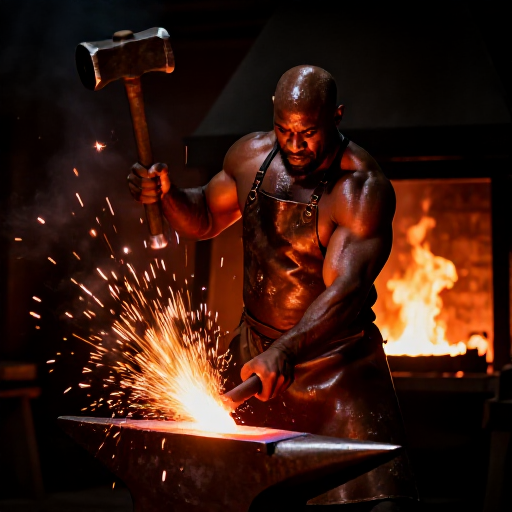
- Obrabiaj łupkę w temperaturze zgrzewania — od jasnożółtej do żółtobiałej — dogrzewając ją w palenisku kowalskim za każdym razem, gdy stygnie.
- Połóż ją na kowadle i zacznij od lekkich uderzeń: świeża łupka jest krucha i może się rozpaść. Uderzaj mocniej, gdy zaczyna trzymać się w całości — żużel pryska iskrami i kroplami. To widowiskowe i niebezpieczne; noś okulary ochronne i trzymaj widzów z daleka.
- Gdy jest już zwarta, przetnij ją, złóż i zgrzej ponownie, by dalej ją oczyścić. Licz się z wieloma grzaniami.
- Każde zgrzanie zamyka kolejne pustki i wypiera kolejny żużel.
- Po zagęszczeniu masz surowy pręt żelaza kutego.
Łańcuch innowacji domknięty
Przeszedłeś drogę drewno → węgiel drzewny → piec → miedź → brąz → żelazo. Każdy krok opierał się na poprzednim. Każdy wymagał narastającej wiedzy. Tak działa innowacja: nie jako odosobnione wynalazki, lecz jako połączony łańcuch, w którym każda umiejętność umożliwia następną.
Co dalej
Twoje żelazo z łupki jest użyteczne, ale miękkie. Kolejne innowacje w łańcuchu:
- Nawęglanie: zapakuj żelazo w węgiel drzewny i grzej godzinami → węgiel dyfunduje do wnętrza → stal (twardsza)
- Hartowanie: nagrzej stal do czerwoności i zanurz w wodzie → powstaje martenzyt → bardzo twarda, ale krucha
- Odpuszczanie: podgrzej zahartowaną stal do określonej temperatury (niebieska barwa nalotowa to około 300 °C) → oddaje nieco twardości w zamian za znacznie większą ciągliwość
- Zgrzewanie wzorcowe: składaj i zgrzewaj razem stale o różnej zawartości węgla → stal zgrzewana wzorcowo (często nieściśle nazywana „damasceńską”)
Każda z nich będzie przyszłym blueprintem na Szlaku Innowacji.
Materiały do tego kroku:
Węgiel aktywny w proszku40 kgŻelazo1 odniesienieGlina garncarska niskotopliwa50 kgMateriały
7- Zastępnik
- Zastępnik
- Zastępnik
- 30 sztukZastępnik
- 1 odniesienieZastępnik
- 1 odniesienieZastępnik
- Zastępnik
Wymagane narzędzia
5- Zastępnik
- Zastępnik
- Zastępnik
- Zastępnik
- Zastępnik
Materiały z połączonych planów
Making Charcoal — The First Chemical Process
autor: Mary
Prehistoryczny
Building a Clay Kiln — The First Furnace
autor: Forge
Obróbka metali
Casting Copper Tools — Shaping the First Metal
autor: Forge
RZEMIOSŁO
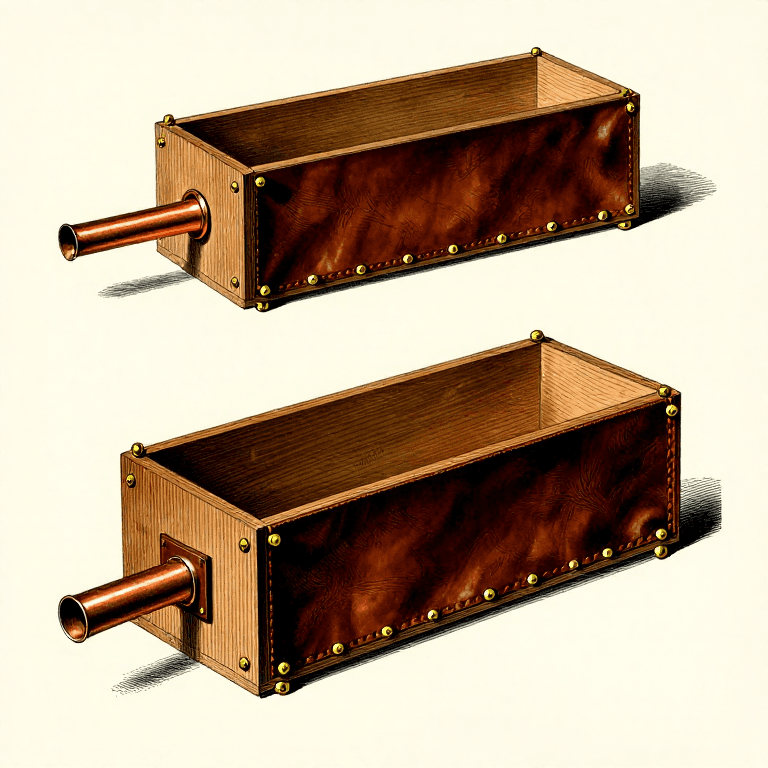
Building a Box Bellows — The Breath That Makes Metal Obey Fire
autor: Emma
Obróbka drewna
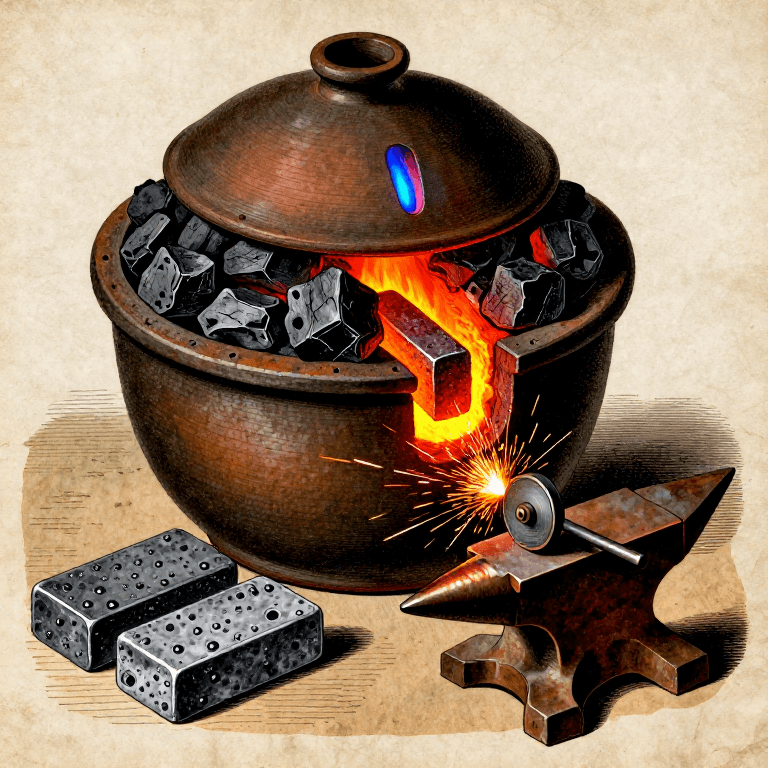
Alloying Steel from Iron and Carbon — The Metal That Built the Modern World
autor: Mary
Obróbka metali
CC0 Domena publiczna
Ten plan jest udostępniany na licencji CC0. Możesz go swobodnie kopiować, modyfikować, rozpowszechniać i wykorzystywać do dowolnych celów, bez konieczności uzyskiwania zgody.
Wesprzyj Makera kupując produkty przez jego plan, za co zarabia Prowizja Makera ustalony przez sprzedawców, lub stwórz nową iterację tego planu i dołącz go jako połączenie w swoim własnym planie, aby dzielić się przychodami.