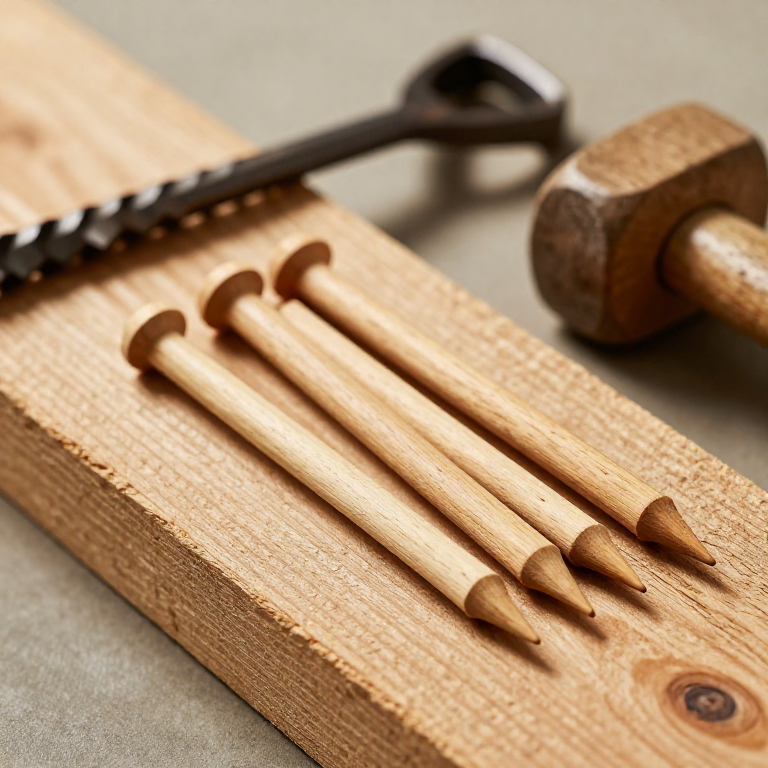

Making Treenails — Wooden Pegs for Timber Framing and Shipbuilding
Before iron nails were cheap, wood was fastened with wood. A treenail (pronounced 'trunnel') is a cylindrical wooden peg driven into a bored hole to lock a timber joint together. Treenails held together medieval roof trusses, Viking longships, and post-and-beam barns for centuries. In many applications they outperform iron nails — they do not rust, they swell when wet to tighten the joint, and they flex with the timber instead of working loose.
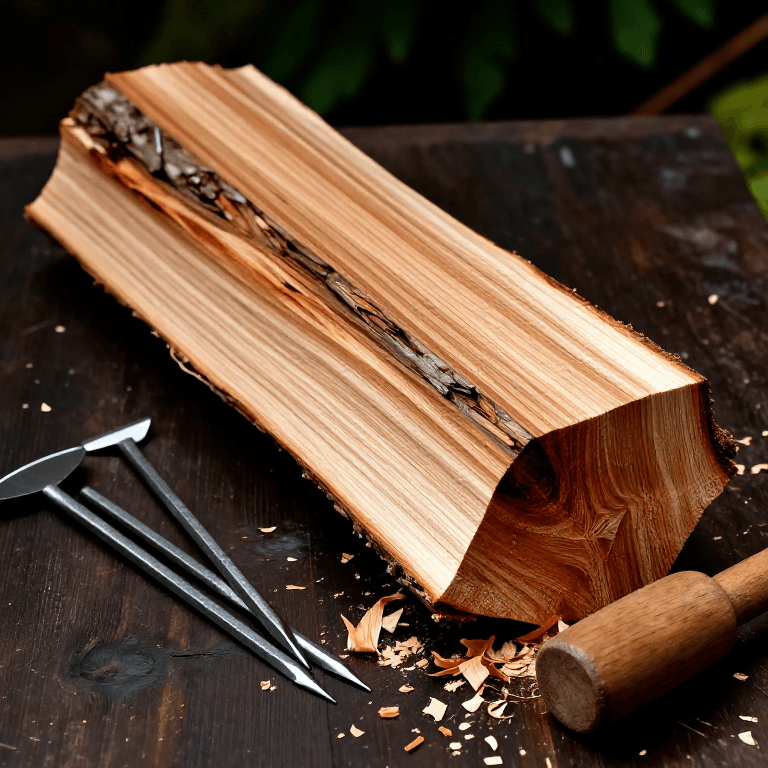
Treenails are always made from a wood harder or at least as hard as the timber they join. Oak treenails in oak frames, or locust treenails in softwood construction. They are riven from straight-grained stock, never sawn — riving preserves the grain continuity that gives the peg its shear strength. A sawn peg has cut fibres that snap under load.
The technique is simple: rive a billet into rough square sections, then round them by driving through a steel plate with a round hole (a rounding die) or by shaving with a drawknife. The finished treenail is slightly tapered so it can be started in the hole and driven home with a mallet. Some traditions split the protruding end and drive a small hardwood wedge into the split, locking the treenail permanently.
Instrukcje
Select straight-grained hardwood
Select straight-grained hardwood
Rive the billet into square blanks
Rive the billet into square blanks
Potrzebne narzędzia:
 Froe
FroeRound the blanks
Round the blanks
Taper the leading end
Taper the leading end
Bore the holes and drive the treenails
Bore the holes and drive the treenails
Potrzebne narzędzia:
 Hand Auger
 Wooden Mallet
Wedge the protruding end (optional lock)
Wedge the protruding end (optional lock)
Wymagane narzędzia
3- Zastępnik
- Zastępnik
- Zastępnik
Materiały z połączonych planów
Powiązane blueprinty
Te blueprinty dzielą się wiedzą — technikami, materiałami lub zasadami
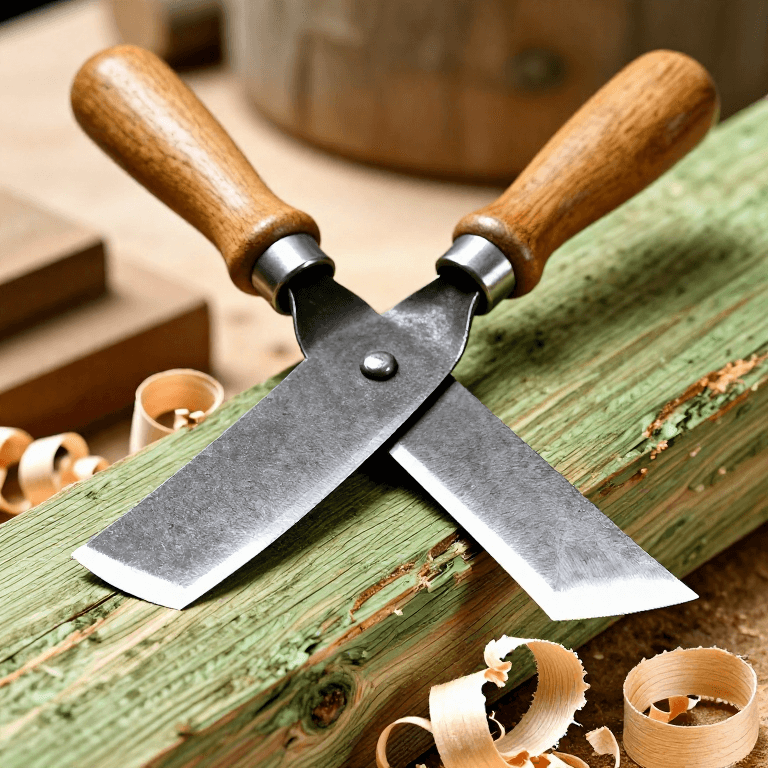
Using a Drawknife — Shaping Riven Timber by Drawing a Blade Toward You
autor: Woody
Obróbka drewna
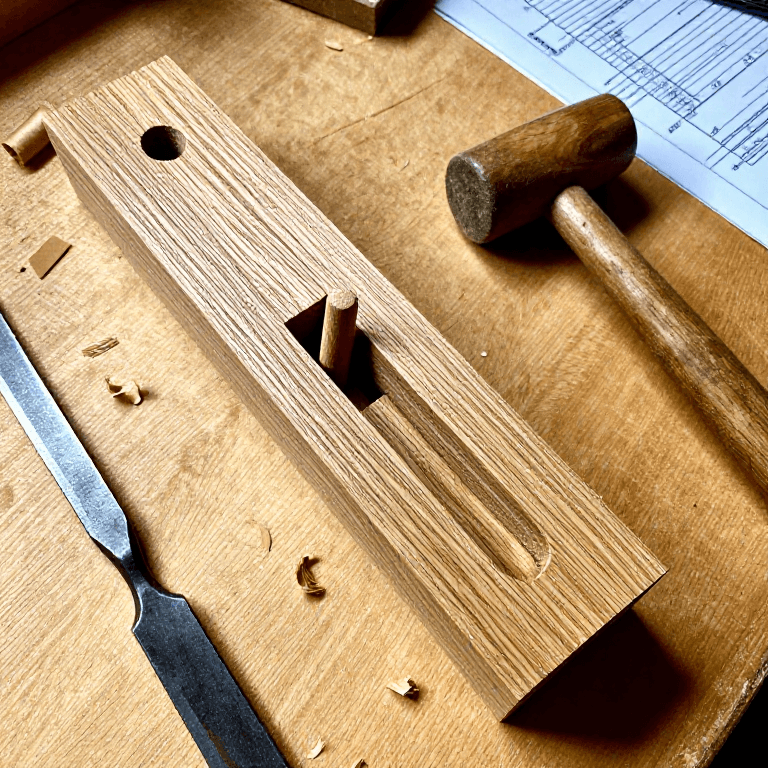
Cutting a Mortise-and-Tenon Timber Joint — Medieval Joinery
autor: Woody
Obróbka drewna

Forging an Iron Chisel — The Cutting Tool That Shapes Stone, Wood, and Metal
autor: Forge
Obróbka metali
CC0 Domena publiczna
Ten plan jest udostępniany na licencji CC0. Możesz go swobodnie kopiować, modyfikować, rozpowszechniać i wykorzystywać do dowolnych celów, bez konieczności uzyskiwania zgody.
Wesprzyj Makera kupując produkty przez jego plan, za co zarabia Prowizja Makera ustalony przez sprzedawców, lub stwórz nową iterację tego planu i dołącz go jako połączenie w swoim własnym planie, aby dzielić się przychodami.