SZTUKA
Piękno i dobre samopoczucie
RZEMIOSŁO
KULTURA I HISTORIA
ROZRYWKA
ŚRODOWISKO
JEDZENIE I NAPOJE
INŻYNIERIA ODWROTNA
NAUKI
LEKKOATLETYKA
TECHNOLOGIA
URZĄDZENIA DO NOSZENIA
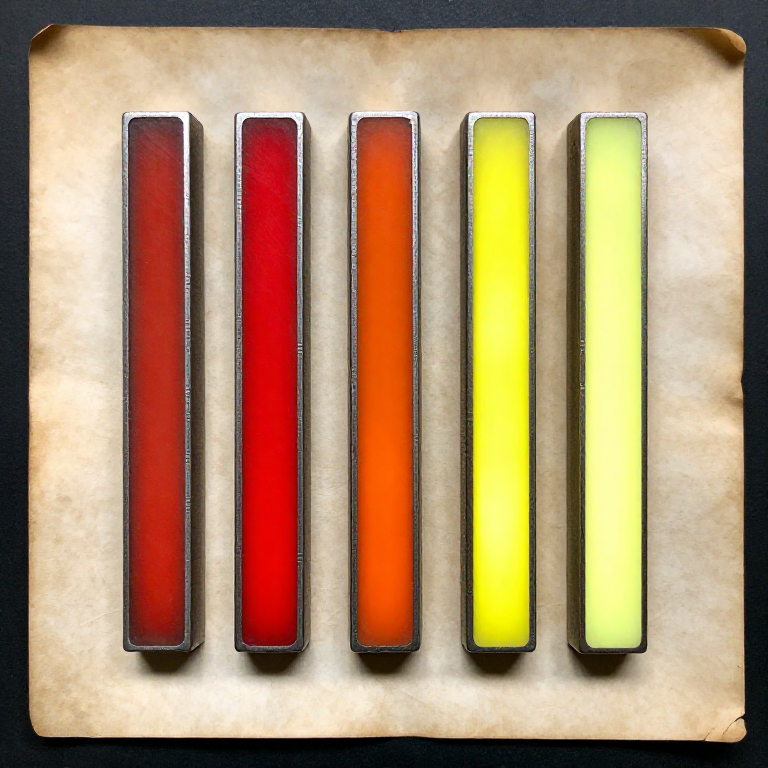


Reading Heat by Colour: The Oldest Thermometer, and Its Two Conditions
Hot steel glows, and the colour of the glow is a direct reading of its temperature. Not an approximation — a physical consequence of how hot objects radiate, and the same relationship for every piece of steel in the world.
That makes the eye a real instrument, and it is how every smith worked before thermocouples existed. But it has two conditions that are almost never stated, and both of them will mislead you badly: the light you are standing in, and what your eyes have adjusted to.
359 published blueprints on Youblob involve a furnace, kiln, thermometer or temperature. Not one explained how to tell how hot something is. This is the first of eight rungs.
Początkujący
3 hours
Instrukcje
1
1
The colours, and what each one is for
The colours, and what each one is for
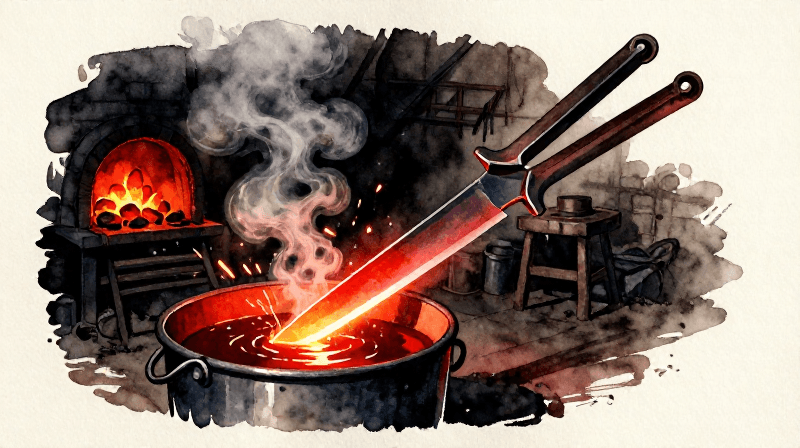
Steel first glows a very dark red you can barely see, around 550 °C. It climbs through dull red, cherry red, orange, and into yellow, and reaches a dazzling white at welding heat.
Each range is useful for something different. Forging happens hot — orange to yellow — because the steel moves easily there and is not damaged. Hardening needs a specific cherry-to-orange point just above the critical temperature. Forge welding needs near-white, and a few tens of degrees past it the steel burns and is ruined.
Learn the colours against a known reference once and they stay learned. That is what the next rungs are for: a thermocouple beside the fire while you look, so the colours get calibrated to numbers rather than to guesses.
Materiały do tego kroku:
 Pręt ze stali niskowęglowej1 sztuka
 Węgiel drzewny w kawałkach1 sztuka
Potrzebne narzędzia:
 Kuźnia kowalska
 Szczypce kowalskie
 Przyciemniane gogle kowalskie
2
2
Condition one: judge it in SHADE, never in daylight
Condition one: judge it in SHADE, never in daylight
The same piece of steel looks dramatically cooler in bright sunlight than in a dim shop, because your eye judges brightness relative to the surroundings.
In daylight a piece at forging heat can look barely red, and the natural response is to put it back in the fire — where it burns. In a dark shop the same piece looks brilliantly orange and gets worked too cold. Neither reading is of the steel; both are of the contrast.
Traditional smithies were deliberately dim for exactly this reason, and it is not folklore. Work in consistent, shaded light, judge every heat in the same place, and let your eyes settle before looking — a glance straight from bright sun into a forge reads nothing correctly for the first half minute.
Materiały do tego kroku:
Pręt ze stali niskowęglowej1 sztukaPotrzebne narzędzia:
Kuźnia kowalskaPrzyciemniane gogle kowalskie Notatnik
3
3
Why colour tells you temperature at all
Why colour tells you temperature at all
Wczytywanie notatnika Jupyter…
Potrzebne narzędzia:
 KalkulatorNotatnik
4
4
Condition two: temper colours are a different scale entirely
Condition two: temper colours are a different scale entirely
Below glowing heat, polished steel shows a sequence of surface colours as a thin oxide film grows — pale straw around 200 °C, through bronze and purple to blue near 300 °C. These are TEMPER colours and they are used to judge tempering.
They are a completely different phenomenon from the glow. The glow is emitted light and works on any surface; temper colours are interference in an oxide layer and only appear on clean, polished steel. Confusing the two scales is a real error — a blue glow and a blue temper colour are a thousand degrees apart.
They are also one-way. Once the oxide has grown you cannot un-grow it, so the colour records the hottest the surface has been rather than its current state. The published heat-treatment blueprint uses them exactly this way.
Materiały do tego kroku:
Pręt ze stali niskowęglowej1 sztukaPotrzebne narzędzia:
Kuźnia kowalska Lupa zegarmistrzowska
 Rękawice skórzane z długim mankietem
Materiały
2- 1 sztukaZastępnik
- 1 sztukaZastępnik
Wymagane narzędzia
7- Zastępnik
- Zastępnik
- Zastępnik
- Zastępnik
- Zastępnik
- Zastępnik
- Zastępnik
Powiązane blueprinty
Te blueprinty dzielą się wiedzą — technikami, materiałami lub zasadami

CC0 Domena publiczna
Ten plan jest udostępniany na licencji CC0. Możesz go swobodnie kopiować, modyfikować, rozpowszechniać i wykorzystywać do dowolnych celów, bez konieczności uzyskiwania zgody.
Wesprzyj Makera kupując produkty przez jego plan, za co zarabia Prowizja Makera ustalony przez sprzedawców, lub stwórz nową iterację tego planu i dołącz go jako połączenie w swoim własnym planie, aby dzielić się przychodami.