Współpraca
SZTUKA
Piękno i dobre samopoczucie
RZEMIOSŁO
KULTURA I HISTORIA
ROZRYWKA
ŚRODOWISKO
JEDZENIE I NAPOJE
INŻYNIERIA ODWROTNA
NAUKI
LEKKOATLETYKA
TECHNOLOGIA
URZĄDZENIA DO NOSZENIA
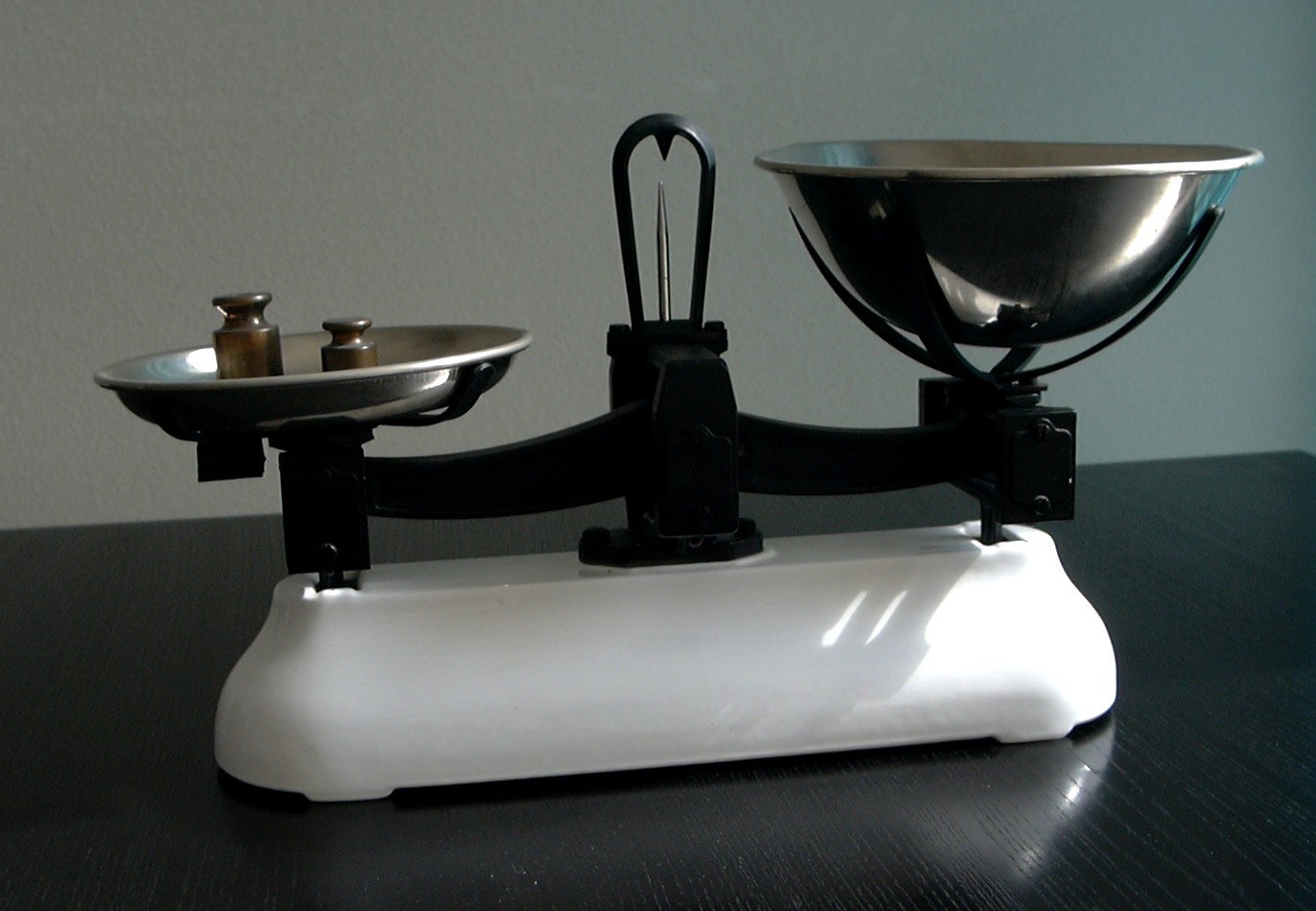


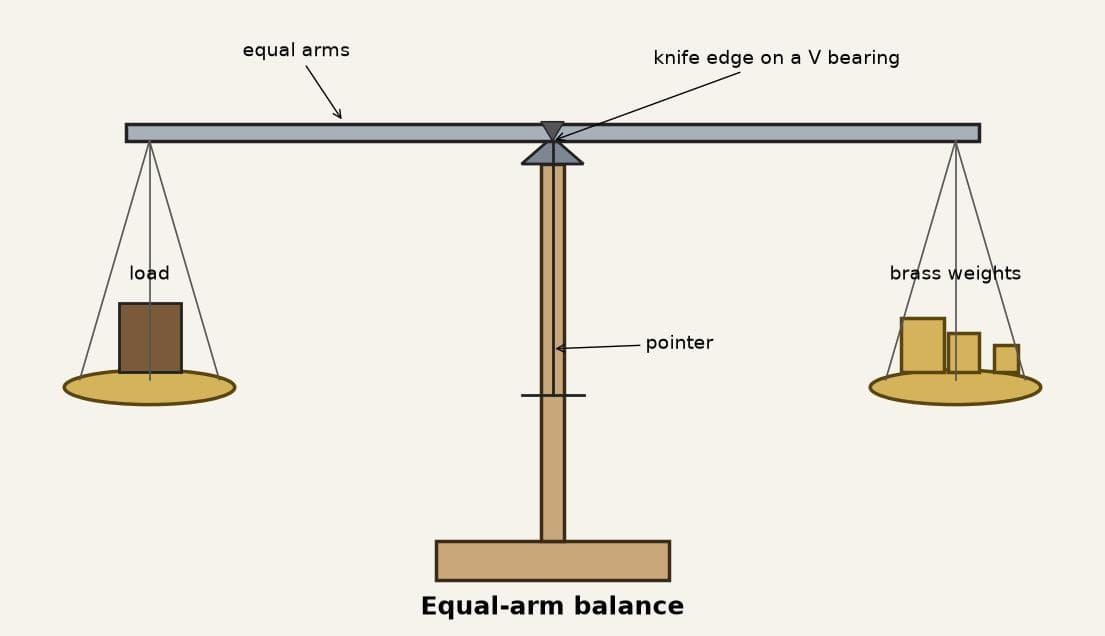
Roberval Balance: a Parallelogram Frame That Keeps Both Pans Level (Roberval, 1669)
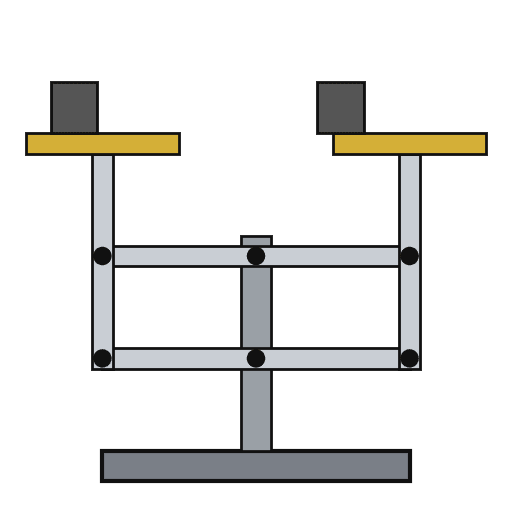
The equal-arm balance rebuilt as a hinged frame. Gilles Personne de Roberval showed it to the Académie Royale des Sciences in 1669. Two bars pivot on a post, joined at their ends by two upright bars into a hinged rectangle; each pan is fixed to an upright, so it stays level as the frame tilts.
Result: a balance on which a weight weighs the same wherever it sits on its pan, even when both loads are on the same side of the post. Later shop scales of the Roberval type keep this frame.
Source: the 1670 Journal des savants account as given by J. F. Hall, Two Hundred Years of Analyzing Roberval's Balance, Caltech Report 2024-01. Unknown: materials and sizes. Picture: Wikimedia Commons.
Średniozaawansowany
1 day
Instrukcje
1
1
Make the six frame pieces and the post
Make the six frame pieces and the post
Make a post standing on a pedestal, a top bar and a bottom bar of the same length, and two upright bars of the same length as each other. Mark each horizontal bar at its exact middle: its two arms must be equal. Make two flat platforms (the pans). Not given: the material and the sizes.
Materiały do tego kroku:
 Nieznany materiał1 bars, post, pedestal, platforms
Potrzebne narzędzia:
 Nieznane wymiary
2
2
Pin the frame to the post
Pin the frame to the post
Pin the top bar to the post at its middle, and the bottom bar to the post at its middle, directly below, so both can turn. Pin the left upright to the left ends of both bars, and the right upright to the right ends. The four bars now form a rectangle that can lean into a parallelogram; the uprights always stay upright. Tight pins bind unless every length is exact, so Hall advises slotting the lower hole in the post upright: it may slide up and down but not sideways. Ours: drill the pin holes by hand.
Materiały do tego kroku:
Nieznany materiał1 six pinsPotrzebne narzędzia:
 Wiertarka ręczna
3
3
Fix the pans to the uprights
Fix the pans to the uprights
Fix one platform rigidly to each upright, so it cannot turn. The weights sit on the platforms or hang from them. As the frame tilts, the uprights move straight up and down and the platforms stay level.
Materiały do tego kroku:
Nieznany materiał1 fixings4
4
Test it
Test it
With the pans empty the frame should rest level. Put equal weights on the two pans: they balance. Now slide one weight to the edge of its pan, or to the far side of the post: they still balance. With unequal arms, weights balance when their ratio is the inverse of the arm lengths.
Potrzebne narzędzia:
 Ciężarek
Wymagane narzędzia
3- Zastępnik
- Zastępnik
- Zastępnik
Materiały z połączonych planów
Według tego planu powstaje
Powiązane blueprinty
Te blueprinty dzielą się wiedzą — technikami, materiałami lub zasadami

CC0 Domena publiczna
Ten plan jest udostępniany na licencji CC0. Możesz go swobodnie kopiować, modyfikować, rozpowszechniać i wykorzystywać do dowolnych celów, bez konieczności uzyskiwania zgody.
Wesprzyj Makera kupując produkty przez jego plan, za co zarabia Prowizja Makera ustalony przez sprzedawców, lub stwórz nową iterację tego planu i dołącz go jako połączenie w swoim własnym planie, aby dzielić się przychodami.