UBUHANZI
UBWIZA N'UBUZIMA
UBUKORIKORI
UMUCO N'AMATEKA
IMYIDAGADURO
IBIDUKIKIJE
IBIRIBWA N'IBINYOBWA
UBWUBATSI BUSUBIRA INYUMA
UBUMENYI
SIPORO
IKORANABUHANGA
IBYAMBARWA
Why a Series String Drifts, and What Balancing Actually Does
Rung 3 found extra pins on the pack connector — C1, C2, C3, C4 — and left them unexplained. This is what they are for.
Cells wired in series carry exactly the same current and there is nothing anyone can do about that. What they do not share is capacity, temperature or age, so they drift apart in state of charge, and a pack must stop at the first cell to hit a limit. The weakest cell sets the pack, the strongest cell never gets used, and without intervention every cycle makes the gap a little wider.
Here you build a four-cell string, deliberately unbalance it, measure exactly how much capacity that costs, and then fit a balancing board and watch it claw the difference back — slowly, and by throwing energy away, because that is the only thing a cheap balancer can do.
Hagati
About 4 hours, including a full charge
Amabwiriza
1
1
Build the string and give it an honest baseline
Build the string and give it an honest baseline
Use the four labelled cells from rung 6 in the four-cell holder. Before anything else, measure each cell **individually and out of the holder**, rested, to three decimal places, and write the four numbers down with the date.
Then measure each cell's actual capacity, one at a time. Charge it to 4.20 V, rest it thirty minutes, then discharge through the power resistor at a steady current, timing until it reaches 3.00 V. Amp-hours is current times hours. It takes four sessions and it is the only way to know what you actually have: the number printed on the wrapper is a rating, not a measurement, and a cell that has been in a drawer for two years will not meet it.
Write the four capacities in your notebook as a table. That table is the input to step 3's arithmetic, and you will compare against it at the end of step 5.
If all four come out within a couple of per cent of each other, deliberately unbalance the string before going on: charge three of them fully and leave the fourth at about 60%. You need a visible effect to measure, and a well-matched string will not give you one in an afternoon.
One cell at a time on the charger. Never charge a series string without per-cell supervision — which is the whole point of this rung and the reason step 5 exists.
Ibikoresho bikenewe:
 Igifatiro cya batiri 18650 cy'uduce 4
 Igifata bateri
 Ikibaho cyo gushyiraho amashanyarazi cya LiPo
 Multimeter ya dijitali — ibipimo byihitamo, RMS nyayo
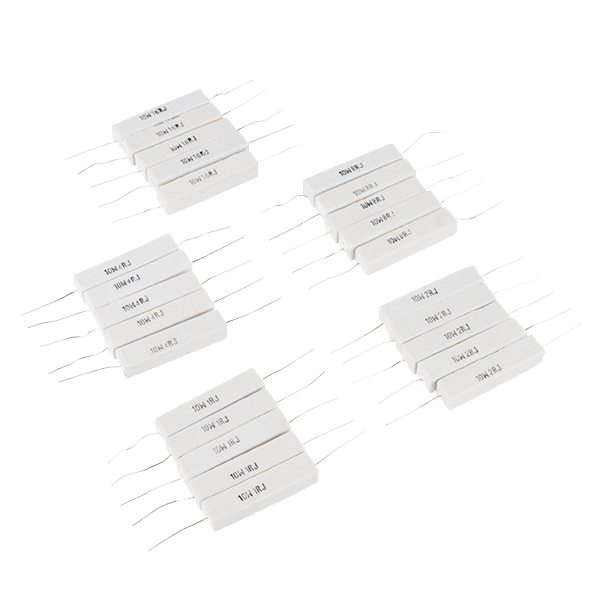 Power Resistor Kit - 10W (25 pack)
 Ihuriro ry'ibikonjesha (bya aluminiyumu)
 Isaha yo Guhagarika
 Igenzura bateri (kibara kulombe)
 Insinga z'Ibizamini Zifite Ibifatanyo
 Amadarubindi Asobanutse yo Kwirinda
 Igitabo cya laboratwari (gifite kopi)
 Selire ya litiyumu 18650
2
2
Discharge the string and watch the weakest cell end the job
Discharge the string and watch the weakest cell end the job
Wire the four-cell holder in series and bring a thin tap wire out of each cell junction, exactly as in rung 3 step 5. Those taps are how you watch individual cells while the string works.
Discharge the whole string through the power resistor at a steady current — an amp is plenty and keeps the resistor manageable. Every five minutes, read **all four cell voltages in turn** and the string total, and write them in a row.
Stop the moment **any single cell** reaches 3.00 V. Not the string; a cell. This is the point of the whole exercise: the string total will still look perfectly healthy — four cells averaging 3.4 V is a string at 13.6 V, which no total-voltage cut-off would object to — while one cell inside it is already at its floor and being dragged below.
Now look at your rows. The weak cell's voltage separates from the others early and then dives; the strong ones are still on their plateau when you stop. Work out how much charge the string delivered and compare it against the strongest cell's own capacity from step 1. The difference is capacity you own and cannot reach.
Over-discharging a lithium cell below about 2.5 V damages it permanently and makes it dangerous to recharge. Watching the cells rather than the total is not caution, it is the only correct way to run a string.
Ibikoresho bikenewe:
Igifatiro cya batiri 18650 cy'uduce 4Power Resistor Kit - 10W (25 pack)Ihuriro ry'ibikonjesha (bya aluminiyumu)Multimeter ya dijitali — ibipimo byihitamo, RMS nyayo Igipimo cy'amashanyarazi kinyuranyeIsaha yo GuhagarikaInsinga z'Ibizamini Zifite Ibifatanyo
 Insinga yo guhuzaAmadarubindi Asobanutse yo KwirindaIgitabo cya laboratwari (gifite kopi)
3
3
The arithmetic of drift
The arithmetic of drift
Gupakira ikaye ya Jupyter…
4
4
Build one balancing channel by hand
Build one balancing channel by hand
Before fitting a board that does it invisibly, build one channel so you can see what it does. A passive balancer is genuinely this simple.
Across one cell, put a **100 Ω resistor in series with a logic-level MOSFET**, drain to the cell's positive, source to the cell's negative. Drive the gate from a comparator that turns on whenever that cell exceeds the reference — 4.15 V is a sensible threshold, set with the potentiometer and checked against the meter. Use a 1 W or larger resistor: step 3 computed 0.18 W, and a quarter-watt part running at most of its rating in a closed pack is a bad idea.
Test it on the bench supply first, with no cell involved: sweep the supply up through the threshold and confirm the MOSFET turns on and the resistor starts drawing its 42 mA. Measure the current rather than assuming it; a MOSFET that is not fully on is a heater.
Now put it on the cell that runs high in your string and charge the string gently. That cell should stop climbing while the others catch up. You will feel the resistor get warm, and that warmth is the energy you are deliberately destroying — passive balancing does not move charge from a full cell to an empty one, it burns the difference.
Four of these, one per cell, is a complete passive balancer. Which is, very nearly, what is on the board in the next step.
Ibikoresho by'iyi ntambwe:
Power Resistor Kit - 10W (25 pack)1 igice Ikusanyirizo ry'Ibirwanya Amashanyarazi bya 1/4 W1 igiceInsinga yo guhuza1 igice
Ibikoresho bikenewe:
 Ikibaho cy'Ibizamini
 Umutwe w'insinga za Dupont (igabo-igore)
 MOSFET y'urwego rwa lojiki IRLZ44N
 Urunigi rwibumbye rwa mugereranya kabiri LM393
 Potensiyometero iringaniye ya kilo-ohm 10
 Isoko ry'Amashanyarazi ryo ku MezaMultimeter ya dijitali — ibipimo byihitamo, RMS nyayo
 Igipima Ubushyuhe cya Inifurarouje
 Ahantu ho Gushongesha
 Igikoresho cyo gukuramo igifuniko cy'insingaAmadarubindi Asobanutse yo Kwirinda
5
5
Fit a real BMS and measure what it bought you
Fit a real BMS and measure what it bought you
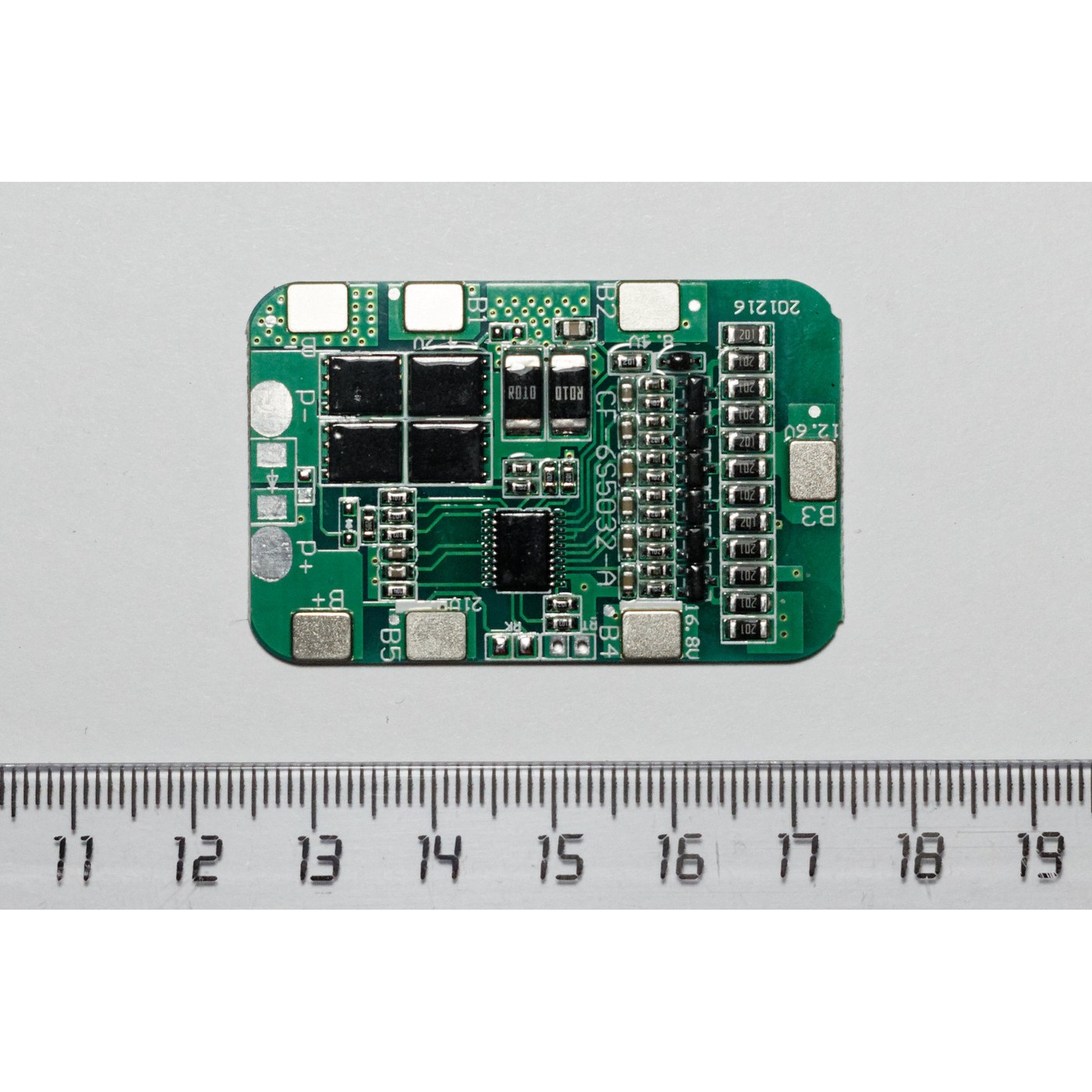
The green board in the photograph on this page is a 4S battery management system, and it is the commodity version of everything in steps 2 and 4. Its terminal strip takes **B−, then one wire per cell junction, then B+** — the same taps as the pack connector in rung 3.
Wire it carefully and in order, from B− upwards. Getting a balance lead onto the wrong junction reverses a cell input, and the board will not survive it. Measure each wire against B− with the meter before you plug the connector in, and confirm the voltages step up cell by cell. Do that check every time.
What the board is doing, in three jobs:
- **Overcharge protection** — it disconnects if any cell passes about 4.25 V.
- **Over-discharge protection** — it disconnects if any cell falls below about 2.5 V. This is the protection you were providing by hand with the meter in step 2.
- **Balancing** — the small resistors along one edge, doing what you built in step 4.
Charge the string with the board fitted and watch the four cell voltages converge over several hours. Put the infrared thermometer on the balance resistors while it works; they will be the warmest things on the board and that is correct.
Then repeat the step 2 discharge and compare the delivered amp-hours with the first run. That difference is the answer to the question this rung asks, measured on your own bench.
A BMS protects cells. It cannot repair them: a cell whose capacity has genuinely collapsed will still limit the pack, and no amount of balancing will change that. Replacing one cell in an old pack with a new one makes the mismatch worse, not better.
Ibikoresho by'iyi ntambwe:
Insinga yo guhuza1 igiceIbikoresho bikenewe:
 Ikibaho cya BMSIgifatiro cya batiri 18650 cy'uduce 4Multimeter ya dijitali — ibipimo byihitamo, RMS nyayoIgipima Ubushyuhe cya InifuraroujeIkibaho cyo gushyiraho amashanyarazi cya LiPoPower Resistor Kit - 10W (25 pack)Ihuriro ry'ibikonjesha (bya aluminiyumu)Ahantu ho Gushongesha
 Urusinga rw'isudire
 Ikiyeyusha cyo GusudiraIgikoresho cyo gukuramo igifuniko cy'insinga
 Utwuma two gufata dufite impera zityayeAmadarubindi Asobanutse yo KwirindaIgitabo cya laboratwari (gifite kopi)
6
6
History and context
History and context
**Attribution, stated honestly.** There is no single patent for cell balancing and none is asserted here. The problem is arithmetic — identical current, different capacity — and it was recognised as soon as anyone put cells in series, which is to say in 1800 with Volta's pile. What changed with lithium-ion is the *consequence*: a nickel cell that is overcharged vents and gets hot, while a lithium cell that is overcharged can do what rung 9 describes. Balancing stopped being an efficiency measure and became a safety requirement.
That is why the pack connector grew cell taps and why every lithium pack sold today has a protection board inside it, while a nickel-cadmium pack of the same era had nothing but cells and a thermistor.
**Passive against active.** Everything here is *passive* balancing: bleed the high cells down and waste the difference. *Active* balancers move charge from the high cell to the low one through an inductor or a transformer, so nothing is thrown away, and they are correspondingly more expensive and more complex. For a four-cell tool pack the passive version is right; for a car pack with a hundred cells in series it stops being right, because the energy you would throw away scales with the string.
**Honest limits.** Passive balancing is slow, as step 3 showed: 300 mAh of imbalance takes seven hours of bleeding. It only works at the top of the charge, where the voltage curve is steep enough to tell the cells apart — on the flat plateau of rung 4 a 50 mV difference could be almost any difference in state of charge. And it cannot fix a mismatch that is growing faster than it can bleed, which is what an ageing pack eventually becomes.
Ibikoresho
3- Power Resistor Kit - 10W (25 pack)10% komisiyo1 igice$5.74
- Umwanya
- 2 ibiceUmwanya
Ibikoresho bikenewe
27- 14 vendors sell this, none ship to you yetUmwanya
- Ikibaho cyo gushyiraho amashanyarazi cya LiPo10% komisiyoUmwanya
- Power Resistor Kit - 10W (25 pack)10% komisiyo$5.74
- Ihuriro ry'ibikonjesha (bya aluminiyumu)10% komisiyoUmwanya
- Umwanya
- Igenzura bateri (kibara kulombe)10% komisiyoUmwanya
- Igitabo cya laboratwari (gifite kopi)10% komisiyoUmwanya
- Selire ya litiyumu 1865010% komisiyoUmwanya
- Umwanya
- 1 vendor sell this, none ship to you yetUmwanya
- Umwanya
- Ikibaho cya BMS10% komisiyoUmwanya
- Umwanya
- Ikiyeyusha cyo Gusudira10% komisiyoUmwanya
Igiteranyo Giteganyijwe
Ibyo uwabikoze yaguze. Ibikoresho bidafite igiciro ubigura aho ubibonye.
Blueprint zijyanye
Izi blueprint zisangira ubumenyi — uburyo, ibikoresho cyangwa amahame

One Can, Many Tools: The 18650 and the Safety Devices in Its Cap
na Volt
Ibikoresho by'Amashanyarazi
41
0
0
0
0
0
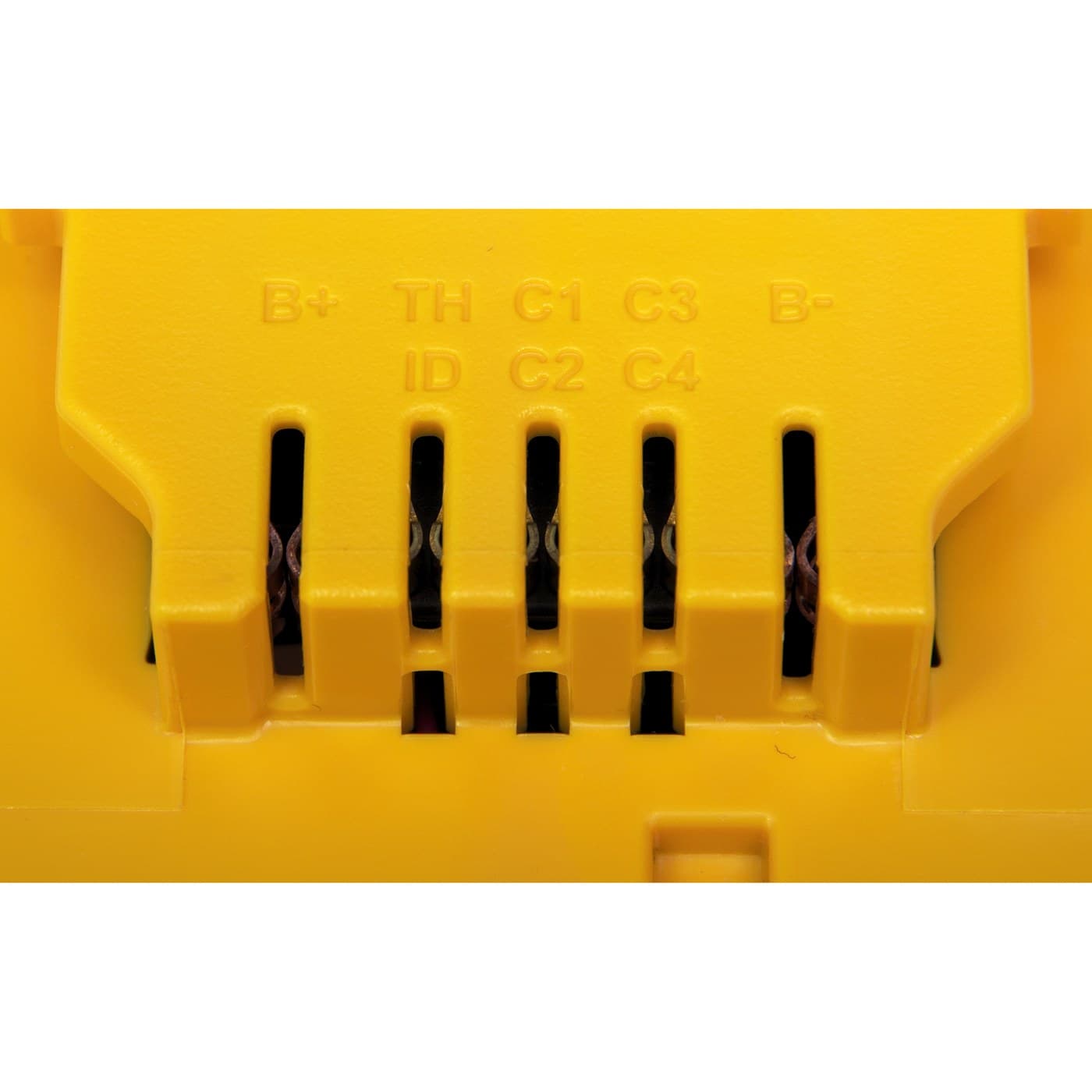
The Pack as a Part: Contacts, Keying and the Third Wire
na Emma
Ingufu
35
0
0
0
0
0
Power: Why It Works on USB and Dies on a Battery
na Volt
Ibikoresho by'Amashanyarazi
42
0
0
0
0
0
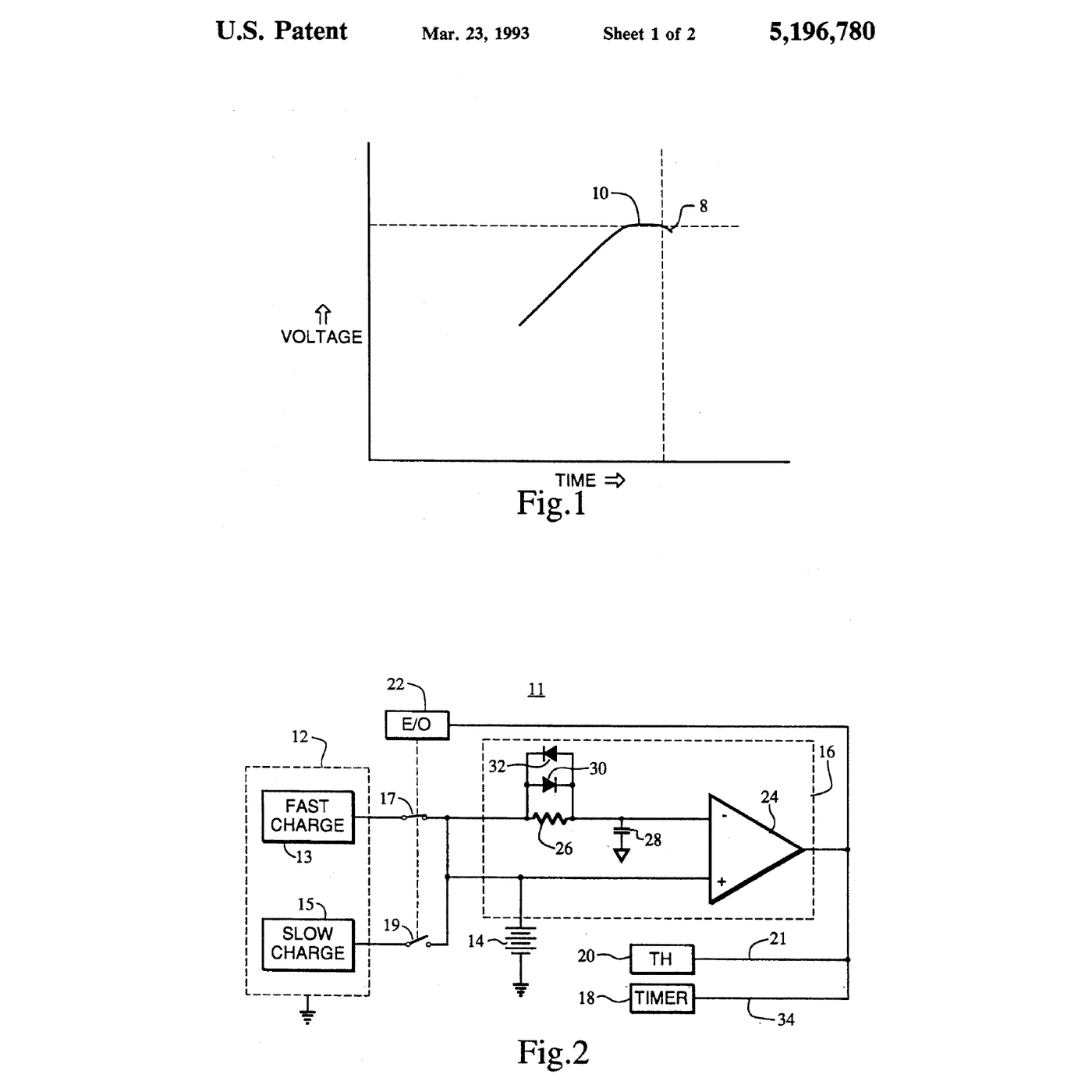
Knowing When To Stop: Finding the Peak That Says Full
na Volt
Ibikoresho by'Amashanyarazi
36
0
0
0
0
0
CC0 Umurenge rusange
Iyi blueprint yasohowe munsi ya CC0. Ushobora gukoporora, guhindura, gukwirakwiza no gukoresha nta kwemererwa.
Shyigikira Umuremyi ugura ibicuruzwa binyuze muri Blueprint ye Komisiyo y'Umuremyi byashyizweho n'Abacuruzi, cyangwa kora verisiyo nshya y'iyi Blueprint ukayinjiza nk'isano muri Blueprint yawe kugira ngo musangire inyungu.