Ubufatanye
UBUHANZI
UBWIZA N'UBUZIMA
UBUKORIKORI
UMUCO N'AMATEKA
IMYIDAGADURO
IBIDUKIKIJE
IBIRIBWA N'IBINYOBWA
UBWUBATSI BUSUBIRA INYUMA
UBUMENYI
SIPORO
IKORANABUHANGA
IBYAMBARWA
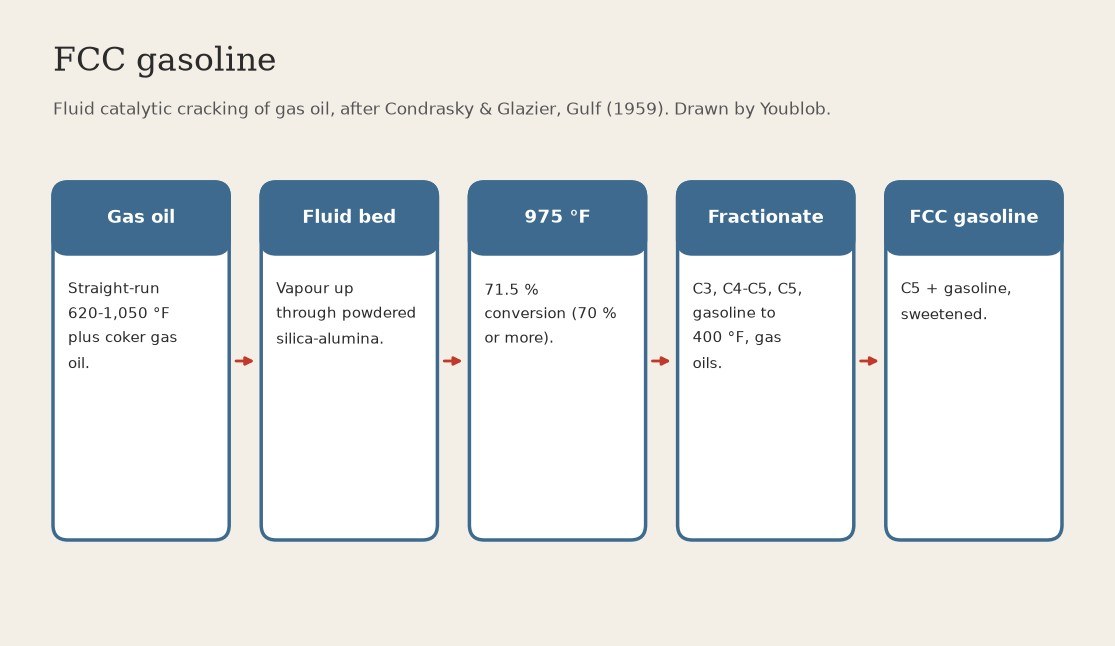

FCC Gasoline: Gas Oil Cracked over Fluidised Silica-Alumina at 975 °F, 71.5 % Conversion (Gulf, US 3,071,535)
In a fluid catalytic cracker, gas oil vapour streams up through a bed of fine silica-alumina powder kept floating by the gas, and breaks into gasoline and lighter products. Gulf ran theirs hotter than usual, at 975 °F, to make more butylenes for alkylation.
Result (Gulf's example, barrels per day): from 44,840 of gas oil, 15,052 of gasoline boiling to 400 °F plus 4,393 of pentane fraction, with 7,547 of C4-C5, 4,230 of C3, 10,555 of light gas oil and fuel gas. Conversion 71.5 %.
Source: Condrasky & Glazier, US 3,071,535 (Gulf, filed 1959). The heavy gas oil and coker gas oil come from Gulf's own crude unit and coker. Not given: catalyst regeneration, space velocity, how the gasoline is sweetened. Hot oil vapour: fire risk. Picture drawn by Youblob.
Impuguke
1 day
Amabwiriza
1
1
Charge the gas oils
Charge the gas oils
The fresh charge is heavy straight-run gas oil boiling from 620 to 1,050 °F, 36,950 barrels per day in Gulf's example, plus 7,890 of coker gas oil boiling above 400 °F.
Ibikoresho by'iyi ntambwe:
 Amavuta aremereye ya gaze36950 parts by volume
 Amavuta ya gaze ya coker7890 parts by volume
Ibikoresho bikenewe:
 Ikigega cyo kubika peteroli
 Pompe yo kwimura
2
2
Crack over a suspended bed of silica-alumina powder
Crack over a suspended bed of silica-alumina powder
Vaporise the charge and pass it upward through a suspended bed of powdered silica-alumina catalyst, as in a conventional fluid catalytic cracker.
Ibikoresho bikenewe:
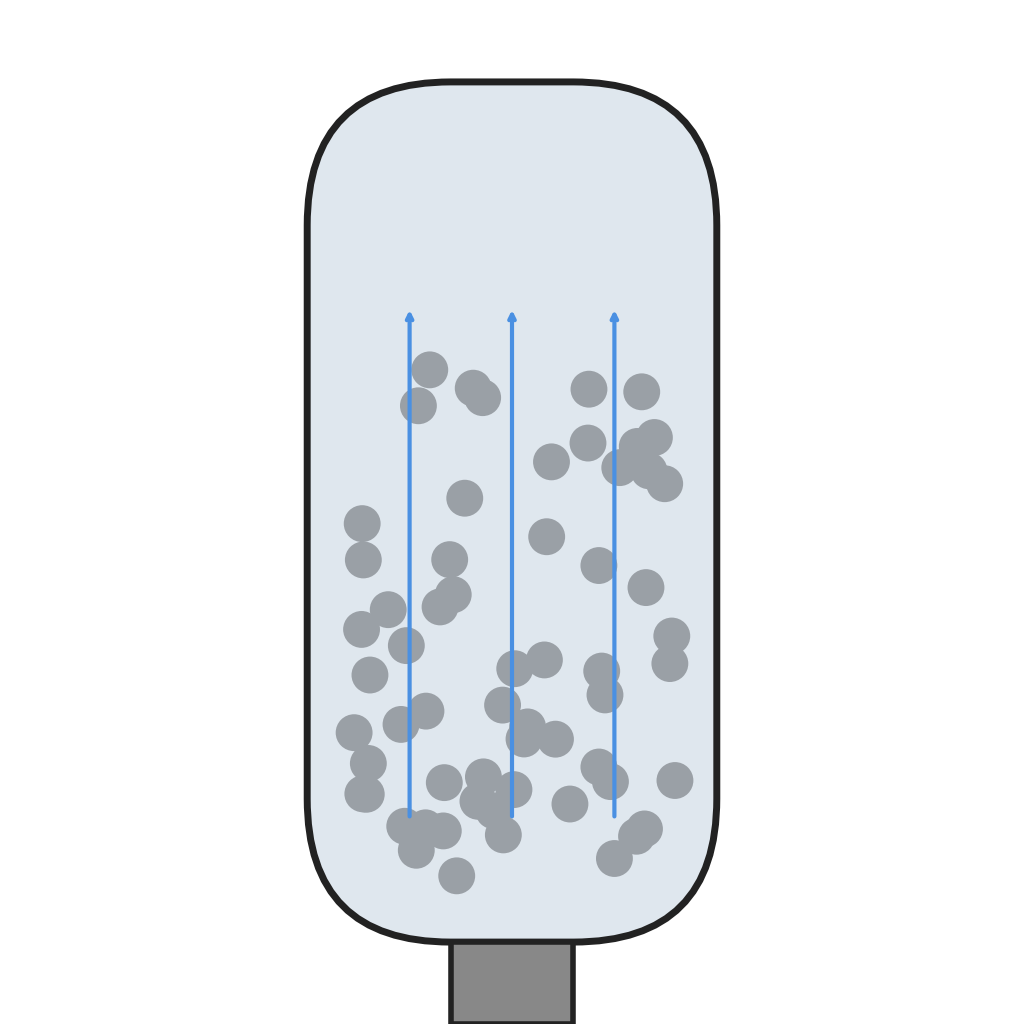 Igikoresho cy'ibice bitemba (fluidised-bed)
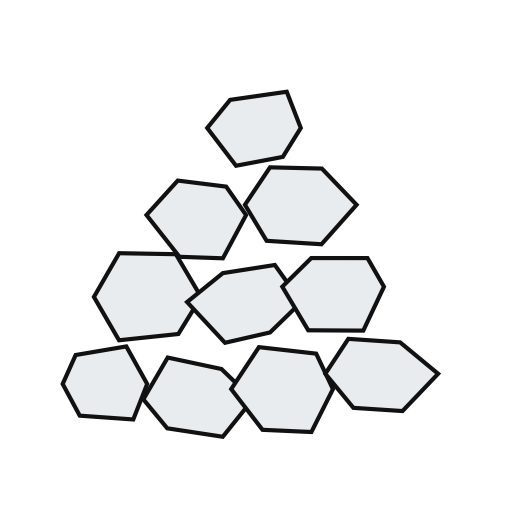 Umusemburo wa jeli ya silika-alumina
3
3
Run at 975 °F or hotter, to 70 % conversion or more
Run at 975 °F or hotter, to 70 % conversion or more
Hold the cracking temperature at 975 °F or more, preferably 975 to 1,050 °F, and set the space velocity to convert at least 70 % by volume of the fresh charge. Gulf's example: 975 °F, 71.5 %.
Ibikoresho bikenewe:
Igikoresho cy'ibice bitemba (fluidised-bed) Pirometero
4
4
Fractionate the products
Fractionate the products
Split the cracked products: fuel gas, a C3 fraction (4,230), a C4-C5 fraction (7,547), a C5 fraction (4,393), gasoline boiling from C6 to 400 °F (15,052), light gas oil (10,555) and heavy oils. The C3 fraction and the light gas oil are kept for polymerisation and hydrotreating. Gulf does not describe the fractionator. Ours: a fractionating still.
Ibikoresho bikenewe:
 Ikinyuza umwuka gitandukanya
5
5
Sweeten the C5 fraction and the gasoline
Sweeten the C5 fraction and the gasoline
The C5 fraction and the gasoline are preferably sweetened in a conventional unit that turns mercaptans into less objectionable sulphur compounds. Gulf does not give the method. This is the FCC gasoline; its part boiling up to 200 °F is the light FCC of the premium blend.
Ibikoresho bikenewe:
Ikigega cyo kubika peteroliIbikoresho
2- 36950 parts by volumeUmwanya
- 7890 parts by volumeUmwanya
Ibikoresho bikenewe
6- Umwanya
- Umwanya
- Umwanya
- Umwanya
Iki gishushanyo gikora
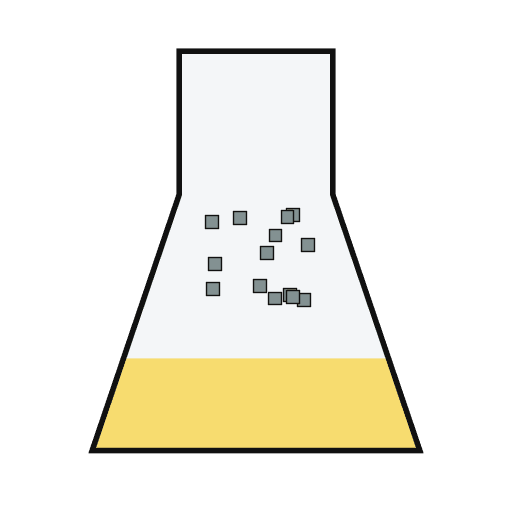
Blueprint zijyanye
Izi blueprint zisangira ubumenyi — uburyo, ibikoresho cyangwa amahame
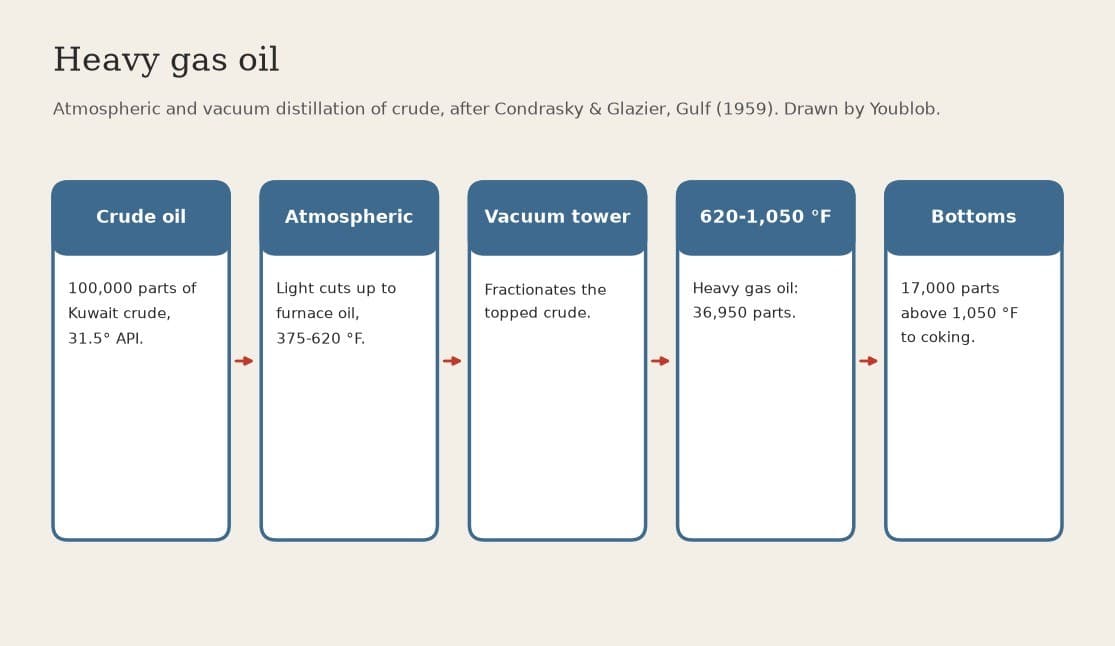
Heavy Gas Oil: the 620-1,050 °F Cut from Atmospheric and Vacuum Distillation of Crude Oil (Gulf, US 3,071,535)
na Charlie
By'Inganda
8
0
0
0
0
0
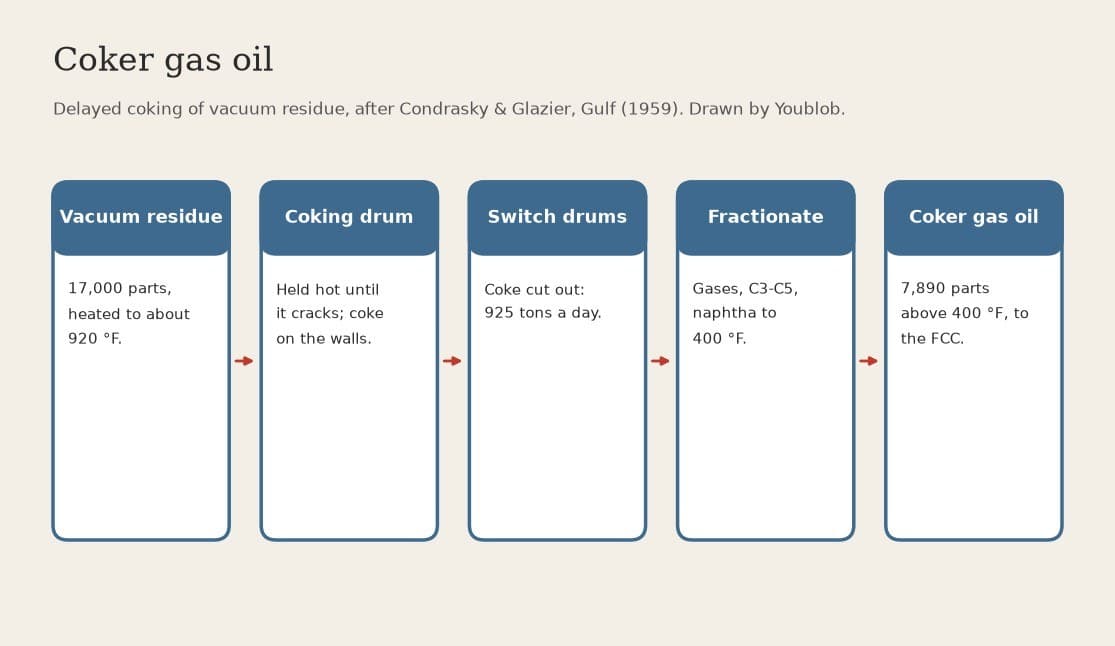
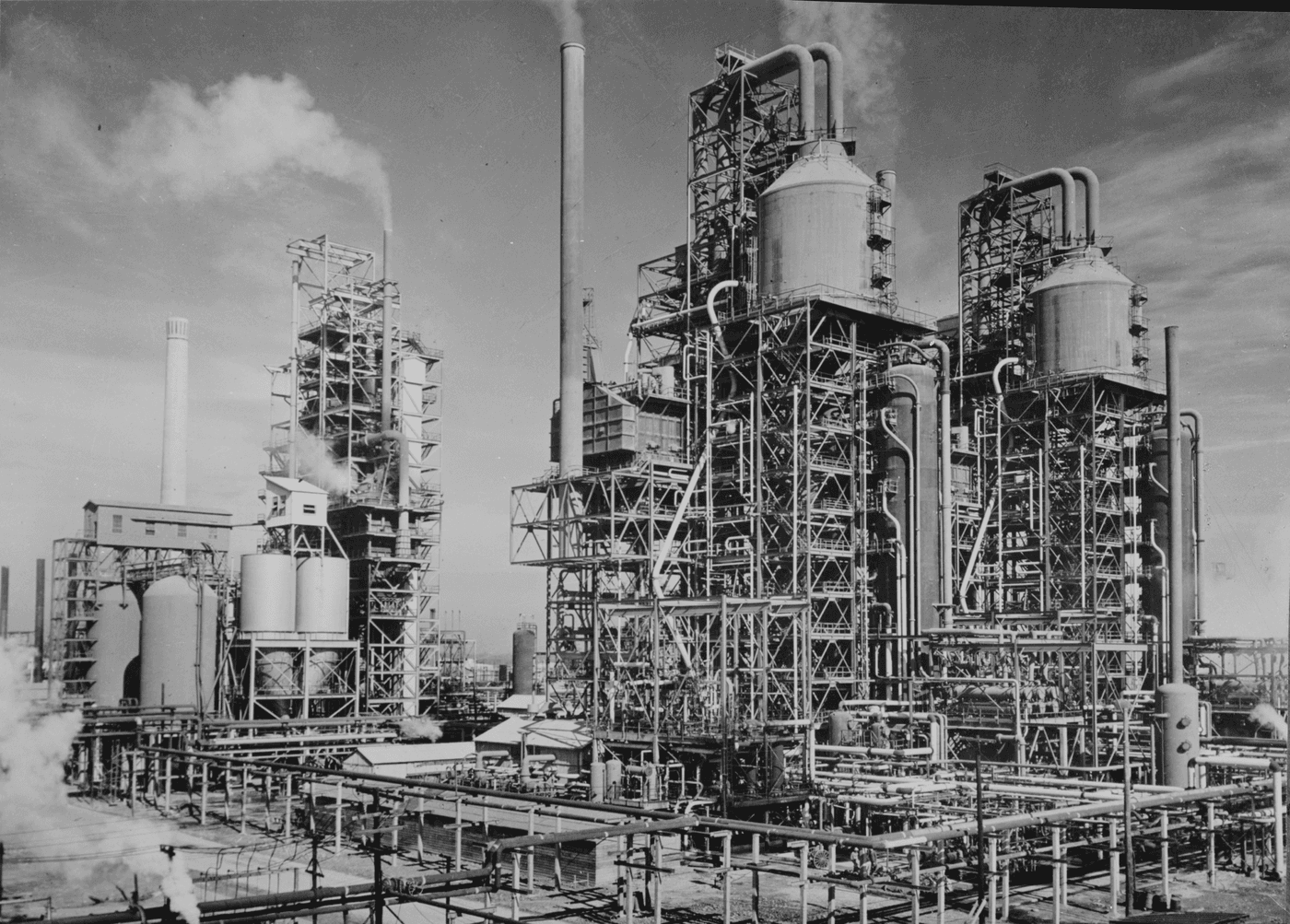
Coker Gas Oil and Petroleum Coke: Vacuum Residue Delayed-Coked at about 920 °F (Gulf, US 3,071,535)
na Charlie
By'Inganda
5
0
0
0
0
0
Aviation Gasoline by Catalytic Cracking over Silica-Alumina Gel at 750 °F (Voorhies, US 2,230,552)
na Charlie
By'Inganda
8
0
0
0
0
0
CC0 Umurenge rusange
Iyi blueprint yasohowe munsi ya CC0. Ushobora gukoporora, guhindura, gukwirakwiza no gukoresha nta kwemererwa.
Shyigikira Umuremyi ugura ibicuruzwa binyuze muri Blueprint ye Komisiyo y'Umuremyi byashyizweho n'Abacuruzi, cyangwa kora verisiyo nshya y'iyi Blueprint ukayinjiza nk'isano muri Blueprint yawe kugira ngo musangire inyungu.