Ubufatanye
UBUHANZI
UBWIZA N'UBUZIMA
UBUKORIKORI
UMUCO N'AMATEKA
IMYIDAGADURO
IBIDUKIKIJE
IBIRIBWA N'IBINYOBWA
UBWUBATSI BUSUBIRA INYUMA
UBUMENYI
SIPORO
IKORANABUHANGA
IBYAMBARWA
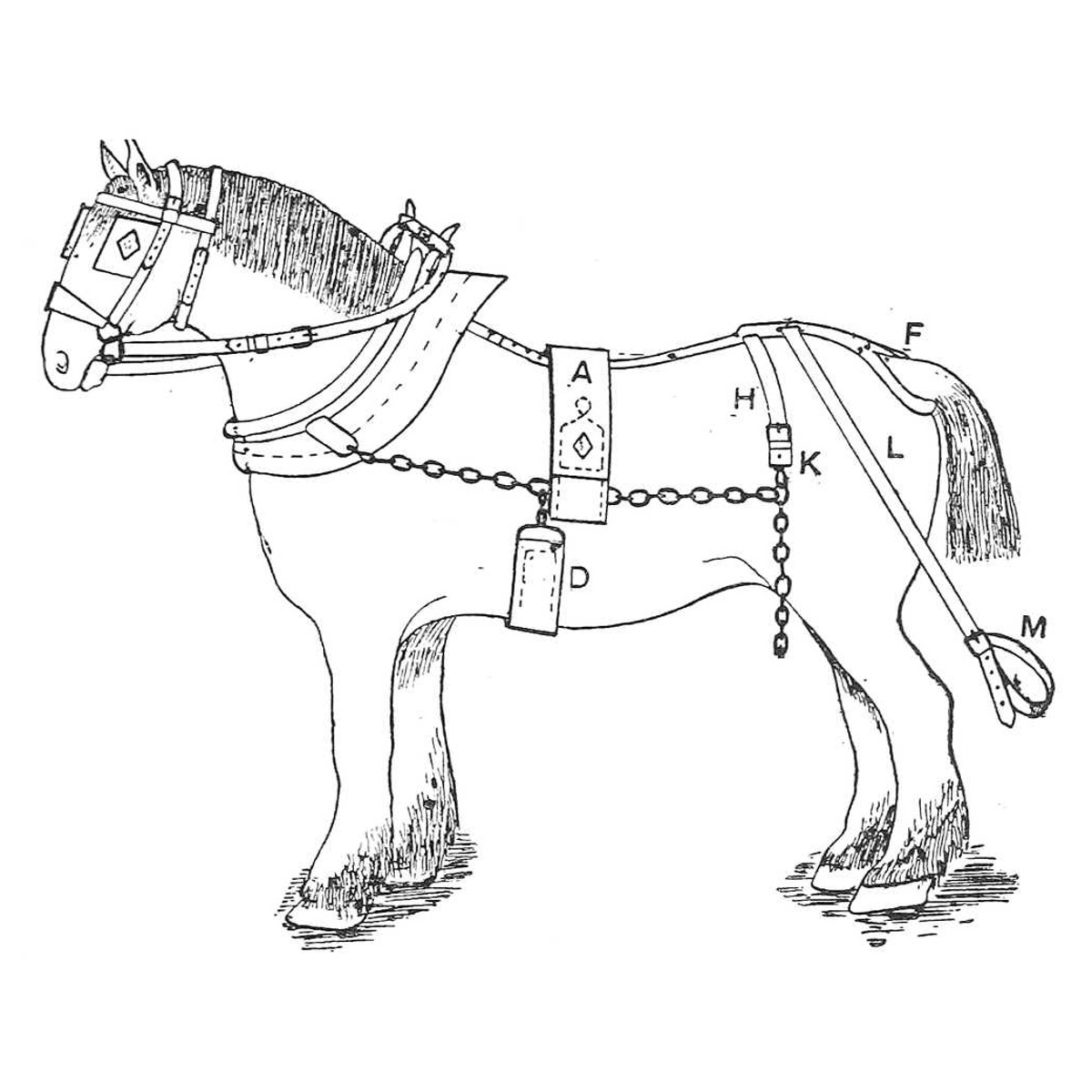


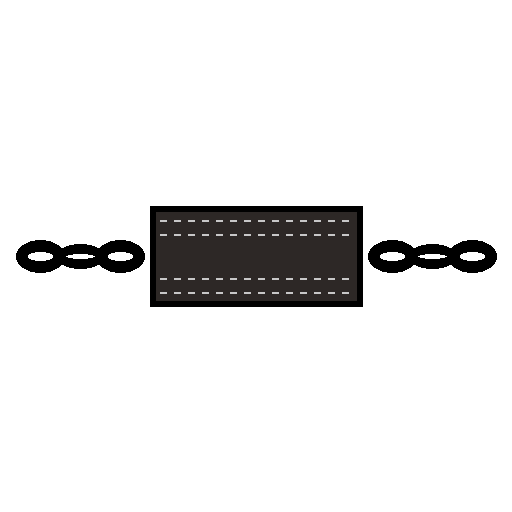
Leader Harness Back-Band and Belly-Band: Eyed Back-Band With Dees, Chain Belly-Band (Hasluck, Harness Making, 1904)
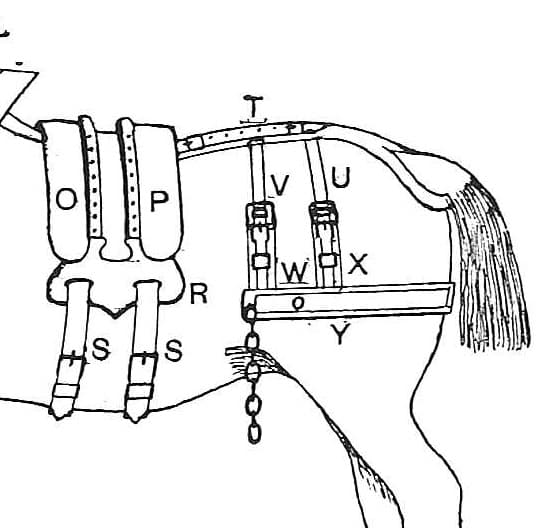
In leader (fore-gear) harness for a horse working in front of the shaft horse, the back-band (A in Fig. 102) carries the chain traces and the belly-band (D) keeps them down. This is the pair from Paul N. Hasluck's Harness Making (1904): a back-band about 4 ft 4 in long with a stitched eye at each end and two dees, and a 3 in belly-band between two chains. Every size is his.
Hagati
About 1 day
Amabwiriza
1
1
The back-band marks
The back-band marks
Gupakira ikaye ya Jupyter…
2
2
Read Harness Making, ch. VIII
Read Harness Making, ch. VIII
"The back-band A, to carry the traces, is the next part of the harness to be made. It must measure about 4 ft. 4 in. from tip to tip, including the terminal chains or the eye, to which the traces are hooked."
3
3
Cut and mark the back-band
Cut and mark the back-band
If pipe, cut the leather 6 ft 4 in by 5 in. Mark a cross-line 1 ft from each end and another 6 in from each of those, leaving 3 ft 4 in between the two middle marks. Cut a lining piece for each end, as wide as the back-band and 1 ft 3 in long. Shave both tips of the linings and the ends of the turn-in of the back-band thin. Crease, black and rub the back-band, creasing from the extreme lines right along.
Ibikoresho by'iyi ntambwe:
 Uruhu rw'ibikoresho by'ifarashi1 igice
 Irangi ry'uruhu1 igice
Ibikoresho bikenewe:
 Icyuma cyo gukata uruhu
 Ikaramu ya penisile
 Igikoresho cyo gukunja
 Itara rya Propane
 Igikoresho cyo gusiga impande z'uruhu
 Umugozi wo Gupima
4
4
Prick, line and stitch the eye parts
Prick, line and stitch the eye parts
Prick from the outer cross-line at each end as far as the double will run, five rows with two on each side. Put the lining under the space between the two lines so that it is 6 in over one and 3 in over the other. Put a narrow piece, shaved at the inner edge and about 6 in long, on both ends at each side of the 6 in space, to strengthen the eye. Stitch the four rows in the 6 in space with three-cord thread, eight stitches per inch; turn the edges of this part and black and rub them.
Ibikoresho by'iyi ntambwe:
Uruhu rw'ibikoresho by'ifarashi1 igice Udodo w'uruhu1 igice
 Igishashara1 igiceIrangi ry'uruhu1 igice
Ibikoresho bikenewe:
 Indobo yo gutobora uruhuIcyuma cyo gukata uruhu
 Igikoresho cyo gutuza impera
 Urushinge Rutobora
 Inshinge ebyiri zo kudoda uruhu
 Igifashi cy'igiti cyo kudoda uruhu
5
5
Form the eyes and fit the dees
Form the eyes and fit the dees
Turn down the ends, bringing the cross-lines that divide the eye exactly opposite each other; flatten the eye so the lined parts come close together, and tack it. Take two 1 in dees, with a piece of leather inside each on the flat side for about half their width. Put one in each end between the double, close to the eye, one on each side of the back-band, low enough to stitch through the leather inside when stitching the outer row. Tack down the dees and the double, stitch right along both sides, the four rows at both ends and sides running to the top of the double from the cross rows. Stitch across the back-band along the cross-lines near the eye (he says stitch or spot with lace), and open out the eye with a thick piece of wood inside.
Ibikoresho by'iyi ntambwe:
 Impeta ya D y'ibikoresho by'ifarashi2 ibiceUruhu rw'ibikoresho by'ifarashi1 igice
 Udusumari two gukurura ku ishusho1 igiceUdodo w'uruhu1 igiceIgishashara1 igice
Ibikoresho bikenewe:
 InyundoUrushinge RutoboraInshinge ebyiri zo kudoda uruhuIgifashi cy'igiti cyo kudoda uruhu
 Ikibaho cy'igiti cya pinusi
6
6
Make the two trace straps
Make the two trace straps
Cut two straps 10 in by 3/4 in, put a buckle and loop on one end and punch four or five holes in the other. They pass through the dee at the side of the back-band and through a link in the trace, to hold the back-band in place. Some makers line the inner part of the eye with sole leather and put a safe under it, about 1 in wider at the bottom, narrowing to the back-band's width at the top, with the lower corners rounded, stitched in from the eye upwards.
Ibikoresho by'iyi ntambwe:
Uruhu rw'ibikoresho by'ifarashi1 igice Urufunga rw'icyuma rufite urutoki2 ibice
 Uruhu rw'isoli1 igiceUdodo w'uruhu1 igiceIgishashara1 igice
Ibikoresho bikenewe:
Icyuma cyo gukata uruhu Inkoni yo gukora impeta z'uruhu
 Igikoresho gitobora uruhuUrushinge RutoboraInshinge ebyiri zo kudoda uruhu
7
7
Make the belly-band
Make the belly-band
Get a pair of 3 in chains and cut the leather 3 ft 4 in by 3 in. Turn in 4 in at the ends, and shave, edge, black and crease them. Put the leather into the openings in the chains, stitch four rows along the double part, and spot or stitch across near the chain.
Ibikoresho by'iyi ntambwe:
 Umunyururu w'icyuma2 ibiceUruhu rw'ibikoresho by'ifarashi1 igiceIrangi ry'uruhu1 igiceUdodo w'uruhu1 igiceIgishashara1 igice
Ibikoresho bikenewe:
Icyuma cyo gukata uruhuIgikoresho cyo gutuza imperaIgikoresho cyo gukunjaItara rya PropaneUrushinge RutoboraInshinge ebyiri zo kudoda uruhuIgifashi cy'igiti cyo kudoda uruhuUmugozi wo Gupima8
8
Troubleshooting
Troubleshooting
Back-band troubleshooting.
Flow
Loading...
9
9
History and honest limits
History and honest limits
From **Harness Making**, edited by Paul N. Hasluck, Cassell, 1904 (Project Gutenberg 70169), chapter VIII, "Fore Gear or Leader Harness", pp. 104-106, Fig. 102; every figure was checked on the archive.org scan (harnessmaking00hasl). He does not explain "if pipe" further. The long crupper, hip straps and tugs of the same gear are not made here. Stitching rather than lacing across the eye, the tools and metric figures are ours.
Ibikoresho
9- Umwanya
- 3 ibiceUmwanya
- 4 ibiceUmwanya
- 4 ibiceUmwanya
- Umwanya
- Umwanya
- Umwanya
- 1 igiceUmwanya
- 2 ibiceUmwanya
Ibikoresho bikenewe
15- Umwanya
- 1 vendor sell this, none ship to you yetUmwanya
- Umwanya
- Umwanya
- 1 vendor sell this, none ship to you yetUmwanya
- Umwanya
- Umwanya
- Umwanya
- Umwanya
- Umwanya
- Umwanya
Iki gishushanyo gikora
Blueprint zijyanye
Izi blueprint zisangira ubumenyi — uburyo, ibikoresho cyangwa amahame
CC0 Umurenge rusange
Iyi blueprint yasohowe munsi ya CC0. Ushobora gukoporora, guhindura, gukwirakwiza no gukoresha nta kwemererwa.
Shyigikira Umuremyi ugura ibicuruzwa binyuze muri Blueprint ye Komisiyo y'Umuremyi byashyizweho n'Abacuruzi, cyangwa kora verisiyo nshya y'iyi Blueprint ukayinjiza nk'isano muri Blueprint yawe kugira ngo musangire inyungu.