Ubufatanye
UBUHANZI
UBWIZA N'UBUZIMA
UBUKORIKORI
UMUCO N'AMATEKA
IMYIDAGADURO
IBIDUKIKIJE
IBIRIBWA N'IBINYOBWA
UBWUBATSI BUSUBIRA INYUMA
UBUMENYI
SIPORO
IKORANABUHANGA
IBYAMBARWA
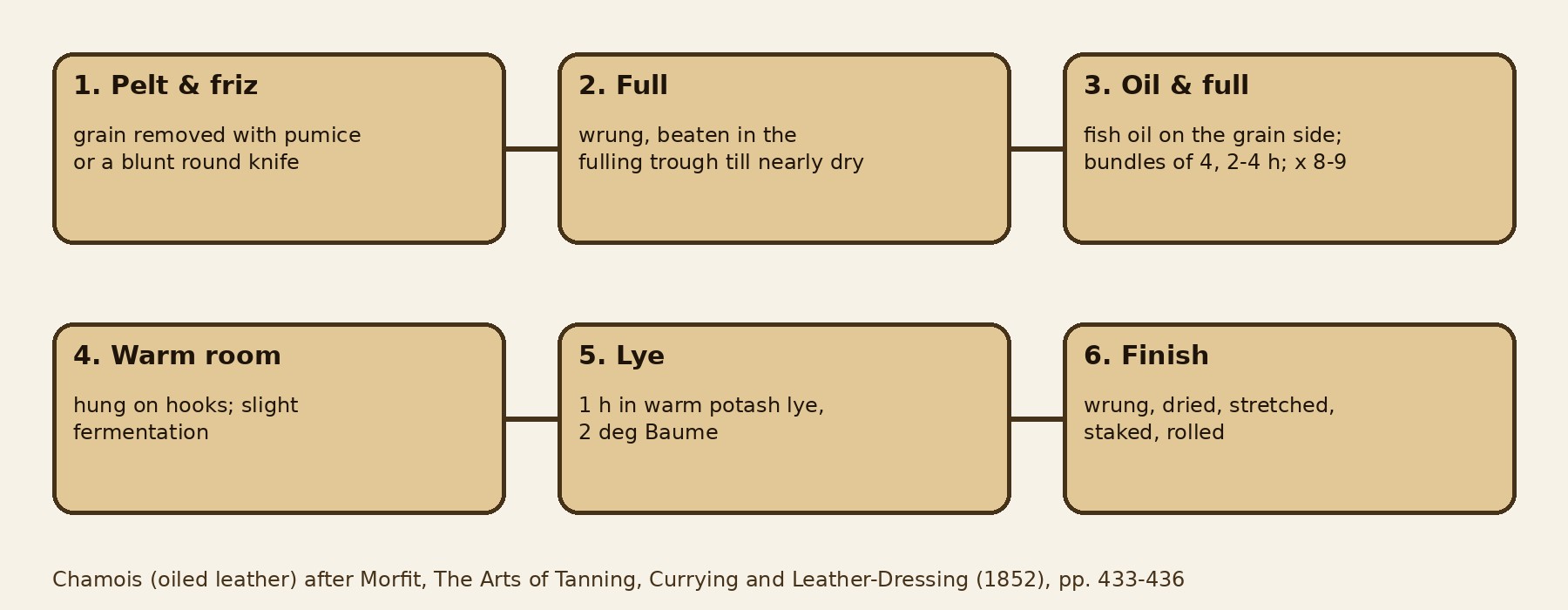


Chamois Wash Leather: Frized Pelts Fulled With Fish Oil Eight or Nine Times (Morfit, 1852)
Oil-tawed chamois or wash leather, from Campbell Morfit's Arts of Tanning, Currying and Leather-Dressing (1852): sheep, goat or deer pelts with the grain rubbed off, beaten again and again with fish oil until it is worked right in, warmed so the oil sets in the fibre, then washed of excess oil in weak potash lye and finished soft. No tannin, no alum.
Hejuru
About 2 weeks
Amabwiriza
1
1
Oil budget
Oil budget
Gupakira ikaye ya Jupyter…
2
2
Read The Arts of Tanning
Read The Arts of Tanning
"Oiled leather is commonly known as chamois, or wash-leather ... from its property of bearing wetting and washing."
3
3
Make pelts and friz
Make pelts and friz
Choose the finest goat, sheep, lamb or deer skins (or thin split sides). Bring them to pelt as for kid leather: wash, lime, fleece, beam and bran. Then friz them: rub with a pumice stone, or work under the round edge of a blunt knife, to remove the grain, even the thickness and soften the skin.
Ibikoresho by'iyi ntambwe:
 Uruhu rw'Intama12 ibice
 Ishwagara yazimye1 igice
 Umuhumbeke w'ingano1 igice
Ibikoresho bikenewe:
 Igikoni cyo Gutunganya Uruhu
 Igiti cyo gukamuraho uruhu
 Icyuma cyo kuvana inyama ku ruhu
 Ibuye rya pumisi
4
4
Oil and full
Oil and full
Wring the skins and beat them in the fulling trough until nearly dry. Spread each on the table and sprinkle the grain side with cod or other fish oil, fold them in bundles of four, and beat again 2 to 4 hours. Open and air them briefly, grease again, and full again. Repeat eight or nine times until thoroughly imbued, with no greasy look. 3 to 5 gallons of oil serve a gross of skins. (By hand: beat them in a tub with a heavy wooden mallet, our method.)
Ibikoresho by'iyi ntambwe:
 Amavuta y'amafi1 igice
Ibikoresho bikenewe:
Igikoni cyo Gutunganya Uruhu Inyundo y'Igiti
5
5
Warm and set
Warm and set
Hang the skins on hooks from wooden hangers in a warm drying room (his is about 6 ft high and 12 ft square, heated by steam-pipes or a stove). A slight fermentation sets the oil into the fibre.
6
6
Wash out the excess
Wash out the excess
Handle the skins for an hour in slightly warm potash lye of 2 deg Baume, which turns the excess oil to soap. Wring them at the peg, dry, finish on the stretcher and the stake (horse), and smooth with rollers. For a buff colour dip them in an oak-bark infusion (a dye here, not a tan).
Ibikoresho by'iyi ntambwe:
 Idorokiside ya potasiyumu1 igice
 Igishishwa cy'umwaloni (cyamenaguwe)1 igice
Ibikoresho bikenewe:
Igikoni cyo Gutunganya Uruhu Indobo ya Litiro 20
7
7
Troubleshooting
Troubleshooting
Chamois troubleshooting.
Flow
Loading...
8
8
History and honest limits
History and honest limits
From Campbell Morfit, **The Arts of Tanning, Currying, and Leather-Dressing** (1852), "Oiled Leather" (checked on the archive.org scan artsoftanningcur00morf, pp. 433-436). He refers back to kid leather for the pelt stage. Hand fulling, the tools and the diagram are ours.
Ibikoresho
6- 12 ibiceUmwanya
- 1 igiceUmwanya
- 1 igiceUmwanya
- 1 igiceUmwanya
- 1 igiceUmwanya
- Umwanya
Ibikoresho bikenewe
6- Umwanya
- Umwanya
- Umwanya
- Umwanya
- Umwanya
Iki gishushanyo gikora

Blueprint zijyanye
Izi blueprint zisangira ubumenyi — uburyo, ibikoresho cyangwa amahame
CC0 Umurenge rusange
Iyi blueprint yasohowe munsi ya CC0. Ushobora gukoporora, guhindura, gukwirakwiza no gukoresha nta kwemererwa.
Shyigikira Umuremyi ugura ibicuruzwa binyuze muri Blueprint ye Komisiyo y'Umuremyi byashyizweho n'Abacuruzi, cyangwa kora verisiyo nshya y'iyi Blueprint ukayinjiza nk'isano muri Blueprint yawe kugira ngo musangire inyungu.