Ubufatanye
UBUHANZI
UBWIZA N'UBUZIMA
UBUKORIKORI
UMUCO N'AMATEKA
IMYIDAGADURO
IBIDUKIKIJE
IBIRIBWA N'IBINYOBWA
UBWUBATSI BUSUBIRA INYUMA
UBUMENYI
SIPORO
IKORANABUHANGA
IBYAMBARWA
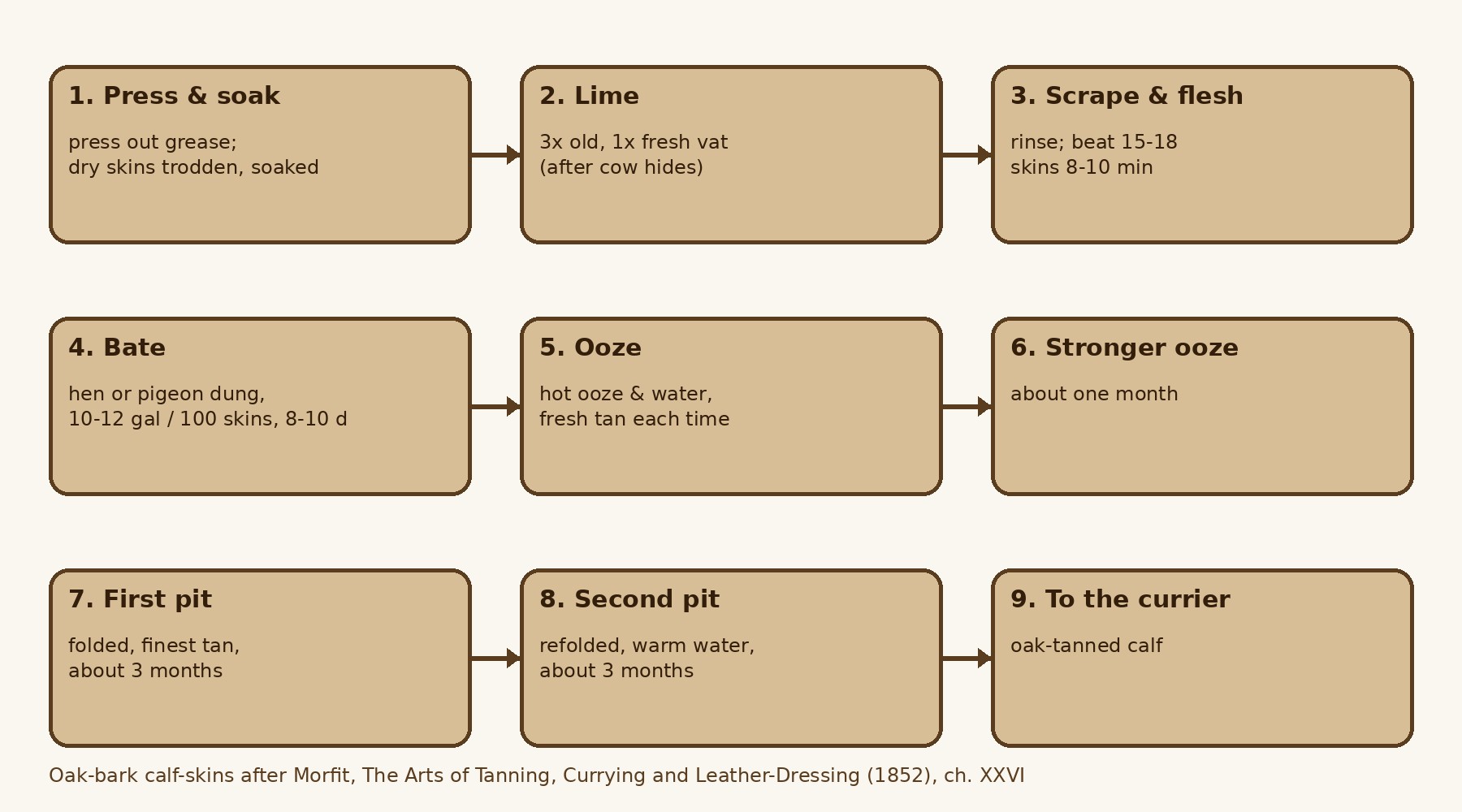


Oak-Bark Calf-Skins: Lime, Dung Bate, Ooze and Two Three-Month Pits of Finest Tan (Morfit, 1852)
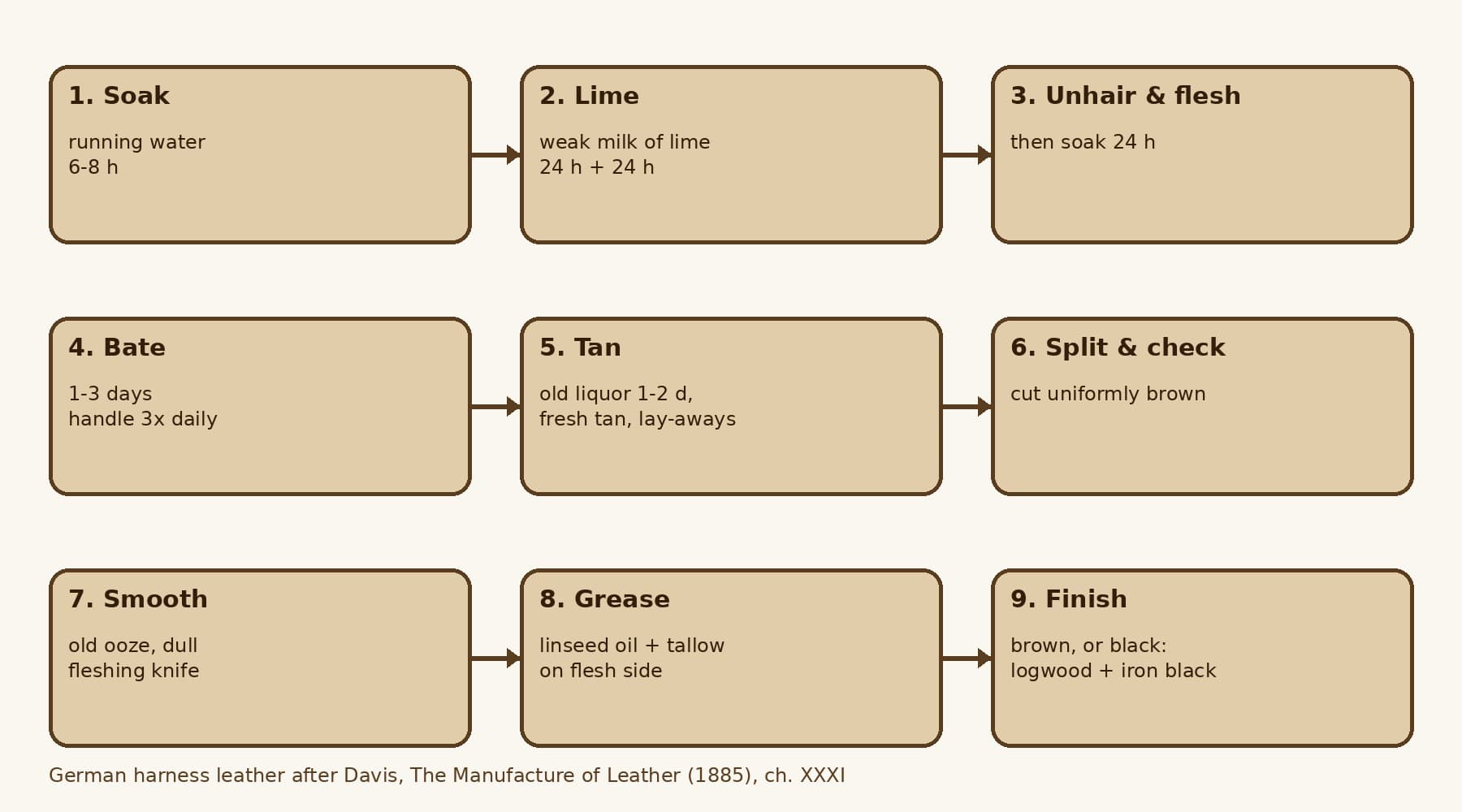
How calf-skins were tanned with oak bark, from Campbell Morfit's Arts of Tanning, Currying and Leather-Dressing (1852): limed in weakened vats, scraped, fleshed and beaten, bated in hen or pigeon dung, brought up in hot ooze and stronger ooze for a month, then laid folded in the finest tan in two pits of about three months each, ready for the currier.
Hejuru
About 7 months
Amabwiriza
1
1
Bark and weight
Bark and weight
Gupakira ikaye ya Jupyter…
2
2
Read The Arts of Tanning, ch. XXVI
Read The Arts of Tanning, ch. XXVI
"The tanning of calf-skins is conducted much in the same way as that of small cow-hides."
3
3
Lime
Lime
Press the skins to expel the oily matter (dry skins are first trodden out and soaked). Pass them three times through old and once through fresh lime vats, using the vats after cow hides have weakened them, as calf cannot bear full-strength lime.
Ibikoresho by'iyi ntambwe:
 Uruhu rushya rw'inyana12 ibice
 Ishwagara yazimye1 igice
Ibikoresho bikenewe:
 Igikoni cyo Gutunganya Uruhu
4
4
Scrape, flesh and beat
Scrape, flesh and beat
Scrape off the lime, flesh carefully and rinse. Beat 15 to 18 skins in a tub for 8 to 10 minutes with wedge-shaped beaters 8-1/2 to 10 in high, after each rinsing (not needed where the skins are rinsed as often as six times).
Ibikoresho bikenewe:
 Igiti cyo gukamuraho uruhu
 Icyuma cyo kuvana inyama ku ruhuIgikoni cyo Gutunganya Uruhu
 Inyundo y'Igiti
5
5
Bate
Bate
To clear the last lime, grease and glue, bate them in water with pigeon's or hen's dung, 10 to 12 gallons of dung to 100 skins, for 8 to 10 days, handling often and scraping on the beam, until they become pelts. (Fresh dung can putrefy and stain.)
Ibikoresho by'iyi ntambwe:
 Ifumbire y'amatungo1 igice
Ibikoresho bikenewe:
Igikoni cyo Gutunganya UruhuIgiti cyo gukamuraho uruhuIcyuma cyo kuvana inyama ku ruhu6
6
Ooze
Ooze
Put the pelts in hot ooze and water, handled more often and more carefully than cow hides, with fresh tan each time; then in stronger ooze and tan for a month.
Ibikoresho by'iyi ntambwe:
 Igishishwa cy'umwaloni (cyamenaguwe)4 ibice
Ibikoresho bikenewe:
Igikoni cyo Gutunganya Uruhu7
7
Two pits
Two pits
Lay the skins in the pit folded lengthwise and unequally, spread with tan of the very finest quality, heads and tails (the thickest parts) with more; leave about 3 months. Take them out, clean off the tan, and lay them in a second pit of finest tan, folded the other way so the covered parts are now exposed; fill up, moisten with warm water (or warm bark infusion) and leave about 3 months. They are then ready for the currier.
Ibikoresho by'iyi ntambwe:
Igishishwa cy'umwaloni (cyamenaguwe)6 ibiceIbikoresho bikenewe:
Igikoni cyo Gutunganya Uruhu8
8
Troubleshooting
Troubleshooting
Calf tanning troubleshooting.
Flow
Loading...
9
9
History and honest limits
History and honest limits
From Campbell Morfit, **The Arts of Tanning, Currying, and Leather-Dressing** (Philadelphia, 1852), chapter XXVI (checked on the archive.org scan artsoftanningcur00morf, pp. 349-353), with Kampffmeyer's oak-bark trial. He gives no ooze strengths. The diagram hero, the per-skin arithmetic and the tools are ours.
Ibikoresho
4- 12 ibiceUmwanya
- 1 igiceUmwanya
- 1 igiceUmwanya
- Umwanya
Iki gishushanyo gikora
Blueprint zijyanye
Izi blueprint zisangira ubumenyi — uburyo, ibikoresho cyangwa amahame
CC0 Umurenge rusange
Iyi blueprint yasohowe munsi ya CC0. Ushobora gukoporora, guhindura, gukwirakwiza no gukoresha nta kwemererwa.
Shyigikira Umuremyi ugura ibicuruzwa binyuze muri Blueprint ye Komisiyo y'Umuremyi byashyizweho n'Abacuruzi, cyangwa kora verisiyo nshya y'iyi Blueprint ukayinjiza nk'isano muri Blueprint yawe kugira ngo musangire inyungu.