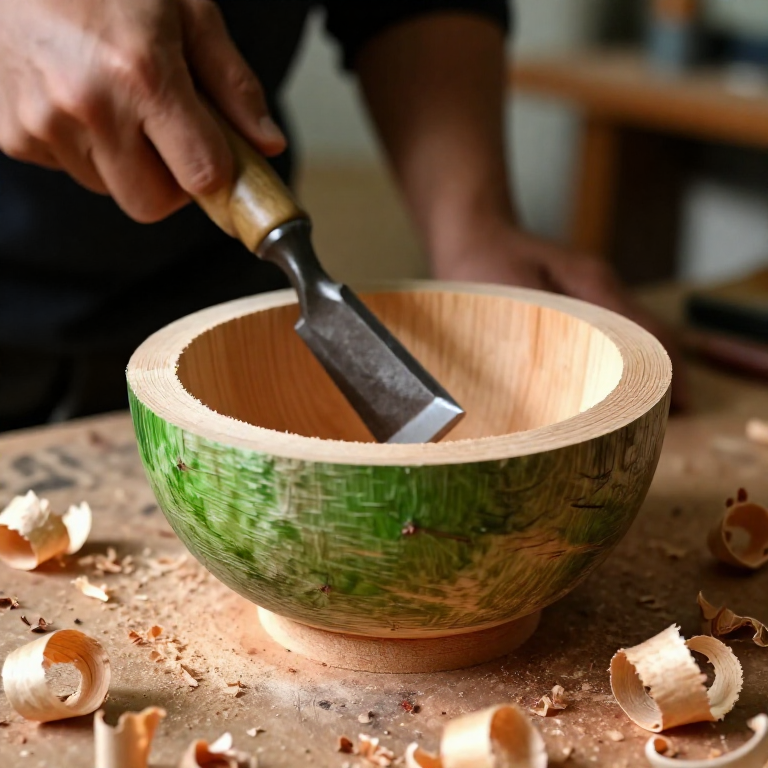


Carving a Wooden Bowl with an Adze — Hollowing from a Green Wood Blank
Before the lathe, every wooden bowl was carved by hand. The primary tool for hollowing was the adze — a blade set perpendicular to the handle, swung in short arcs to scoop out wood. A skilled worker can hollow a bowl from a green wood half-log in under an hour with nothing more than an adze and a gouge. The technique is ancient — wooden bowls carved with stone adzes have been found in Neolithic lake dwellings dating to 4000 BCE.
Green wood is essential. Freshly split wood is soft and forgiving — the adze bites cleanly and lifts chips without tearing. Seasoned wood is hard, punishes a slightly mis-angled blow, and tends to crack. The bowl is roughed out while green, then left to dry slowly. As it dries, a hand-carved bowl will move — the walls thin unevenly, and tension in the grain pulls the rim into a gentle oval. This is not a defect but a signature of hand work.
The combination of adze for roughing and gouge for finishing produces a bowl with visible tool marks that are both decorative and functional — the textured interior grips food better than a smooth turned surface, and the thick walls retain heat longer than thin-walled lathe work.
التعليمات
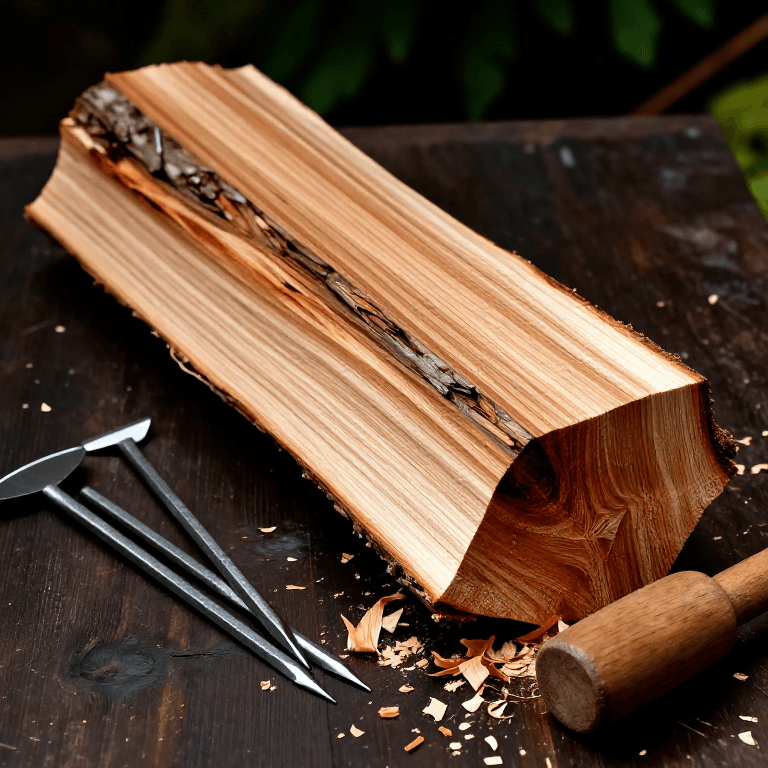
Split a bowl blank from a green log
Split a bowl blank from a green log
المواد لهذه الخطوة:
 جذع بتولا1 قطعة
Shape the outside with a hatchet
Shape the outside with a hatchet
الأدوات المطلوبة:
 فأس صغيرة
Hollow with the adze
Hollow with the adze
الأدوات المطلوبة:
 قدوم
قدومRefine with a gouge
Refine with a gouge
الأدوات المطلوبة:
 إزميل مجوّف للخشب
 مطرقة خشبية
Even the wall thickness
Even the wall thickness
Dry the bowl slowly
Dry the bowl slowly
المواد لهذه الخطوة:
 شمع النحل1 قطعة
مواد المخططات المرتبطة
المخططات ذات الصلة
هذه المخططات تشارك المعرفة مع هذا — التقنيات والمواد والمبادئ
CC0 ملكية عامة
هذا المخطط مُصدر بموجب CC0. يحق لك نسخه وتعديله وتوزيعه واستخدامه لأي غرض، دون طلب إذن.
ادعم الصانع بشراء منتجات عبر مخططه حيث يكسب عمولة الصانع يحددها البائعون، أو أنشئ نسخة جديدة من هذا المخطط وضمّنه كرابط في مخططك لمشاركة الإيرادات.