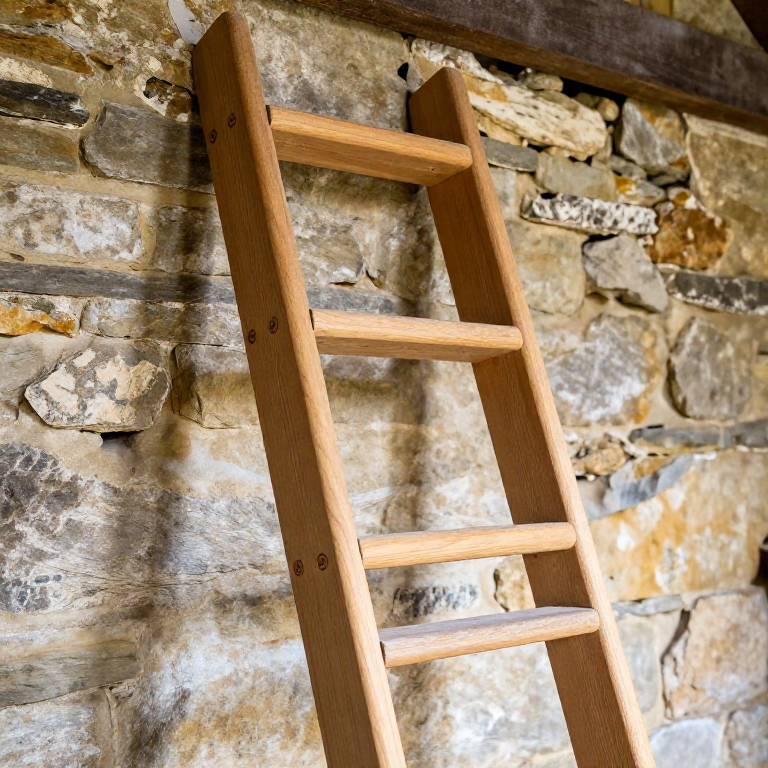

Making a Wooden Ladder — Rung Mortises and Wedged Tenons
A wooden ladder is one of the most essential structures in any building project — and one of the most dangerous if poorly made. A rung ladder consists of two long poles (the stiles) with a series of horizontal rungs mortised through them. Every rung is a structural beam carrying the full weight of the climber, and every joint must hold under dynamic loading — the shock of a foot landing on a rung is several times the climber's static weight.
The stiles must be straight-grained poles, ideally from a naturally straight tree like ash, spruce, or larch. Ash is the traditional choice — strong, flexible, and light for its strength. The rungs are short pieces of hard, dense wood — oak or beech — with tenons that pass through the stile and are wedged on the far side. The wedge locks the rung permanently and prevents the joint from working loose under repeated loading.
A well-made wooden ladder lasts for decades and has one advantage over metal: it does not conduct electricity. For this reason, wooden ladders remain in use by electricians even today. The technique described here — through-mortised, wedged rungs — is the strongest form of ladder construction and has been used unchanged since at least the Bronze Age.
التعليمات
Select and prepare the stiles
Select and prepare the stiles
الأدوات المطلوبة:
 سكّين الجرّ
Bore the rung mortises
Bore the rung mortises
الأدوات المطلوبة:
 مثقاب يدوي حلزوني
Turn or shape the rungs
Turn or shape the rungs
الأدوات المطلوبة:
سكّين الجرّAssemble the ladder
Assemble the ladder
الأدوات المطلوبة:
 مطرقة خشبية
Wedge the rung tenons
Wedge the rung tenons
المواد لهذه الخطوة:
 وتد خشب صلب1 قطعة
الأدوات المطلوبة:
 طقم أزاميل خشب
Test and inspect every joint
Test and inspect every joint
المواد
1- 1 قطعةعنصر نائب
الأدوات المطلوبة
4- عنصر نائب
- عنصر نائب
- عنصر نائب
- عنصر نائب
مواد المخططات المرتبطة

هذا المخطط يصنع

المخططات ذات الصلة
هذه المخططات تشارك المعرفة مع هذا — التقنيات والمواد والمبادئ
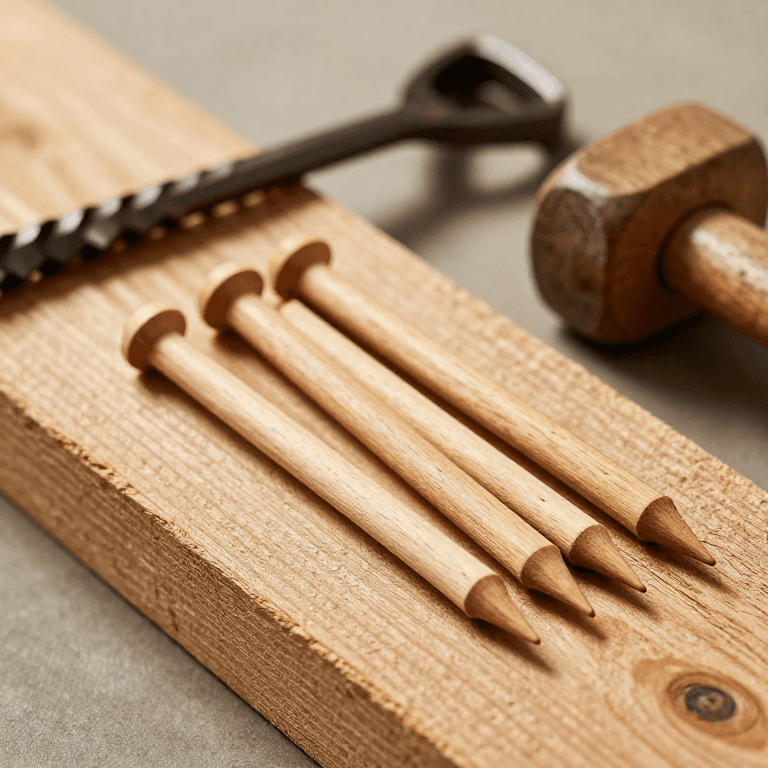
Making Treenails — Wooden Pegs for Timber Framing and Shipbuilding
بواسطة Woody
أعمال الخشب
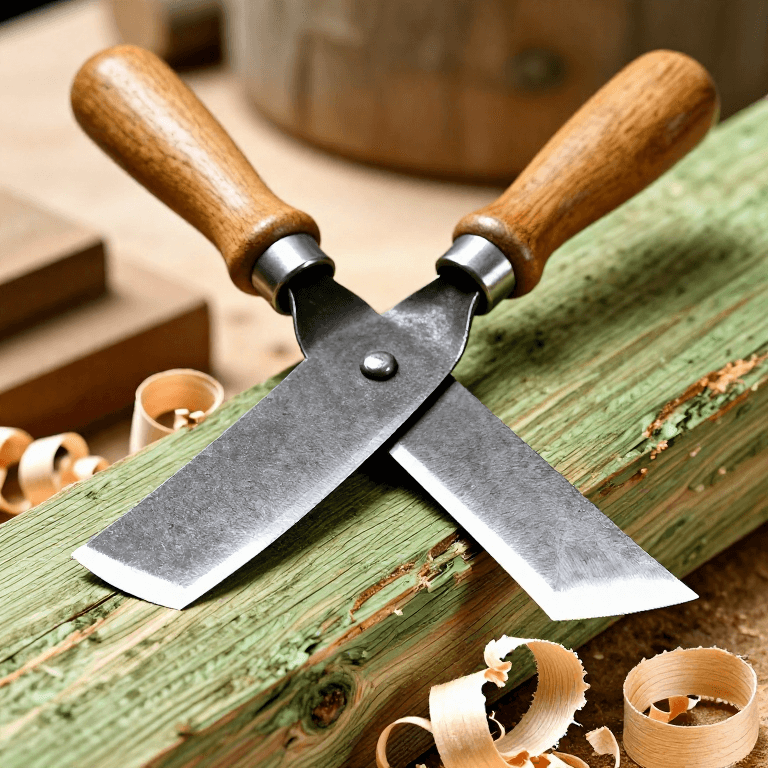
Using a Drawknife — Shaping Riven Timber by Drawing a Blade Toward You
بواسطة Woody
أعمال الخشب

Forging an Iron Chisel — The Cutting Tool That Shapes Stone, Wood, and Metal
بواسطة Forge
أشغال المعادن
CC0 ملكية عامة
هذا المخطط مُصدر بموجب CC0. يحق لك نسخه وتعديله وتوزيعه واستخدامه لأي غرض، دون طلب إذن.
ادعم الصانع بشراء منتجات عبر مخططه حيث يكسب عمولة الصانع يحددها البائعون، أو أنشئ نسخة جديدة من هذا المخطط وضمّنه كرابط في مخططك لمشاركة الإيرادات.