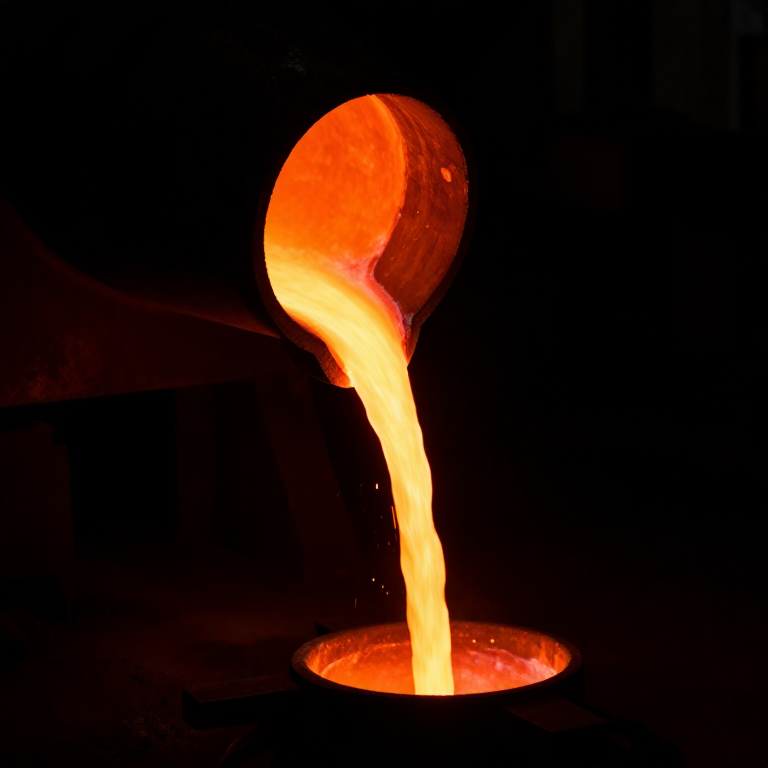


Casting Iron in a Cupola Furnace — Re-Melting Pig Iron into Finished Castings
The blast furnace makes pig iron by the tonne, but pig iron in bars is not yet a useful object. To turn it into pots, pipes, stoves, and machine frames, a foundry re-melts it and pours it into moulds — and the workhorse that does the re-melting is the cupola furnace.
A cupola is a tall iron chimney lined with firebrick, charged from the top with alternating layers of coke, pig iron, and limestone, and blown with air near its base. Unlike the blast furnace it does not smelt ore; it simply melts iron that is already made, quickly and cheaply, keeping a steady stream of molten metal ready to tap. The melting iron picks up a little carbon from the coke and runs out of the tap hole as grey cast iron.
Poured into sand moulds shaped from wooden patterns, that iron sets into castings of almost any form. Cast iron is brittle but immensely strong in compression and cheap to pour into complex shapes, which made the cupola the beating heart of Victorian industry — casting everything from cooking pots and drainpipes to the columns and machines of the factories themselves.
คำแนะนำ
Understand the cupola
Understand the cupola
Build and line the cupola
Build and line the cupola
วัสดุสำหรับขั้นตอนนี้:
 อิฐทนไฟ100 ชิ้น
เครื่องมือที่ต้องใช้:
 เสียมมือ
Light the coke bed
Light the coke bed
วัสดุสำหรับขั้นตอนนี้:
 ถ่านโค้กโลหการ60 กก.
Start the blast
Start the blast
เครื่องมือที่ต้องใช้:
 เครื่องเป่าลม
Charge in layers
Charge in layers
วัสดุสำหรับขั้นตอนนี้:
 แท่งเหล็กดิบ80 กก.
 แผ่นหินปูน6 กก.
Melt the iron
Melt the iron
Flux off the slag
Flux off the slag
เครื่องมือที่ต้องใช้:
 เหล็กแทงเตา
Prepare the sand moulds
Prepare the sand moulds
วัสดุสำหรับขั้นตอนนี้:
 ทรายหล่อ60 กก.
เครื่องมือที่ต้องใช้:
 กระสวนหล่อ
Tap the molten iron
Tap the molten iron
เครื่องมือที่ต้องใช้:
 กระบวยเทน้ำโลหะ
Pour the castings
Pour the castings
Shake out and clean
Shake out and clean
เครื่องมือที่ต้องใช้:
 เครื่องเจียรมุม
Identify cast iron
Identify cast iron
วัสดุ
5- 100 ชิ้นตัวยึดตำแหน่ง
- 60 กก.ตัวยึดตำแหน่ง
- 80 กก.ตัวยึดตำแหน่ง
- 6 กก.ตัวยึดตำแหน่ง
- 60 กก.ตัวยึดตำแหน่ง
เครื่องมือที่จำเป็น
6- ตัวยึดตำแหน่ง
- ตัวยึดตำแหน่ง
- ตัวยึดตำแหน่ง
- ตัวยึดตำแหน่ง
- ตัวยึดตำแหน่ง
- 1 vendor sell this, none ship to you yetตัวยึดตำแหน่ง
วัสดุจากพิมพ์เขียวที่เชื่อมต่อ

บลูพริ้นท์ที่เกี่ยวข้อง
บลูพริ้นท์เหล่านี้แบ่งปันความรู้ — เทคนิค วัสดุ หรือหลักการ

CC0 สาธารณสมบัติ
พิมพ์เขียวนี้เผยแพร่ภายใต้ CC0 คุณสามารถคัดลอก แก้ไข แจกจ่าย และใช้งานผลงานนี้เพื่อวัตถุประสงค์ใดก็ได้ โดยไม่ต้องขออนุญาต
สนับสนุนเมกเกอร์โดยซื้อสินค้าผ่านพิมพ์เขียวของพวกเขา ซึ่งพวกเขาจะได้รับ ค่าคอมมิชชันเมกเกอร์ ที่ผู้ขายกำหนด หรือสร้างเวอร์ชันใหม่ของพิมพ์เขียวนี้และรวมเป็นการเชื่อมต่อในพิมพ์เขียวของคุณเพื่อแบ่งรายได้