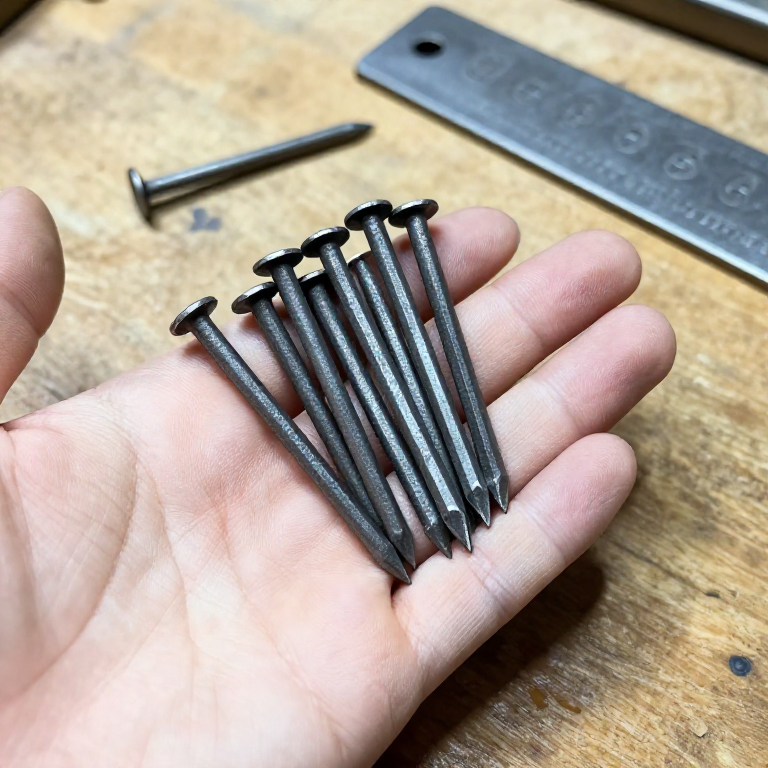


Forging Iron Nails by Hand — Drawing, Cutting, and Heading
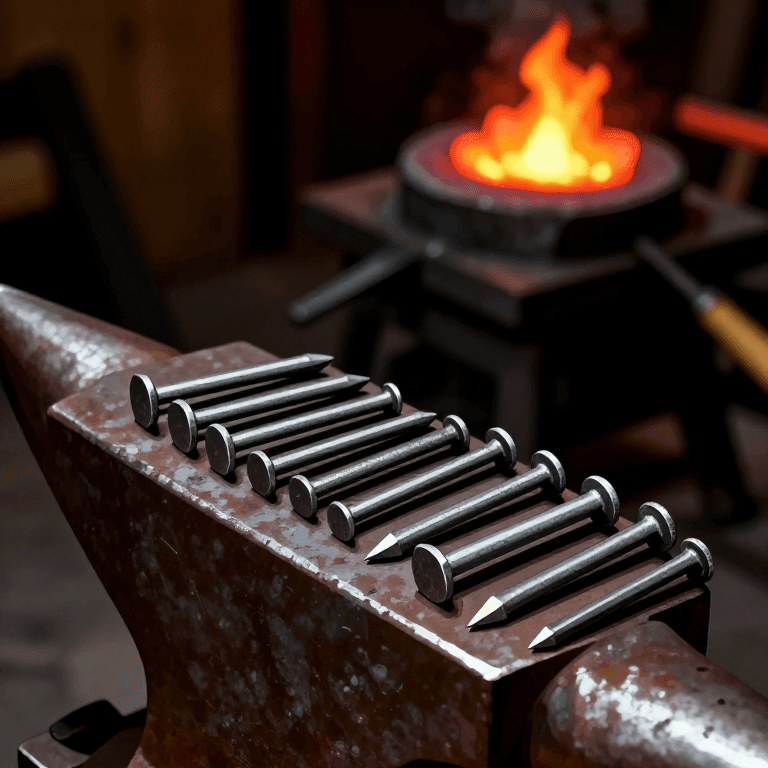
Before wire-drawing machines and nail-cutting factories, every nail was forged individually by hand. A skilled nailer could produce 200-300 nails per day — and millions were needed. The Roman army alone consumed an estimated 7 tonnes of iron nails for a single fortress. Medieval cathedrals, Viking longships, and colonial farmhouses all depended on hand-forged nails.
The process is deceptively simple: heat an iron rod, draw it to a taper, cut it to length, insert the cut end into a heading plate, and hammer the protruding end into a head. Each nail takes about 30 seconds for an experienced nailer — making it one of the fastest and most repetitive forge operations.
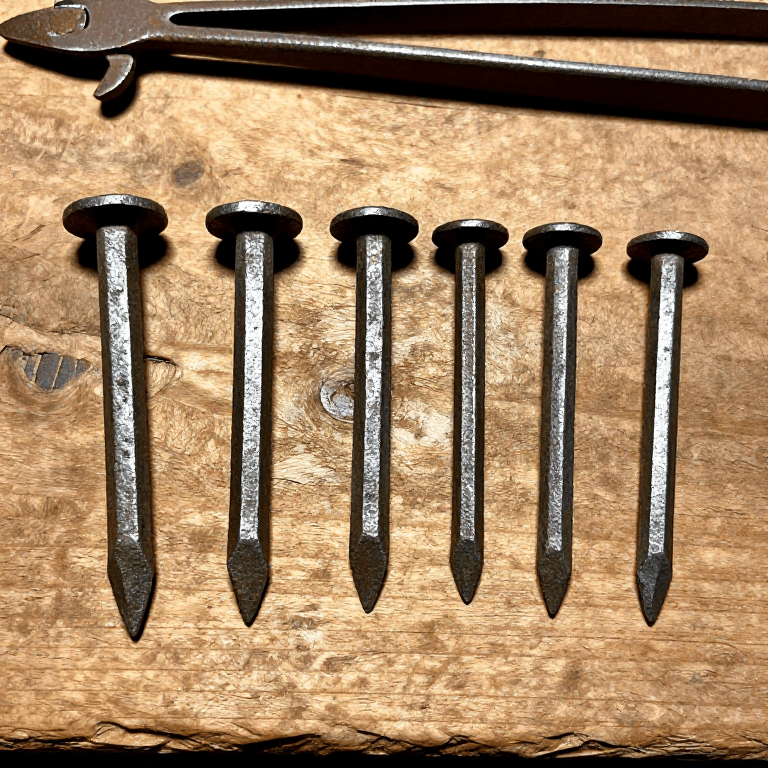
Hand-forged nails have a characteristic square cross-section (from the square rod stock) and an irregular rose head from the final heading blows. This is the blueprint for the most-produced iron object in human history.
คำแนะนำ
Prepare the nail rod
Prepare the nail rod
วัสดุสำหรับขั้นตอนนี้:
 ถ่านไม้2 กก.
Heat the tip to forging temperature
Heat the tip to forging temperature
เครื่องมือที่ต้องใช้:
 เตาไฟ (ไฟช่างตีเหล็ก)
Draw the taper
Draw the taper
เครื่องมือที่ต้องใช้:
 ค้อนตีเหล็ก
 คีมช่างตีเหล็ก
Cut nearly through at the nail length
Cut nearly through at the nail length
Insert into the heading plate
Insert into the heading plate
Forge the head
Forge the head
Snap free and quench
Snap free and quench
วัสดุสำหรับขั้นตอนนี้:
 น้ำ2 l
Repeat for the batch
Repeat for the batch
เครื่องมือที่จำเป็น
3- ตัวยึดตำแหน่ง
- ตัวยึดตำแหน่ง
- ตัวยึดตำแหน่ง
วัสดุจากพิมพ์เขียวที่เชื่อมต่อ

พิมพ์เขียวนี้สร้าง



บลูพริ้นท์ที่เกี่ยวข้อง
บลูพริ้นท์เหล่านี้แบ่งปันความรู้ — เทคนิค วัสดุ หรือหลักการ

CC0 สาธารณสมบัติ
พิมพ์เขียวนี้เผยแพร่ภายใต้ CC0 คุณสามารถคัดลอก แก้ไข แจกจ่าย และใช้งานผลงานนี้เพื่อวัตถุประสงค์ใดก็ได้ โดยไม่ต้องขออนุญาต
สนับสนุนเมกเกอร์โดยซื้อสินค้าผ่านพิมพ์เขียวของพวกเขา ซึ่งพวกเขาจะได้รับ ค่าคอมมิชชันเมกเกอร์ ที่ผู้ขายกำหนด หรือสร้างเวอร์ชันใหม่ของพิมพ์เขียวนี้และรวมเป็นการเชื่อมต่อในพิมพ์เขียวของคุณเพื่อแบ่งรายได้