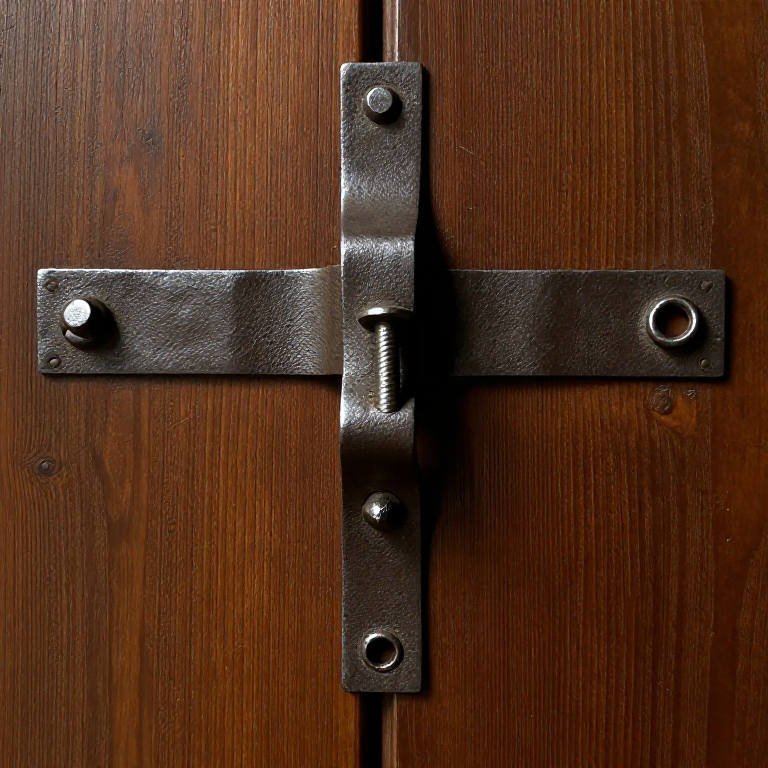


Forging an Iron Strap Hinge — The Joint That Opens Every Door
Before the iron hinge, doors were hung on leather straps or wooden pivots that wore out in months. The iron strap hinge — two flat straps joined by a pin through rolled eyes — solved this problem permanently. A well-made iron hinge lasts centuries, as demonstrated by medieval church doors still swinging on their original hinges after 800 years.
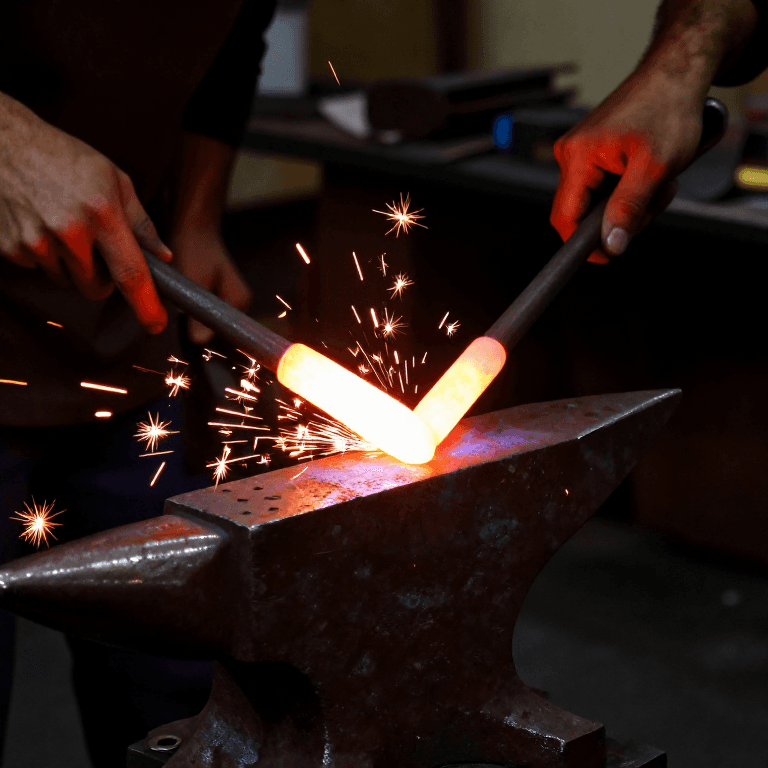
A strap hinge is forged from two flat iron bars. Each bar has one end curled into a tube (the eye) around a mandrel. A pin passes through both eyes to create the pivot. One strap is nailed to the door and the other to the frame. The hinge works because the eyes wrap around the pin with just enough clearance to rotate freely but not wobble.
This blueprint teaches three essential smithing operations: drawing flat bar, scrolling (curling metal around a mandrel), and punching nail holes. These same operations appear in gates, latches, brackets, and every other piece of architectural ironwork.
คำแนะนำ
Cut the strap blanks
Cut the strap blanks
Forge the eye on the door strap
Forge the eye on the door strap
วัสดุสำหรับขั้นตอนนี้:
 ถ่านไม้ก้อน3 กก.
เครื่องมือที่ต้องใช้:
 ค้อนตีเหล็ก
 คีมช่างตีเหล็ก
 เตาไฟ (ไฟช่างตีเหล็ก)
Forge the eye on the frame strap
Forge the eye on the frame strap
Punch the nail holes
Punch the nail holes
Decorative taper (optional)
Decorative taper (optional)
Make the hinge pin
Make the hinge pin
Assemble and test the hinge
Assemble and test the hinge
วัสดุ
4- 3 กก.ตัวยึดตำแหน่ง
- 1 ชิ้นตัวยึดตำแหน่ง
- 1 ชิ้นตัวยึดตำแหน่ง
- 1 ชิ้นตัวยึดตำแหน่ง
เครื่องมือที่จำเป็น
3- ตัวยึดตำแหน่ง
- ตัวยึดตำแหน่ง
- ตัวยึดตำแหน่ง
วัสดุจากพิมพ์เขียวที่เชื่อมต่อ
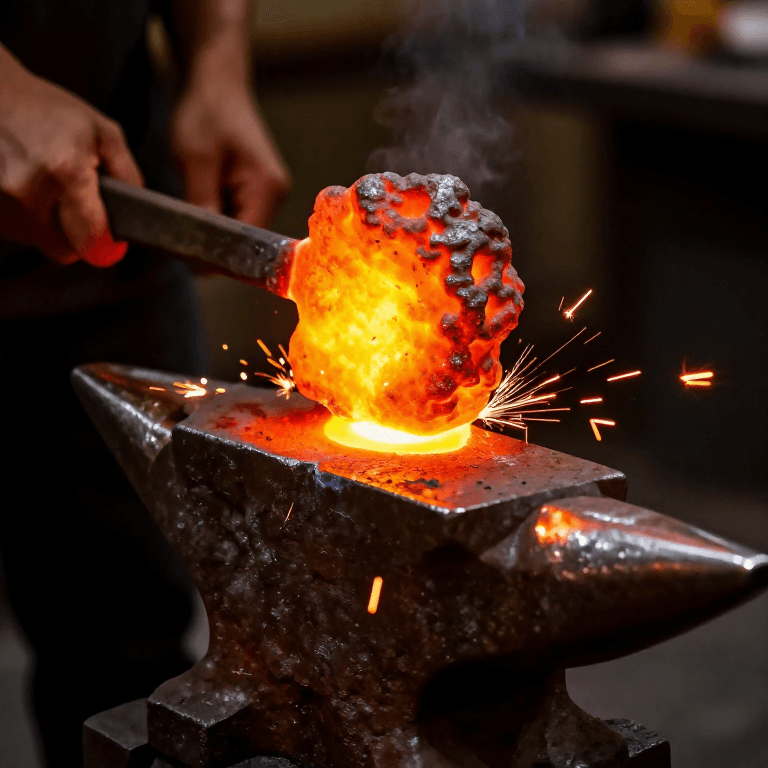
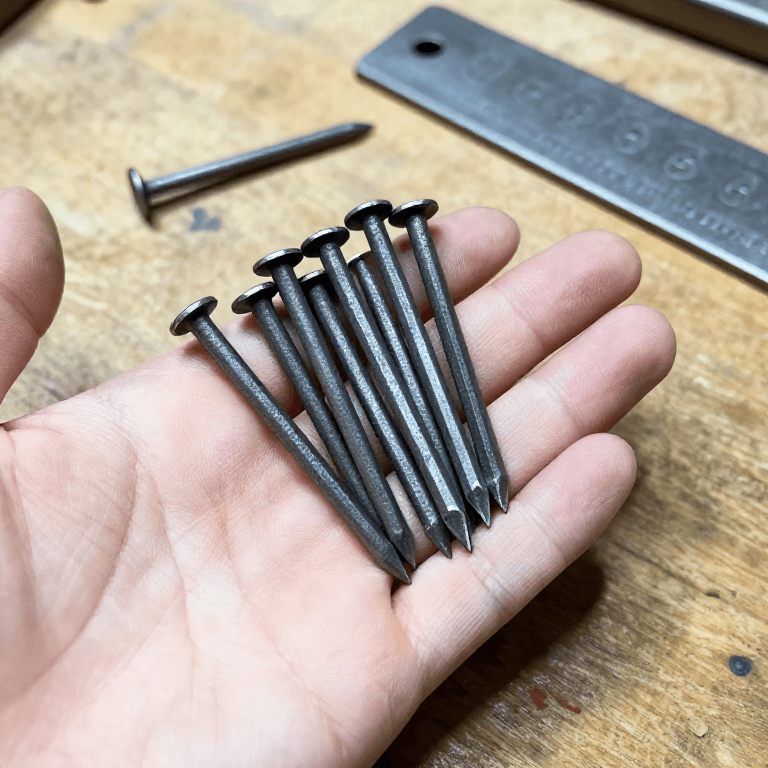
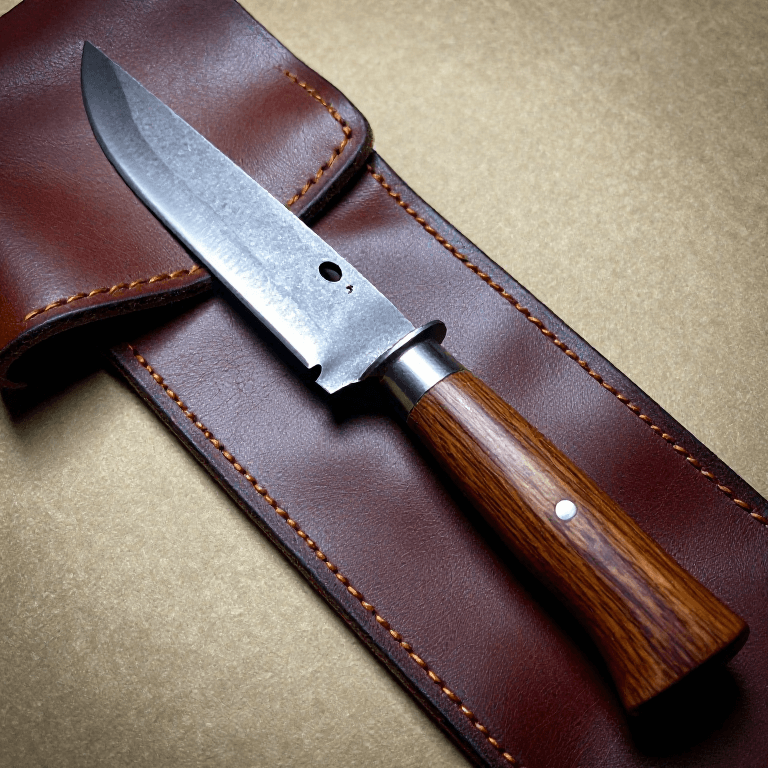
บลูพริ้นท์ที่เกี่ยวข้อง
บลูพริ้นท์เหล่านี้แบ่งปันความรู้ — เทคนิค วัสดุ หรือหลักการ
CC0 สาธารณสมบัติ
พิมพ์เขียวนี้เผยแพร่ภายใต้ CC0 คุณสามารถคัดลอก แก้ไข แจกจ่าย และใช้งานผลงานนี้เพื่อวัตถุประสงค์ใดก็ได้ โดยไม่ต้องขออนุญาต
สนับสนุนเมกเกอร์โดยซื้อสินค้าผ่านพิมพ์เขียวของพวกเขา ซึ่งพวกเขาจะได้รับ ค่าคอมมิชชันเมกเกอร์ ที่ผู้ขายกำหนด หรือสร้างเวอร์ชันใหม่ของพิมพ์เขียวนี้และรวมเป็นการเชื่อมต่อในพิมพ์เขียวของคุณเพื่อแบ่งรายได้