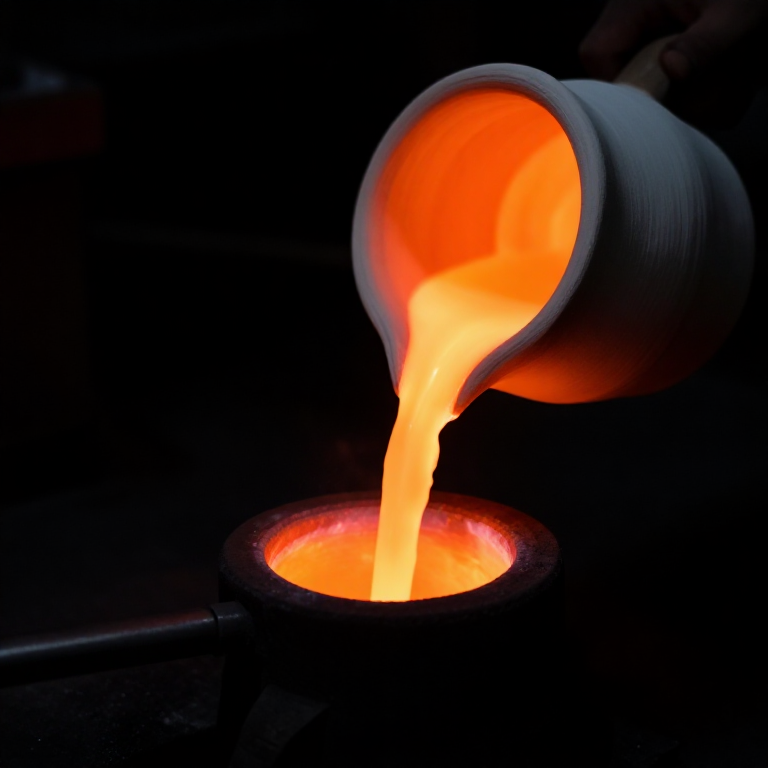


Crucible Cast Steel by the Huntsman Process — Remelting Blister Steel into Flawless Ingots
Blister steel was a triumph, but it had a flaw: its carbon was uneven, rich at the surface of each bar and poor in the core. For fine springs, watch parts, and razors, smiths needed steel that was the same all the way through. In 1740 the Sheffield clockmaker Benjamin Huntsman found the answer — melt the steel completely.
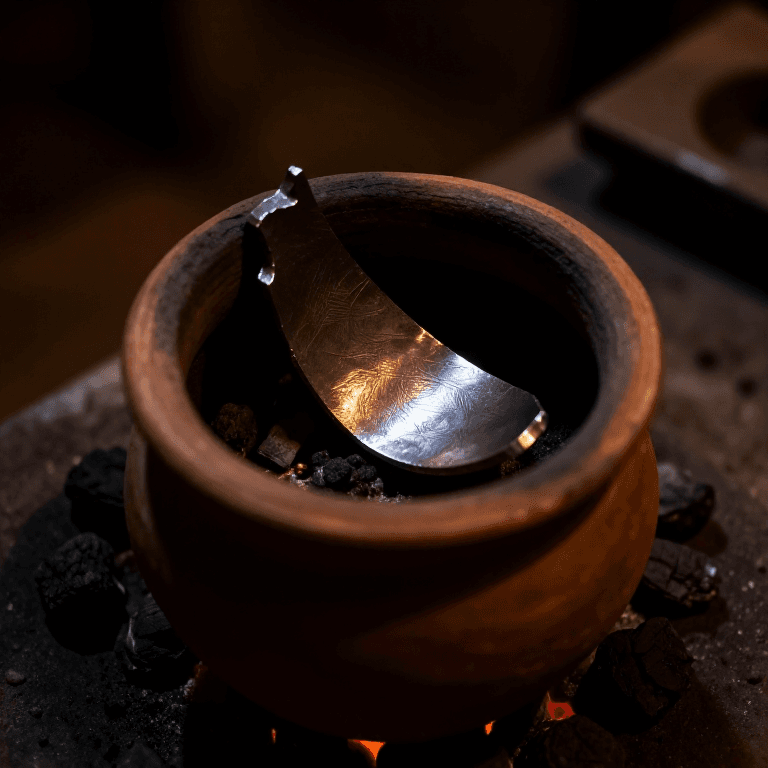
No furnace of the day could melt steel, so Huntsman built one that could. He broke blister steel into small pieces, sealed them in a covered clay crucible, and drove a coke fire hot enough — around 1600 degrees Celsius — to turn the solid steel into a clear liquid. Fully molten, the carbon spread perfectly evenly through the metal and the impurities floated off as slag. Poured into a mould, it set into a flawless ingot of cast steel.
Huntsman's crucible steel was the finest in the world and made Sheffield the steel capital of the age. The principle — melt it to make it uniform — is the same one that still underlies steelmaking today, and it sits at the very top of the iron-and-steel chain that runs from ore to coke to pig iron to wrought iron to blister steel to this.
Інструкції
Understand the goal
Understand the goal
Break up the blister steel
Break up the blister steel
Матеріали для цього кроку:
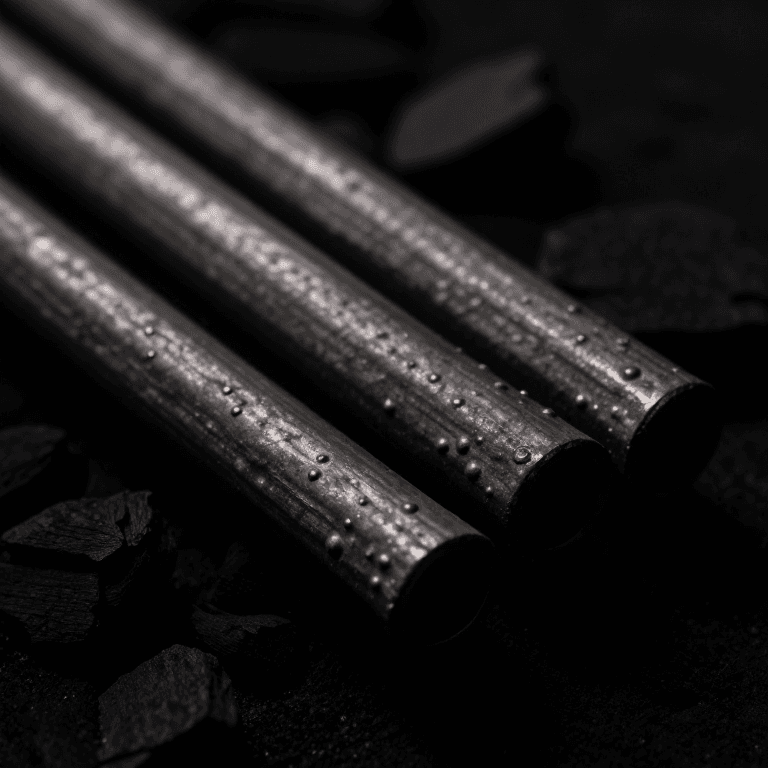
 Смуги пухирчастої сталі12 кг
Необхідні інструменти ({count})
 Молоток
Prepare a clay crucible
Prepare a clay crucible
Матеріали для цього кроку:
 Глибокий глиняний тигель1 штука
Charge the crucible
Charge the crucible
Матеріали для цього кроку:
 Вапнякова плита1 кг
Build a coke melting furnace
Build a coke melting furnace
Матеріали для цього кроку:
 Металургійний кокс50 кг
Необхідні інструменти ({count})
 Ковальський міх
Melt the steel fully
Melt the steel fully
Необхідні інструменти ({count})
 Кліщі для тиглів
Let the carbon even out
Let the carbon even out
Let the slag rise
Let the slag rise
Lift the crucible
Lift the crucible
Необхідні інструменти ({count})
Кліщі для тиглівCast the ingot
Cast the ingot
Необхідні інструменти ({count})
 Виливниця
Cool and strip
Cool and strip
Необхідні інструменти ({count})
МолотокIdentify cast steel
Identify cast steel
Необхідні інструменти ({count})
 Набір напилків
Матеріали
4- Заповнювач
- 1 штукаЗаповнювач
- 1 кгЗаповнювач
- 50 кгЗаповнювач
Матеріали з пов'язаних креслень
Пов'язані креслення
Ці креслення діляться знаннями — техніки, матеріали або принципи

CC0 Суспільне надбання
Це креслення випущено під ліцензією CC0. Ви можете вільно копіювати, змінювати, поширювати та використовувати цю роботу для будь-яких цілей без запиту дозволу.
Підтримайте мейкера, купуючи продукти через його креслення, де він отримує Комісію мейкера встановлену вендорами, або створіть нову ітерацію цього креслення та включіть його як зв'язок у власне креслення для розподілу доходу.