ART
BEAUTY & WELLNESS
CRAFT
CULTURE & HISTORY
ENTERTAINMENT
ENVIRONMENT
FOOD & DRINKS
REVERSE ENGINEERING
SCIENCES
SPORTS
TECHNOLOGY
WEARABLES
Translated

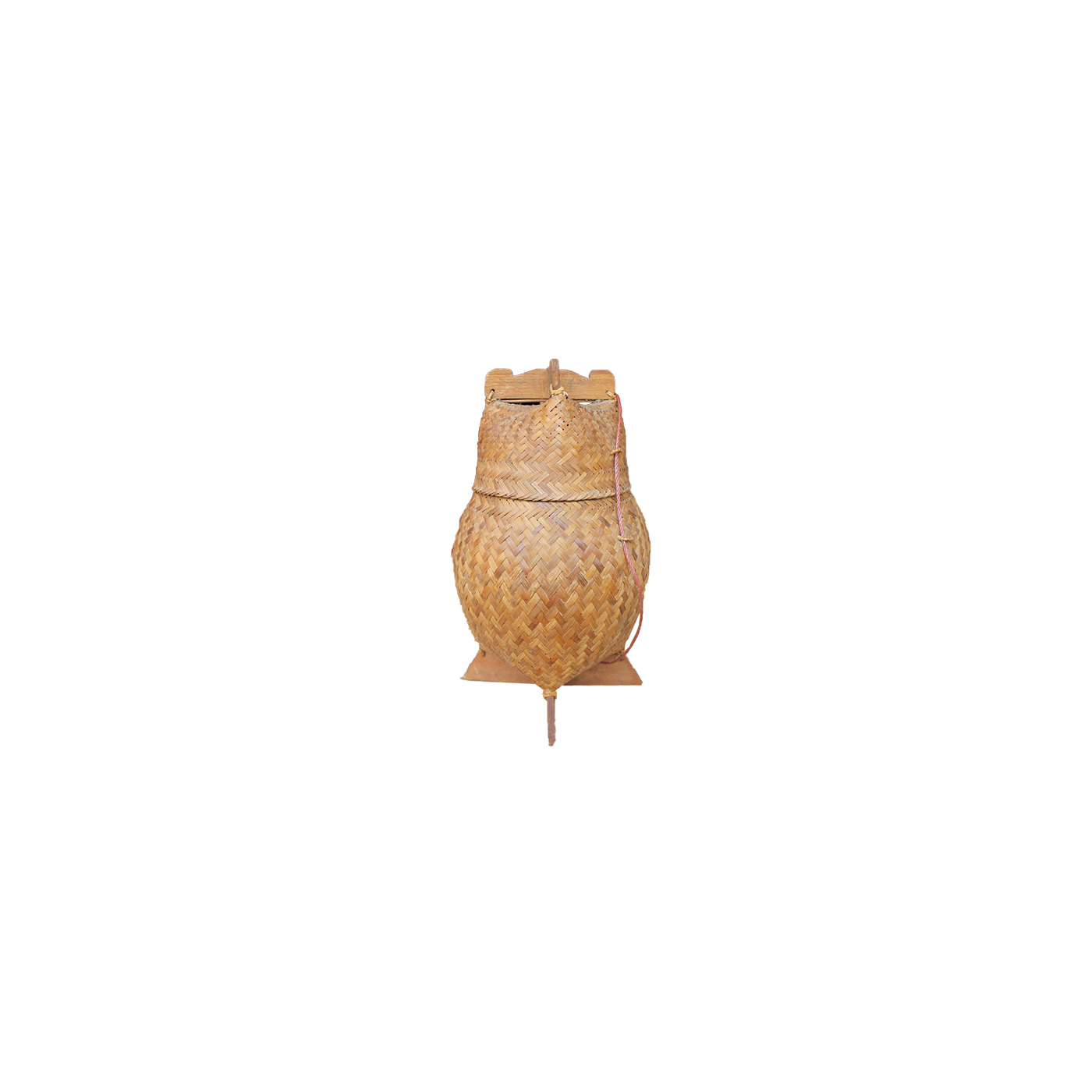
Aep (Tai Dam Sticky-Rice Basket) — a Bulging Woven Basket, Square Bottom, Fitted Lid, Crossed-Board Feet and Handle, Cord Shoulder Strap
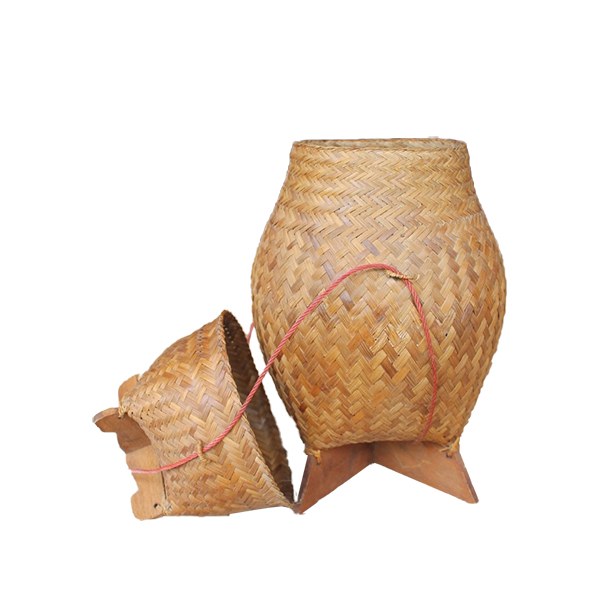
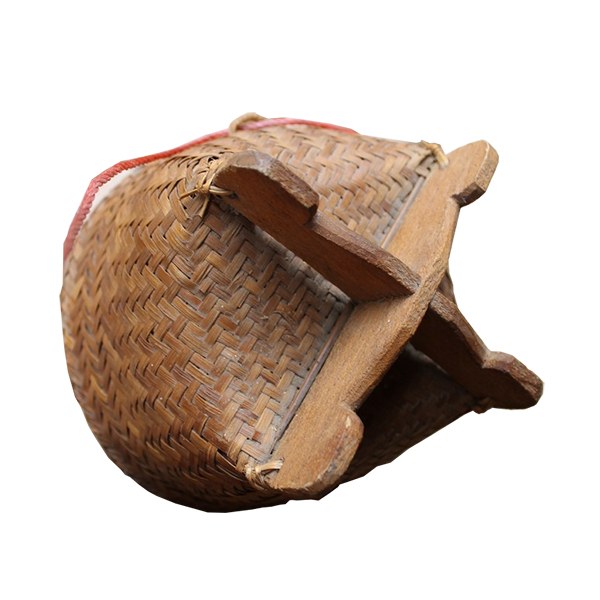
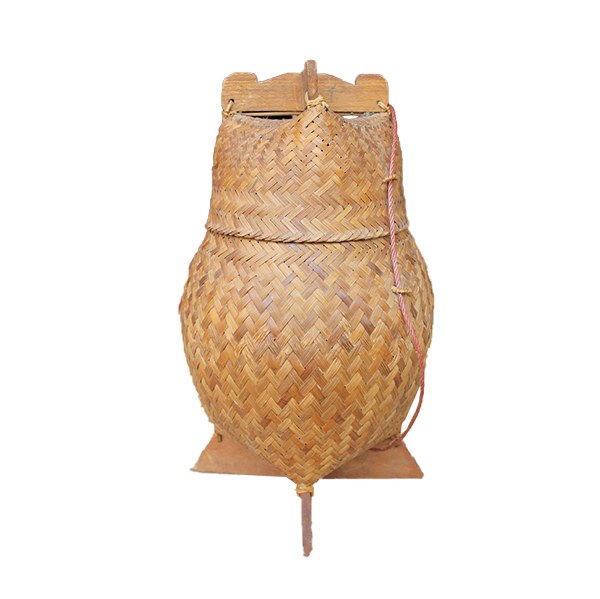
แอบ (aep, ka-aep) is a Tai Dam basket for carrying steamed sticky rice to eat away from home. It is a cylinder bulging in the middle, with a square bottom, a narrowed mouth and a fitted lid; crossed four-armed boards under the bottom and on the lid, and a cord shoulder strap. It is used like a krathip but is larger, enough for several people.
This blueprint weaves a real aep by the method in the source.
Advanced
Several days
Instructions
1
1
Size
Size
Loading Jupyter Notebook...
2
2
Sticky-rice baskets, before it
Sticky-rice baskets, before it
The krathip is a straight cylinder; the aep bulges in the middle because its strips are shaved to different widths, and it is larger.
3
3
Read from the source
Read from the source
"Both ends of each strip must be shaved narrower, to force the aep to bulge in the middle, or to make the lid flare out." (Sirindhorn Anthropology Centre, author พิชชา ทองขลิบ (Phitcha Thongkhlip), CC BY 4.0)
4
4
Taper and dye the strips
Taper and dye the strips
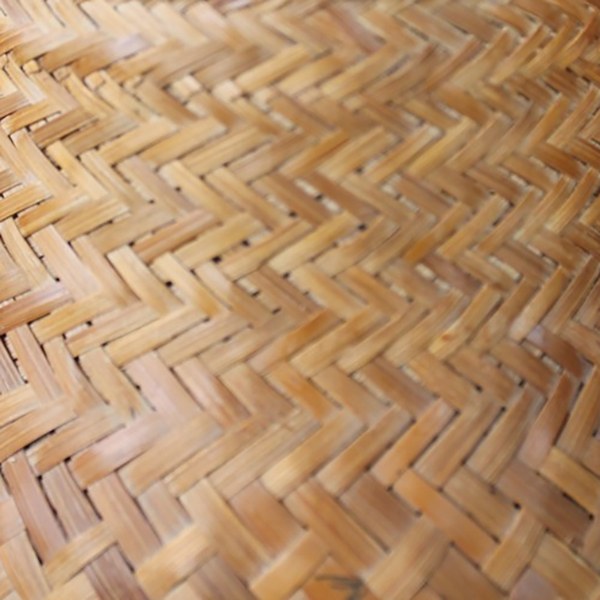
Shave both ends of each strip narrower (suai tok). For a pattern, dye strips with tinned oil paint: dip a cloth in the paint and draw the strip through it, rather than painting with a brush.
Materials for this step:
 Bamboo Poles1 piece
 Cotton Rags1 piece
Tools needed:
 Machete
 Knife
Knife5
5
Weave body and lid
Weave body and lid
Start at the centre of the bottom, overlapping the ends of the standing and crossing strips into a square of about 10 cm, then raise it into a cylinder and draw it in to a narrower mouth as the strips taper. It bulges slightly, then narrows into a neck the lid fits over. Fold the strips into the weave to finish the mouth; no bamboo rim is added. Weave the lid the same way as the bottom, about 10 cm high, then fold in the edge.
6
6
Feet, handle and strap
Feet, handle and strap
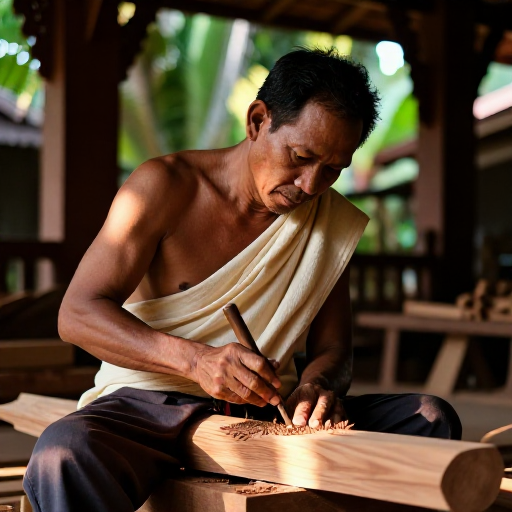
Make the lid handle from board: notch two pieces to cross in an X, shape them to fit the square lid and tie them on with rattan. Make the base the same way, shaping the ends to fit the basket, and bind with braided rattan. Thread a thin cord as a carrying and shoulder strap through body and lid together.
Materials for this step:
 Hardwood Board1 piece
 Cord1 piece
Tools needed:
 Hand Saw
7
7
Real photos
Real photos
Photos of a real aep, Ancient Tai Dam Cultural Revival Centre, U Thong, Suphan Buri (Sirindhorn Anthropology Centre, author พิชชา ทองขลิบ (Phitcha Thongkhlip), CC BY 4.0).
8
8
How it is used
How it is used
Fill it with steamed sticky rice and carry it on the shoulder to the fields or on a journey. The crossed board on the lid is a handle and balances the basket. The lid turns over into a small bowl for dry side dishes such as grilled fish or chicken.
9
9
Troubleshooting
Troubleshooting
Troubleshooting the aep.
Flow
Loading...
10
10
History and limits
History and limits
The Tai Dam aep is used like the krathip, but bulges and is larger, holding sticky rice for a whole family. An aep for ritual use has a carved finial on the lid. Take care with the knife when shaving strips and shaping wood.
Source: Sirindhorn Anthropology Centre, Traditional Objects of Everyday Use database, "แอบข้าว", author พิชชา ทองขลิบ (Phitcha Thongkhlip), Ancient Tai Dam Cultural Revival Centre, Suphan Buri (CC BY 4.0 licence).
**Limits** The source gives no body height and no size for the crossed boards, and there is no listing for rattan or oil paint, so they are named in the text.
Materials
4- 1 piecePlaceholder
- 1 piecePlaceholder
- 1 piecePlaceholder
- 1 piecePlaceholder
Related Blueprints
These blueprints share knowledge with this one — techniques, materials, or principles that connect them in the learning graph.
CC0 Public Domain
This blueprint is released under CC0. You are free to copy, modify, distribute, and use this work for any purpose, without asking permission.
Support the Maker by purchasing products through their Blueprint where they earn a Maker Commission set by Vendors, or create a new iteration of this Blueprint and include it as a connection in your own Blueprint to share revenue.