ART
BEAUTY & WELLNESS
CRAFT
CULTURE & HISTORY
ENTERTAINMENT
ENVIRONMENT
FOOD & DRINKS
REVERSE ENGINEERING
SCIENCES
SPORTS
TECHNOLOGY
WEARABLES
Translated

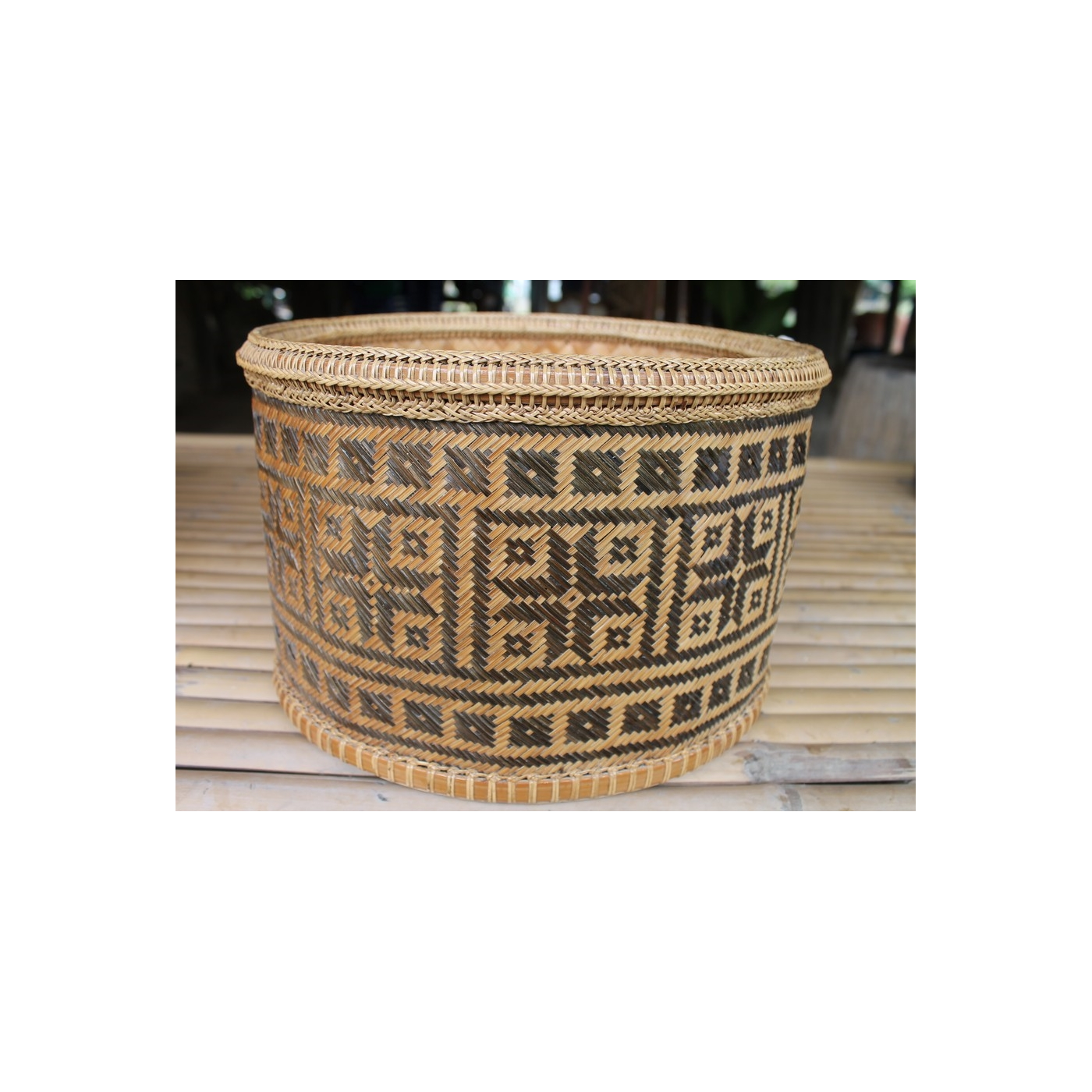
Ho (Tai Dam Sewing Basket) — a Hexagon-Bottomed Tray Set into a Patterned Woven Cylinder, Rims Bound with Rattan, for Needlework Tools
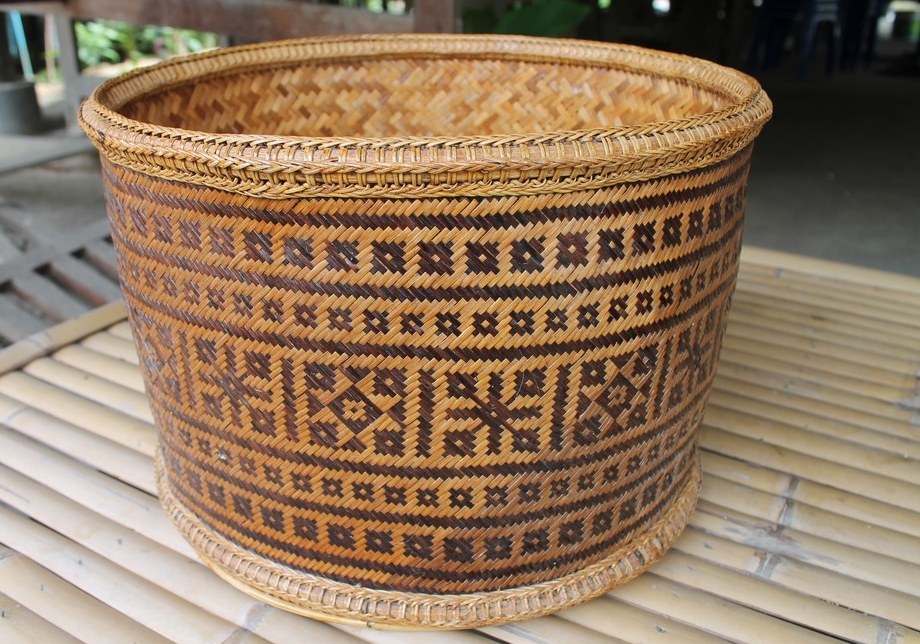
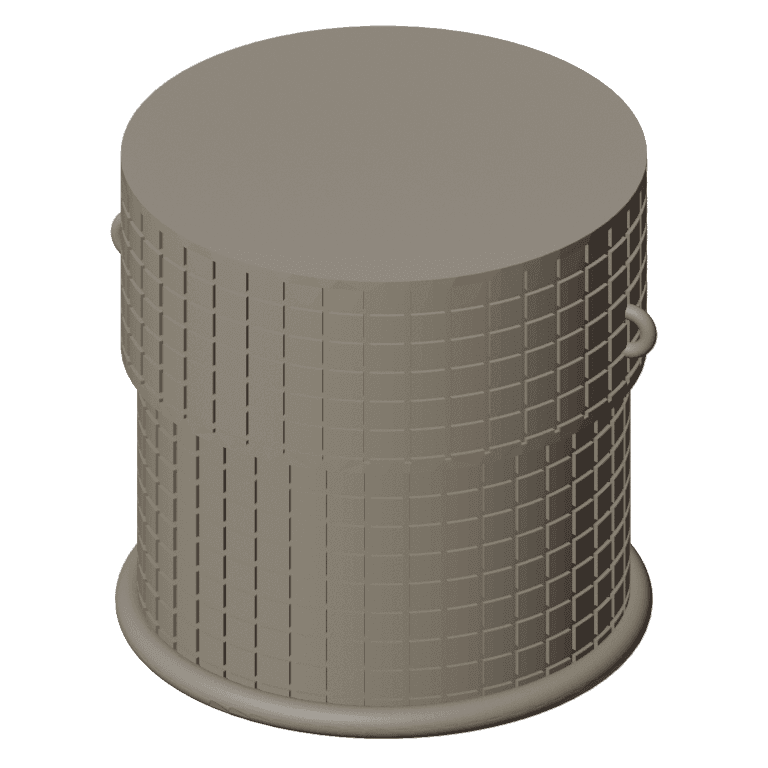
โฮ่ (ho) holds the cloth scraps, thread, needles, scissors and needlework tools of Tai Dam women. It is woven from bamboo and rattan: a low cylinder without a lid, with a tray at the top whose shallow bottom does not reach the ground.
This blueprint weaves a real ho by the method in the source.
Advanced
Several days
Instructions
1
1
Parts
Parts
Loading Jupyter Notebook...
2
2
Basketry, before it
Basketry, before it
The kradong is a single flat woven piece; the ho is assembled from two woven pieces, a tray and a cylinder, then rimmed and bound with rattan.
3
3
Read from the source
Read from the source
"The hexagon-bottomed tray and the cylinder are fitted together so that the tray's edge meets the top edge of the cylinder, and bamboo is clamped on to make the rim." (Sirindhorn Anthropology Centre, author พิชชา ทองขลิบ (Phitcha Thongkhlip), CC BY 4.0)
4
4
Tray
Tray
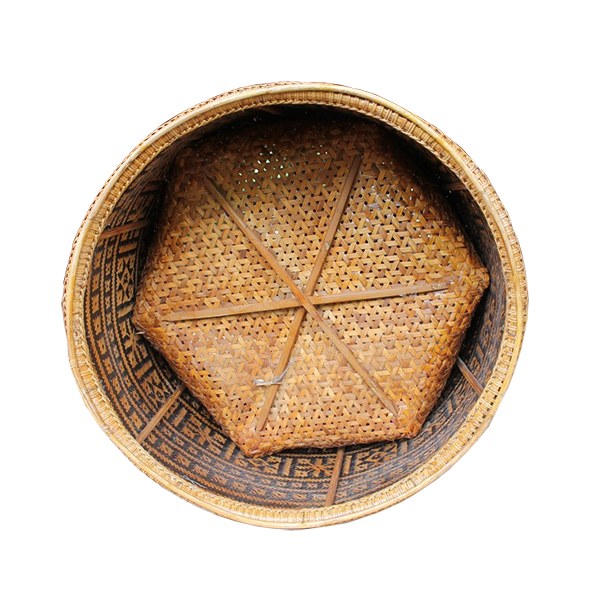
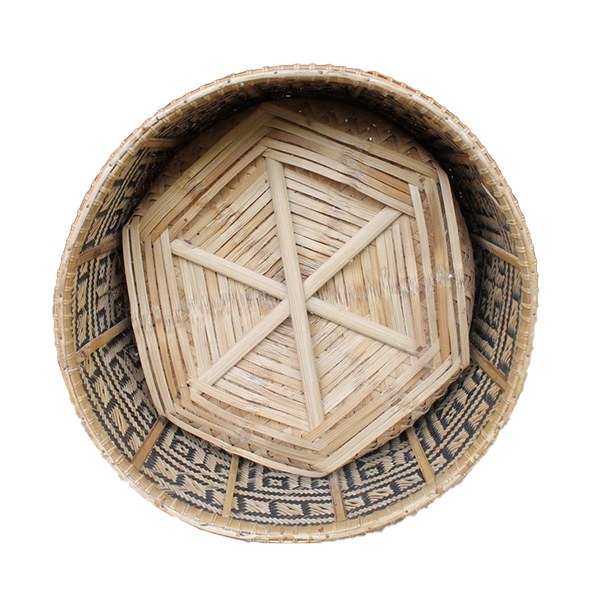
Weave a krachat or hap kheng tray, bottom and body, without a rim. Weave the bottom in the hexagonal ta-laeo-ho pattern.
Materials for this step:
 Bamboo Poles1 piece
Tools needed:
 Machete
 Knife
Knife5
5
Cylinder
Cylinder
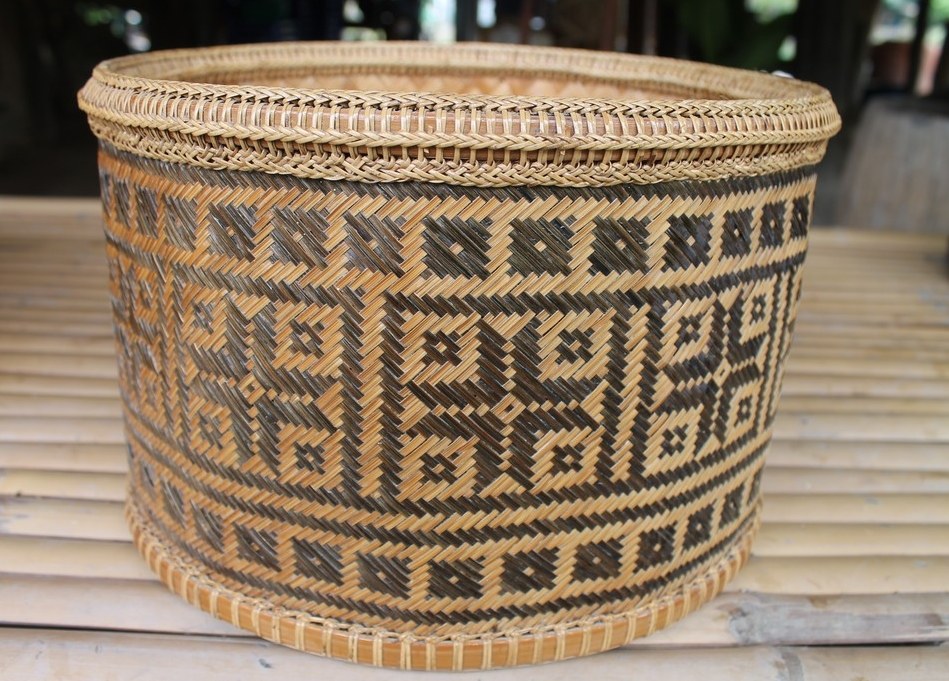
Weave strips in raised-flower or lettered patterns, dyeing strips if wanted so the pattern shows clearly, into a hollow cylinder the same diameter as the tray's mouth.
6
6
Assemble and bind the rims
Assemble and bind the rims
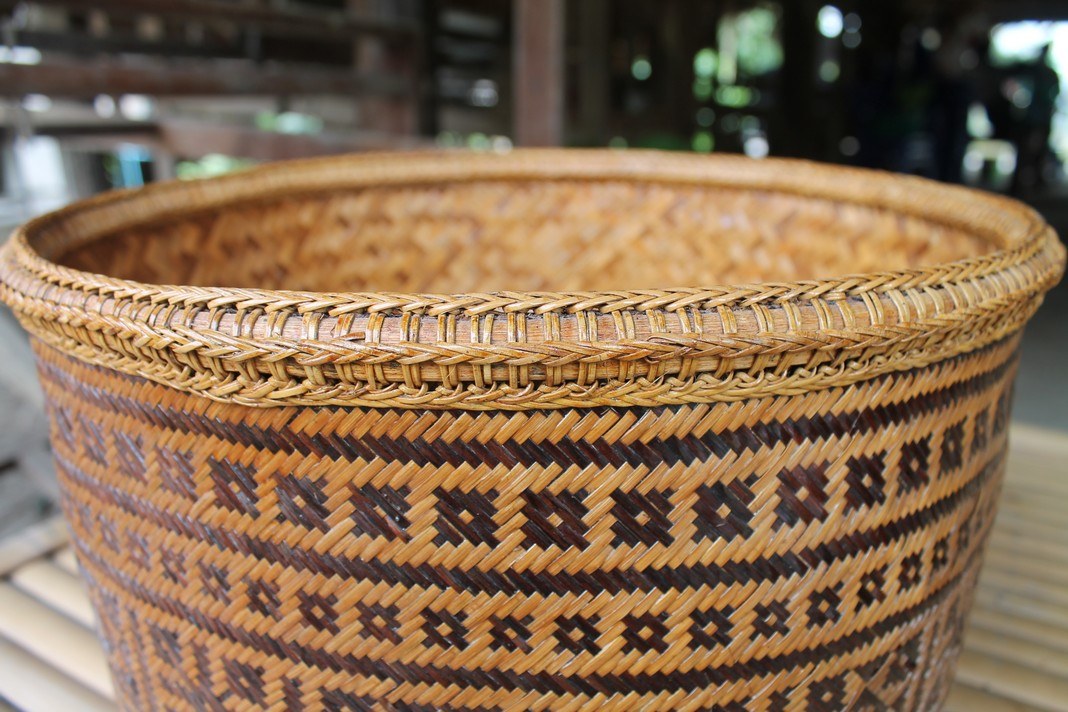
Set the tray into the cylinder so its edge meets the top edge, and clamp bamboo on to make the rim. Clamp bamboo onto the bottom edge of the cylinder as the base. Bind the top and bottom rims finely with braided rattan, in patterns such as single, double, three- and five-rattan binding, chung nang, kraduk, san pla chon and kwang liao lang. Cross 3 bamboo sticks under the bottom for strength.
7
7
Real photos
Real photos
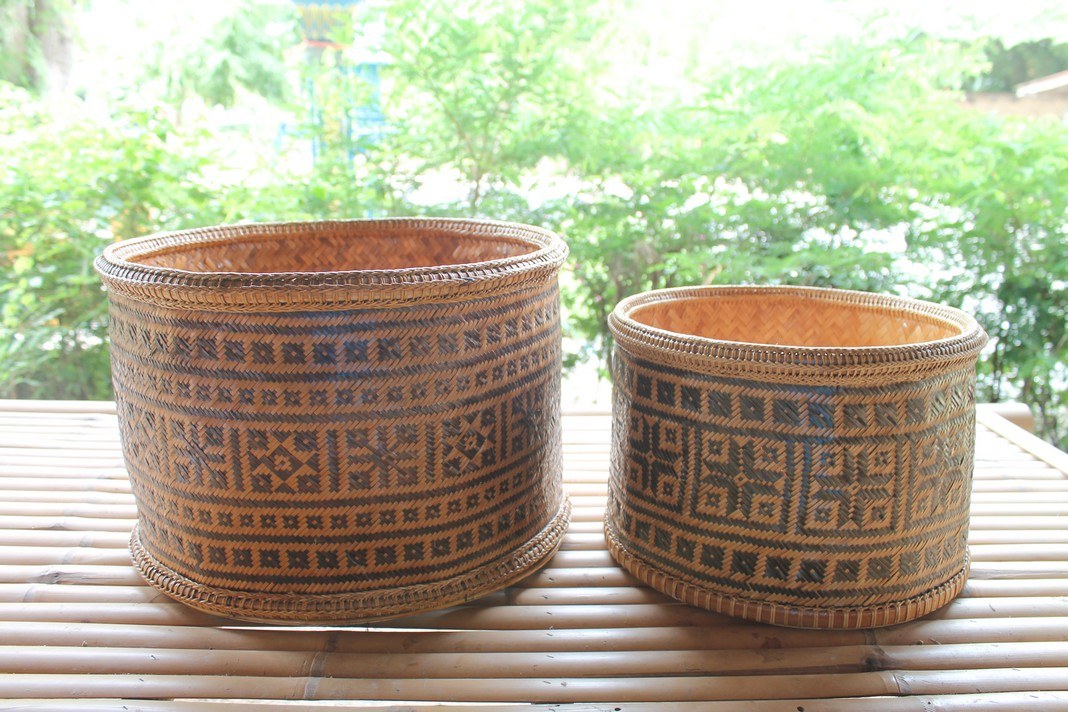
Photos of real ho, Ancient Tai Dam Cultural Revival Centre, U Thong, Suphan Buri (Sirindhorn Anthropology Centre, author พิชชา ทองขลิบ (Phitcha Thongkhlip), CC BY 4.0).
8
8
How it is used
How it is used
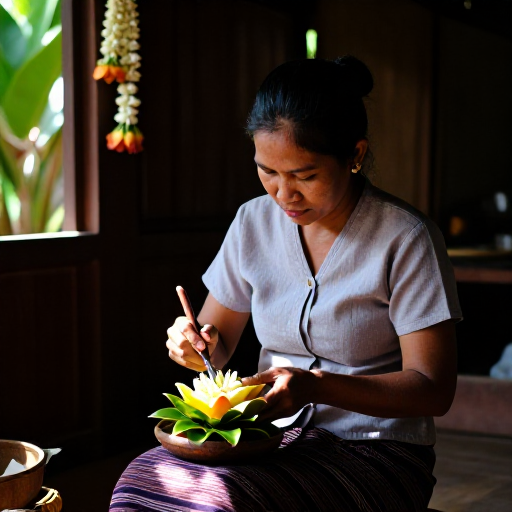
Keep cloth scraps, thread, needles, scissors and needlework tools in the tray at the top; Tai Dam women carry it with them for their sewing tools.
9
9
Troubleshooting
Troubleshooting
Troubleshooting the ho.
Flow
Loading...
10
10
History and limits
History and limits
Tai Dam life divides work between men and women: men work bamboo and rattan, women work cloth. Young Tai Dam men often wove a ho as a gift or to court a young woman; the finer the rattan binding, the more care it showed. Today only elders can still make one. Take care with the knife when splitting strips.
Source: Sirindhorn Anthropology Centre, Traditional Objects of Everyday Use database, "โฮ่", author พิชชา ทองขลิบ (Phitcha Thongkhlip), Ancient Tai Dam Cultural Revival Centre, Suphan Buri (CC BY 4.0 licence).
**Limits** The source gives no sizes, no method for the ta-laeo-ho weave and no dye, and there is no listing for rattan, so it is named in the text.
Related Blueprints
These blueprints share knowledge with this one — techniques, materials, or principles that connect them in the learning graph.
CC0 Public Domain
This blueprint is released under CC0. You are free to copy, modify, distribute, and use this work for any purpose, without asking permission.
Support the Maker by purchasing products through their Blueprint where they earn a Maker Commission set by Vendors, or create a new iteration of this Blueprint and include it as a connection in your own Blueprint to share revenue.