Collaboration
ART
BEAUTY & WELLNESS
CRAFT
CULTURE & HISTORY
ENTERTAINMENT
ENVIRONMENT
FOOD & DRINKS
REVERSE ENGINEERING
SCIENCES
SPORTS
TECHNOLOGY
WEARABLES


Chippewa Purple Dye: Very Old Rotten Maple Wood Boiled with Grindstone Dust (Densmore, 1928)
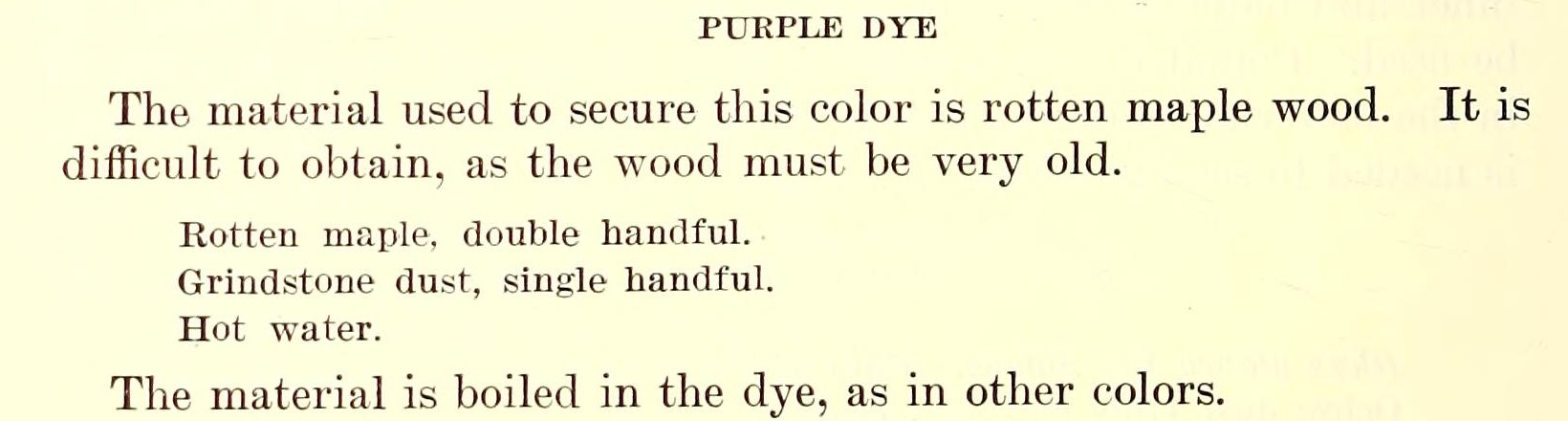
The Chippewa (Ojibwe) purple Frances Densmore recorded: a double handful of rotten maple wood and a single handful of grindstone dust boiled in hot water, the material boiled in the dye. The wood must be very old, so it is hard to find.
Beginner
An hour or two
Instructions
1
1
Read Densmore
Read Densmore
"The material used to secure this color is rotten maple wood. It is difficult to obtain, as the wood must be very old."
2
2
Find the wood
Find the wood
Look for very old, rotten maple wood (rotten wood of other trees is not what she names). Break it up (ours).
Materials for this step:
 Rotten Wood1 piece
Tools needed:
 Hammerstone
3
3
Make the dye
Make the dye
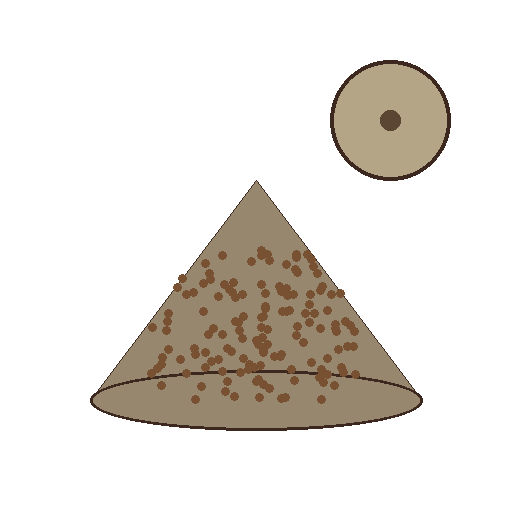
Put a double handful of the rotten maple and a single handful of grindstone dust into hot water and boil (water amount ours: a few quarts).
Materials for this step:
 Grindstone Dust1 piece
 Water1 piece
Tools needed:
 Fire Pit
 Large Dye Pot
4
4
Dye the yarn
Dye the yarn
Boil the yarn in the dye, as for the other colours. Lift it out, rinse and dry it (rinse and dry ours).
Materials for this step:
 Undyed Wool Yarn1 piece
Tools needed:
Fire PitLarge Dye Pot5
5
Troubleshooting
Troubleshooting
Purple dye troubleshooting.
Flow
Loading...
6
6
History and honest limits
History and honest limits
From Frances Densmore, *Uses of Plants by the Chippewa Indians*, **44th Annual Report of the Bureau of American Ethnology** (1928), p. 374 (checked on the archive.org scan usesofplantsbych00dens); grindstone dust, a silt with iron, p. 370. She adds that the Chippewa in Minnesota did not dye green with native dyes. The water amount, timing and rinsing are ours.
Materials
4- 1 piecePlaceholder
- 1 piecePlaceholder
- 1 piecePlaceholder
- 1 piecePlaceholder
This blueprint makes

Related Blueprints
These blueprints share knowledge with this one — techniques, materials, or principles that connect them in the learning graph.
CC0 Public Domain
This blueprint is released under CC0. You are free to copy, modify, distribute, and use this work for any purpose, without asking permission.
Support the Maker by purchasing products through their Blueprint where they earn a Maker Commission set by Vendors, or create a new iteration of this Blueprint and include it as a connection in your own Blueprint to share revenue.