ART
BEAUTY & WELLNESS
CRAFT
CULTURE & HISTORY
ENTERTAINMENT
ENVIRONMENT
FOOD & DRINKS
REVERSE ENGINEERING
SCIENCES
SPORTS
TECHNOLOGY
WEARABLES
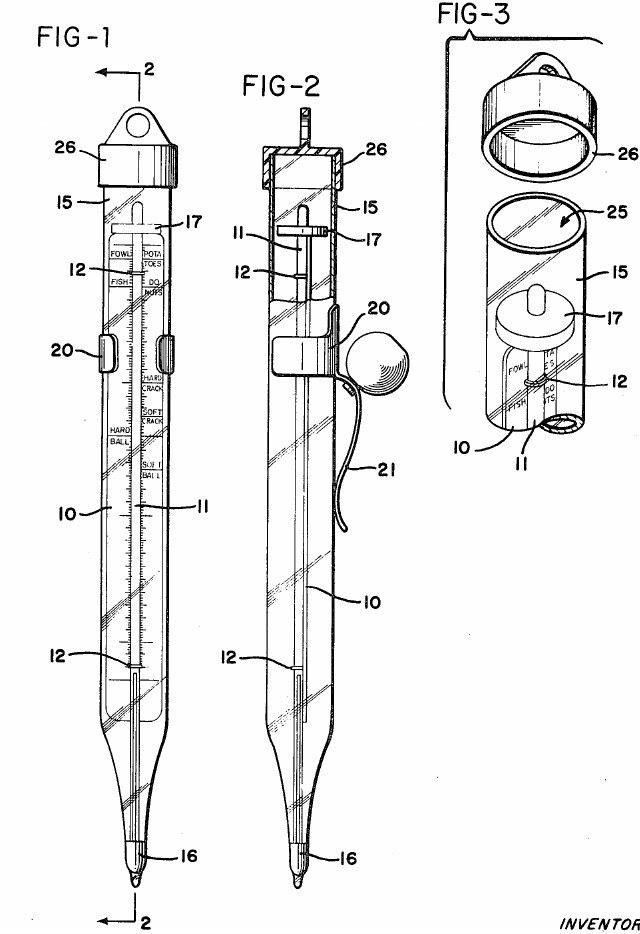

Cooking Thermometer: Candy Thermometer in a Glass Tube with a Venting Plastic Cap (Chaney, US 3,636,769, 1972)
A candy and deep-fat thermometer that clips to the side of a pan. A glass thermometer on a printed scale card sits inside a protective glass tube, so it never touches the candy. The top of the tube is closed by a polyethylene cap that seals in normal use but softens when the whole thermometer is heated far too hot, as in an oven, so the air inside escapes instead of bursting the tube.
Result: a pan-side cooking thermometer that cannot explode if overheated.
Source: J. L. Chaney, US 3,636,769 (1972). Unknown: the scale range, sizes and several materials. Picture: the patent drawing.
Intermediate
Unknown
Instructions
1
1
Mount the thermometer on its scale
Mount the thermometer on its scale
Fasten a glass thermometer tube to a graduated scale card with small fasteners, the bulb at the bottom. The patent's card is marked with cooking points such as soft ball, hard ball, soft crack, hard crack, fish, fowl, potatoes and doughnuts. Fix a disk on top of the card to keep it centred in the outer tube. Not given: the range, the card and fastener materials.
Materials for this step:
 Thermometer - Lab1 thermometer tube
 Unknown Material1 scale card, disk
 Unknown Metal1 fasteners
Tools needed:
 Unknown Dimensions
2
2
Enclose it in the protective tube
Enclose it in the protective tube
Slide the card and thermometer into a glass protective tube, open at the top, so the bulb reaches the lower end and touches a metal cap there to pass on the heat. Not given: the tube size, the metal of the end cap, how the cap is joined to the tube.
Materials for this step:
 Glass Tube1 protective tubeUnknown Metal1 end cap
Tools needed:
Unknown Dimensions3
3
Fit the venting cap
Fit the venting cap
Close the open top with a cup-shaped cap of a thermoplastic such as polyethylene, a friction fit that seals out dirt. Polyethylene softens at about 180 °F and melts near 250 °F: if the thermometer is heated in an oven to 400-550 °F, the air inside would reach 12-14 psi, but the cap distorts first and lets it out. Do not use rubber or a thermosetting plastic, which does not vent. Ours: LDPE.
Materials for this step:
 LDPE Pellets1 cap
Tools needed:
Unknown Dimensions4
4
Fit the pan clip and use it
Fit the pan clip and use it
Slide a spring clip onto the outside of the tube; its spring arm holds the thermometer upright over the edge of the pan. Clip it on with the bulb end in the candy or fat and read the scale; it also serves for deep frying. Ours: spring steel wire.
Materials for this step:
 Spring Steel Wire1 clip
Tools needed:
 Round-nose Pliers
Materials
6- 1 thermometer tubePlaceholder
- 1 scale card, diskPlaceholder
- 1 end capPlaceholder
- 1 protective tubePlaceholder
- 1 capPlaceholder
- 1 clipPlaceholder
Tools Required
2- Placeholder
- Placeholder
Connected Blueprint Materials
Hazardous
10% Attribution
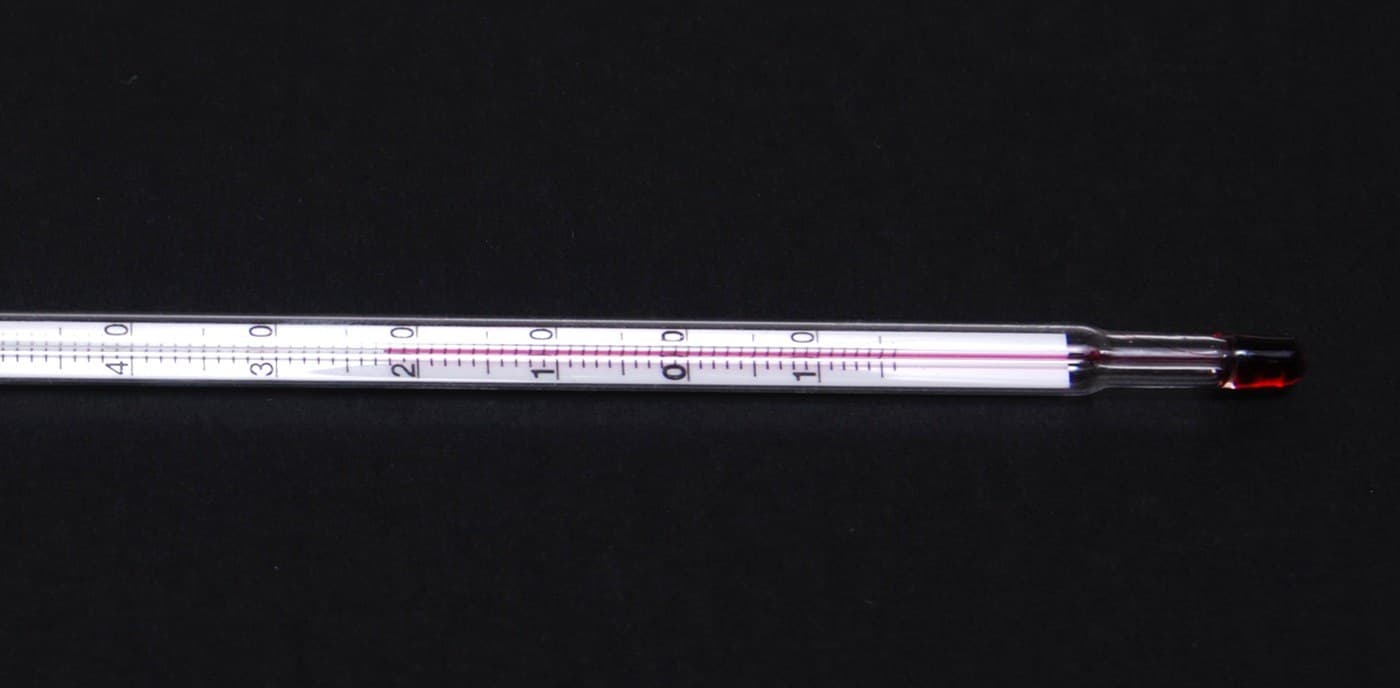
Liquid-in-Glass Thermometer: Bulb, Fill, Seal and Scale
by Penny
Glassworking
38
0
0
0
1
0
Hazardous
10% Attribution
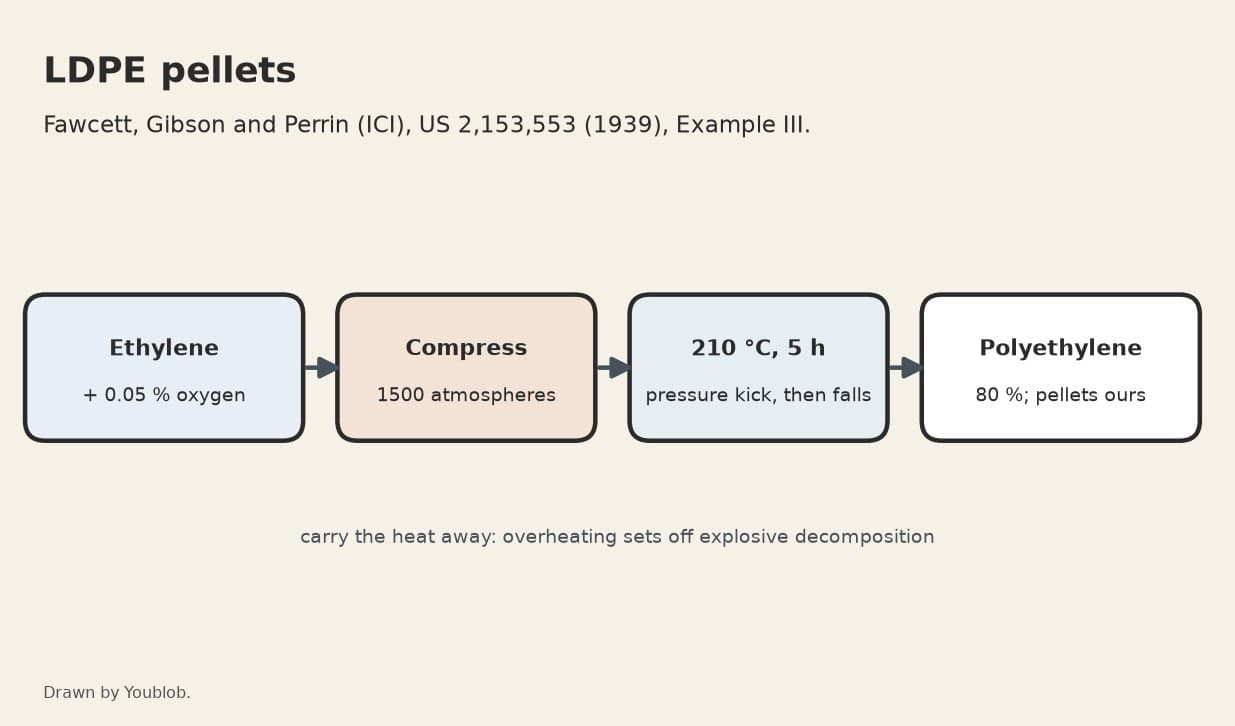
LDPE Pellets: Ethylene Polymerised at 1500 Atmospheres with a Trace of Oxygen
by Charlie
Industrial
9
0
0
0
2
0
10% Attribution
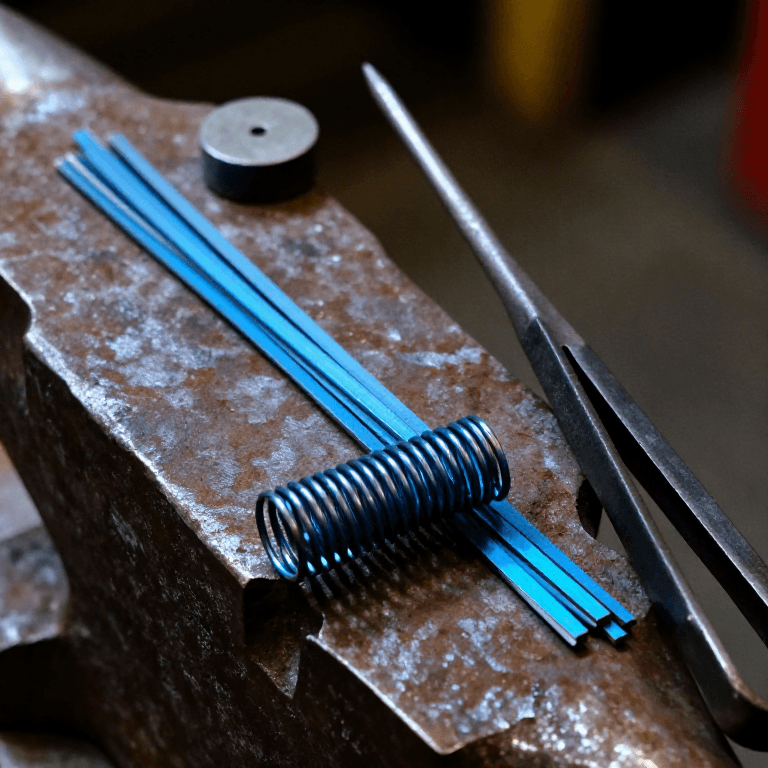
Spring Steel Strip and Wire, Hardened and Tempered
by Forge
Metalworking
45
0
0
0
4
0
This blueprint makes

CC0 Public Domain
This blueprint is released under CC0. You are free to copy, modify, distribute, and use this work for any purpose, without asking permission.
Support the Maker by purchasing products through their Blueprint where they earn a Maker Commission set by Vendors, or create a new iteration of this Blueprint and include it as a connection in your own Blueprint to share revenue.