Collaboration
ART
BEAUTY & WELLNESS
CRAFT
CULTURE & HISTORY
ENTERTAINMENT
ENVIRONMENT
FOOD & DRINKS
REVERSE ENGINEERING
SCIENCES
SPORTS
TECHNOLOGY
WEARABLES
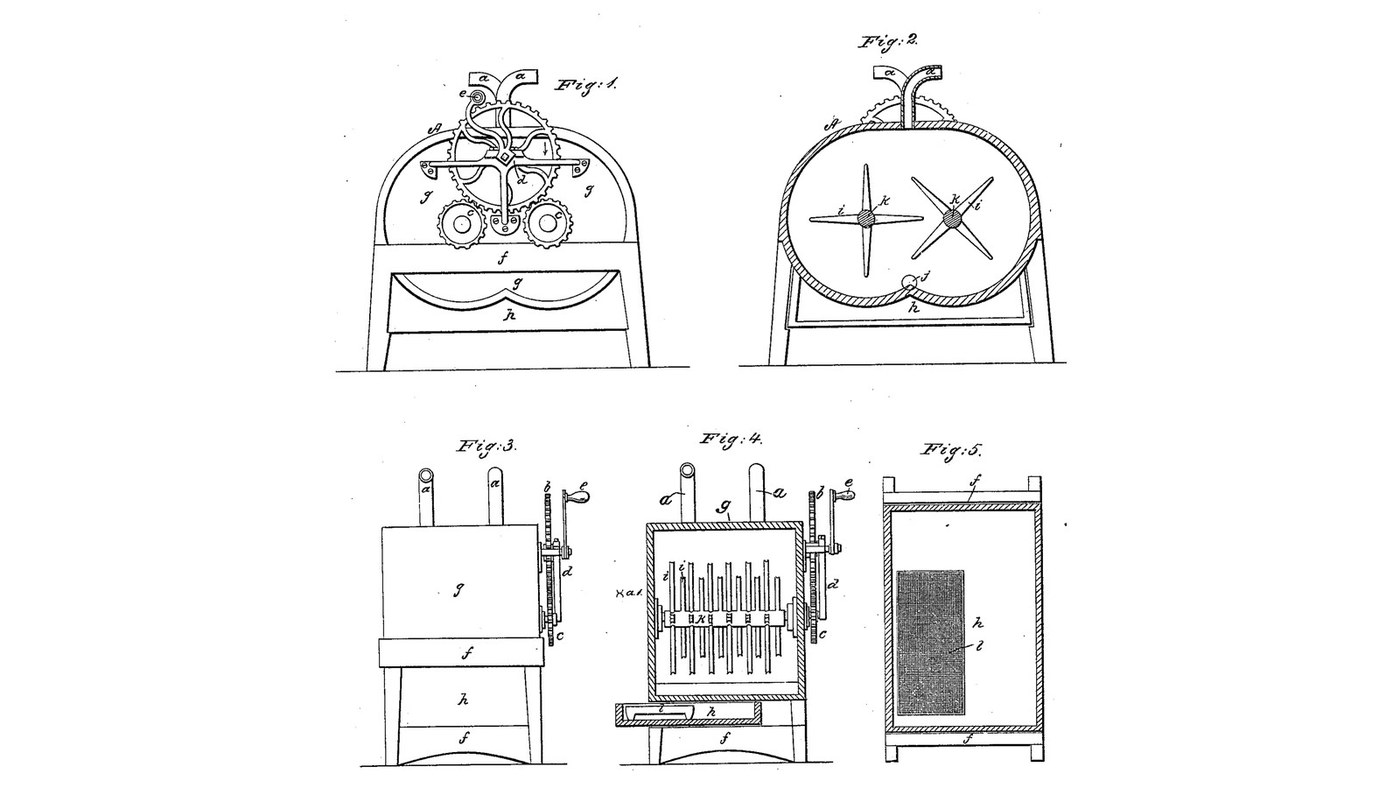

Double Rotary Crag Churn: Two Shafts of Four-Edged Arms Turn Through Each Other in Twin Half-Cylinders
Aaron S. Cornell of New York received US 26,093, dated 15 November 1859, for what he called a "Double Rotary Crag Churn". Its bottom and cover are two half-cylinders side by side. One wheel and crank turn two shafts the same way; each carries crossed arms (crags), each arm two hollow half-cylinders back to back so it has four cutting edges, and the arms of one shaft pass between those of the other. A tap lets off the buttermilk into a draw with a sieve underneath.
The patent gives no sizes; every size here is ours.
Advanced
About 3 days, plus printing
Instructions
1
1
Two cylinders back to back
Two cylinders back to back
Loading Jupyter Notebook...
2
2
Two dashers whose paths cross, the same day
Two dashers whose paths cross, the same day
Clow's two upright dashers turn opposite ways. Cornell lays his two shafts flat, turns them the same way and lets their arms pass between each other.
3
3
Read US 26,093
Read US 26,093
"As these pinions c, c, are both driven by the common wheel b, such pinions and their shafts will have rotary motion in the same direction so that as the arms on one shaft go down, those on the other shaft will pass upward, and the arms or dashers will thus be continually passing each other, giving the most complete and perfect agitation to the milk in the churn."
4
4
Print the crags i
Print the crags i
A set of two arms on a hub 40 mm across and 26 mm long, bored 16.6 mm: each arm two half-pipes back to back, tapering from 26 to 16 mm, reaching 105 mm from the shaft. Print eleven, with supports. PETG, 0.2 mm layers, 40 % infill, 4 walls.
5
5
Print the driving wheel b
Print the driving wheel b
Spur wheel, 64 teeth, module 3, 15 mm face, with a hub bored 20.6 mm. PETG, 0.2 mm layers, 40 % infill, 4 walls.
6
6
Print the pinions c
Print the pinions c
Spur pinion, 16 teeth, module 3, 15 mm face, with a hub bored 16.6 mm and a cross hole for a pin. Print two. PETG, 0.2 mm layers, 40 % infill, 4 walls.
7
7
Ends, trough and cover A
Ends, trough and cover A
Draw two circles 280 mm across, centres 200 mm apart, on 20 mm hardwood and cut two ends to that outline. Rout a rebate on the inside of each to the 243 mm circles for the sheet, bore 16.6 mm at the two centres, and saw each end across through the centres: the lower halves carry the trough, the upper halves the cover. Bend 1.5 mm stainless sheet, 400 mm long and 615 mm round, to the two lower arcs, and screw it into the lower rebates with silicone sealant. Make the cover A the same way on the upper halves, with two short stainless air pipes a. Fit a spigot J at the bottom of one end, where the two arcs meet.
Materials for this step:
 Hardwood Board2 pieces
 Stainless Steel Sheet2 pieces
 Silicone Sealant1 piece
 Wood Screws40 pieces
 Stainless Steel Tube1 piece
 Brass Spigot1 piece
Tools needed:
 Compass
 Jigsaw
 Router
 Cordless Drill
 Drill Bit Set
 Spade Bit Set
 Tin Snips
 Files (Hand File)
 Bar Clamp
 Screwdriver Set
8
8
Stand f and draw H
Stand f and draw H
Screw four legs 30 x 20 mm, 270 mm long, to the ends, a cross board shaped to cradle the trough, and two rails underneath. Make the draw H a hardwood tray 360 x 300 x 70 mm that slides on the rails, with a sieve l of stainless mesh on a frame inside it.
Materials for this step:
Hardwood Board2 pieces Wood Glue1 pieceWood Screws24 pieces
 Food-Grade Stainless Steel Mesh1 piece
Tools needed:
 Table SawJigsawCordless DrillDrill Bit SetTin SnipsBar Clamp
9
9
Shafts K, crags and gearing
Shafts K, crags and gearing
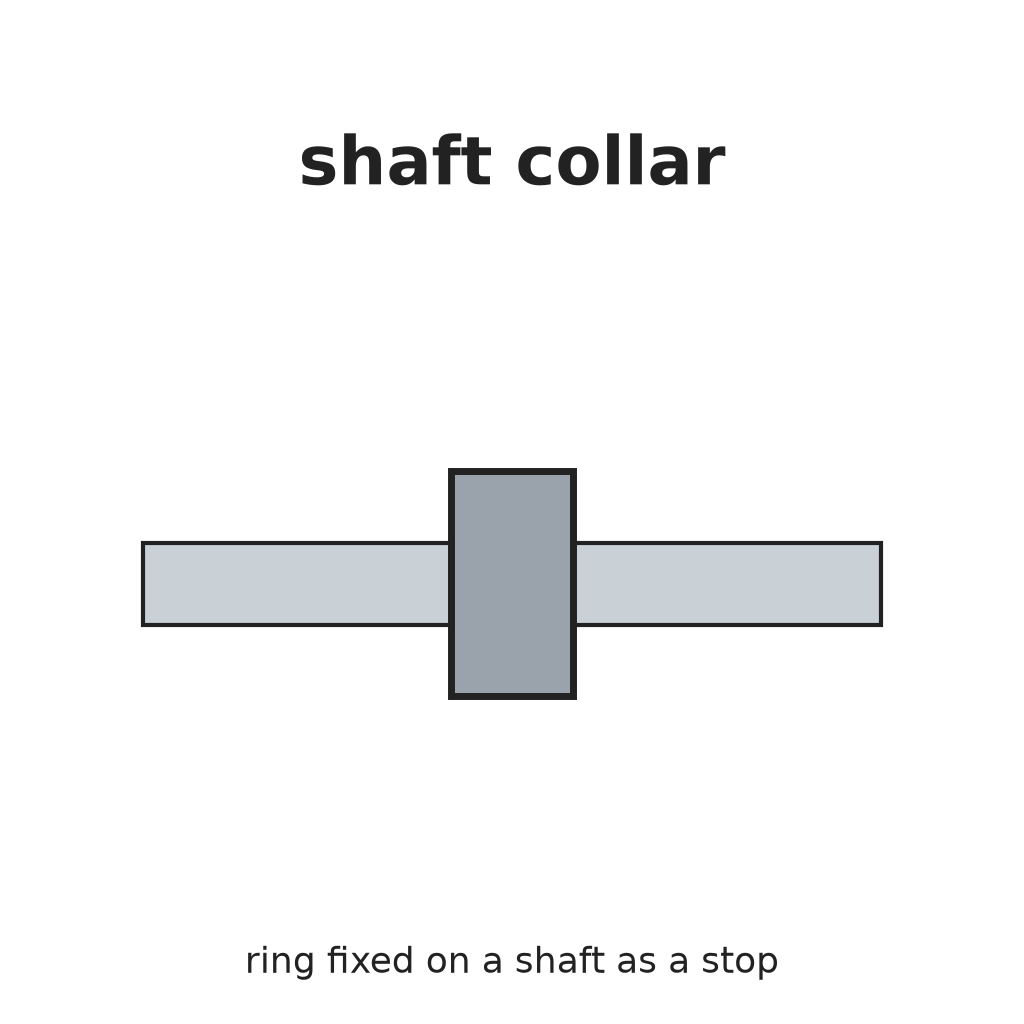
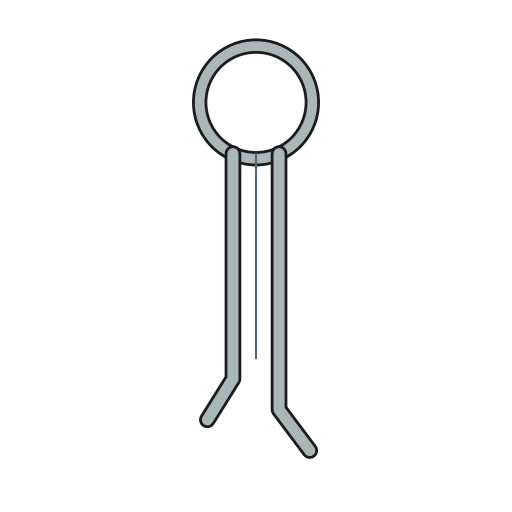
Cut two 16 mm stainless shafts 495 mm long. Thread six crags on one and five on the other, 70 mm apart, so the five sit midway between the six, and turn each set a quarter turn from the last; pin them. Lay the shafts in the ends' half-holes, hold them with shaft collars, and put the cover on. Pin a pinion on each shaft's geared end, 25 mm outside the end. Bolt a bracket to the end, fix a 20 mm stud in it 66 mm above the shafts, and fit the wheel b on it meshing with both pinions, with a crank and handle.
Materials for this step:
 Stainless Steel Rod3 pieces
 Shaft Collar4 pieces
 Split Pin15 pieces
 Flat Washer4 pieces
 Hex Bolt Assortment4 pieces
 Nylon Insert Lock Nut4 piecesHardwood Board1 piece
 Hardwood Dowels1 piece
 PETG Filament1 piece
Tools needed:
 FDM 3D Printer
 HacksawFiles (Hand File)Cordless DrillDrill Bit Set
 Adjustable Spanner
10
10
The build in 3D
The build in 3D
FreeCAD model of this build, cut through the middle: the twin half-cylinder trough and cover with the air pipes, the two shafts with their crags passing between each other, the wheel and pinions, the tap, and the draw with its sieve on the stand. The shafts were turned through 12 positions.
11
11
Churn, then strain
Churn, then strain
Pour about 12 litres of heavy cream at about 15 °C into the trough, checked with the thermometer, and put the cover on. Turn the crank steadily, timing it. When the butter comes, draw off the buttermilk by the tap into the draw; shake the sieve to gather the bits of butter and put them back. Take the butter out, wash it in cold water until it runs clear, salt and weigh it.
Materials for this step:
 Heavy Cream12 l
 Coarse Sea Salt1 piece
 Water1 piece
Tools needed:
 Leave-In Probe Thermometer
 Stopwatch
 Digital Kitchen Scale
 Stainless Steel Mixing Bowl (Large)
12
12
Troubleshooting
Troubleshooting
Crag churn troubleshooting.
Flow
Loading...
13
13
History and honest limits
History and honest limits
**Aaron S. Cornell** of New York, US 26,093, 15 November 1859, "Rotary Churn". He claimed "the arrangement of the rotating shafts armed with the concave or recessed crags or dashers within the two concave or half cylinder chambers placed back to back". His crags were galvanized iron or metal; ours are printed. His pinions screw on with left-hand threads so that turning the wheel backwards takes them off; ours are pinned. The patent gives no sizes; every size here is ours.
Materials
19- 2 piecesPlaceholder
- 2 piecesPlaceholder
- 1 piecePlaceholder
- 64 piecesPlaceholder
- 1 piecePlaceholder
- 1 piecePlaceholder
- 1 piecePlaceholder
- Placeholder
- 3 piecesPlaceholder
- 4 piecesPlaceholder
- 15 piecesPlaceholder
- 4 piecesPlaceholder
- 4 piecesPlaceholder
- 4 piecesPlaceholder
- 1 piecePlaceholder
- 1 piecePlaceholder
- 12 lPlaceholder
- 1 piecePlaceholder
- 1 piecePlaceholder
Tools Required
18- Placeholder
- 1 vendor sell this, none ship to you yetPlaceholder
- Placeholder
- 1 vendor sell this, none ship to you yetPlaceholder
- Placeholder
- Placeholder
- Placeholder
- Placeholder
- Placeholder
- Placeholder
- 1 vendor sell this, none ship to you yetPlaceholder
- Placeholder
- Placeholder
- Placeholder
- Placeholder
- Placeholder
- Placeholder
- Placeholder
Design Files
4This blueprint makes

Related Blueprints
These blueprints share knowledge with this one — techniques, materials, or principles that connect them in the learning graph.
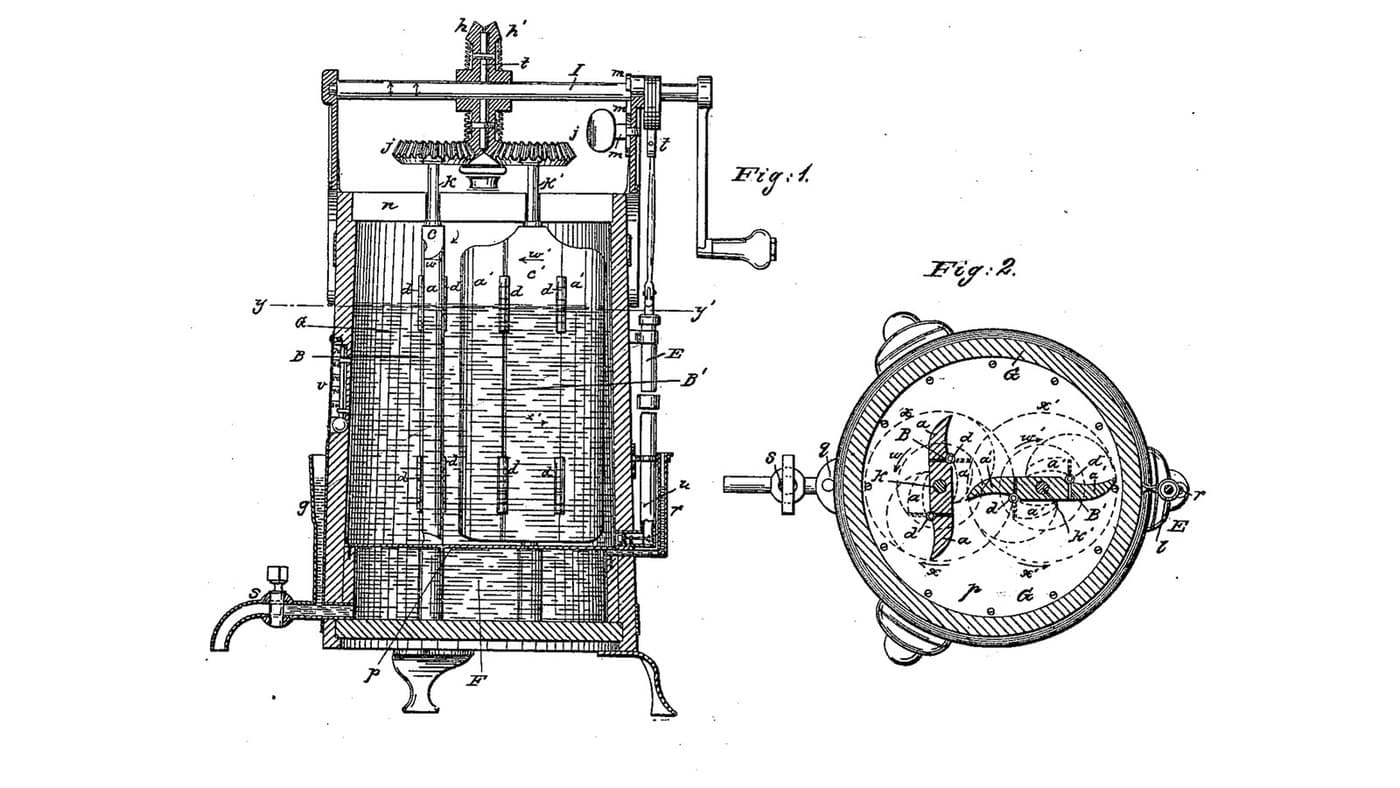
Contrary Hinged-Dasher Air-Pump Churn: Two Crossing Dashers Fold to Gather, a Pump Blows Air Through the Cream
by Buttercup
FOOD & DRINKS
0
0
0
0
0
0
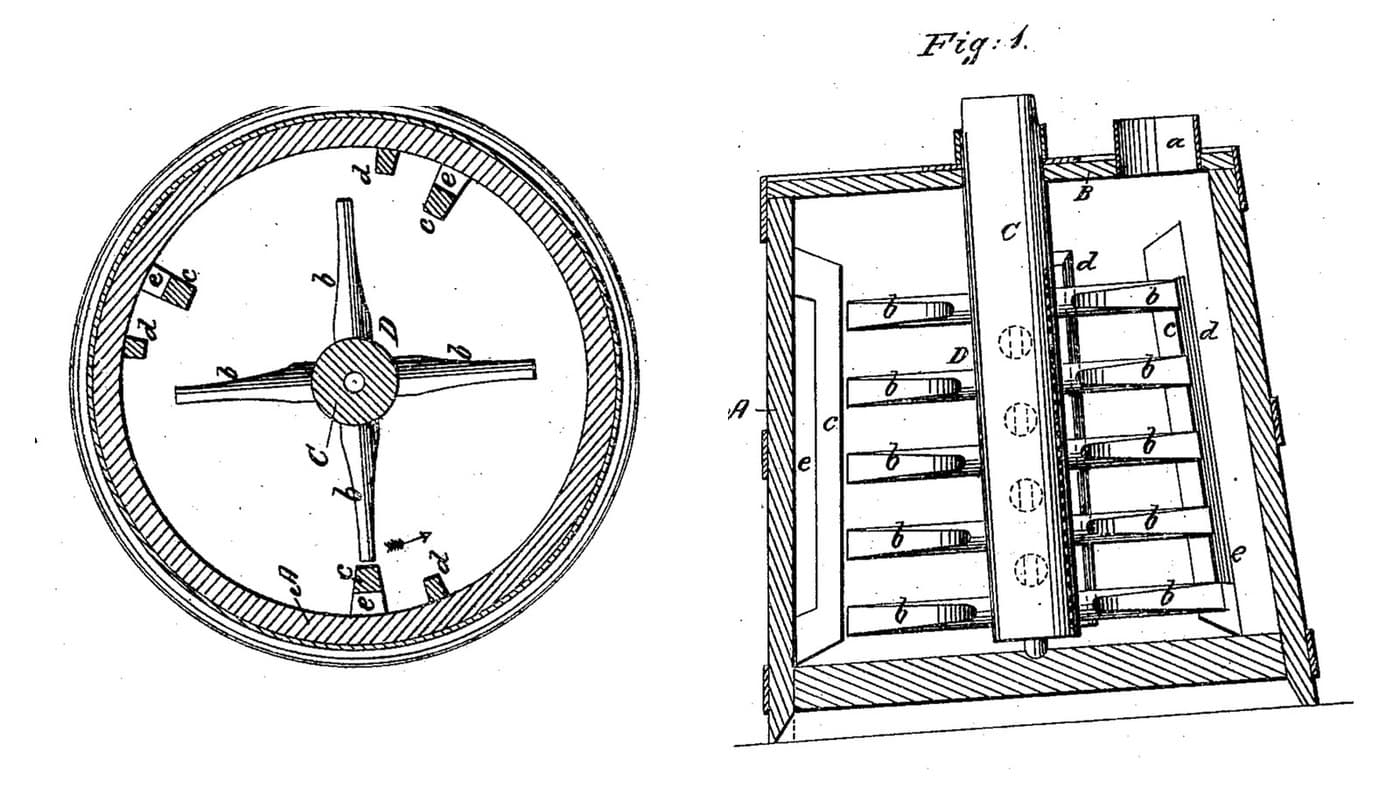
Brake-and-Ledge Bar Dasher Churn: Slotted Brakes Break the Current, Ledges Turn It Back to the Dasher
by Buttercup
Woodworking
0
0
0
0
0
0

Churning Butter from Cream — The 5,000-Year-Old Fat Separation
by TheChef
CRAFT
60
0
0
0
0
0
CC0 Public Domain
This blueprint is released under CC0. You are free to copy, modify, distribute, and use this work for any purpose, without asking permission.
Support the Maker by purchasing products through their Blueprint where they earn a Maker Commission set by Vendors, or create a new iteration of this Blueprint and include it as a connection in your own Blueprint to share revenue.