Collaboration
ART
BEAUTY & WELLNESS
CRAFT
CULTURE & HISTORY
ENTERTAINMENT
ENVIRONMENT
FOOD & DRINKS
REVERSE ENGINEERING
SCIENCES
SPORTS
TECHNOLOGY
WEARABLES
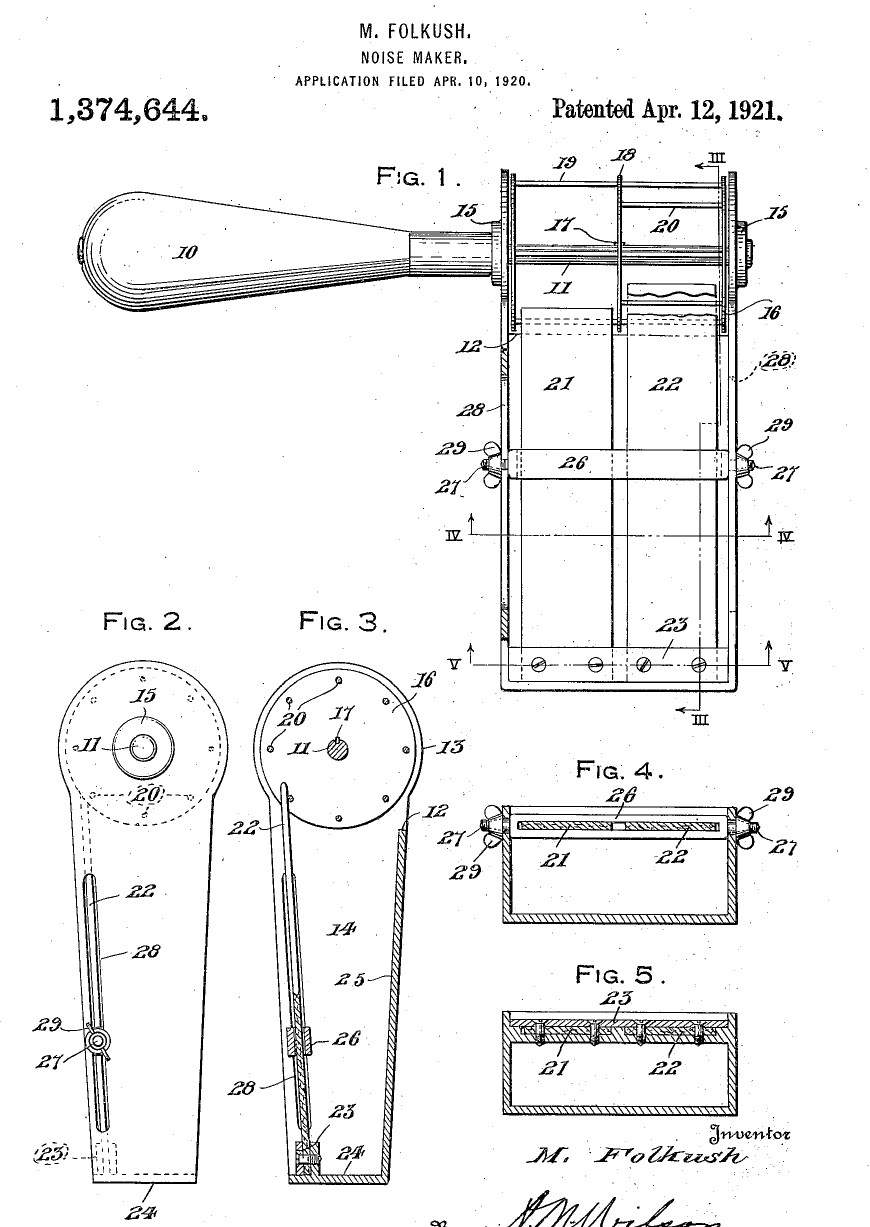


New Year Noisemaker: a Spun Box Whose Wooden Tongues Clack Over a Pinned Bobbin (Folkush, 1921)
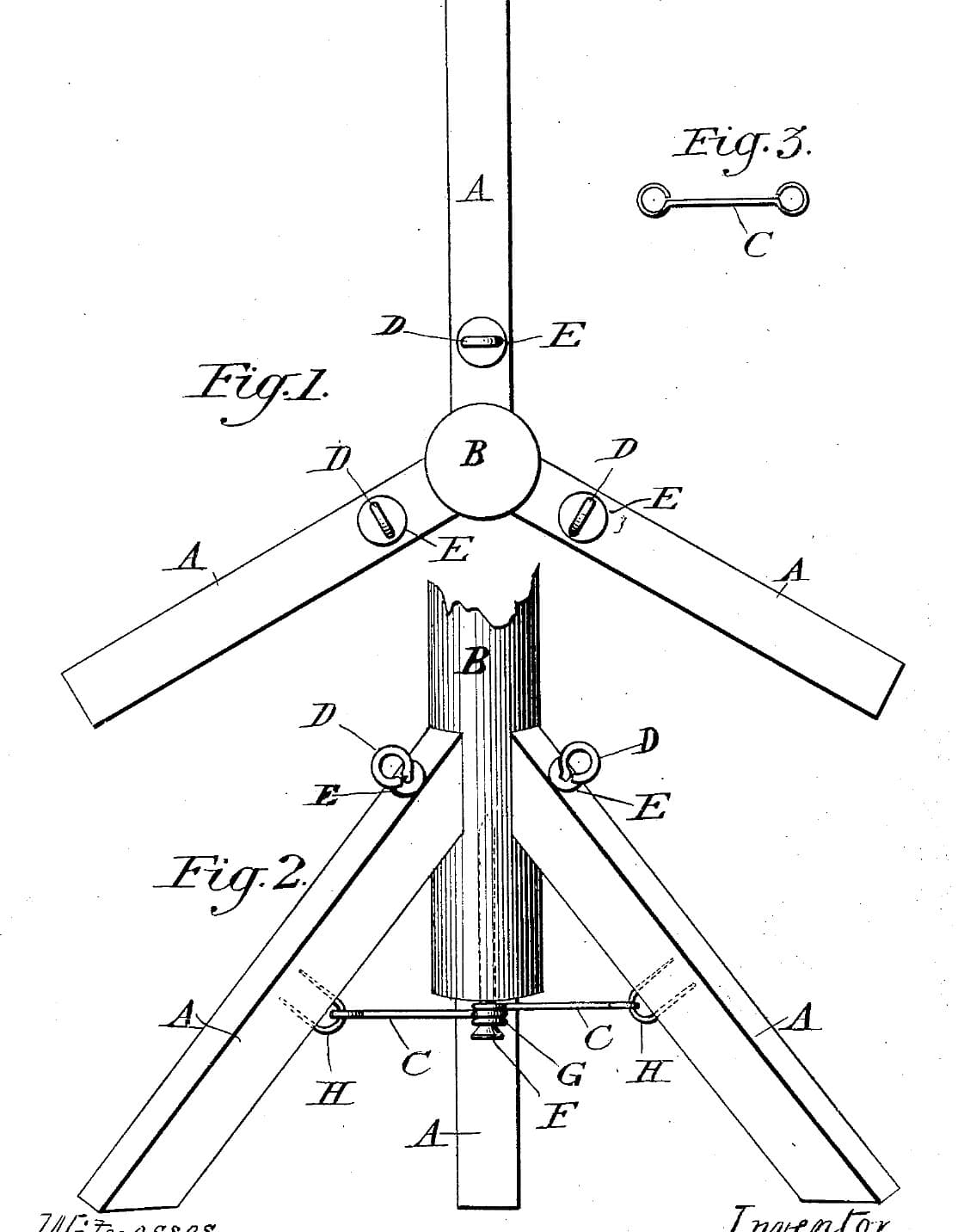
Martin Folkush of Milwaukee received US 1,374,644, dated 12 April 1921, for a noisemaker "that can be heard for a great distance". Hold the handle and swing the box round it: two thin wooden tongues inside snap over the posts of a fixed bobbin, one in single clacks and one in double, and the box rings like a sounding board. A slider changes the pitch.
We make it from plywood, dowel and hardwood strip. All sizes are ours.
Intermediate
About 4 hours
Instructions
1
1
Posts on the bobbin
Posts on the bobbin
Loading Jupyter Notebook...
2
2
Read US 1,374,644
Read US 1,374,644
"Upon rotating the casing 12 upon the shaft 11, the sounding boards 21 and 22 will be brought into violent engagement with the posts 19 and 20 causing loud sounds to be emitted."
3
3
Make the handle and shaft
Make the handle and shaft
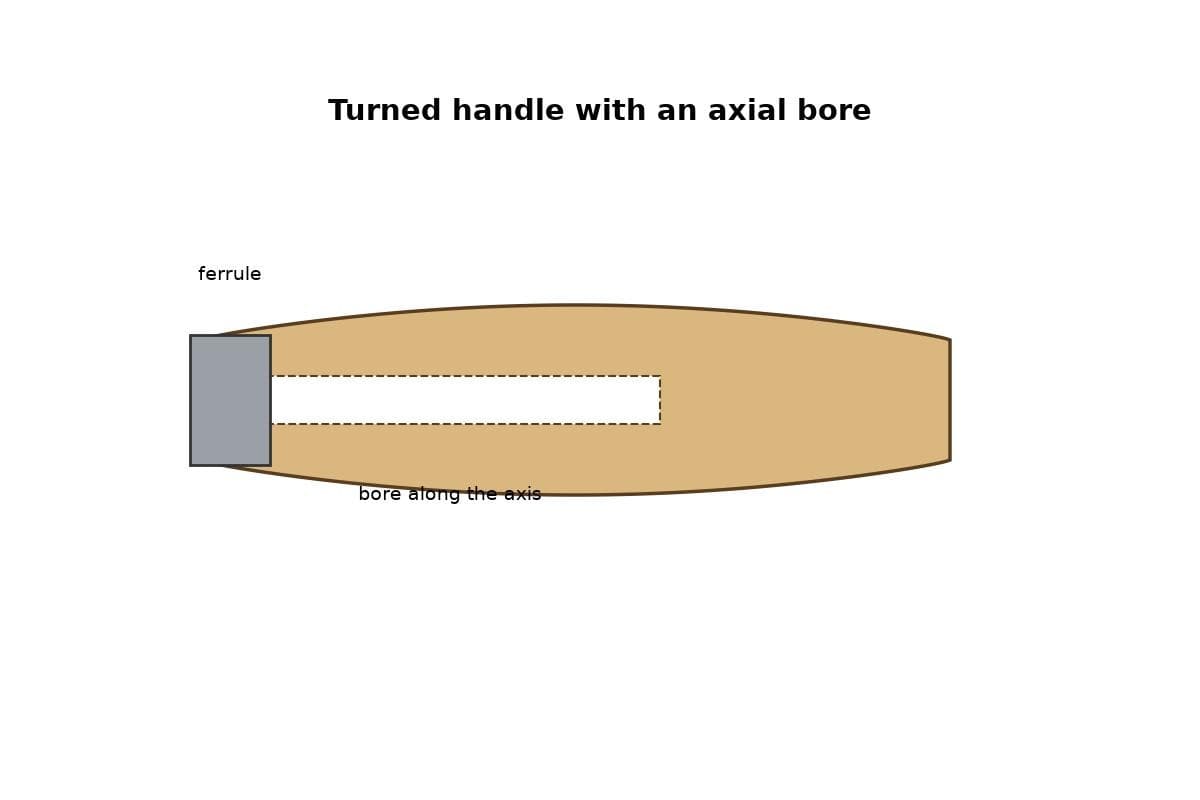
Shape a handle from hardwood handle stock with a rasp, his handle 10, and glue a dowel shaft 11 into its end.
Materials for this step:
 Hardwood Handle Stock1 piece
 Hardwood Dowels1 piece
 Wood Glue1 piece
Tools needed:
 Hand Saw
 Wood Rasp
 Sandpaper
 Hand Drill
4
4
Make the bobbin
Make the bobbin
Cut three plywood disks 60 mm across (ours): two ends and the middle disk 18. Drill all three on the circle from the notebook and glue dowel posts 19 through all of them; then glue the shorter posts 20 between the middle disk and one end disk only, between the long ones. Drill the centre for the shaft and pin the bobbin to it, his pin 17.
Materials for this step:
 Plywood Sheet1 pieceHardwood Dowels1 pieceWood Glue1 piece
 Nails1 piece
Tools needed:
 Coping Saw
 DividersHand DrillHand Saw
5
5
Make the casing
Make the casing
Cut two plywood sides 14 with a round head 13 at one end, bored for the shaft. Join them with a closed end 24 and an open frame so the bobbin turns freely between the heads. Glue a cross rib 23 inside the closed end. Cut a slot 28 in each side for the slider.
Materials for this step:
Plywood Sheet1 pieceWood Glue1 pieceNails1 pieceTools needed:
Hand SawCoping SawHand Drill6
6
Fit the sounding boards
Fit the sounding boards
Cut two thin hardwood strips (his sounding boards 21 and 22) long enough to reach from the rib to just inside the circle of posts, and screw their ends to the rib, side by side, one opposite each half of the bobbin.
Materials for this step:
 Hardwood Strip1 piece
 Wood Screws1 piece
Tools needed:
Hand SawHand Drill Screwdriver Set
7
7
Fit the slider and close the box
Fit the slider and close the box
Make a small wooden slider 26 that surrounds both boards, with a length of threaded rod through it whose ends pass out through the slots; put a wing nut on each end (his set nuts 29). Put the casing on the shaft over the bobbin and close the other side with a plywood plate 25, making a resonant box.
Materials for this step:
Hardwood Strip1 piece Threaded Rod1 piece
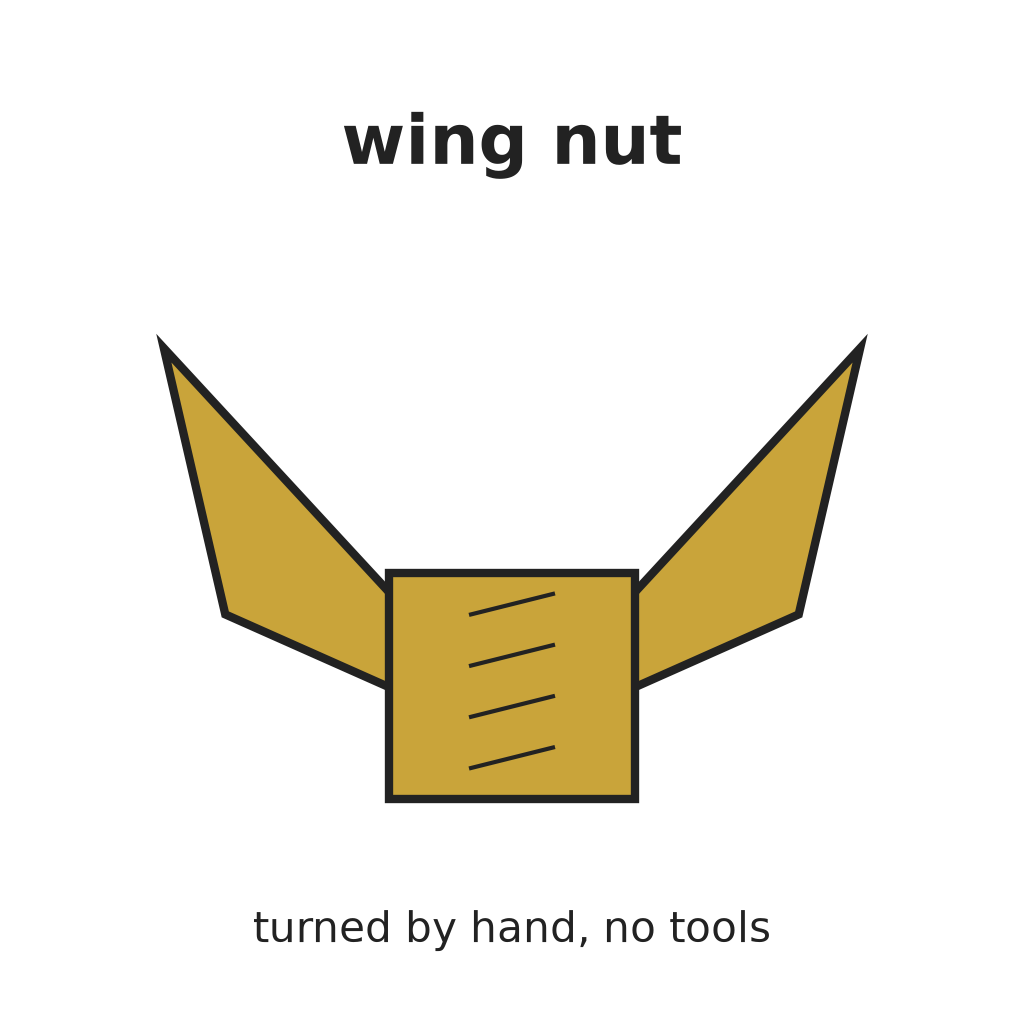 Wing Nut2 piecesPlywood Sheet1 pieceWood Glue1 piece
Tools needed:
Hand SawHand Drill Hacksaw
8
8
Play it
Play it
Hold the handle and swing the box round the shaft: the boards snap over the posts. Slide the slider toward the bobbin for a higher, sharper sound, away for a deeper one, and lock it with the wing nuts.
9
9
Troubleshooting
Troubleshooting
Noisemaker troubleshooting.
Flow
Loading...
10
10
History and honest limits
History and honest limits
**Martin Folkush** of Milwaukee, US 1,374,644, dated 12 April 1921, filed 10 April 1920. He claimed "a noise maker comprising a shaft, a casing journaled thereon, a frame having spaced end supported posts", "one half of said frame being provided with double the number of posts that the other half has", and the pitch-adjusting slider. He names no materials and gives no sizes: the wood, all sizes, wing nuts and threaded rod are ours.
Materials
9- 1 piecePlaceholder
- 1 piecePlaceholder
- 4 piecesPlaceholder
- 1 piecePlaceholder
- 2 piecesPlaceholder
- 1 piecePlaceholder
- 1 piecePlaceholder
- 1 piecePlaceholder
- 2 piecesPlaceholder
This blueprint makes
Related Blueprints
These blueprints share knowledge with this one — techniques, materials, or principles that connect them in the learning graph.
CC0 Public Domain
This blueprint is released under CC0. You are free to copy, modify, distribute, and use this work for any purpose, without asking permission.
Support the Maker by purchasing products through their Blueprint where they earn a Maker Commission set by Vendors, or create a new iteration of this Blueprint and include it as a connection in your own Blueprint to share revenue.