ART
BEAUTY & WELLNESS
CRAFT
CULTURE & HISTORY
ENTERTAINMENT
ENVIRONMENT
FOOD & DRINKS
REVERSE ENGINEERING
SCIENCES
SPORTS
TECHNOLOGY
WEARABLES
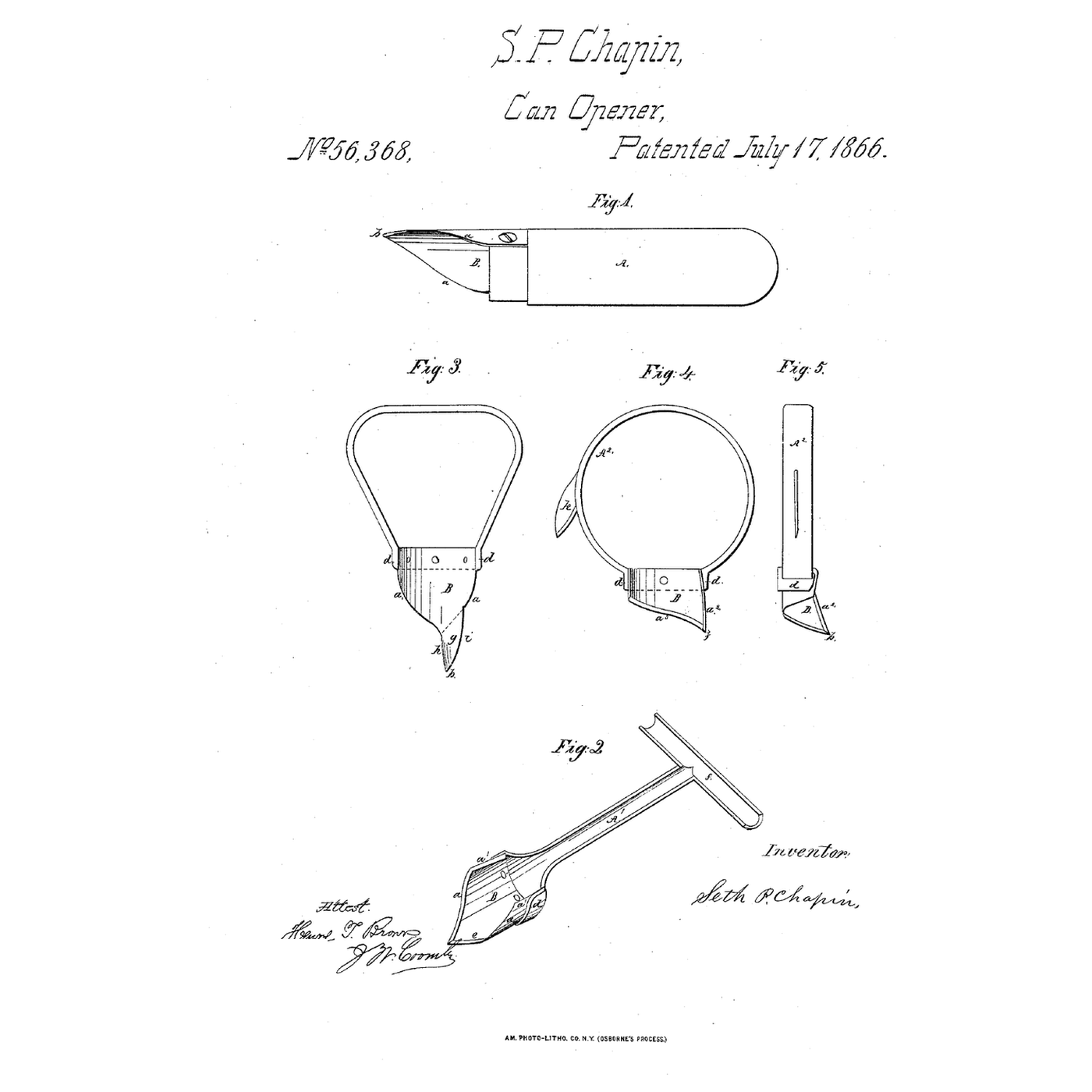


Half-Round Can Opener: Push the Cutter In and Twist
Opening a sardine box or tin with a flat knife takes many strokes and leaves a ragged edge.
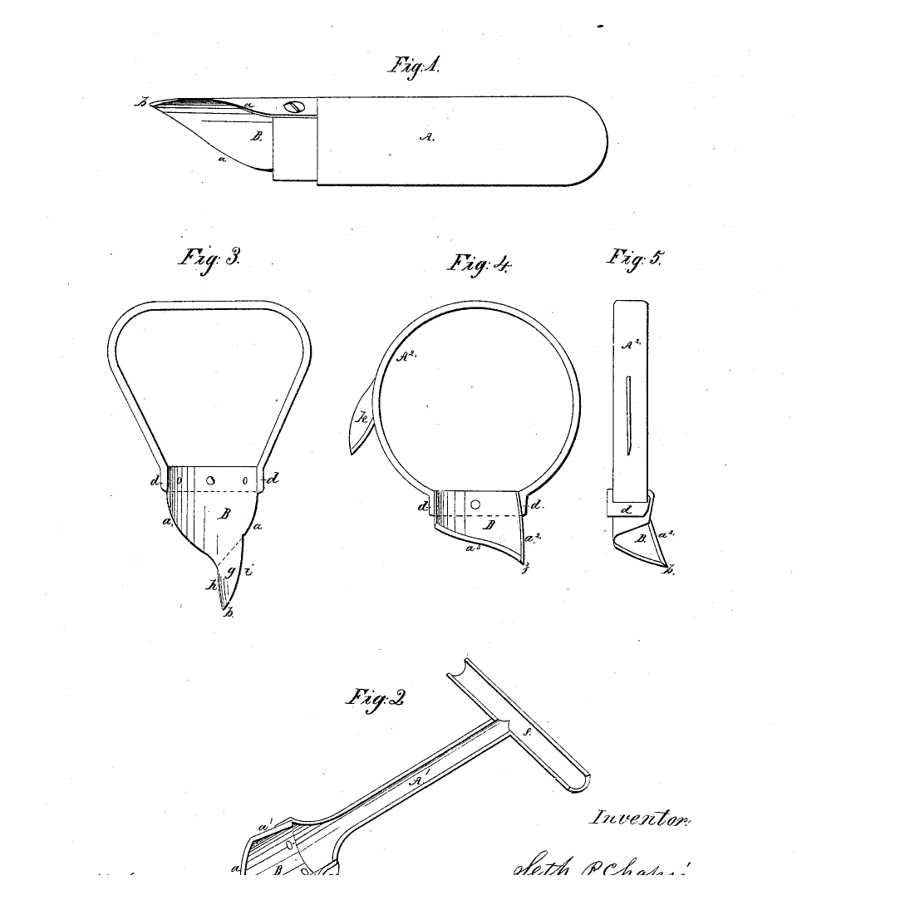
Seth P. Chapin of Atlantic, New Jersey, received US 56,368, dated 17 July 1866, for an implement for opening sheet-metal cans and boxes: a cutter semicircular in section with sloping edges to a point, bevelled inside, on a handle; forced in nearly to the handle and twisted, it cuts a circle the size of its own curve, and a guard at its top keeps it in position and stops it going too deep.
This rung works out how many twists a hole takes, then files the cutter from steel tube and opens a can.
Beginner
About 2 hours
Instructions
1
1
Twists for a full circle
Twists for a full circle
Loading Jupyter Notebook...
2
2
A cutter turned round before it
A cutter turned round before it
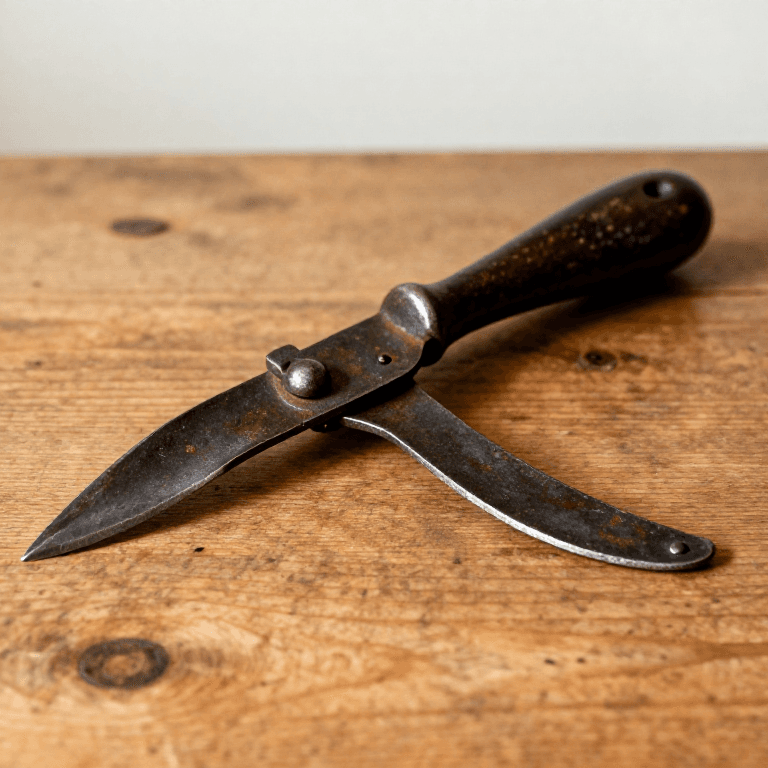
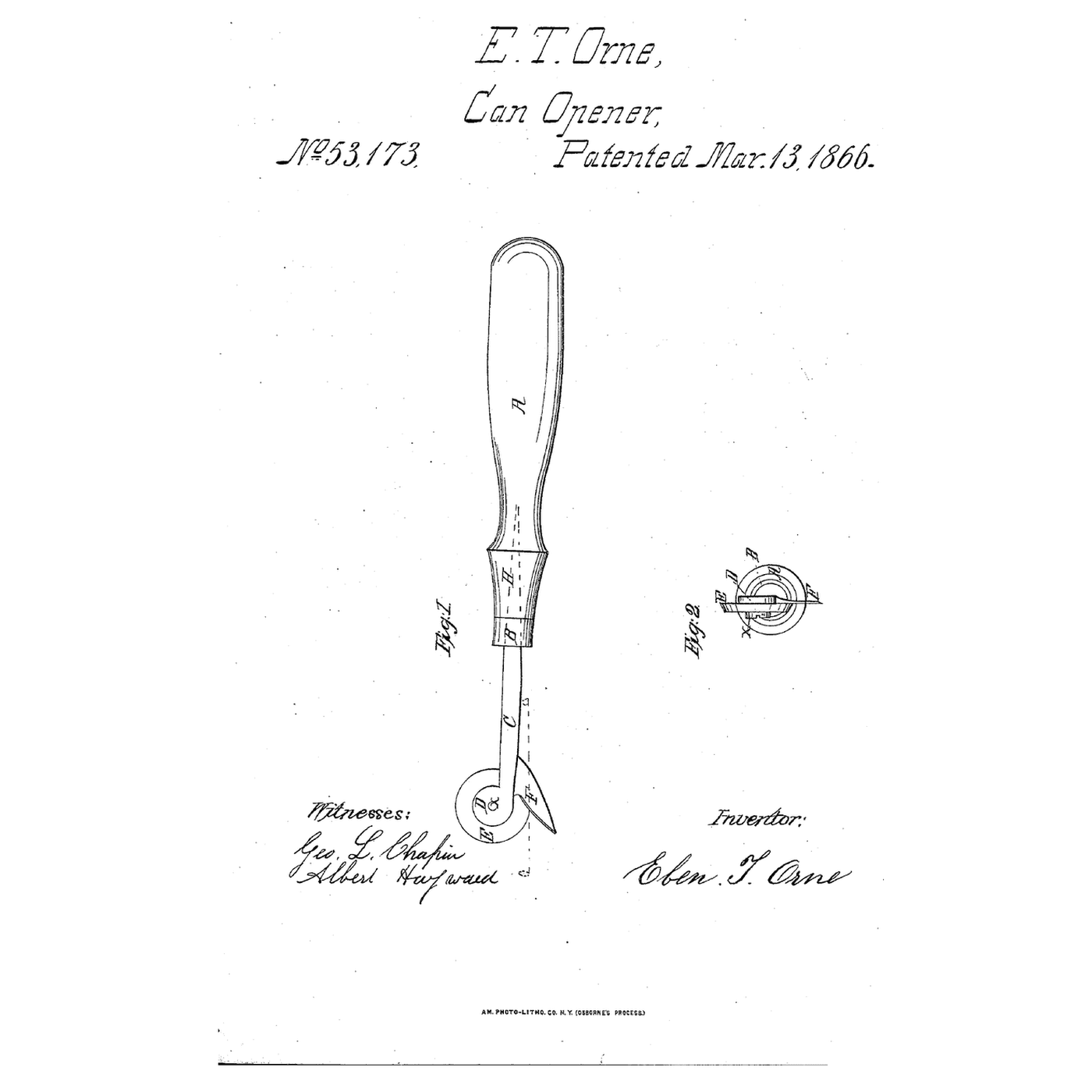
The embedded blueprint shears tin round a wheel. Chapin bends the blade into a half-tube so twisting it cuts a circle.
3
3
Read US 56,368
Read US 56,368
"The said edges a are beveled upon their inner side to make them sufficiently sharp, and the implement is used for cutting circular holes in the tin box by forcing it, point first, into and through the sheet metal nearly up to the end of the handle A, and then turning or twisting the cutter around by means of the said handle, which causes the foremost of the edges a to cut the thin metal in a circular line corresponding to the circle of which the back or convex side of the cutter forms an arc."
4
4
Cut the half tube
Cut the half tube
Cut 45 mm of 25 mm steel tube and saw it in half lengthwise. Keep one half.
Materials for this step:
 Steel Tubing1 piece
Tools needed:
 Hacksaw
 Bench Vise
 Permanent Marker
 Ruler
Ruler5
5
Shape the point
Shape the point
File both long edges to slope in to a point at one end, over the last 25 mm. Bevel them inside with a round needle file and hone.
Tools needed:
 Files (Hand File)
 Needle File Set
 WhetstoneBench Vise
 Clear Safety Glasses
6
6
Guard and handle
Guard and handle
Epoxy a large flat washer across the cutter's top as the guard, and a hardwood handle above it.
Materials for this step:
 Flat Washer1 piece
 Hardwood Dowels1 piece
 Two-Part Epoxy1 piece
Tools needed:
 Sandpaper
7
7
The build in 3D
The build in 3D
FreeCAD model of this build, not of the patent: a 25 mm half-tube cutter with sloping edges to a point, the washer guard and the hardwood handle.
8
8
Twist out a hole
Twist out a hole
Stand a sealed can on the kitchen scale. Force the point through the top until the guard meets it, then twist round; count the twists, read the peak load and measure the hole.
Materials for this step:
 Tin Can1 piece
Tools needed:
 Digital Kitchen Scale
 Digital Caliper 6-Inch
 Stopwatch
 Leather Work Gloves
9
9
A cutter that will not enter, wanders or jams
A cutter that will not enter, wanders or jams
Half-round can opener troubleshooting.
Flow
Loading...
10
10
History and honest limits
History and honest limits
**Seth P. Chapin** of Atlantic, Monmouth County, New Jersey, received US 56,368, dated 17 July 1866, for opening tin or other sheet-metal boxes in circles or straight or irregular lines. Widened at its widest part, the cutter cuts a larger part of a circle or oval at one thrust, leaving a piece easily bent over; another form has one edge flattened for sardine boxes, and a metal handle with a cross-piece for turning. Wyman's 1868 patent names it.
**Honest limits.** A washer stands in for his guard, and the tube is unhardened. Your twist counts are the result.
Materials
5- 1 piecePlaceholder
- 1 piecePlaceholder
- 1 piecePlaceholder
- 1 piecePlaceholder
- 1 piecePlaceholder
Tools Required
13- Placeholder
- Placeholder
- Placeholder
- Placeholder
- Placeholder
- Placeholder
- Placeholder
- Placeholder
- Placeholder
- Placeholder
- Placeholder
- Placeholder
- Placeholder
Design Files
1Related Blueprints
These blueprints share knowledge with this one — techniques, materials, or principles that connect them in the learning graph.


CC0 Public Domain
This blueprint is released under CC0. You are free to copy, modify, distribute, and use this work for any purpose, without asking permission.
Support the Maker by purchasing products through their Blueprint where they earn a Maker Commission set by Vendors, or create a new iteration of this Blueprint and include it as a connection in your own Blueprint to share revenue.