Collaboration
ART
BEAUTY & WELLNESS
CRAFT
CULTURE & HISTORY
ENTERTAINMENT
ENVIRONMENT
FOOD & DRINKS
REVERSE ENGINEERING
SCIENCES
SPORTS
TECHNOLOGY
WEARABLES
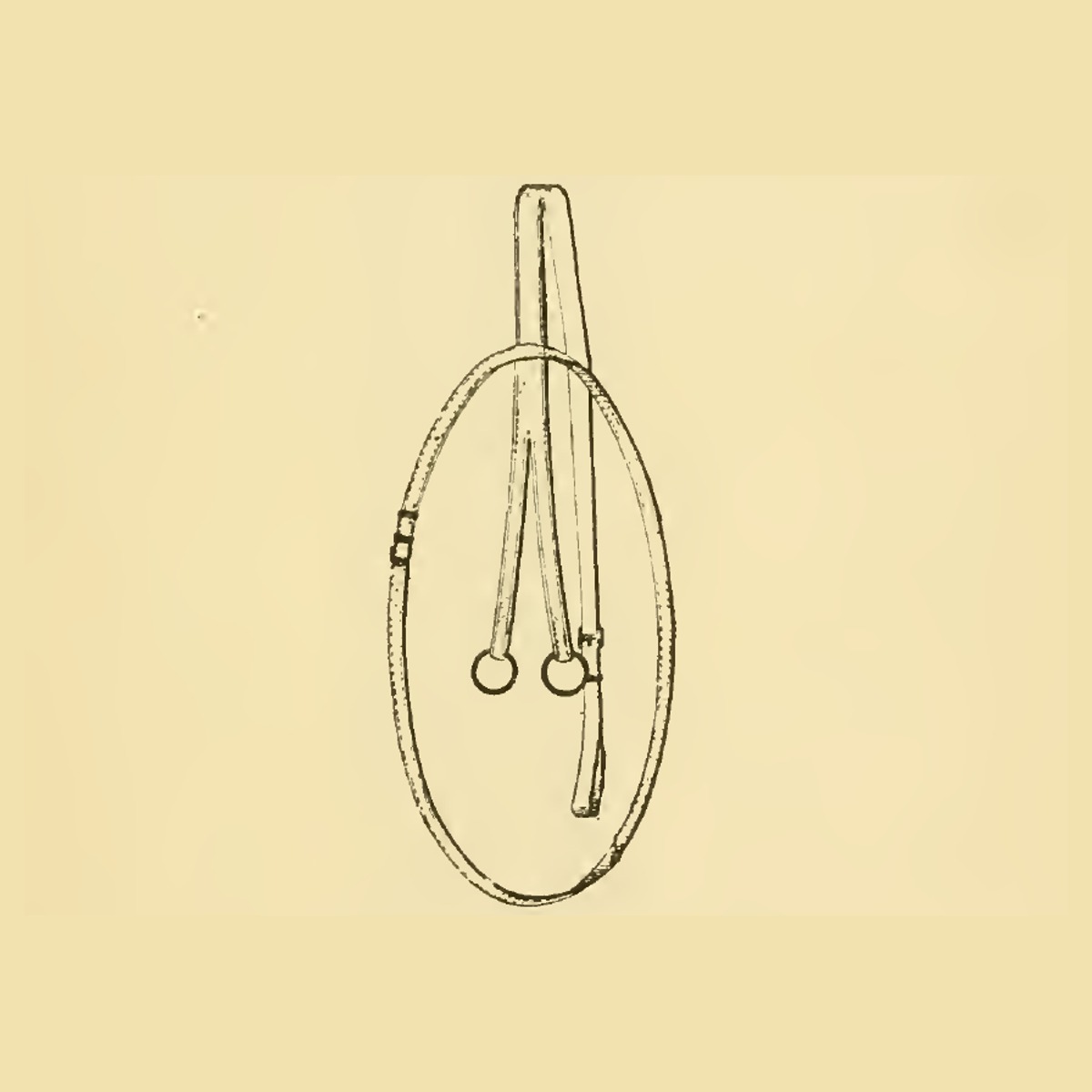


Martingale: Neck Strap and Slit Breast Strap With Rings (Hasluck, Saddlery, 1904)
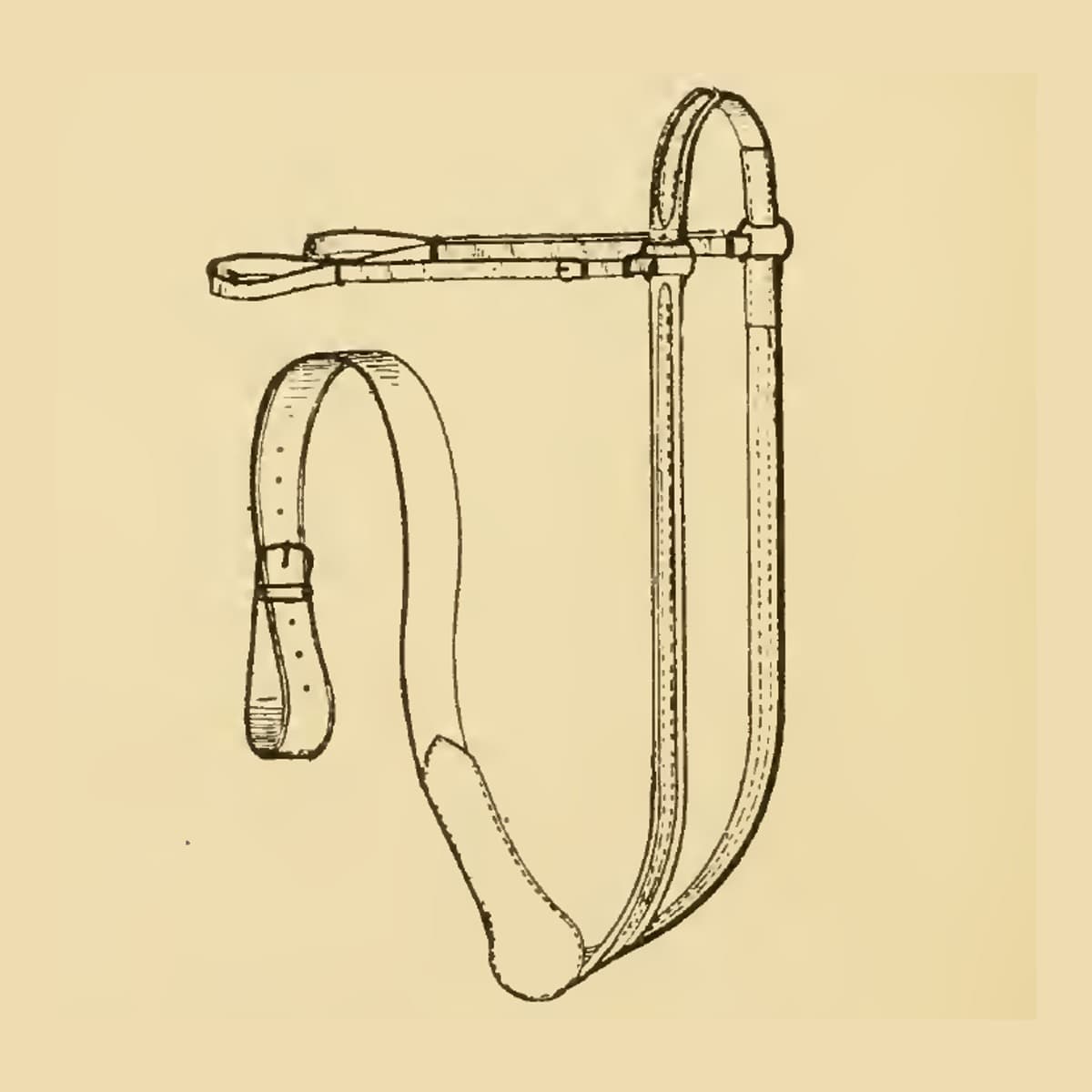
A martingale runs from the girth up between the horse's forelegs and stops it throwing its head too high. This is the martingale from Paul N. Hasluck's Saddlery (1904), as in his Fig. 11: a neck strap about 4 ft 6 in long, and a breast strap slit at the top into two branches, each ending in a ring for the reins. Every size is his; he does not give the size of the rings.
Intermediate
About 1 day
Instructions
1
1
His sizes in centimetres
His sizes in centimetres
Loading Jupyter Notebook...
2
2
Read Saddlery, ch. V
Read Saddlery, ch. V
"Martingales (Fig. 11) are made with straps round the neck, either flat or round, and with or without a buckle; the total length is about 4 ft. 6 in., and the flat strap is 3/4 in. wide."
3
3
Make the neck strap
Make the neck strap
Cut the neck strap about 4 ft 6 in long and 3/4 in wide. With a buckle: place a piece of leather about 1 ft 3 in from the buckle for the breast strap and stitch it at both ends, so it makes an opening. Round the rest of the neck strap, leaving about 1 ft flat for a 3/4 in buckle. Without a buckle, make the opening by simply overlapping the ends, leaving enough space between the two splices for the breast strap.
Materials for this step:
 Harness Leather1 piece
 Cord1 piece
 Iron Buckle with Tongue1 piece
 Linen Thread1 piece
 Beeswax1 piece
Tools needed:
 Leather Knife
 Groove Board
 Edge Beveller
 Edge Slicker
 Creasing Tool
 Propane Torch
 Awl
 Two Harness Needles
 Stitching Pony
 Tape Measure
4
4
Cut and slit the breast strap
Cut and slit the breast strap
Cut the breast strap 1-1/4 in wide and 4 ft long and slit it for 1 ft 1 in. It may be flat or round; a round one must be cut wider to begin with, say 1-5/8 in, and then slit in half.
Materials for this step:
Harness Leather1 pieceTools needed:
Leather KnifeTape Measure5
5
Make the girth loop
Make the girth loop
For a flat strap, narrow it at the unslit end for 1 ft 6 in from the end. Fix a 1 in buckle there the reverse way and buckle the strap back on itself to form a loop for the girth. Fit this buckle before the rings.
Materials for this step:
Iron Buckle with Tongue1 pieceLinen Thread1 pieceBeeswax1 pieceTools needed:
Leather KnifeEdge BevellerEdge SlickerCreasing ToolPropane TorchAwlTwo Harness Needles Leather Hole Punch
6
6
Put on the rings and finish
Put on the rings and finish
Put a ring on the end of each slit branch, as in Fig. 11; he does not give the ring size. Then run the buckle end of the breast strap through the opening in the neck strap, and the martingale is complete.
Materials for this step:
 Harness Ring2 piecesLinen Thread1 pieceBeeswax1 piece
Tools needed:
Leather KnifeAwlTwo Harness NeedlesStitching Pony7
7
Troubleshooting
Troubleshooting
Martingale troubleshooting.
Flow
Loading...
8
8
History and honest limits
History and honest limits
From **Saddlery**, edited by Paul N. Hasluck, David McKay, 1904 (archive.org saddlery00hasl), chapter V, martingales, pp. 45-47, Fig. 11 on p. 43; every fraction was read on the scan. He names the rings but gives no size for them, and does not say how they are fixed to the branches: follow Fig. 11. The combined martingale and breastplate on p. 45 is not made here. The thread, tools and metric figures are ours.
Materials
6- 2 piecesPlaceholder
- 1 piecePlaceholder
- 1 piecePlaceholder
- 3 piecesPlaceholder
- 3 piecesPlaceholder
- 2 piecesPlaceholder
Tools Required
11- Placeholder
- Placeholder
- Placeholder
- Placeholder
- Placeholder
- Placeholder
- Placeholder
- Placeholder
- Placeholder
- 1 vendor sell this, none ship to you yetPlaceholder
- Placeholder
This blueprint makes

Related Blueprints
These blueprints share knowledge with this one — techniques, materials, or principles that connect them in the learning graph.
CC0 Public Domain
This blueprint is released under CC0. You are free to copy, modify, distribute, and use this work for any purpose, without asking permission.
Support the Maker by purchasing products through their Blueprint where they earn a Maker Commission set by Vendors, or create a new iteration of this Blueprint and include it as a connection in your own Blueprint to share revenue.