ART
BEAUTY & WELLNESS
CRAFT
CULTURE & HISTORY
ENTERTAINMENT
ENVIRONMENT
FOOD & DRINKS
REVERSE ENGINEERING
SCIENCES
SPORTS
TECHNOLOGY
WEARABLES
Translated
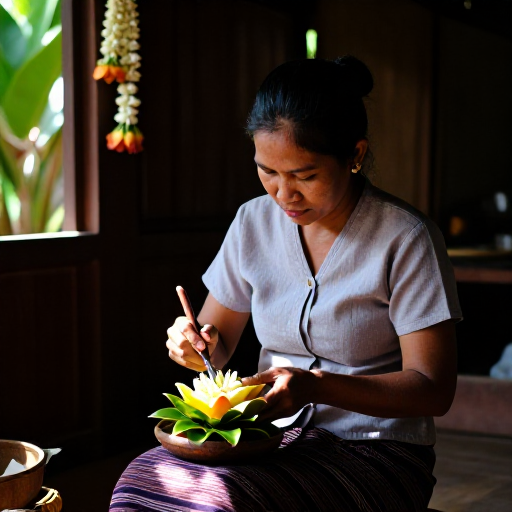

เครื่องสีข้าว (khrueang si khao) — a Woven Bamboo Upper Part Packed with Clay Turns on the Lower Part, Cracking the Husk Off to Brown Rice
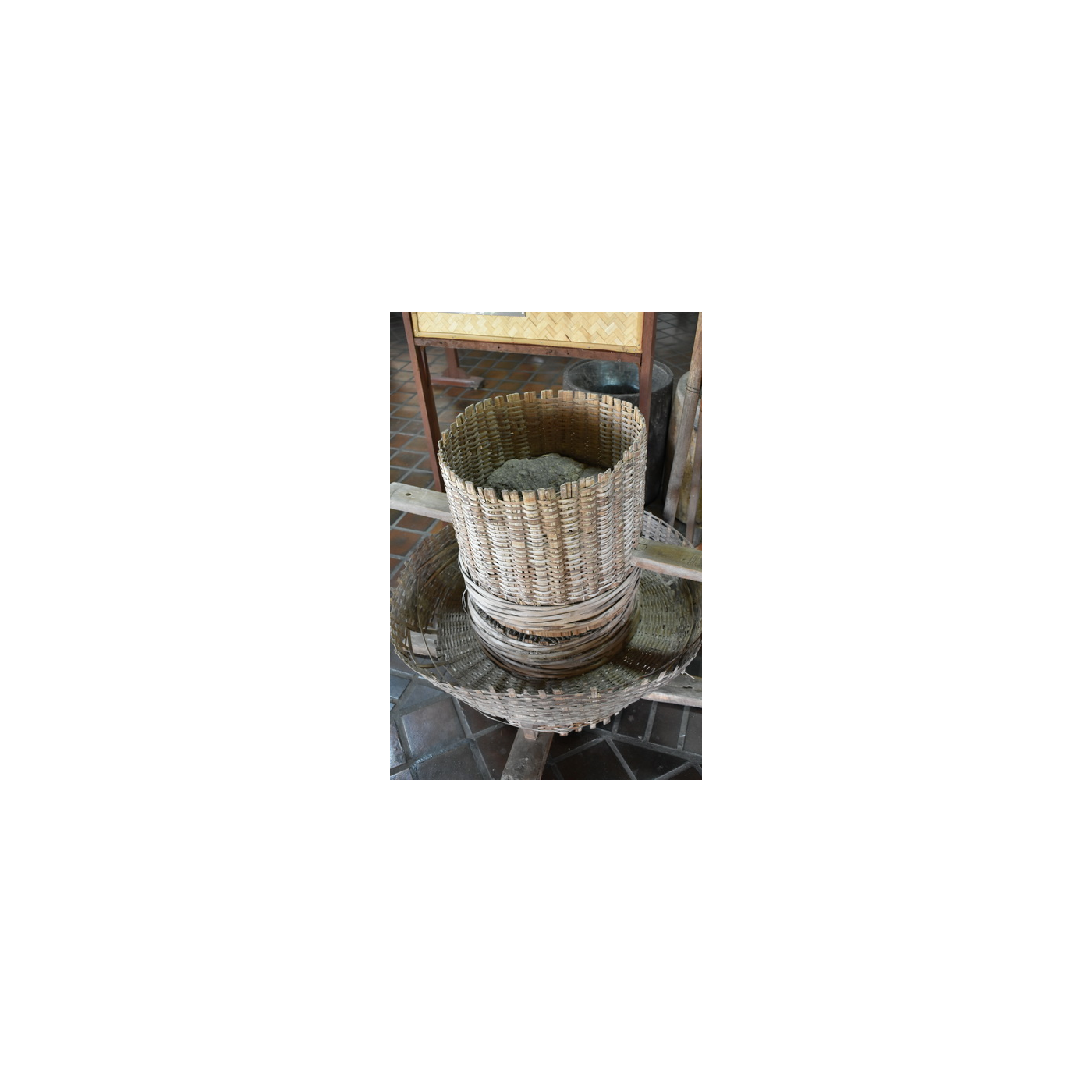
เครื่องสีข้าว (khrueang si khao) cracks the husk off paddy to give brown rice. It is woven of bamboo skin and packed with clay; its teeth are thin hardwood slats alternating with clay mixed with rice husks.
This blueprint builds a real rice huller as described in the source.
Beginner
Several days (weaving and packing the clay)
Instructions
1
1
Real sizes
Real sizes
Loading Jupyter Notebook...
2
2
The next step for the rice
The next step for the rice
The rice huller cracks the husk off to give brown rice; the rice is then pounded in the mortar into milled rice.
3
3
Read from the source
Read from the source
"To mill the rice, paddy is put into the deep hollow of the upper toothed part, which is turned clockwise by hand with the lever until it gives brown rice; this is then pounded to white milled rice for cooking." (Sirindhorn Anthropology Centre, author พิชชา ทองขลิบ (Phitcha Thongkhlip), CC BY 4.0)
4
4
The lower part
The lower part
Weave bamboo-skin strips into a tray with a high rim and bore a hole for the brown rice to run out into a container. Stand a wooden spindle in the middle and pack clay firmly round it, sprinkled with salt water. Make the teeth of thin hardwood slats alternating with clay mixed with rice husks, packed tight all round the face.
Materials for this step:
 Bamboo Poles1 piece
 Clay1 piece
 Coarse Sea Salt1 piece
 Hardwood Board1 piece
 Hardwood Dowels1 piece
Tools needed:
 Machete
 Knife
Knife5
5
The upper part
The upper part
Weave bamboo-skin strips into a round body about 50 cm high and 50 cm across. Pass a squared hardwood crossbar about 2 metres long through it so it sticks out 25 cm on each side, and bore a hole in each end. Pack it with clay sprinkled with salt water, leaving a hollow in the middle for pouring the rice. Make teeth on its underside as on the lower part.
Materials for this step:
 Teak Lumber1 piece
Tools needed:
 Auger
Auger Hand Saw
6
6
The lever
The lever
Make a lever from a large bamboo with a handle, bore a hole in its end and make a peg to fit the hole in the crossbar. Set the upper part on the spindle of the lower part.
Materials for this step:
 Bamboo Rod1 piece
Tools needed:
 Chisel Set - Wood
7
7
Real photos
Real photos
Real photos of a เครื่องสีข้าว (khrueang si khao) from พิพิธภัณฑ์พื้นบ้านจ่าทวี (Ja Thawee Folk Museum) (Sirindhorn Anthropology Centre, author พิชชา ทองขลิบ (Phitcha Thongkhlip), CC BY 4.0)
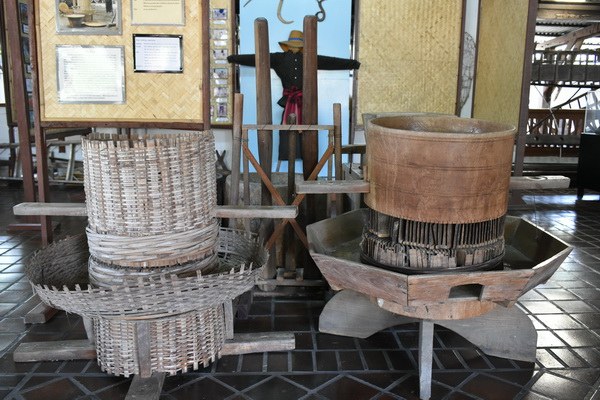
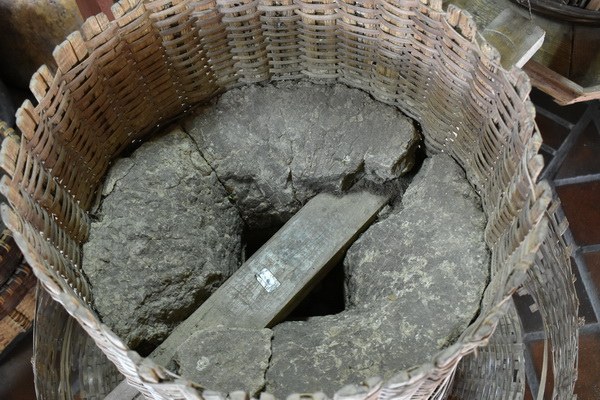
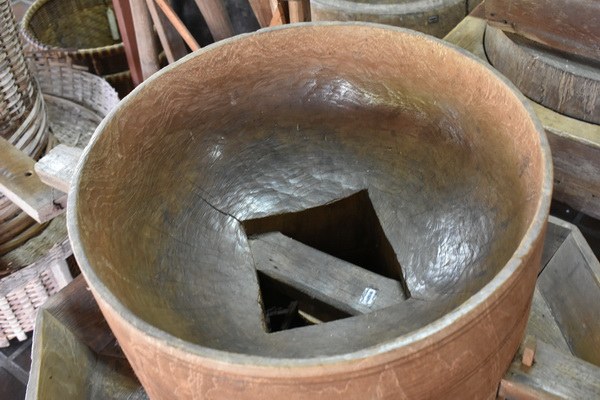
8
8
How to hull
How to hull
Pour paddy into the hollow of the upper part and turn the lever clockwise. The paddy runs down between the upper and lower teeth, the husks crack off, and the brown rice runs out through the hole into the container. Then pound it in a mortar into milled rice.
9
9
Troubleshooting
Troubleshooting
Troubleshooting the rice huller.
Flow
Loading...
10
10
History and limits
History and limits
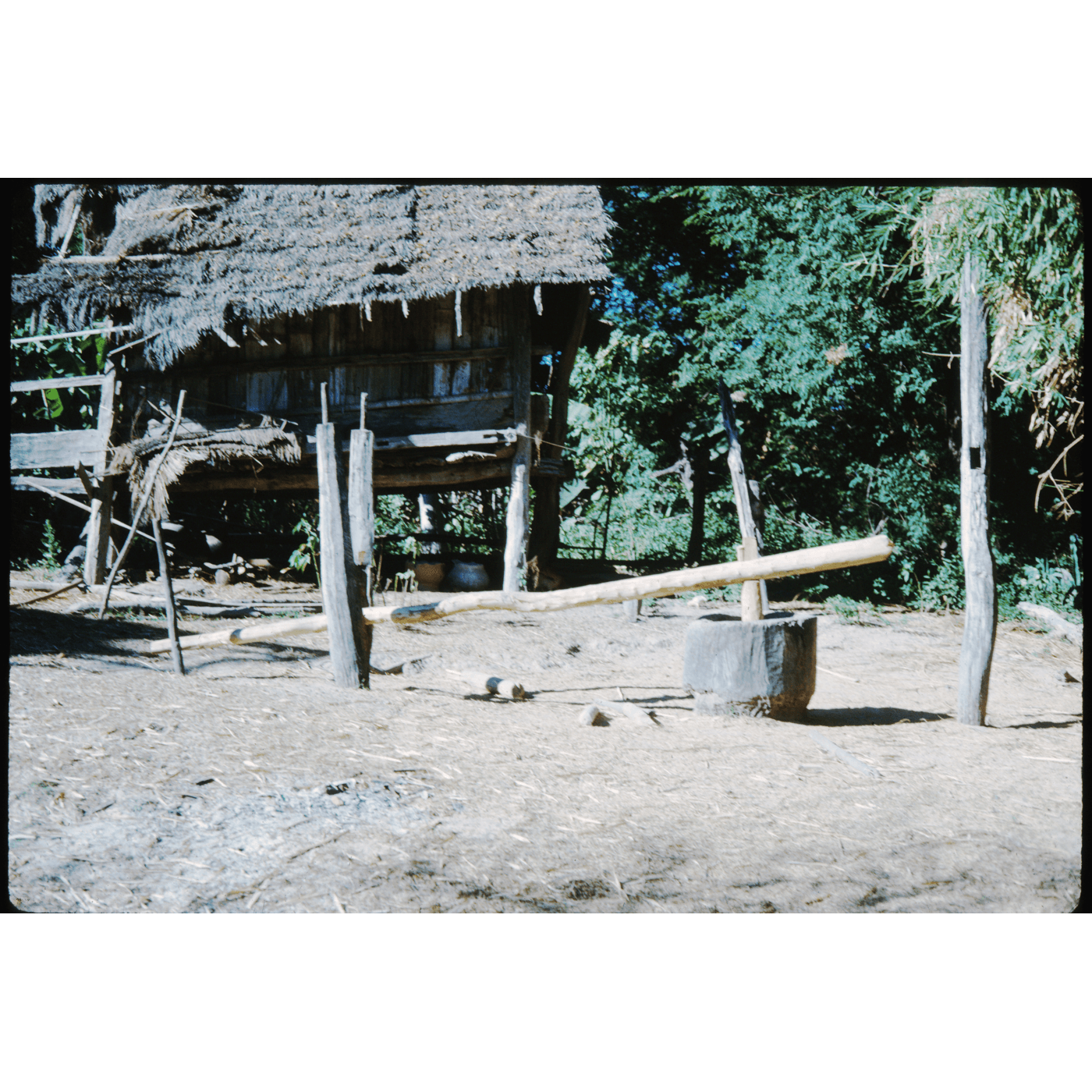
Hulling rice works much like grinding flour in a mo. Pounding the brown rice in a mortar is called som khao. The salt water sprinkled on helps the clay bind tightly and keeps termites away.
Source: Sirindhorn Anthropology Centre, Traditional Objects of Everyday Use database, "เครื่องสีข้าว" (CC BY 4.0 licence).
**Limits** The source gives neither the number of teeth nor the proportion of clay to rice husks.
Materials
7- 1 piecePlaceholder
- 1 piecePlaceholder
- 1 piecePlaceholder
- 1 piecePlaceholder
- 1 piecePlaceholder
- Teak Lumber10% commission1 piecePlaceholder
- 1 piecePlaceholder
Related Blueprints
These blueprints share knowledge with this one — techniques, materials, or principles that connect them in the learning graph.
CC0 Public Domain
This blueprint is released under CC0. You are free to copy, modify, distribute, and use this work for any purpose, without asking permission.
Support the Maker by purchasing products through their Blueprint where they earn a Maker Commission set by Vendors, or create a new iteration of this Blueprint and include it as a connection in your own Blueprint to share revenue.