ART
BEAUTY & WELLNESS
CRAFT
CULTURE & HISTORY
ENTERTAINMENT
ENVIRONMENT
FOOD & DRINKS
REVERSE ENGINEERING
SCIENCES
SPORTS
TECHNOLOGY
WEARABLES
Translated


Mai Sang Kha (Mai Mue Suea) — a Four-Tined Bamboo Comb That Straightens Cogon Grass
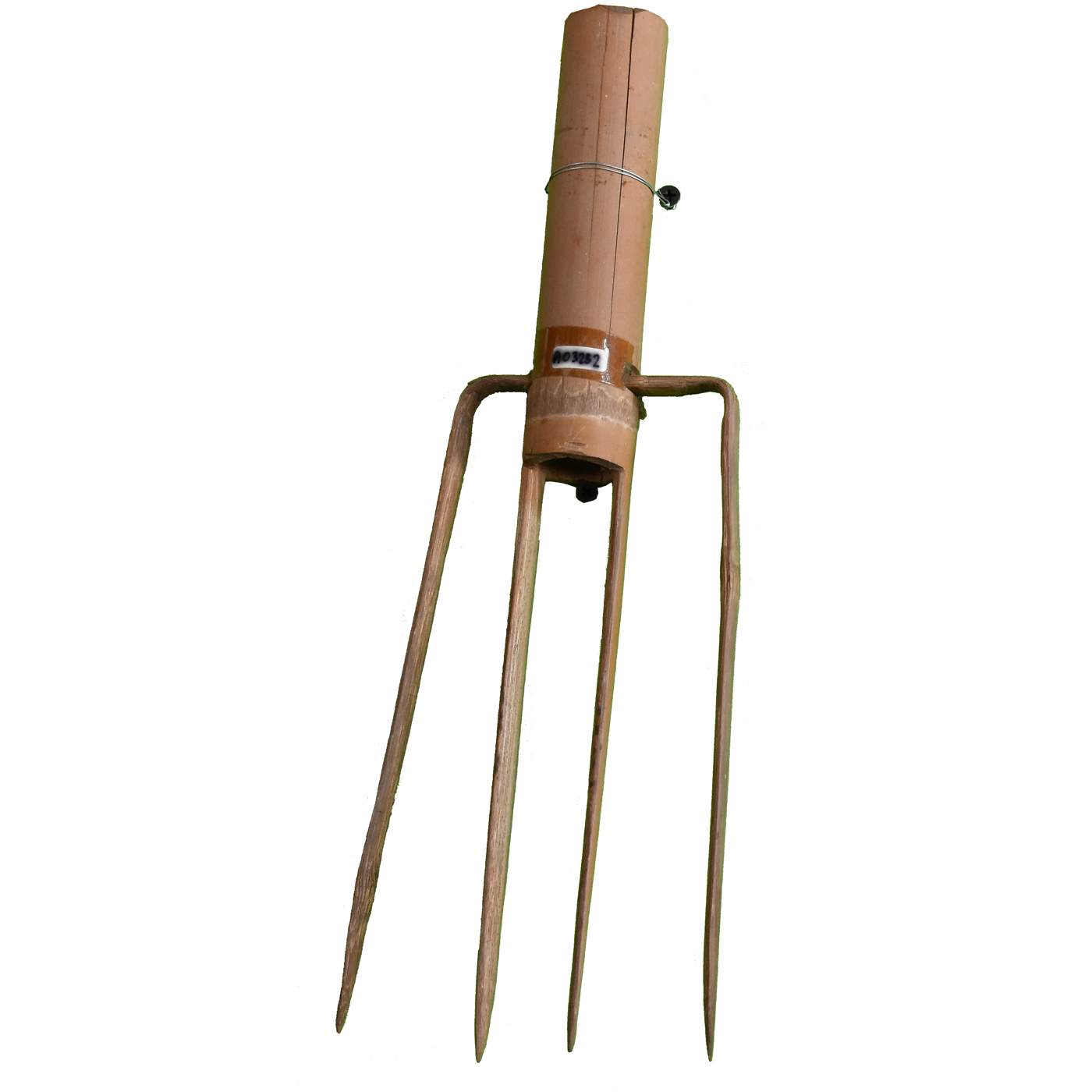
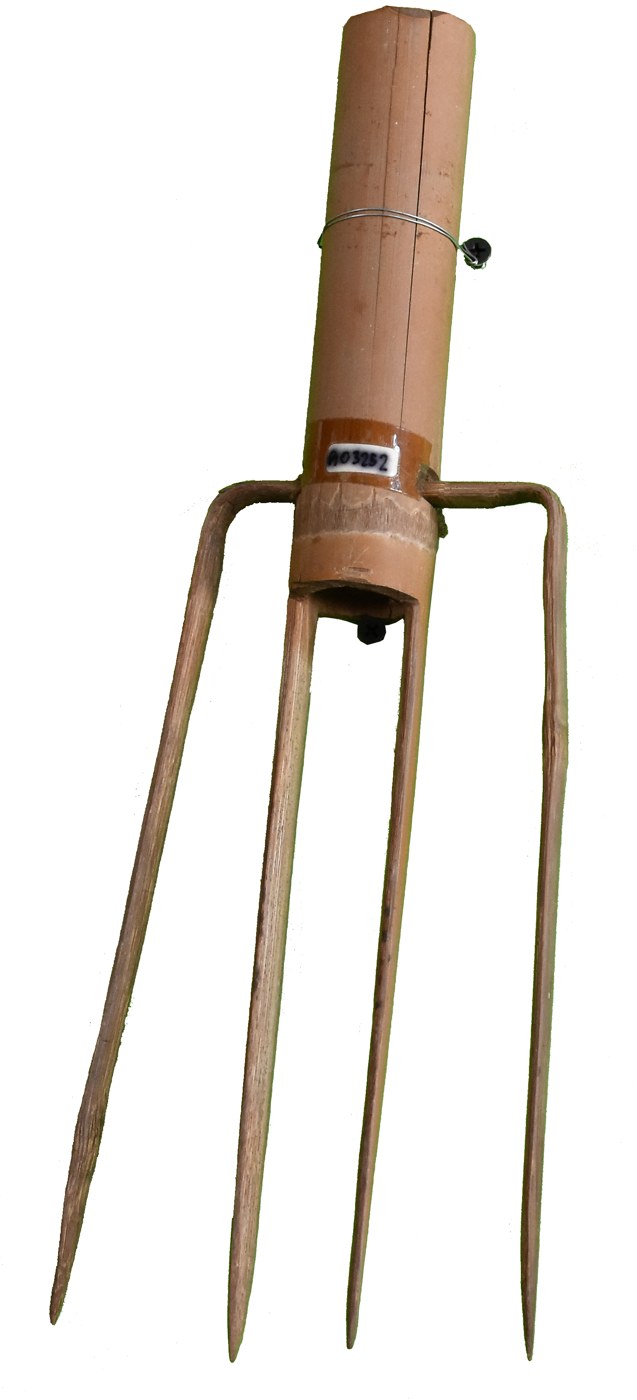
ไม้มือเสือ (mai mue suea, "tiger-claw stick") is a tool for combing cogon grass or vetiver. It is made of bamboo with four tines whose sharp tips are like a tiger's claws; in the upper north it is called "ไม้สางคา" (mai sang kha). It combs the cogon leaves straight before they are woven into thatch panels.
This blueprint makes a mai mue suea to the sizes in the source.
Beginner
About 1 hour
Instructions
1
1
Width of the stick
Width of the stick
Loading Jupyter Notebook...
2
2
A bamboo tool before it
A bamboo tool before it
The threshing sticks work on sheaves of rice; the mai mue suea works on bundles of cogon grass.
3
3
Read from the source
Read from the source
"In use, villagers divide the cogon grass from the bundle; one hand grips the tops of the grass and holds them high, the other hand holds the mai mue suea and combs from the tops down to the base, so that the tines catch or rake out the leaves that are not straight, short or tangled, combing them into order." (Sirindhorn Anthropology Centre, author พิชชา ทองขลิบ (Phitcha Thongkhlip), CC BY 4.0)
4
4
Split the bamboo
Split the bamboo
Take one internode of a large thorny bamboo (phai si suk), about 30 cm long, and split it in half; one internode makes two mai mue suea. Shave the split halves smooth and flat.
Materials for this step:
 Bamboo Poles1 piece
Tools needed:
 Hand Saw
 Machete
5
5
Make the tines
Make the tines
Hew and shave the end into sharp tines like a fork, four tines in all, with a 2 cm gap between each, 15-20 cm long.
Tools needed:
 KnifeMachete
6
6
The handle
The handle
Shave the handle tapering toward its end so it is easy to hold; you may drill a hole to thread a cord for hanging. Sand it smooth with no splinters.
Tools needed:
Knife Cordless Drill
 Sandpaper
7
7
Real photos
Real photos
Real photos of a ไม้มือเสือ (mai mue suea) from พิพิธภัณฑ์พื้นบ้านจ่าทวี (Ja Thawee Folk Museum) (Sirindhorn Anthropology Centre, author พิชชา ทองขลิบ (Phitcha Thongkhlip), CC BY 4.0)
8
8
How to use
How to use
Divide the cogon grass from the bundle; grip the tops in one hand and hold them high; with the other hand comb with the mai mue suea from the tops down to the base, so the tines catch out the leaves that are not straight, short or tangled. Once combed into order, the grass is easy and quick to weave into thatch panels.
9
9
Troubleshooting
Troubleshooting
Troubleshooting the mai mue suea.
Flow
Loading...
10
10
History and limits
History and limits
The mai mue suea looks like a mai pakka but differs from it; it is called mai mue suea because its sharp tips are like a tiger's claws.
Source: Sirindhorn Anthropology Centre, database of traditional everyday objects, "ไม้มือเสือ" (local name ไม้สางคา), author พิชชา ทองขลิบ (licence CC BY 4.0), from the Sergeant Major Thawee Folk Museum, Phitsanulok.
**Limits.** The source gives no tine width; the width in the model is an example.
Materials
1- 1 piecePlaceholder
Related Blueprints
These blueprints share knowledge with this one — techniques, materials, or principles that connect them in the learning graph.
CC0 Public Domain
This blueprint is released under CC0. You are free to copy, modify, distribute, and use this work for any purpose, without asking permission.
Support the Maker by purchasing products through their Blueprint where they earn a Maker Commission set by Vendors, or create a new iteration of this Blueprint and include it as a connection in your own Blueprint to share revenue.