Collaboration
ART
BEAUTY & WELLNESS
CRAFT
CULTURE & HISTORY
ENTERTAINMENT
ENVIRONMENT
FOOD & DRINKS
REVERSE ENGINEERING
SCIENCES
SPORTS
TECHNOLOGY
WEARABLES
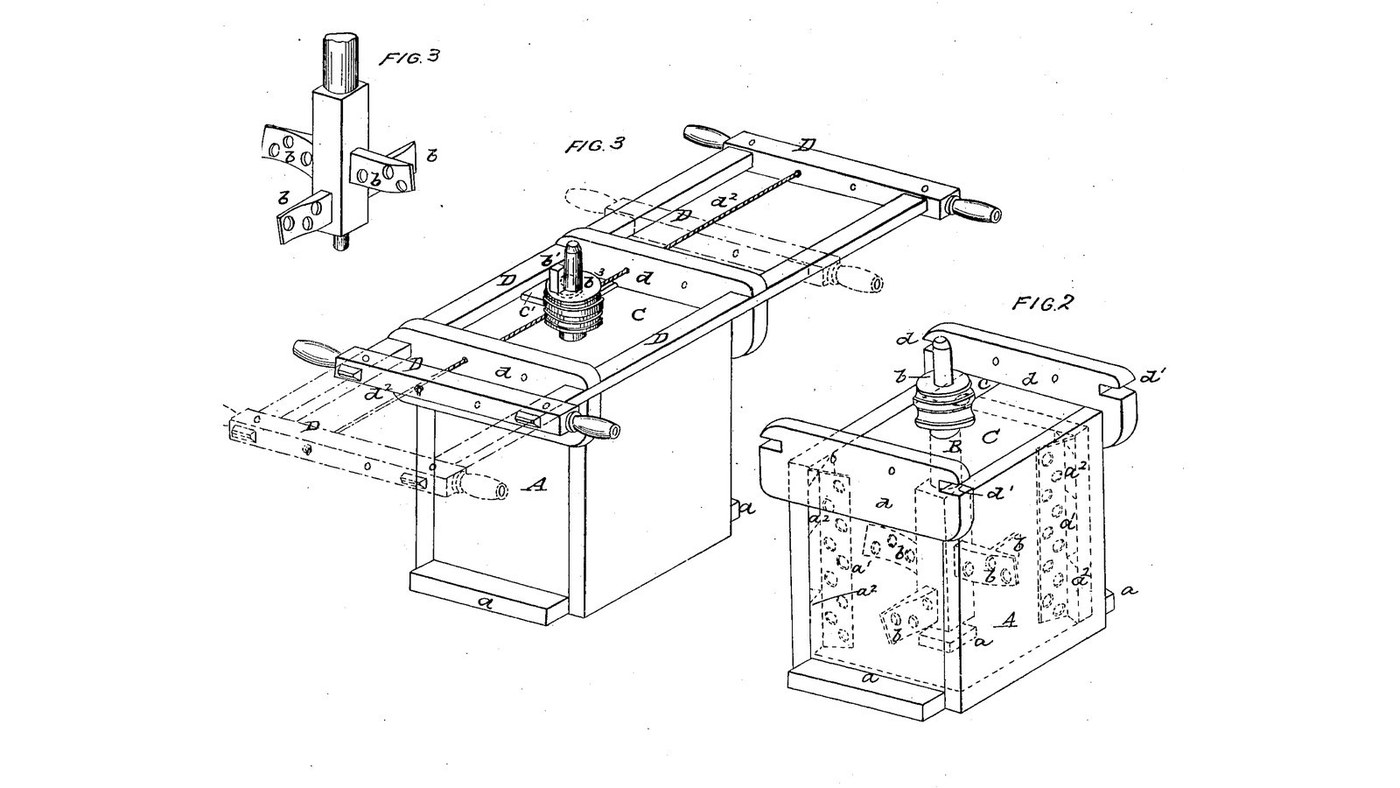

Sliding-Frame Churn: Push and Pull a Frame on Top and a Cord Spins Tilted, Perforated Beaters Back and Forth
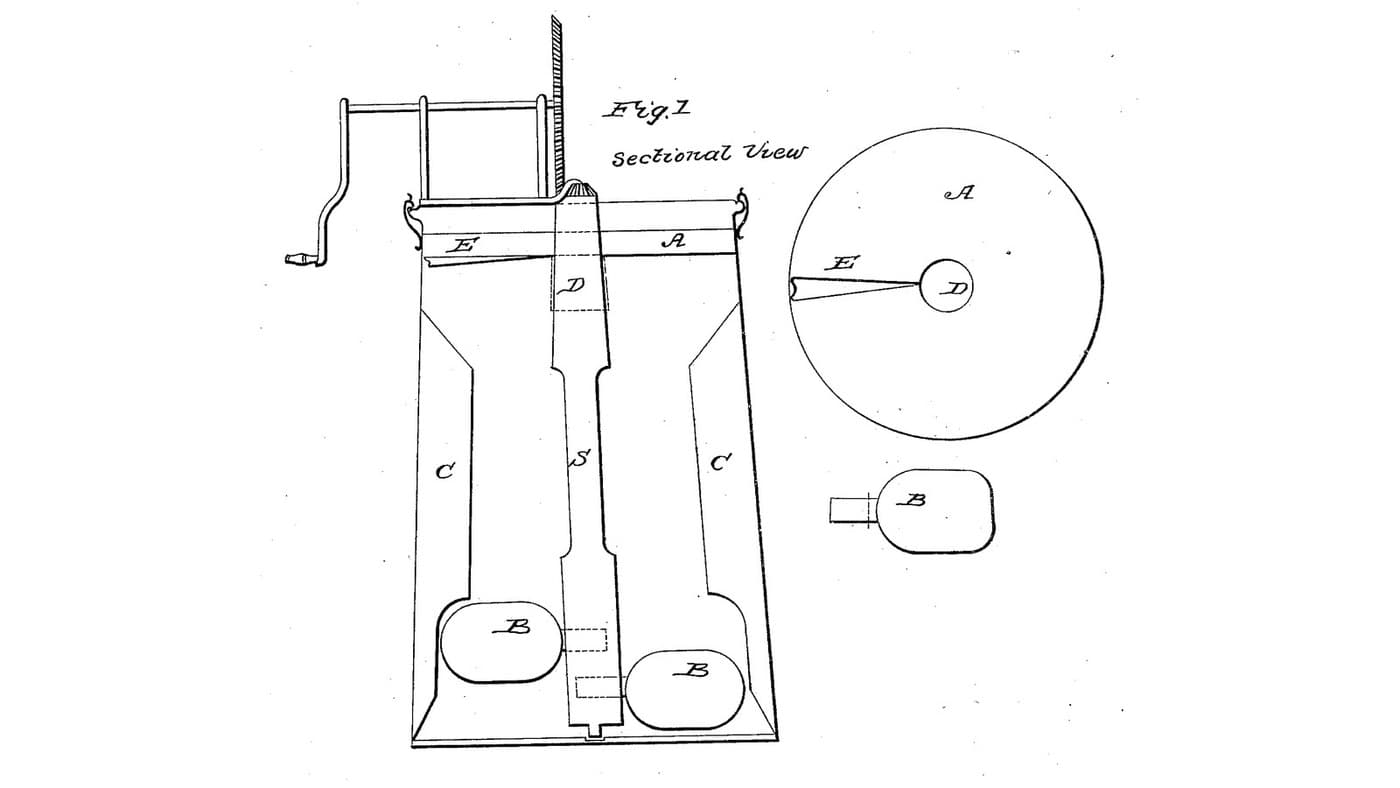
William Morgan of Middlebrook, Virginia, received US 27,559, dated 20 March 1860, for a churn. A frame sliding in slotted ledges on top of a square box is pushed and pulled by its handles; a cord from the frame, wound round a pulley on the upright dasher shaft, spins the dasher first one way then the other. Its beaters are perforated and tilted 5 to 10 degrees, and perforated breakers stand in the box's corners. A large one can be worked by two people.
The patent gives the beaters' proportions; every size here is ours.
Intermediate
About 2 days, plus printing
Instructions
1
1
From a push to a turn
From a push to a turn
Loading Jupyter Notebook...
2
2
A cord that turns a shaft back and forth, five weeks before
A cord that turns a shaft back and forth, five weeks before
Willson's bow pulls a cord round a whirl. Morgan's frame does the same, guided in slots.
3
3
Tilted beaters on an upright shaft, one week before
Tilted beaters on an upright shaft, one week before
Wiswell's scoops lean by different amounts. Morgan's beaters all lean one way, and are perforated.
4
4
Read US 27,559
Read US 27,559
"These beaters I construct of a depth two or three times greater than their width, and set them at an angle of from five to ten degrees to the perpendicular of the dasher-shaft, and so that they all incline one way. They are also perforated with a series of holes to effect a more minute subdivision of the particles of the milk."
5
5
Print the pulley b3
Print the pulley b3
Pulley 80 mm across, 30 high, with a round groove for a 5 mm cord and a hub; bored 25.4 mm, cross-drilled for the key. PETG, 0.2 mm layers, 40 % infill, 4 walls.
6
6
Box A, ledge a, lid C and step a3
Box A, ledge a, lid C and step a3
From 20 mm hardwood board make a box 300 x 300 mm inside and 400 deep, glued and screwed, its inside joints sealed with silicone sealant, standing on a base board 40 mm larger all round as the ledge a. Screw a hardwood block 60 x 60 x 20 mm in the floor's centre as the step a3 and bore it 21 mm, 15 deep. Cut a lid to fit inside the top, bored 26 mm in the centre for the shaft and 40 mm near one corner for the filling opening; fit a rubber stopper as the plug c.
Materials for this step:
 Hardwood Board3 pieces
 Hardwood Block1 piece
 Wood Glue1 piece
 Wood Screws40 pieces
 Silicone Sealant1 piece
 Rubber Stoppers1 piece
Tools needed:
 Table Saw
 Cordless Drill
 Drill Bit Set
 Spade Bit Set
 Bar Clamp
 Screwdriver Set
 Tape Measure
7
7
Breakers a' in strips a2
Breakers a' in strips a2
Cut four triangular hardwood strips 50 mm on the short sides, 350 long, with a 15 mm slot along each, and glue and screw one into each corner. Cut four hardwood breakers 60 x 15 mm, 350 long, drill each with two rows of 12 mm holes, and slide them into the slots so their edges face the shaft, 140 mm from it; they lift out for cleaning.
Materials for this step:
Hardwood Board1 pieceWood Glue1 pieceWood Screws8 piecesTools needed:
Table Saw Chisel Set - WoodCordless DrillDrill Bit Set
 SandpaperScrewdriver Set
8
8
Dasher-shaft B and beaters b
Dasher-shaft B and beaters b
Cut a 35 mm square hardwood shaft 375 mm long; turn or carve its foot to a 20 mm round pin 15 long and its top to a 25 mm round 90 long. Cut two hardwood beaters 220 x 50 x 20 mm, two and a half times as deep as wide, and drill each with four 14 mm holes. Mortise them through the shaft at right angles to each other, 55 and 115 mm above the floor, each tilted 8 degrees from upright, both the same way, checked with the protractor.
Materials for this step:
Hardwood Board1 pieceWood Glue1 pieceTools needed:
Table SawChisel Set - WoodCordless DrillDrill Bit SetSpade Bit Set ProtractorSandpaper
9
9
Ledges d, sliding frame D, pulley and cord d2
Ledges d, sliding frame D, pulley and cord d2
Screw a hardwood ledge 50 x 50 mm, 420 long, on the top of each of two opposite sides; cut a slot 26 mm wide and 32 deep across each ledge 180 mm each side of the middle, and lower the ledges' middle 15 mm to clear the cord. Make the frame from two bars 24 x 30 mm, 700 long, and two cross-bars 24 x 30 mm, 384 long, pinned at the corners with dowels so it comes apart, with a turned dowel handle on each bar's ends. Set the bars in the slots. Key the pulley on the shaft's top with a dowel through both. Tie a cord to one cross-bar, take it round the pulley two or three times, and tie it to the other, tight.
Materials for this step:
Hardwood Board2 pieces Hardwood Dowels2 piecesWood Glue1 pieceWood Screws8 pieces
 Cord1 piece
 PETG Filament1 piece
Tools needed:
 FDM 3D PrinterTable SawChisel Set - WoodCordless DrillDrill Bit SetBar ClampScrewdriver Set
10
10
The build in 3D
The build in 3D
FreeCAD model of this build, one side left off: the shaft on its step with the two tilted beaters, the breakers in the corners, the lid, the ledges with their slots, the sliding frame and the cord round the pulley.
11
11
Churn
Churn
Pour about 10 litres of heavy cream at about 15 °C, checked with the thermometer, through the filling opening and put in the plug. Take the frame's handles and push and pull it steadily, timing it; with a large churn two people can work it, one each side. When the butter comes, lift off the frame, pulley and lid, lift out the dasher and breakers, take out the butter, tip the buttermilk into a bowl, wash the butter in cold water until it runs clear, salt and weigh it.
Materials for this step:
 Heavy Cream10 l
 Coarse Sea Salt1 piece
 Water1 piece
Tools needed:
 Leave-In Probe Thermometer
 Stopwatch
 Digital Kitchen Scale
 Stainless Steel Mixing Bowl (Large)
12
12
Troubleshooting
Troubleshooting
Sliding-frame churn troubleshooting.
Flow
Loading...
13
13
History and honest limits
History and honest limits
**William Morgan** of Middlebrook, Augusta County, Virginia, US 27,559, 20 March 1860, "Churn". He did not claim dashers turned back and forth, nor the forms of dashers and breakers, but the inclined perforated beaters with the removable perforated breakers and the sliding frame. He made it all of hard wood, "oak, ash, hickory &c.", with no metal; ours is hardwood with a printed pulley. The beaters' proportions are his; every size is ours.
Materials
12- 3 piecesPlaceholder
- 1 piecePlaceholder
- 4 piecesPlaceholder
- 56 piecesPlaceholder
- 1 piecePlaceholder
- 1 piecePlaceholder
- 2 piecesPlaceholder
- 1 piecePlaceholder
- 1 piecePlaceholder
- 10 lPlaceholder
- 1 piecePlaceholder
- 1 piecePlaceholder
Tools Required
15- 1 vendor sell this, none ship to you yetPlaceholder
- 1 vendor sell this, none ship to you yetPlaceholder
- Placeholder
- Placeholder
- Placeholder
- Placeholder
- 1 vendor sell this, none ship to you yetPlaceholder
- Placeholder
- Placeholder
- Placeholder
- Placeholder
- Placeholder
- Placeholder
- Placeholder
- Placeholder
Design Files
2This blueprint makes

Related Blueprints
These blueprints share knowledge with this one — techniques, materials, or principles that connect them in the learning graph.
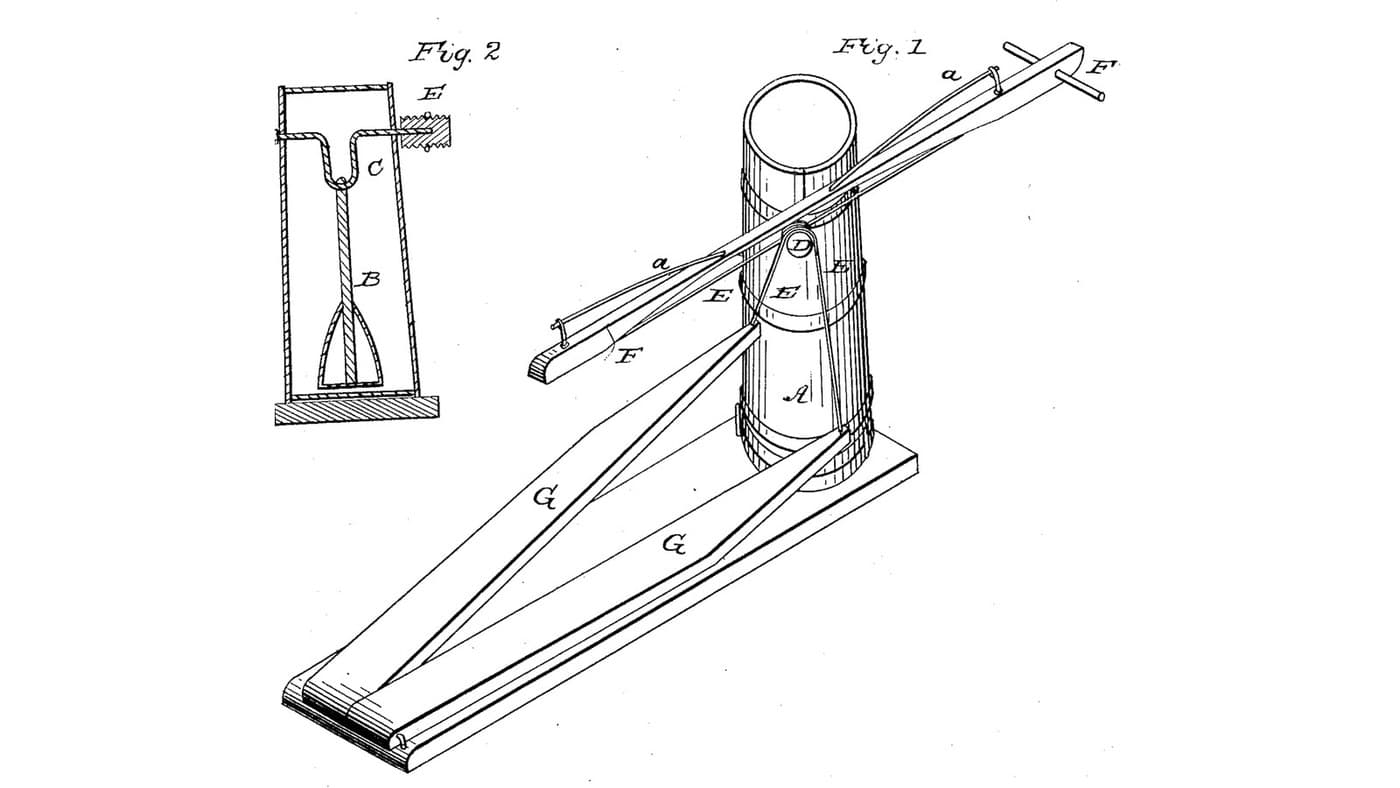
Spring-Bow Churn: A Bow With Two Springs Keeps Its Cord Tight Round a Screw Whirl on the Crank Shaft
by Buttercup
Woodworking
0
0
0
0
0
0
Leaning-Scoop Churn: Three Scoops Tilted 10, 5 and 0 Degrees Throw the Cream at Sharp-Topped Ribs and a Slit Cover
by Buttercup
Woodworking
0
0
0
0
0
0

Churning Butter from Cream — The 5,000-Year-Old Fat Separation
by TheChef
CRAFT
60
0
0
0
0
0
CC0 Public Domain
This blueprint is released under CC0. You are free to copy, modify, distribute, and use this work for any purpose, without asking permission.
Support the Maker by purchasing products through their Blueprint where they earn a Maker Commission set by Vendors, or create a new iteration of this Blueprint and include it as a connection in your own Blueprint to share revenue.