ART
BEAUTY & WELLNESS
CRAFT
CULTURE & HISTORY
ENTERTAINMENT
ENVIRONMENT
FOOD & DRINKS
REVERSE ENGINEERING
SCIENCES
SPORTS
TECHNOLOGY
WEARABLES


Ogee-Float Twin-Shaft Churn: Two Rocking Shafts Drive the Cream's Currents Into Each Other
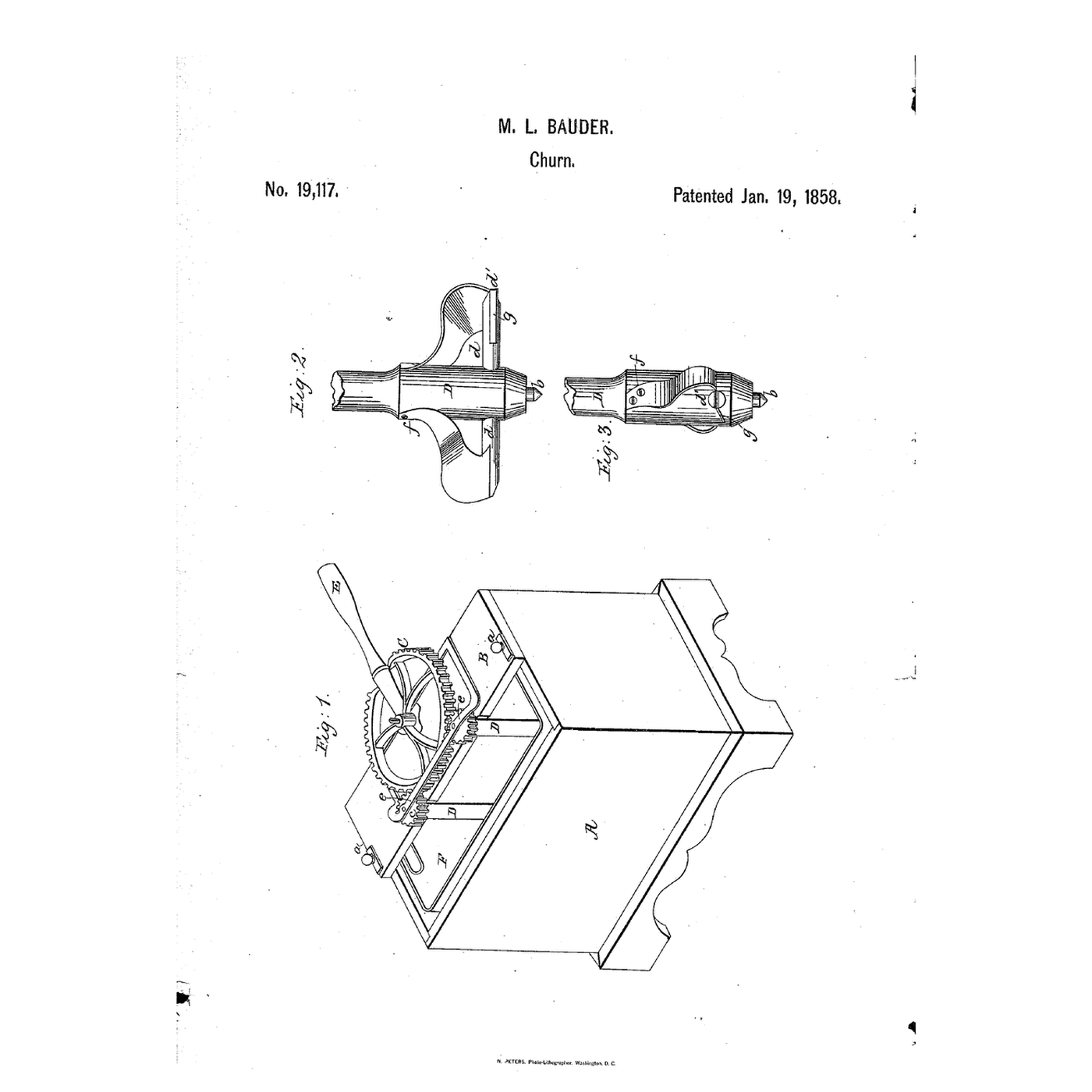
Michael L. Bauder of Elyria, Ohio, received US 19,117, dated 19 January 1858, for an elongated churn in a wooden case that holds hot or cold water round it, with two upright shafts carrying ogee-curved floats, both rocked by one segment wheel, "driving the currents of cream violently into each other at the central parts of the churn."
This rung prints the floats, hubs, segment wheel and pinions, builds the churn and makes butter.
Advanced
About 5 hours, plus printing
Instructions
1
1
One handle, two shafts
One handle, two shafts
Loading Jupyter Notebook...
2
2
Water round the churn before it
Water round the churn before it
The Crowells temper with water under the churn; Bauder's case holds water all round it.
3
3
Read US 19,117
Read US 19,117
"My invention consists first of two sets of beaters on two shafts so situated in an ovoid or elongated vessel that the beater on one shaft whirls all the cream in one end of the churn alternately forward and backward, while the beater on the other shaft whirls all the cream in the other end of the churn in the opposite direction, for the purpose of driving the currents of cream violently into each other at the central parts of the churn where the air is drawn into the cream."
4
4
Print the parts
Print the parts
Print four ogee floats (/uploads/blueprints/ogee-float-twin-shaft-churn-ogee-float.stl), two arm hubs (/uploads/blueprints/ogee-float-twin-shaft-churn-arm-hub.stl), the segment wheel with its handle (/uploads/blueprints/ogee-float-twin-shaft-churn-segment-wheel.stl) and two pinions (/uploads/blueprints/ogee-float-twin-shaft-churn-pinion.stl). Print in PETG at 0.2 mm layers, 30 % infill, 4 walls; wash before first use.
Materials for this step:
 PETG Filament1 piece
Tools needed:
 FDM 3D Printer
5
5
Vessel, case and shafts
Vessel, case and shafts
Stand a long rectangular food-grade container inside a larger one, spaced off by short pine cleats, so water can be poured between them. Stand two 10 mm square hardwood shafts in the inner one, 87 mm either side of the middle, each with a hub and a 10 mm square hardwood arm through it carrying a float at each end; set the two arms at right angles.
Materials for this step:
 Food-Grade Storage Container2 pieces
 Pine Board1 piece
 Hardwood Dowels1 piece
 Wood Glue1 piece
Tools needed:
 Hand Saw
 Cordless Drill
 Drill Bit Set
6
6
Segment and pinions
Segment and pinions
Fix a pine bar across the outer container, with bearing holes for the shafts and a pivot for the segment wheel between them. Fix a pinion on each shaft's top and mount the segment so it meshes both.
Materials for this step:
Pine Board1 piece Mild Steel Rod1 piece
 #8 x 1" Wood Screw1 piece
Tools needed:
Hand SawCordless Drill Screwdriver Set
7
7
The build in 3D
The build in 3D
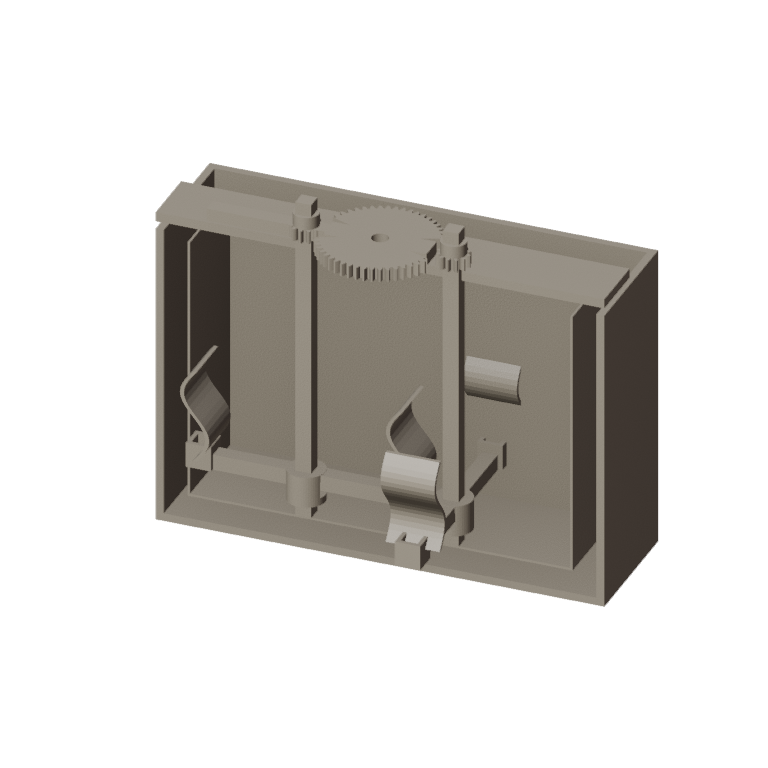
FreeCAD model of this build: the case and inner vessel cut away to show the two shafts with their ogee floats at right angles, and the segment wheel meshing both pinions.
8
8
Temper and churn
Temper and churn
Let the heavy cream stand until it reaches about 15 °C, checked with the thermometer. Pour cold or lukewarm water into the space between the containers to set the temperature. Pour 2 litres of cream into the inner one and rock the handle steadily left and right; time until the butter comes. Pour off the buttermilk, add cold water, churn a little and pour off again until it runs clear; work in a pinch of salt and weigh the butter.
Materials for this step:
 Heavy Cream2000 ml
 Coarse Sea Salt1 piece
 Water1 piece
Tools needed:
 Leave-In Probe Thermometer
 Stopwatch
 Digital Kitchen Scale
 Stainless Steel Mixing Bowl (Large)
9
9
Troubleshooting
Troubleshooting
Twin-shaft churn troubleshooting.
Flow
Loading...
10
10
History and honest limits
History and honest limits
**Michael L. Bauder** of Elyria, Lorain County, Ohio, US 19,117, 19 January 1858. His inner body was zinc or tin; he wrote that the case could also serve as a refrigerator for packing butter, and that the churn is best worked with half the cover off. He did not claim shafts with beaters in round churns, nor a reciprocating motion; he claimed the elongated vessel with the two armed shafts in the case. Two containers and printed parts stand in for his. FDM prints hold food in their layer lines, so wash well and replace when worn.
Materials
10- 1 piecePlaceholder
- 2 piecesPlaceholder
- 1 piecePlaceholder
- 1 piecePlaceholder
- 1 piecePlaceholder
- 1 piecePlaceholder
- 1 piecePlaceholder
- 2000 mlPlaceholder
- 1 piecePlaceholder
- 1 piecePlaceholder
Tools Required
9- Placeholder
- Placeholder
- 1 vendor sell this, none ship to you yetPlaceholder
- Placeholder
- Placeholder
- Placeholder
- Placeholder
- Placeholder
- Placeholder
Design Files
1Related Blueprints
These blueprints share knowledge with this one — techniques, materials, or principles that connect them in the learning graph.
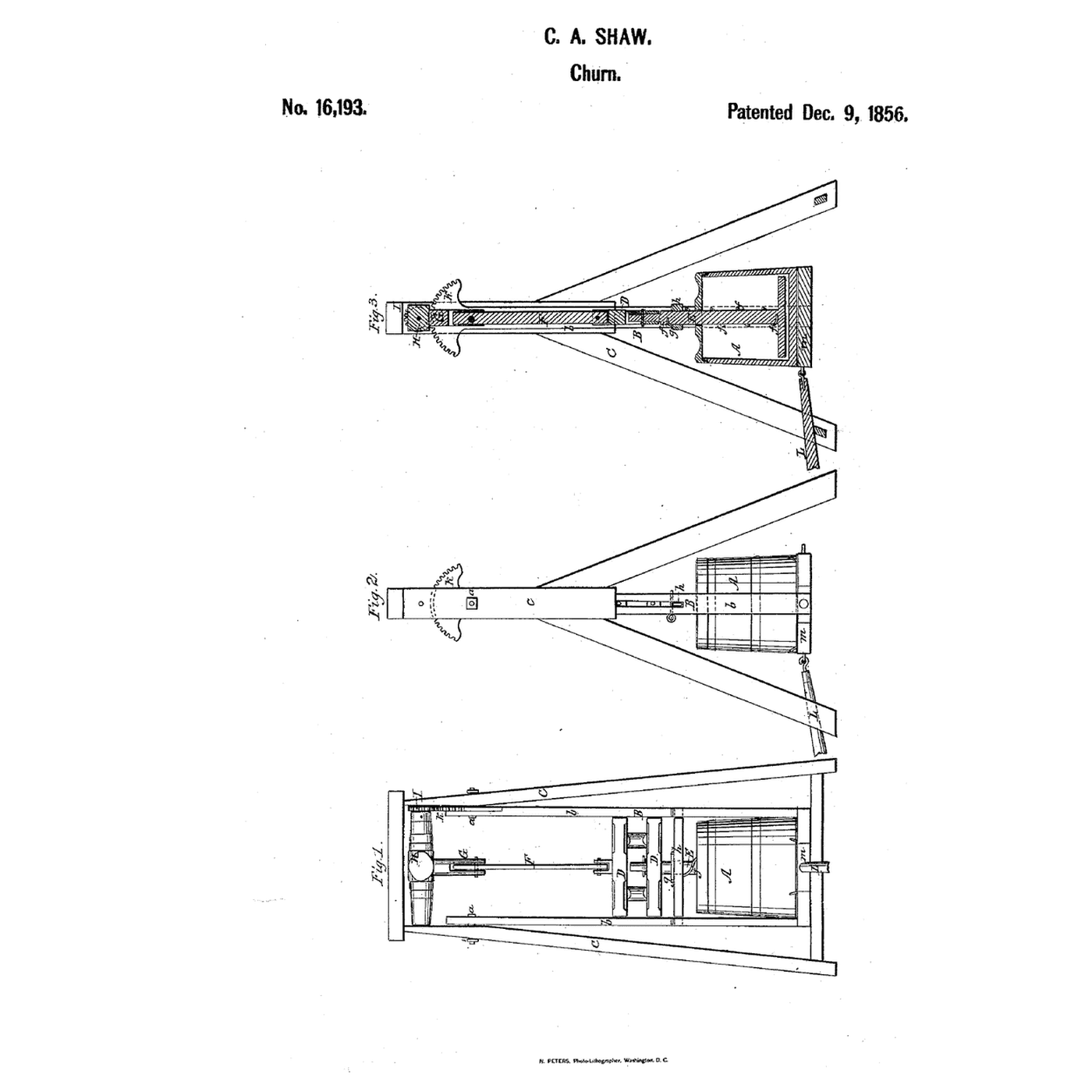
Screw-Turned Pendulum Dash Churn: The Swing Lifts the Dasher, a Screw Turns It as It Goes
by Martin
FOOD & DRINKS
4
0
0
0
0
0
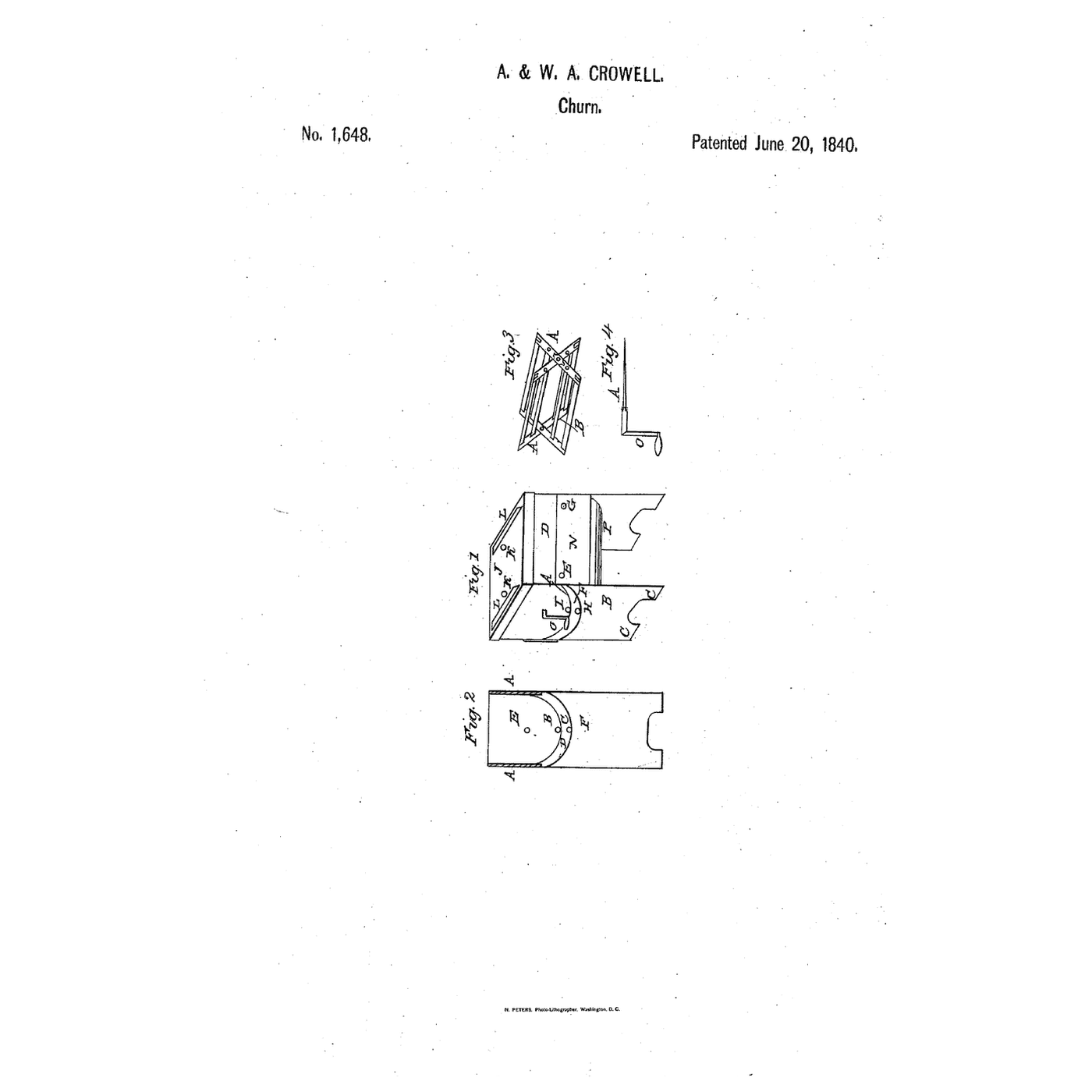
Water-Jacketed Churn: Hot or Cold Water Under a Metal Plate Tempers the Cream
by Karen
FOOD & DRINKS
3
0
0
0
0
0
Churning Butter from Cream — The 5,000-Year-Old Fat Separation
by TheChef
CRAFT
47
0
0
0
0
0
CC0 Public Domain
This blueprint is released under CC0. You are free to copy, modify, distribute, and use this work for any purpose, without asking permission.
Support the Maker by purchasing products through their Blueprint where they earn a Maker Commission set by Vendors, or create a new iteration of this Blueprint and include it as a connection in your own Blueprint to share revenue.