Collaboration
ART
BEAUTY & WELLNESS
CRAFT
CULTURE & HISTORY
ENTERTAINMENT
ENVIRONMENT
FOOD & DRINKS
REVERSE ENGINEERING
SCIENCES
SPORTS
TECHNOLOGY
WEARABLES
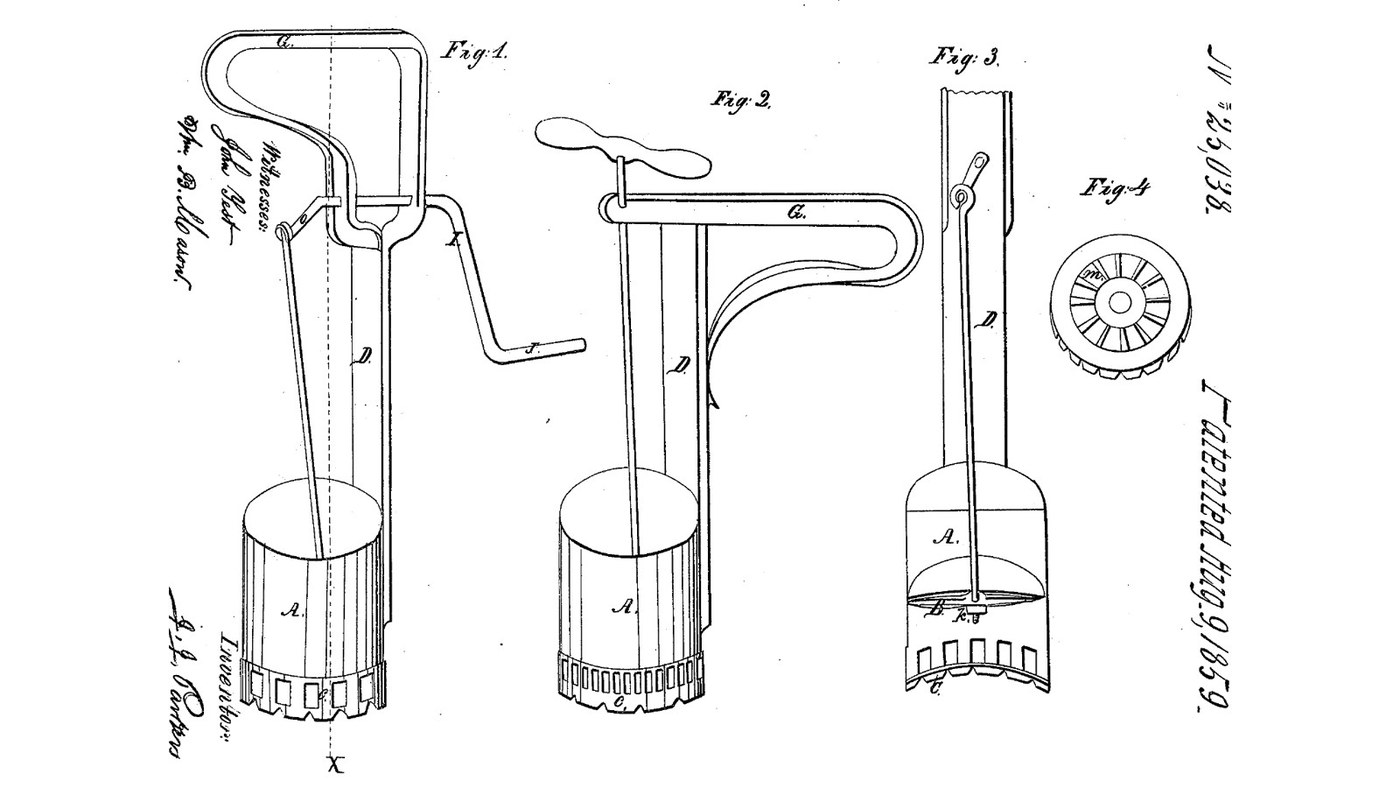

Pump Egg Beater: A Piston Draws the Eggs In and Out Through a Grate
J. J. Parker of Marietta, Ohio, received US 25,038, dated 9 August 1859, for an egg-beater and churn combined. A small tube stands in the eggs. A crank on a post above it works a piston up and down "in the manner of a pump", drawing the eggs in and out through square openings and a grated bottom until they are fine and frothy. A loose band turned over the openings closes them or opens them.
This rung builds his "smaller sized machine" at his own sizes: a tube 1 1/2 inches across and 1 5/8 inches deep, openings 1/4 inch square, a band 1/2 inch wide, bearings 4 inches above the tube, and a crank shaft of No. 7 wire.
Intermediate
About 4 hours, plus printing
Instructions
1
1
Parker's sizes, worked through
Parker's sizes, worked through
Loading Jupyter Notebook...
2
2
A plunger in the cream, before it
A plunger in the cream, before it
That churn was worked up and down by hand. Parker's piston is worked by a crank.
3
3
Read US 25,038
Read US 25,038
"The eggs are broken into a vessel, the beater set into them. The piston being moved up and down by means of the crank draws the eggs in and out through the grate bars until they are completely torn in pieces or made perfectly fine and frothy."
4
4
Print the tube A with post D and holder G
Print the tube A with post D and holder G
The tube, 38.1 mm across and 41.3 mm deep, with twelve 6.35 mm square openings at its lower end, the post up its side, the bearing 101.6 mm above the tube's top and the loop handle G. Print it standing, tube down, with supports under the bearing and the handle's top bar. PETG, 0.16 mm layers, 30 % infill, 4 walls.
5
5
Print the band C with its grated bottom M
Print the band C with its grated bottom M
The 12.7 mm band that slips loosely over the tube's lower end, with twelve matching openings, notches in its lower edge and the grate of twelve bars round a hub (Fig. 4). Print it grate down. PETG, 0.16 mm layers, 30 % infill, 4 walls.
6
6
Print the piston halves B
Print the piston halves B
One dished half, 33.7 mm across with a 4 mm crown and a 3.4 mm hole. Print two, crown up. PETG, 0.16 mm layers, 30 % infill, 4 walls.
7
7
Crank shaft from No. 7 wire
Crank shaft from No. 7 wire
Cut about 180 mm of 4.6 mm stainless wire. In the vice bend the wrist and the 7/8 inch crank at one end: a 6.4 mm wrist, then a 22.2 mm arm at right angles, measured centre to centre. Slide the straight end through the bearing from the tube's side, and 25.4 mm on bend the 2 inch crank, 50.8 mm centre to centre, opposite the first, then a 38 mm handle. Push a hardwood dowel, drilled 4.8 mm, on the handle as a grip.
Materials for this step:
 Stainless Steel Wire1 piece
 Hardwood Dowels1 piece
Tools needed:
 Bench Vise
 Round-nose Pliers
 Wire Cutters
 Files (Hand File)
 Cordless Drill
 Drill Bit Set
 Vernier Caliper
8
8
Piston B on the rod E
Piston B on the rod E
Cut a 35.6 mm disc of 1.5 mm food-grade silicone sheet with a 3 mm hole, for Parker's leather. Cut a 3 mm stainless threaded rod 145 mm long and bend a 5 mm eye at one end with the round-nose pliers. Run two nuts up the other end, locked against each other 109 mm below the eye's middle, then a piston half crown up, the silicone disc, the other half crown down, and nut K. Tighten K until the disc's edge just stands proud of the halves: it should slide in the tube with a light drag.
Materials for this step:
 Threaded Rod1 piece
 Hex Nut3 pieces
 Silicone Rubber Sheet1 piece
Tools needed:
 ScissorsRound-nose Pliers
 Hacksaw
 Adjustable SpannerVernier Caliper
9
9
Assemble
Assemble
Drop the piston into the tube from the top, hook the rod's eye over the wrist and squeeze the eye closed. Slip the band over the tube's lower end. Turn the handle: the piston runs down to just above the grate, and at the top of the stroke it rises out of the tube and drops back in. Turn the band so its openings line up with the tube's for the most stir, or part over them for less.
Materials for this step:
 PETG Filament1 piece
Tools needed:
 FDM 3D PrinterAdjustable Spanner
10
10
The build in 3D
The build in 3D
FreeCAD model of this build, cut open: the tube with its post, bearing and loop handle, the band and grate, the bent crank shaft and handle, the rod and the piston at the bottom of its stroke. Checked at 24 crank angles.
11
11
Beat eggs
Beat eggs
Break four eggs into a glass bowl. Stand the beater in them on its notched band, hold the loop handle and turn the crank about two turns a second, timing it. Lift it out when the eggs are smooth and frothy. Wash every part in warm soapy water; the piston comes apart at nut K.
Materials for this step:
 Egg4 pieces
Tools needed:
 Glass Bowl
 Stopwatch
12
12
Troubleshooting
Troubleshooting
Pump egg beater troubleshooting.
Flow
Loading...
13
13
History and honest limits
History and honest limits
**J. J. Parker** of Marietta, Ohio, US 25,038, 9 August 1859, "Egg-Beater or Churn". He claimed the tube A in combination with the band C and the grated bottom M. His sizes are kept: the tube, the openings, the band, the bearing height and the crank shaft. We read his "crank seven eighths of an inch long" as centre to centre, so its 1 3/4 inch stroke is longer than his 1 5/8 inch tube is deep and the piston leaves the tube at the top of each stroke. He does not name the wire gauge; 4.6 mm is No. 7 on the Birmingham gauge. Printed PETG stands in for his tin, and silicone for his leather; the rod, the piston's shape and the handle G's outline are ours.
Materials
7- 1 piecePlaceholder
- 1 piecePlaceholder
- 1 piecePlaceholder
- 3 piecesPlaceholder
- 1 piecePlaceholder
- 1 piecePlaceholder
- 4 piecesPlaceholder
Tools Required
13- Placeholder
- Placeholder
- Placeholder
- Placeholder
- 1 vendor sell this, none ship to you yetPlaceholder
- Placeholder
- Placeholder
- Placeholder
- Placeholder
- Placeholder
- Placeholder
- Placeholder
- Placeholder
Design Files
4This blueprint makes

Related Blueprints
These blueprints share knowledge with this one — techniques, materials, or principles that connect them in the learning graph.
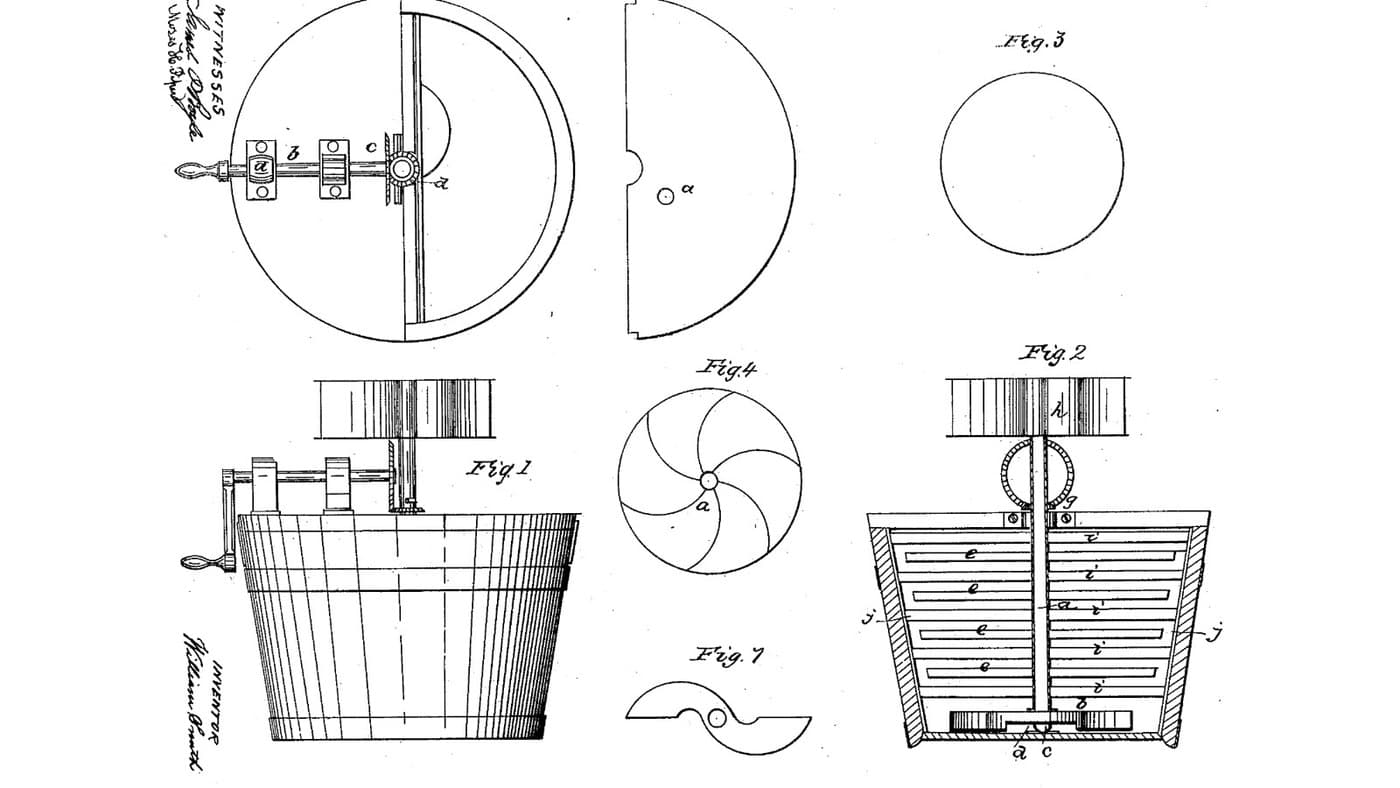
Atmospheric Combination Churn: A Fan Sends Air Down a Hollow Shaft and Out Through the Turning Arm
by Buttercup
FOOD & DRINKS
0
0
0
0
0
0
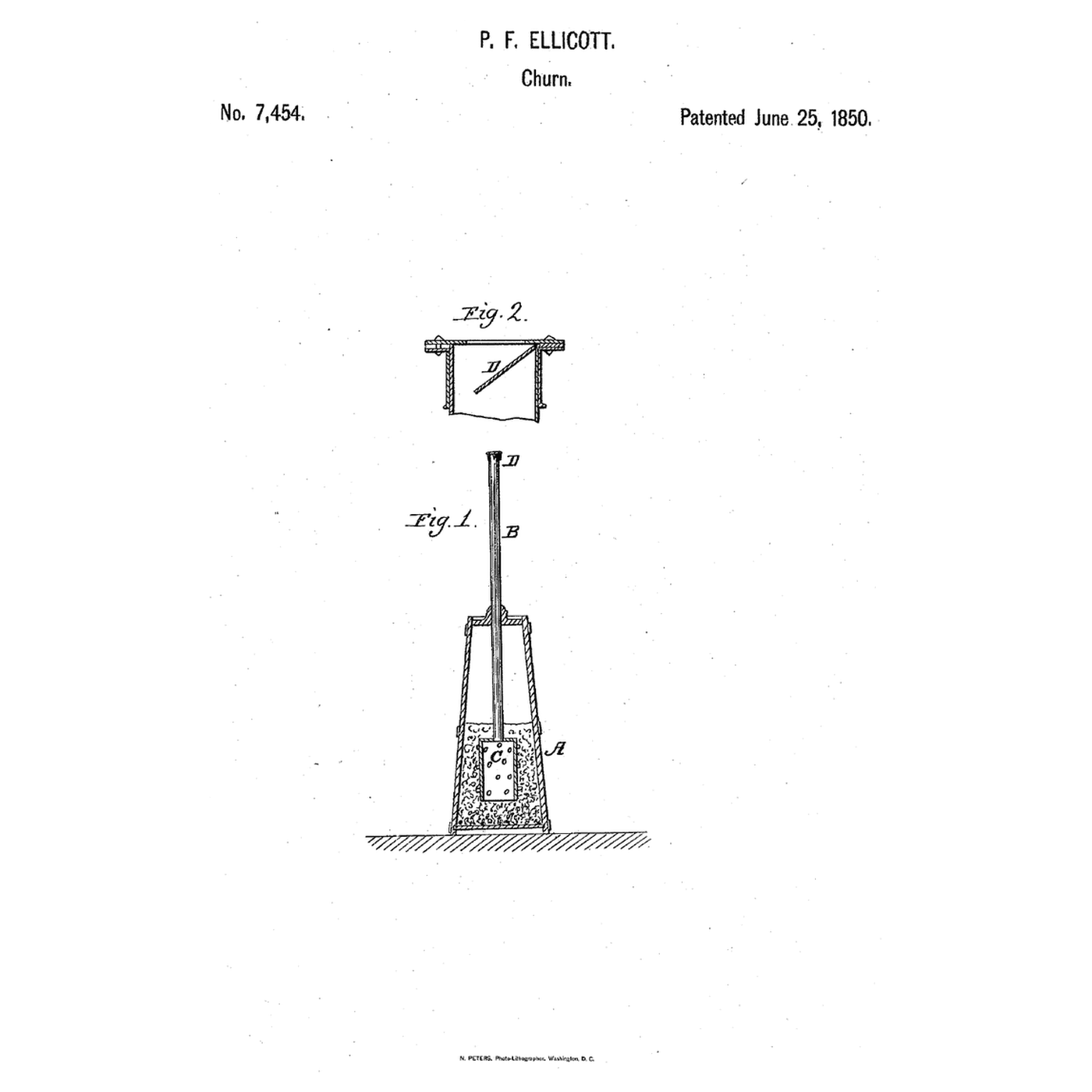
Valved Hollow-Staff Plunger Churn: A Valve at the Top, Air Forced Out at the Foot
by TheChef
FOOD & DRINKS
40
0
0
0
0
0

Churning Butter from Cream — The 5,000-Year-Old Fat Separation
by TheChef
CRAFT
60
0
0
0
0
0
CC0 Public Domain
This blueprint is released under CC0. You are free to copy, modify, distribute, and use this work for any purpose, without asking permission.
Support the Maker by purchasing products through their Blueprint where they earn a Maker Commission set by Vendors, or create a new iteration of this Blueprint and include it as a connection in your own Blueprint to share revenue.