ART
BEAUTY & WELLNESS
CRAFT
CULTURE & HISTORY
ENTERTAINMENT
ENVIRONMENT
FOOD & DRINKS
REVERSE ENGINEERING
SCIENCES
SPORTS
TECHNOLOGY
WEARABLES

Pinwheel Air-Tube Churn: A Beater Cut From One Tin Sheet, Tubes That Feed the Wave
Emerson wanted a dasher "which unites simplicity with efficiency."
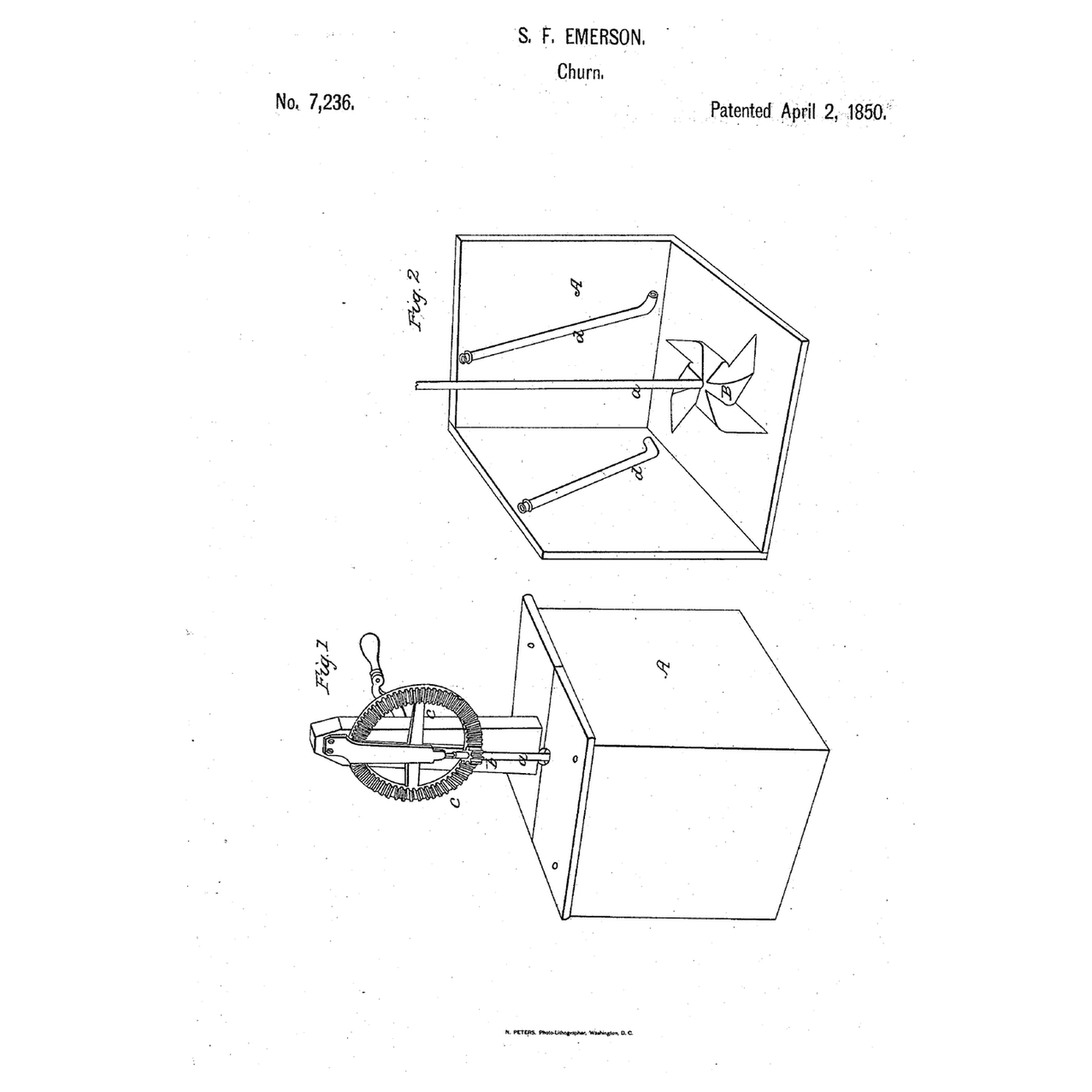
Simeon F. Emerson of Canaan, Ohio, received US 7,236, dated 2 April 1850, for an atmospheric churn in a square box whose cover is in two pieces, one removable to inspect the cream. The beater is a squared sheet of tin plate "slit from each of the corners toward the center of the sheet for rather more than half the distance," every other corner turned in, on an upright spindle turned by a crank and wheel. "Inclined tubes, d, are secured to the sides of the churn tub; these incline forward, as they descend, in the direction in which the dasher is revolved."
This rung works out the cuts, then makes the beater from stainless sheet with a printed template (or prints it), fits inclined tubes in a box, and makes butter.
Beginner
About 2 hours, plus printing
Instructions
1
1
The cuts
The cuts
Loading Jupyter Notebook...
2
2
Air fed into the whirl before it
Air fed into the whirl before it
The embedded blueprint lets the whirl bring air into a cone. Emerson breaks the whirl with tubes on the walls that feed air into its wave.
3
3
Read US 7,236
Read US 7,236
"A squared sheet of tin plate or other metal is slit from each of the corners toward the center of the sheet for rather more than half the distance from the corner to the center. Every other one of the eight corners thus produced is turned inward toward the center of the sheet, and the four are united there thus forming a beater B, with four arms."
4
4
Make the beater
Make the beater
Print the template (/uploads/blueprints/pinwheel-air-tube-churn-sheet-template.stl), lay it on a 150 mm square of 0.5 mm stainless sheet, mark the four slits and the centre hole, and cut them with snips and a drill. Deburr, then bend every other point in toward the centre and rivet or bolt the four together through a hole, as he united them. Or print the finished pinwheel (/uploads/blueprints/pinwheel-air-tube-churn-printed-beater.stl). Print in PETG at 0.2 mm layers, 30 % infill, 4 walls; wash before first use.
Materials for this step:
 Stainless Steel Sheet - 3041 piece
 Machine Screws1 piece
 Hex Nut1 piece
 PETG Filament1 piece
Tools needed:
 Tin Snips
 Deburring Tool
 Cordless Drill
 Drill Bit Set
 FDM 3D Printer
5
5
Tubes on the sides
Tubes on the sides
Print six tube clips (/uploads/blueprints/pinwheel-air-tube-churn-tube-clip.stl). Cut three 200 mm lengths of 16 mm food-grade tube and clip one to each of three sides of a food-safe square box, open at both ends, leaning about 18° forward as they go down in the direction the beater will turn.
Materials for this step:
 PVC Pipe1 piece
 Food-Grade Storage Container1 piece
 #8 x 1" Wood Screw1 piece
Tools needed:
 Hacksaw
 Screwdriver Set
6
6
Spindle and crank
Spindle and crank
Fix the beater near the foot of a 10 mm square hardwood spindle and stand it in a seat drilled in the box's floor. Cut a two-piece plywood lid, one piece removable, with a hole for the spindle; glue a crank arm and handle on top.
Materials for this step:
 Hardwood Dowels1 piece
 Plywood Sheet1 piece
 Wood Glue1 piece
Tools needed:
 Hand Saw
 Coping SawCordless Drill
7
7
The build in 3D
The build in 3D
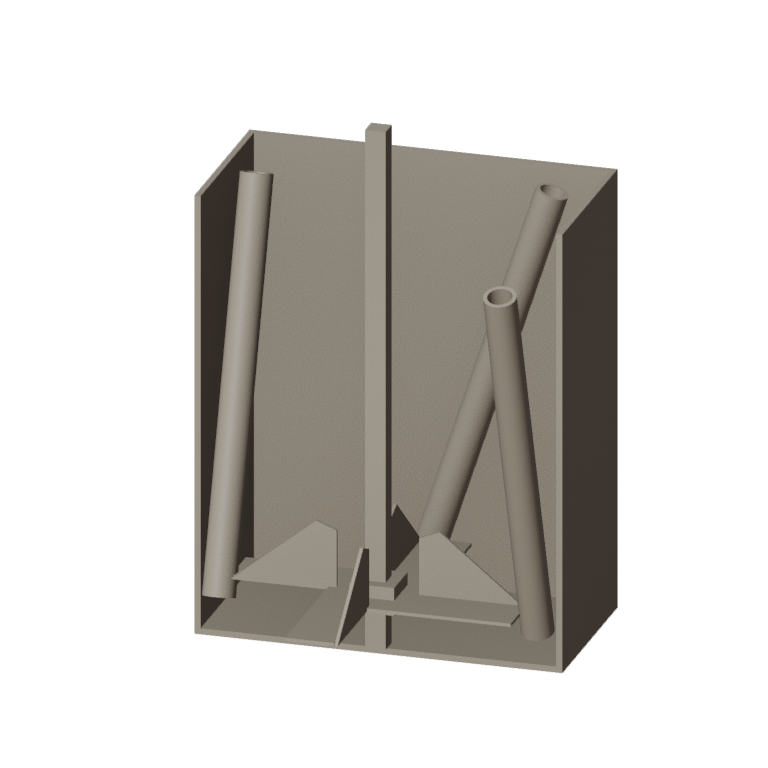
FreeCAD model of this build, not of the patent: the box cut away to show the four-armed pinwheel beater on its spindle and the inclined air tubes on its sides.
8
8
Crank and make butter
Crank and make butter
Let the heavy cream stand until it reaches about 15 °C, checked with the thermometer. Pour in 2 litres, below the tubes' tops. Crank steadily the way the tubes lean; time until the butter comes. Pour off the buttermilk, add cold water, churn a little and pour off again until it runs clear; work in a pinch of salt and weigh the butter.
Materials for this step:
 Heavy Cream2000 ml
 Coarse Sea Salt1 piece
 Water1 piece
Tools needed:
 Leave-In Probe Thermometer
 Stopwatch
 Digital Kitchen Scale
 Stainless Steel Mixing Bowl (Large)
9
9
Cream up the tubes, a beater that bends
Cream up the tubes, a beater that bends
Pinwheel air-tube churn troubleshooting.
Flow
Loading...
10
10
History and honest limits
History and honest limits
**Simeon F. Emerson** of Canaan, Wayne County, Ohio, received US 7,236, dated 2 April 1850. The spindle was stepped in the tub's bottom and turned through a wheel and crank on the cover; the parts could be of "such materials as the manufacturer may deem best suited" for "efficiency, cheapness, and facility for cleaning." He claimed the combination of the dasher with the stationary inclined air channels on the churn tub.
**Honest limits.** Stainless sheet stands in for his tin plate; our crank turns the spindle directly. FDM prints hold food in their layer lines, so wash well and replace when worn. Your times and weights are the result.
Materials
13- 1 piecePlaceholder
- 1 piecePlaceholder
- 1 piecePlaceholder
- 1 piecePlaceholder
- 1 piecePlaceholder
- 1 piecePlaceholder
- 1 piecePlaceholder
- 1 piecePlaceholder
- 1 piecePlaceholder
- 1 piecePlaceholder
- 2000 mlPlaceholder
- 1 piecePlaceholder
- 1 piecePlaceholder
Tools Required
13- Placeholder
- Placeholder
- 1 vendor sell this, none ship to you yetPlaceholder
- Placeholder
- Placeholder
- Placeholder
- Placeholder
- Placeholder
- Placeholder
- Placeholder
- Placeholder
- Placeholder
- Placeholder
Design Files
1Related Blueprints
These blueprints share knowledge with this one — techniques, materials, or principles that connect them in the learning graph.
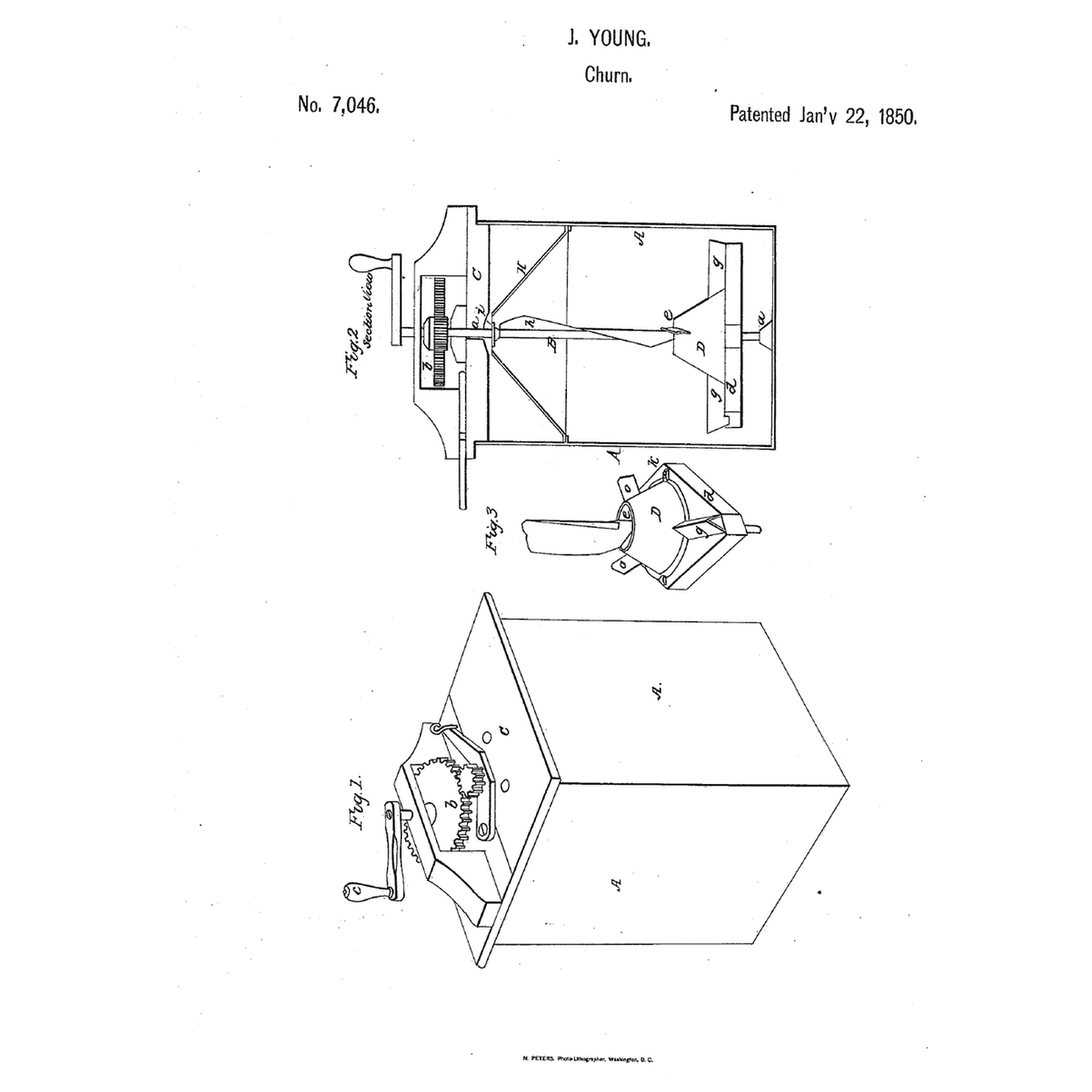
Whirl-Cone Splash-Guard Churn: A Whirl Feeds Air to a Cone, a Funnel Keeps the Cream In
by Karen
FOOD & DRINKS
3
0
0
0
0
0
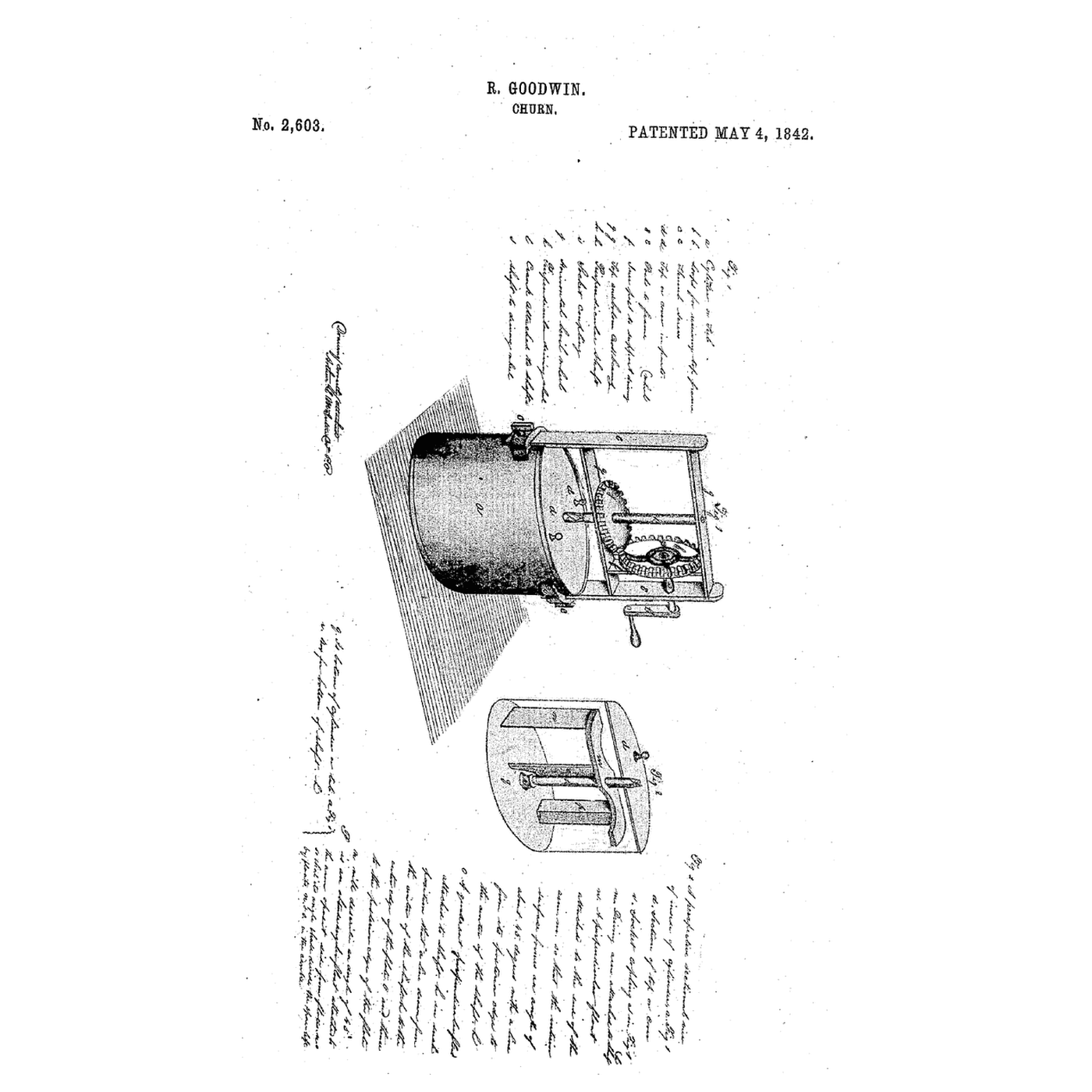
Rotary Stirring Churn: Three Floats That Stop the Cream Merely Going Round
by YourGrandma
FOOD & DRINKS
1
0
0
0
0
0
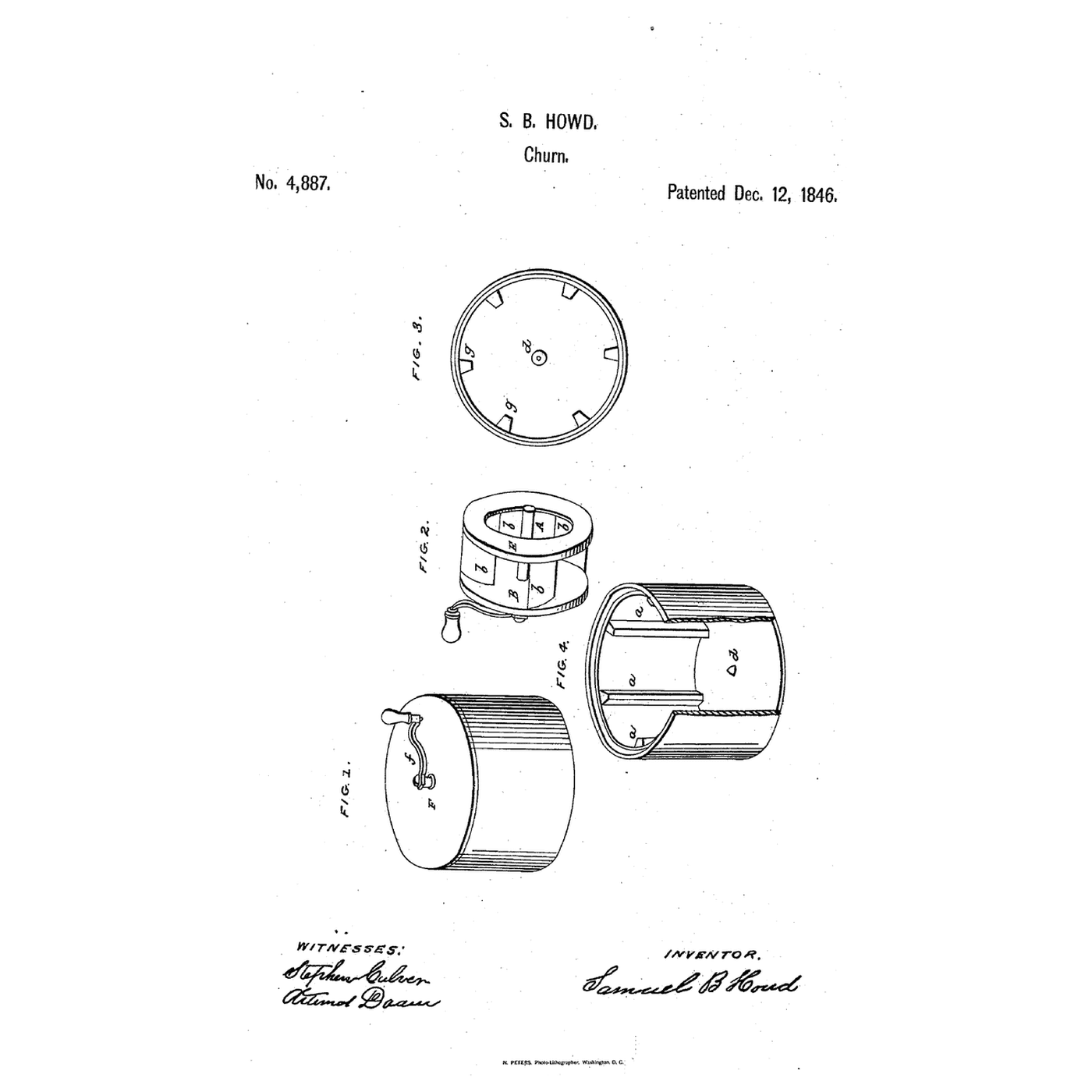
Draw-and-Throw Rotary Churn: Cream Drawn In at the End, Thrown Against Breakers
by TheChef
FOOD & DRINKS
2
0
0
0
0
0
CC0 Public Domain
This blueprint is released under CC0. You are free to copy, modify, distribute, and use this work for any purpose, without asking permission.
Support the Maker by purchasing products through their Blueprint where they earn a Maker Commission set by Vendors, or create a new iteration of this Blueprint and include it as a connection in your own Blueprint to share revenue.