ART
BEAUTY & WELLNESS
CRAFT
CULTURE & HISTORY
ENTERTAINMENT
ENVIRONMENT
FOOD & DRINKS
REVERSE ENGINEERING
SCIENCES
SPORTS
TECHNOLOGY
WEARABLES

Piston-Float Air Churn: Hollow Floats With Pistons Worked by a Fixed Eccentric
Egbert wanted the air "forcibly discharged in small jets at the very point where it is most required, viz, the moving surface of the dasher."
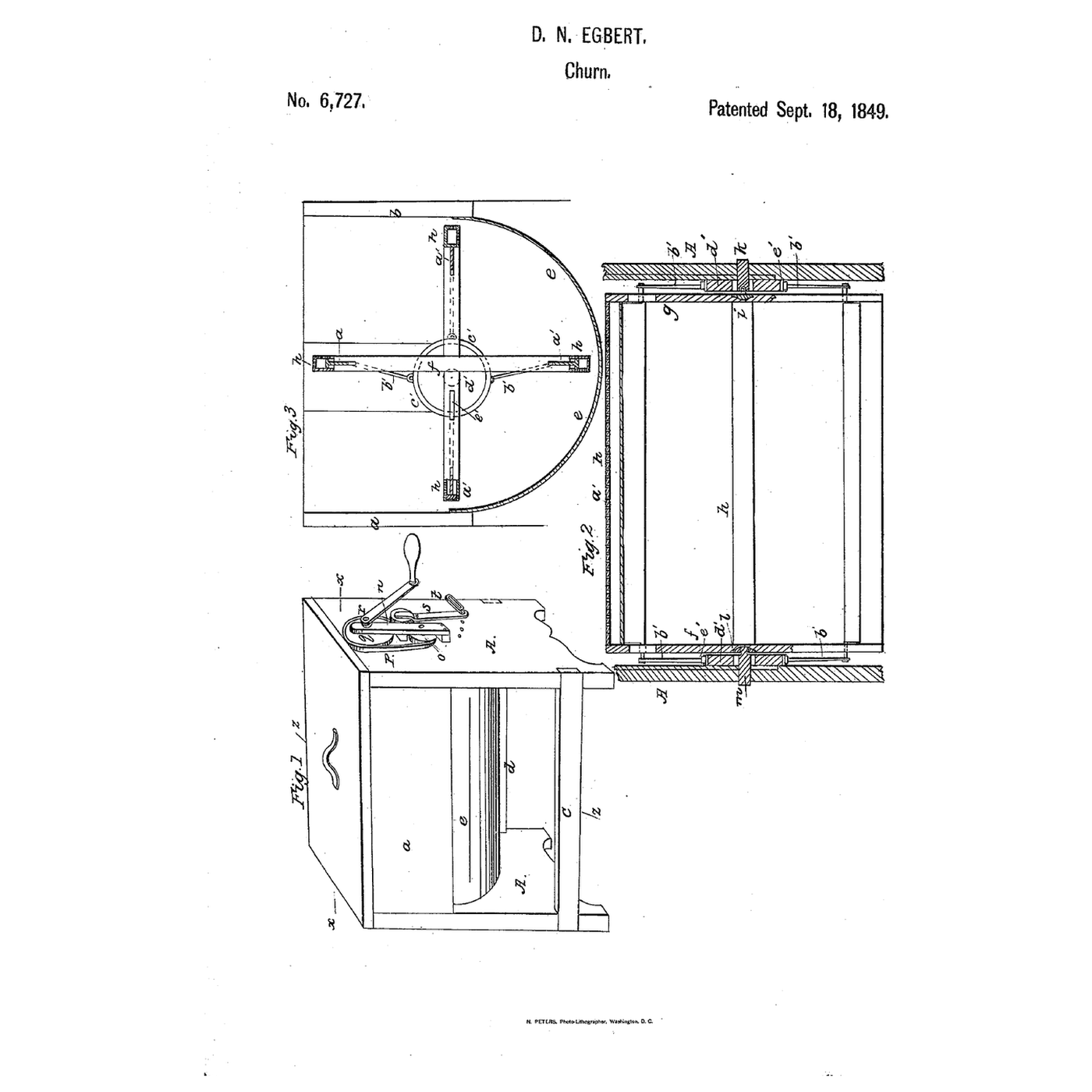
D. N. Egbert of Hudson, Ohio, received US 6,727, dated 18 September 1849, for a rotary churn-dasher in a case with a zinc bottom: two sets of arms joined by hollow floats whose sides are pierced with small holes, each fitted with a piston. Connecting rods join the pistons to an eccentric ring running on an eccentric fixed to the end piece, so each float fills with air as it ascends and discharges it as it descends. A strap from a large pulley on the crank shaft to a small one on the dasher's shaft turns it fast.
This rung works out the air each float pumps, then prints the floats, pistons, eccentric and arms, builds them over a stainless bottom, and makes butter.
Advanced
About 6 hours, plus printing
Instructions
1
1
Air per float
Air per float
Loading Jupyter Notebook...
2
2
A dasher that is also an air pump before it
A dasher that is also an air pump before it
The embedded blueprint pumps air with a tube over a loose plunger. Egbert builds the pump into each float of a rotary dasher.
3
3
Read US 6,727
Read US 6,727
"It will now be perceived that as the floats ascend above their horizontal position by the revolution of the dasher, each piston is in turn withdrawn in its appropriate float and the hollow cavity filled with air; as the floats descend below their horizontal position this air is forcibly discharged through the perforations of the floats, below the surface of the liquid."
4
4
Print the parts
Print the parts
Print two hollow floats (/uploads/blueprints/piston-float-air-churn-hollow-float.stl) and two pistons (/uploads/blueprints/piston-float-air-churn-piston.stl), the fixed eccentric (/uploads/blueprints/piston-float-air-churn-eccentric.stl) and its ring (/uploads/blueprints/piston-float-air-churn-eccentric-ring.stl), two arm sets (/uploads/blueprints/piston-float-air-churn-arms.stl) and the crank arm (/uploads/blueprints/piston-float-air-churn-crank-arm.stl). Print in PETG at 0.2 mm layers, 30 % infill, 4 walls; wash before first use.
Materials for this step:
 PETG Filament1 piece
Tools needed:
 FDM 3D Printer
5
5
The case
The case
Make two plywood end pieces with a 90 mm radius half circle grooved in each, and bend a 0.5 mm stainless sheet into the bottom, seated in the grooves with silicone, as his zinc bottom. Screw the eccentric to the inside of one end on the axis, offset upward as printed.
Materials for this step:
 Plywood Sheet1 piece
 Stainless Steel Sheet - 3041 piece
 Silicone Sealant1 piece
 #8 x 1" Wood Screw1 piece
Tools needed:
 Coping Saw
 Tin Snips
 Deburring Tool
 Rubber Mallet
 Screwdriver Set
6
6
Dasher, pistons and rods
Dasher, pistons and rods
Slide the two arm sets onto a 10 mm square hardwood shaft and screw a float to the ends of each pair of arms, holes outward. Fit a piston in each float. Fit the ring over the eccentric and join each piston to the ring with two thin pine rods on M3 screws, so the ring is carried round by the arms. Pass the shaft through the other end and glue the crank arm and handle on.
Materials for this step:
 Hardwood Dowels1 piece
 Pine Board1 piece
 Machine Screws1 piece
 Hex Nut1 piece
 Wood Glue1 piece
Tools needed:
 Hand Saw
 Cordless Drill
 Drill Bit SetScrewdriver Set
7
7
The patent drawing
The patent drawing
US 6,727 drawing sheet, public domain (expired patent).
8
8
Crank and make butter
Crank and make butter
Let the heavy cream stand until it reaches about 15 °C, checked with the thermometer. Pour in 1.5 litres. Crank steadily and watch for jets of bubbles as each float goes down; time until the butter comes. Pour off the buttermilk, add cold water, churn a little and pour off again until it runs clear; work in a pinch of salt and weigh the butter.
Materials for this step:
 Heavy Cream1500 ml
 Coarse Sea Salt1 piece
 Water1 piece
Tools needed:
 Leave-In Probe Thermometer
 Stopwatch
 Digital Kitchen Scale
 Stainless Steel Mixing Bowl (Large)
9
9
Pistons that stick, no jets
Pistons that stick, no jets
Piston-float air churn troubleshooting.
Flow
Loading...
10
10
History and honest limits
History and honest limits
**D. N. Egbert** of Hudson, Summit County, Ohio, received US 6,727, dated 18 September 1849. A tightening pulley on a spring lever kept the strap taut. He claimed the combination of the pistons moved by stationary eccentrics with the floats of a revolving dasher.
**Honest limits.** Our crank turns the shaft directly, without his strap and pulleys; stainless sheet and printed parts stand in for his zinc and wooden floats. The notebook gives an upper bound. FDM prints hold food in their layer lines, so wash well and replace when worn. Your times and weights are the result.
Materials
13- 1 piecePlaceholder
- 1 piecePlaceholder
- 1 piecePlaceholder
- 1 piecePlaceholder
- 1 piecePlaceholder
- 1 piecePlaceholder
- 1 piecePlaceholder
- 1 piecePlaceholder
- 1 piecePlaceholder
- 1 piecePlaceholder
- 1500 mlPlaceholder
- 1 piecePlaceholder
- 1 piecePlaceholder
Tools Required
13- Placeholder
- Placeholder
- Placeholder
- Placeholder
- Placeholder
- Placeholder
- Placeholder
- 1 vendor sell this, none ship to you yetPlaceholder
- Placeholder
- Placeholder
- Placeholder
- Placeholder
- Placeholder
Related Blueprints
These blueprints share knowledge with this one — techniques, materials, or principles that connect them in the learning graph.
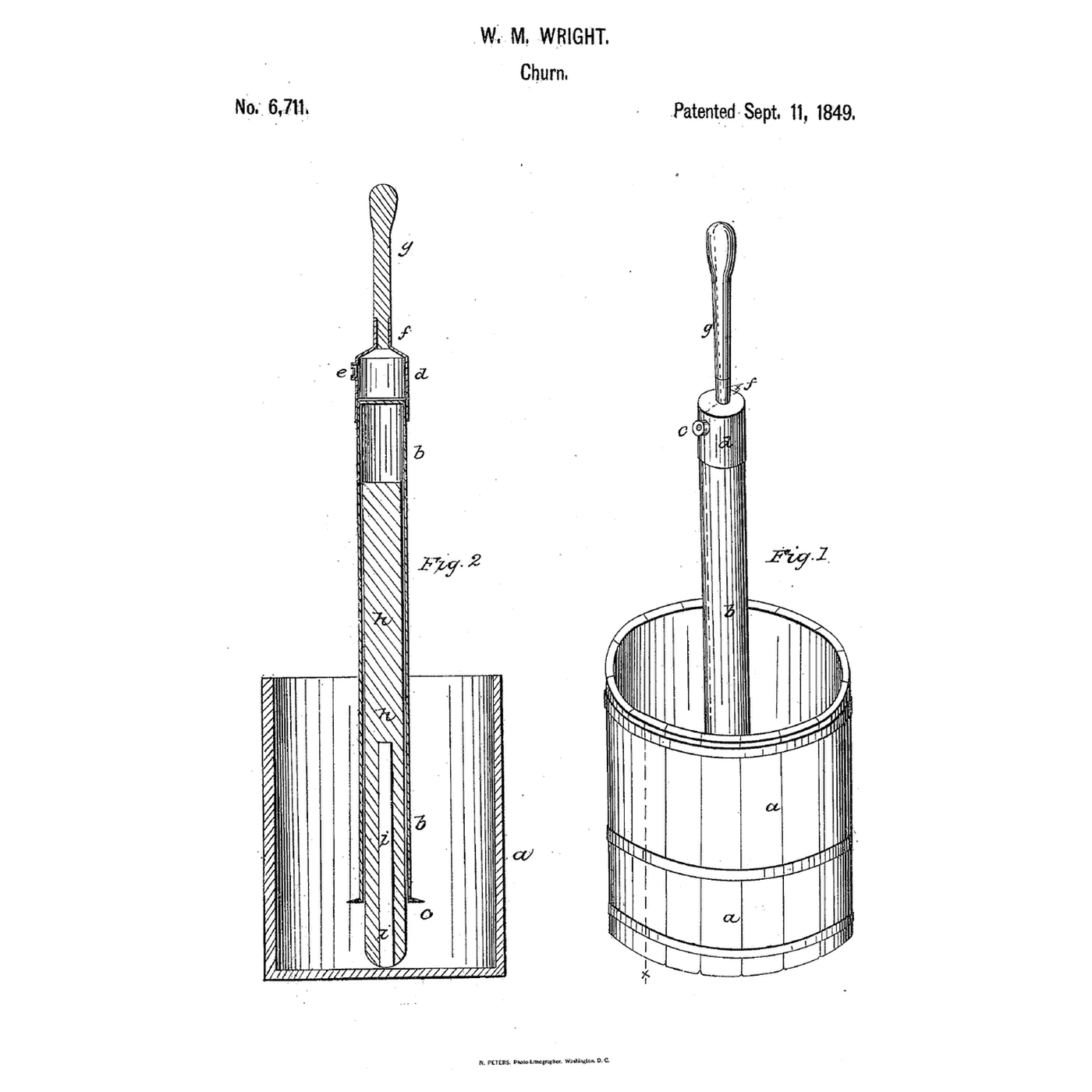
Air-Pump Tube Dasher: A Tube Over a Loose Plunger Pumps Air at Every Stroke
by Emma
FOOD & DRINKS
2
0
0
0
0
0
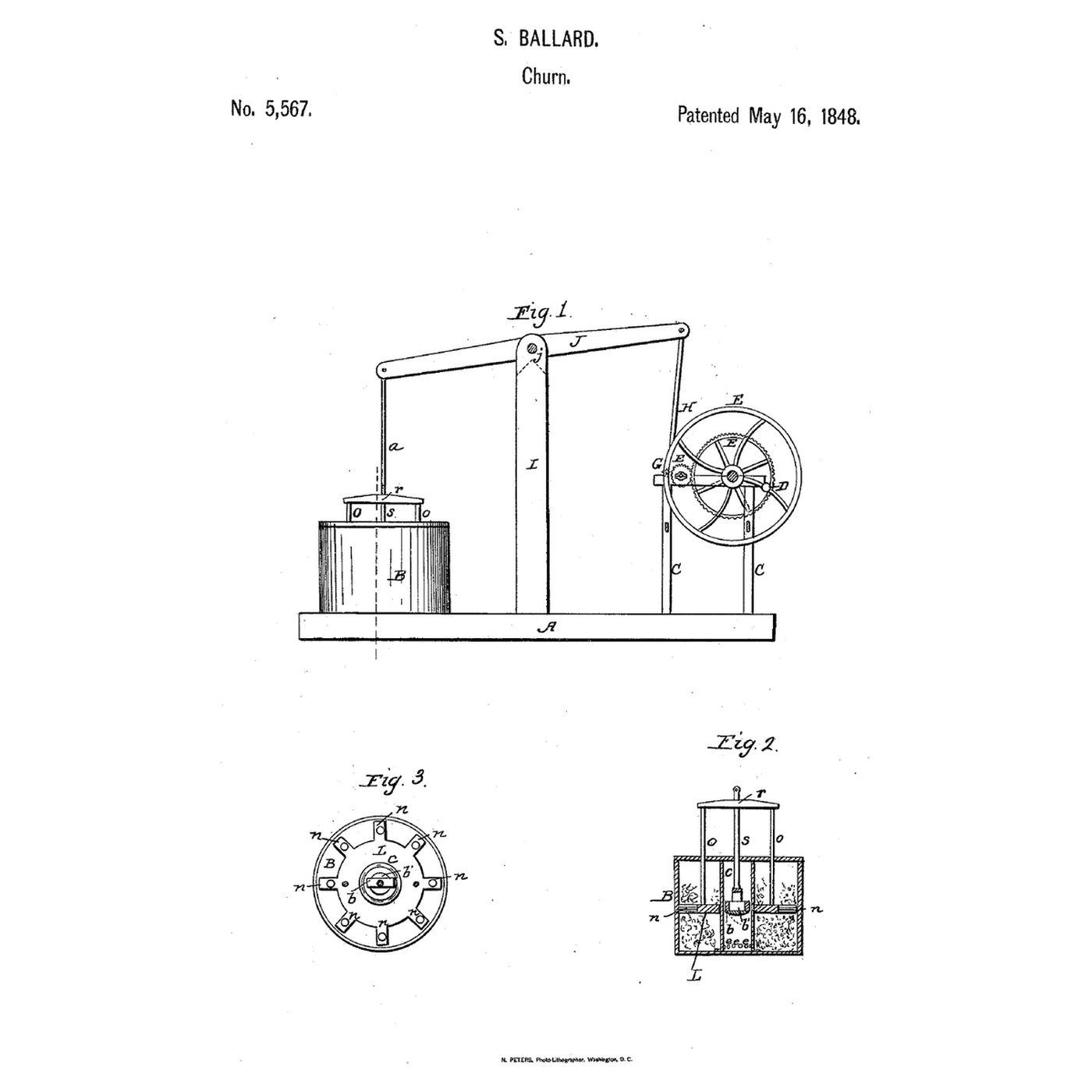
Air-Pump Annular Dasher Churn: A Pump in the Middle, a Ring Dasher Round It
by Martin
FOOD & DRINKS
5
0
0
0
0
0
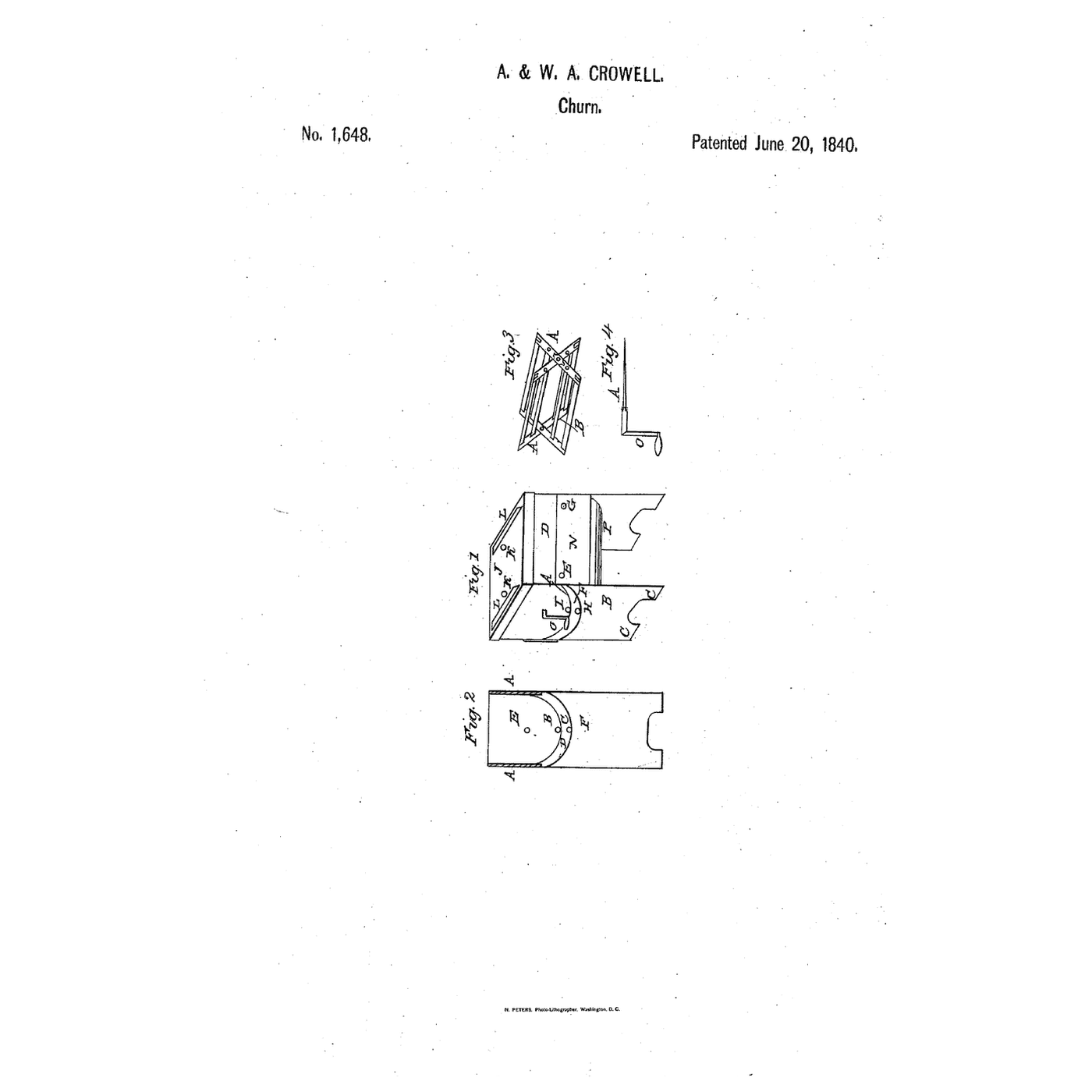
Water-Jacketed Churn: Hot or Cold Water Under a Metal Plate Tempers the Cream
by Karen
FOOD & DRINKS
3
0
0
0
0
0
CC0 Public Domain
This blueprint is released under CC0. You are free to copy, modify, distribute, and use this work for any purpose, without asking permission.
Support the Maker by purchasing products through their Blueprint where they earn a Maker Commission set by Vendors, or create a new iteration of this Blueprint and include it as a connection in your own Blueprint to share revenue.