ART
BEAUTY & WELLNESS
CRAFT
CULTURE & HISTORY
ENTERTAINMENT
ENVIRONMENT
FOOD & DRINKS
REVERSE ENGINEERING
SCIENCES
SPORTS
TECHNOLOGY
WEARABLES
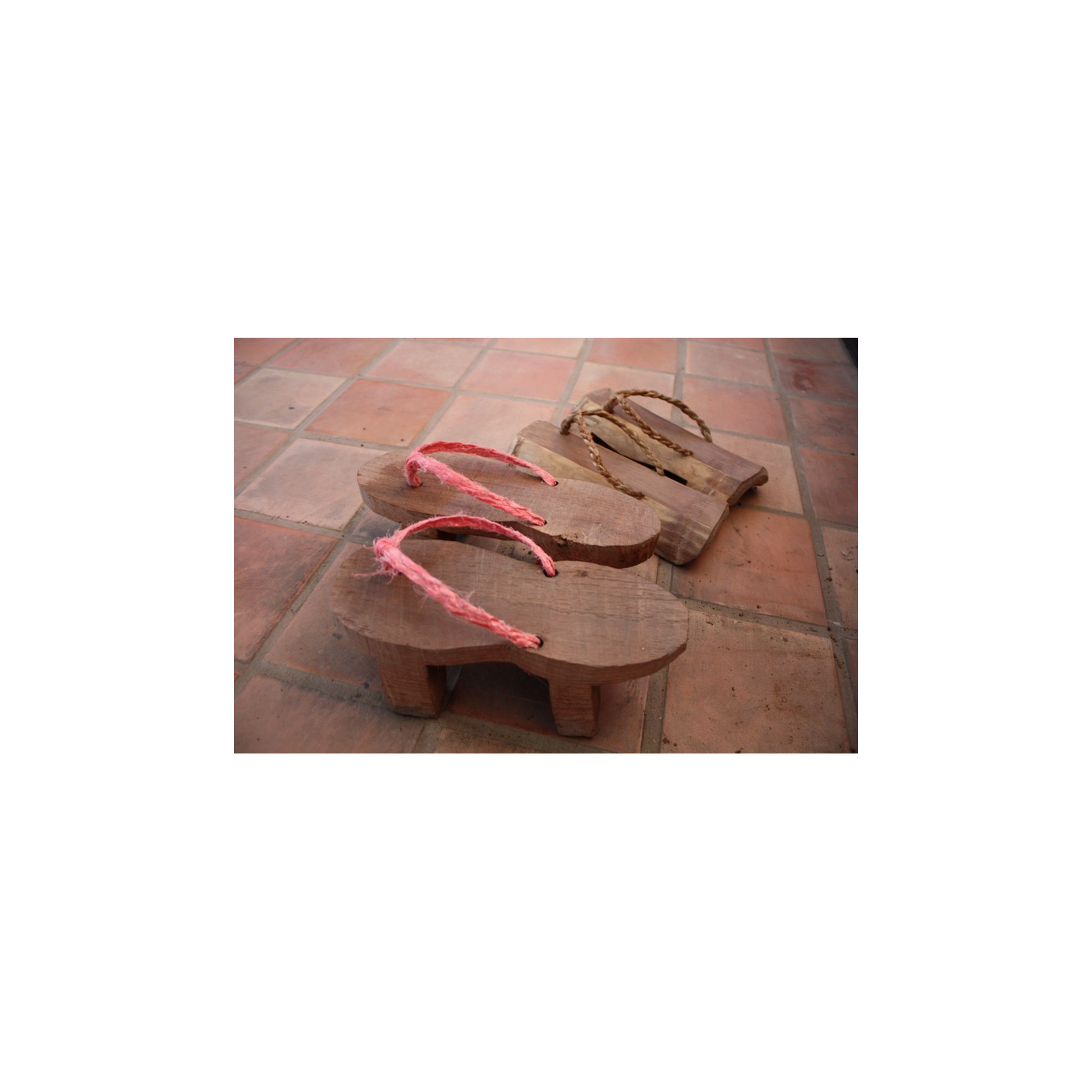
Translated
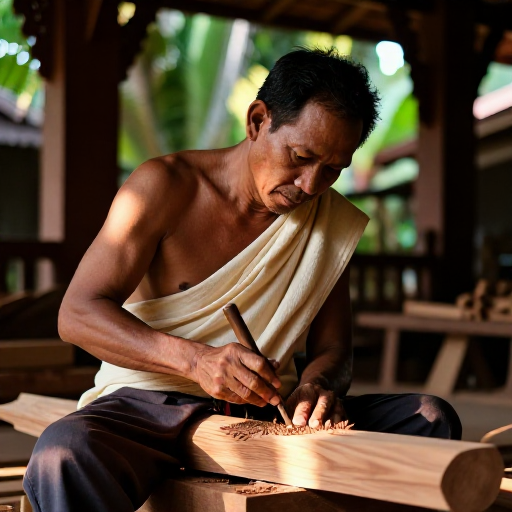

Rong Thao Mai (Wooden Sandal) — a Foot-Shaped Teak Sole with Three Holes for a Jute Strap, Worn in the Forest Against Thorns
รองเท้าไม้ (rong thao mai), formerly called เกือก (kueak), is something villagers wore to work in the forest to keep thorns out of their feet; it is shaped much like today's flip-flop. It is made of a foot-shaped teak board with holes for the strap.
This blueprint makes a pair of wooden sandals following the source.
Beginner
About 3 hours
Instructions
1
1
Sole size
Sole size
Loading Jupyter Notebook...
2
2
A village tool before it
A village tool before it
The threshing sticks are used in the field; the wooden sandals are worn in the forest.
3
3
Read from the source
Read from the source
"To make wooden sandals, use a teak board 1-2 centimetres thick, as long as the wearer's foot, as the sole; hew the board into two foot-shaped pieces and drill three round holes for threading the strap. The strap may be animal-hide cord or jute cord, but jute is mostly used." (Sirindhorn Anthropology Centre, author สนม ครุฑเมือง (Sanom Khrutmueang), CC BY 4.0)
4
4
The soles
The soles
Stand on a hardwood board 1-2 cm thick and draw round both feet; hew and cut to the outline and smooth the edges.
Materials for this step:
 Hardwood Board1 piece
Tools needed:
 Coping Saw
 Adze
Adze Spokeshave
 Sandpaper
5
5
Drill the holes
Drill the holes
Drill three round holes in each sole: one between the big toe and the second toe, and two on either side of the middle of the foot.
Tools needed:
 Cordless Drill
 Drill Bit Set
6
6
Thread the strap
Thread the strap
Thread jute cord through the front hole, split it into two straps to the two side holes, knot it firmly under the sole and adjust its length to the foot.
Materials for this step:
 Jute Twine1 piece
Tools needed:
 Knife
Knife7
7
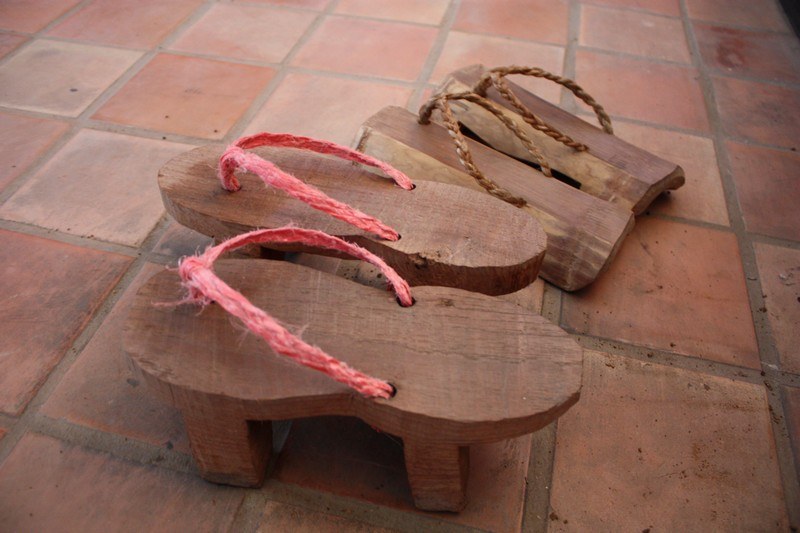
Real photos
Real photos
Real photos of a รองเท้าไม้ (rong thao mai) from ศูนย์วัฒนธรรมไทลื้อ (วัดหย่วน) (Tai Lue Cultural Centre (Wat Yuan)) (Sirindhorn Anthropology Centre, author สนม ครุฑเมือง (Sanom Khrutmueang), CC BY 4.0)
8
8
How to use
How to use
Before putting them on, dip the straps in water or wet them by hand so they soften and do not chafe between the toes. Villagers usually carried them and put them on on reaching thorny forest.
Materials for this step:
 Water1 piece
9
9
Troubleshooting
Troubleshooting
Troubleshooting the wooden sandals.
Flow
Loading...
10
10
History and limits
History and limits
Thai people in the past seldom wore shoes; wooden sandals were made for going into the forest to gather mushrooms, bamboo shoots and wild fruit. Later, rubber and foam sandals replaced them.
Source: Sirindhorn Anthropology Centre, database of traditional everyday objects, "รองเท้าไม้", author สนม ครุฑเมือง (licence CC BY 4.0), from the Tai Lue Cultural Centre (Wat Yuan), Phayao.
**Limits.** The source gives no hole positions; the positions in the model are examples. Any hardwood board can stand in for teak.
Materials
3- 1 piecePlaceholder
- 1 piecePlaceholder
- 1 piecePlaceholder
Related Blueprints
These blueprints share knowledge with this one — techniques, materials, or principles that connect them in the learning graph.

CC0 Public Domain
This blueprint is released under CC0. You are free to copy, modify, distribute, and use this work for any purpose, without asking permission.
Support the Maker by purchasing products through their Blueprint where they earn a Maker Commission set by Vendors, or create a new iteration of this Blueprint and include it as a connection in your own Blueprint to share revenue.