ART
BEAUTY & WELLNESS
CRAFT
CULTURE & HISTORY
ENTERTAINMENT
ENVIRONMENT
FOOD & DRINKS
REVERSE ENGINEERING
SCIENCES
SPORTS
TECHNOLOGY
WEARABLES
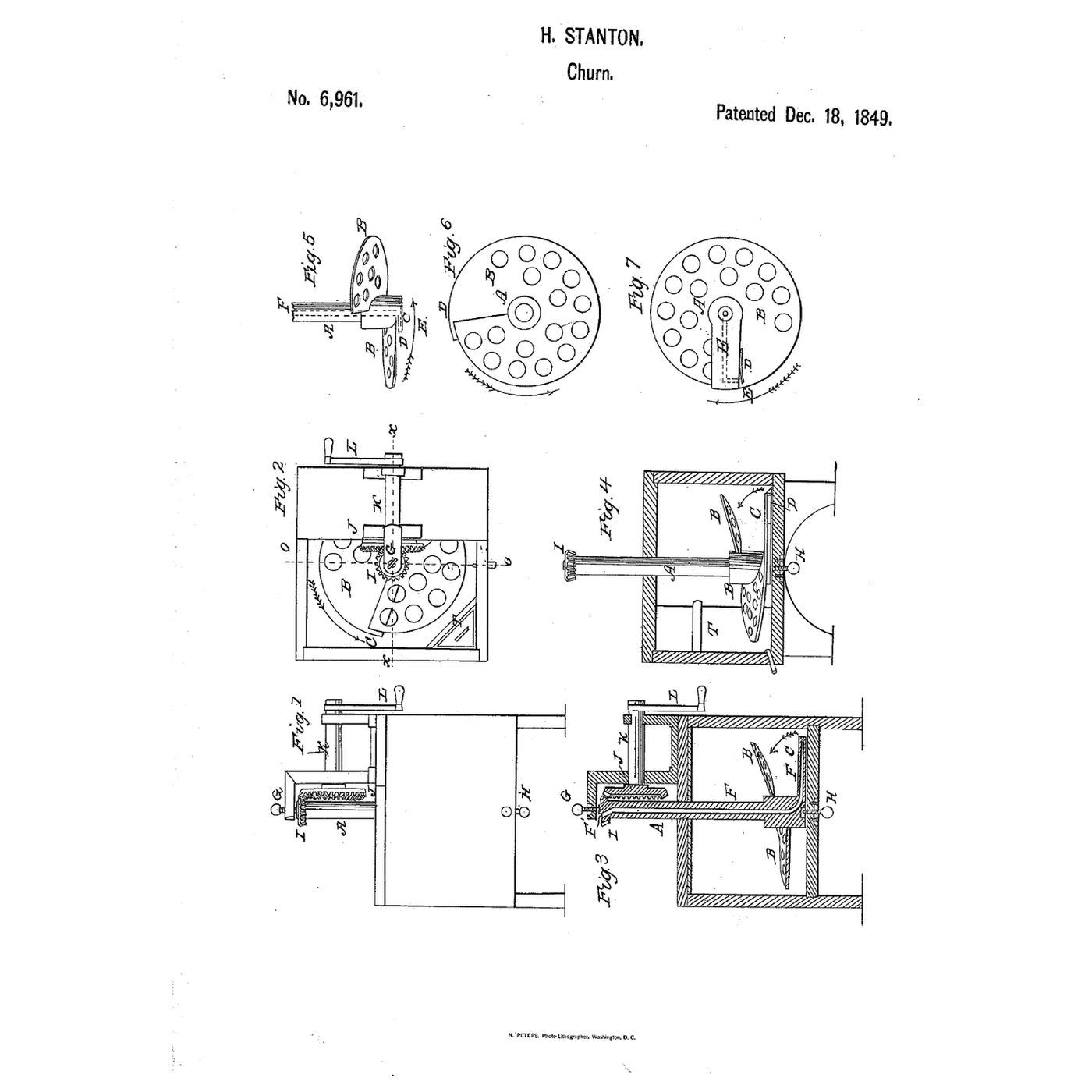


Spiral-Float Air-Arm Churn: A Perforated Screw Over a Breathing Wedge
Stanton wanted one float that would churn slowly with air, lift and drop the cream, and gather the butter.
Henry Stanton of Richfield, New York, received US 6,961, dated 18 December 1849, for "Stanton's Atmospheric Churn": a perforated spiral float of wood "cramped or pressed in the form of a screw" round a hollow vertical shaft, unperforated for its first quarter, above a hollow wedge-shaped radial arm with a spring valve over its outlet; the shaft's top is funnel-shaped; and a movable metal vessel of ice or warm water stands in a corner to bring the cream to temperature. Turned right it churns; turned left it gathers.
This rung works out what the spiral lifts, then prints the shaft-and-arm and the spiral float, fits them with a can for the tempering water, and makes butter.
Intermediate
About 3 hours, plus printing
Instructions
1
1
What the spiral lifts
What the spiral lifts
Loading Jupyter Notebook...
2
2
A screw that lifts the cream before it
A screw that lifts the cream before it
The embedded blueprint lifts cream in a screw inside a tube. Stanton's spiral is open and perforated, and breathes air in through its hollow shaft.
3
3
Read US 6,961
Read US 6,961
"This spiral float with vertical axis answers a three fold purpose—namely for producing a vacuum—agitating the cream—and gathering the butter—the butter being churned by turning the spiral float to the right and gathered by turning it to the left."
4
4
Print the parts
Print the parts
Print the hollow shaft with its funnel and wedge-shaped arm upright, with supports (/uploads/blueprints/spiral-float-air-arm-churn-shaft-and-arm.stl), and the spiral float upright with supports (/uploads/blueprints/spiral-float-air-arm-churn-spiral-float.stl): unperforated for its first quarter, perforated beyond. Print the crank arm (/uploads/blueprints/spiral-float-air-arm-churn-crank-arm.stl). Print in PLA at 0.2 mm layers, 30 % infill, 4 walls; wash before first use.
Materials for this step:
 PLA Filament1 piece
Tools needed:
 FDM 3D Printer
5
5
Valve and assembly
Valve and assembly
Glue a small leather flap over the arm's outlet along its leading side, so it lifts when air blows out and closes against butter, as his spring valve. Slide the float down the shaft, its unperforated start just above the arm, and glue it. Stand the shaft's foot in a seat drilled in the centre of a food-safe box's floor.
Materials for this step:
 Leather Strip1 piece
 Two-Part Epoxy1 piece
 Food-Grade Storage Container1 piece
Tools needed:
 Cordless Drill
 Drill Bit Set
6
6
Crank and temperer
Crank and temperer
Pass the shaft through a plywood half-lid and fix a hardwood crank to it below the funnel, keeping the funnel open. Stand a clean tin can in a corner as his tempering vessel: warm water in it to raise the cream's temperature, ice water to lower it.
Materials for this step:
 Plywood Sheet1 piece
 Hardwood Block1 piece
 Hardwood Dowels1 piece
 Tin Can1 piece
 Wood Glue1 piece
Tools needed:
 Hand SawCordless DrillDrill Bit Set
7
7
The build in 3D
The build in 3D
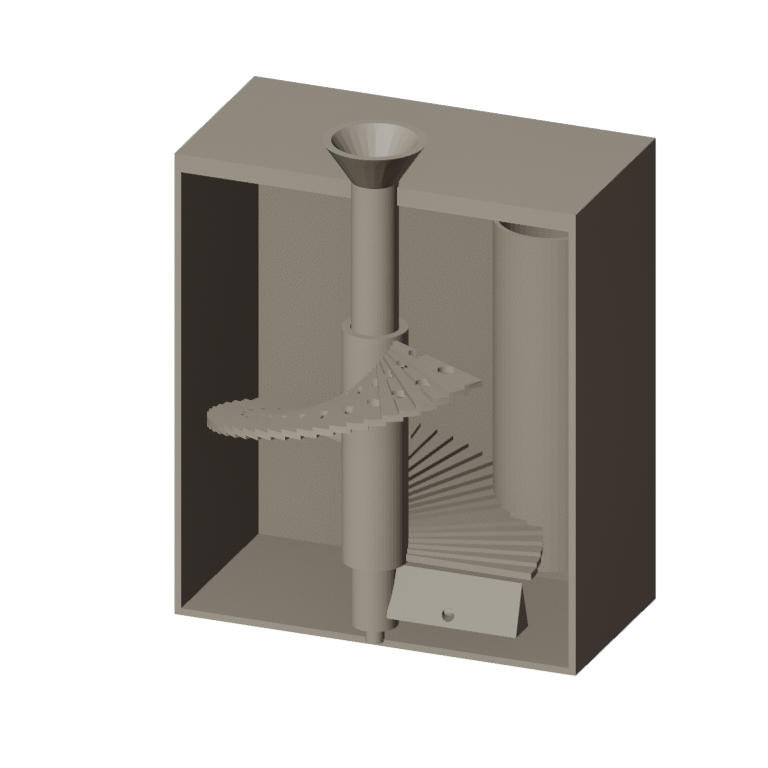
FreeCAD model of this build, not of the patent: the box cut away to show the hollow shaft with its funnel top, the perforated spiral float, the wedge-shaped air arm at its foot, and the tempering can in a corner.
8
8
Churn right, gather left
Churn right, gather left
Pour in 1.5 litres of heavy cream and bring it to about 15 °C with warm or ice water in the can, checked with the thermometer; then lift the can out. Turn the float slowly to the right and time until the butter comes; then turn it to the left to gather the butter at its foot. Pour off the buttermilk, add cold water, churn a little and pour off again until it runs clear; work in a pinch of salt and weigh the butter.
Materials for this step:
 Heavy Cream1500 ml
 Coarse Sea Salt1 piece
 Water1 piece
Tools needed:
 Leave-In Probe Thermometer
 Stopwatch
 Digital Kitchen Scale
 Stainless Steel Mixing Bowl (Large)
9
9
No air, butter in the arm
No air, butter in the arm
Spiral-float air-arm churn troubleshooting.
Flow
Loading...
10
10
History and honest limits
History and honest limits
**Henry Stanton** of Richfield, Otsego County, New York, received US 6,961, dated 18 December 1849. The shaft was held by two pointed set screws so the float came out for cleaning, and turned by a small bevel wheel and a larger one on a cranked horizontal shaft on half the lid. He poured an alkali into the funnel "for correcting the acidity of the cream"; this build does not, and nothing should be added to cream for butter unless you know it is safe. He explained the result by the oxygen of the atmosphere; that is his account. He claimed the combination of the perforated spiral float with the prismatic radial arm and vertical shaft.
**Honest limits.** Our crank turns the shaft directly, without his bevel wheels; printed parts, a box and a tin can stand in for his wooden float, tub and metal vessel. FDM prints hold food in their layer lines, so wash well and replace when worn. Your times and weights are the result.
Materials
12- 1 piecePlaceholder
- 1 piecePlaceholder
- 1 piecePlaceholder
- 1 piecePlaceholder
- 1 piecePlaceholder
- 1 piecePlaceholder
- 1 piecePlaceholder
- 1 piecePlaceholder
- 1 piecePlaceholder
- 1500 mlPlaceholder
- 1 piecePlaceholder
- 1 piecePlaceholder
Tools Required
8- Placeholder
- 1 vendor sell this, none ship to you yetPlaceholder
- Placeholder
- Placeholder
- Placeholder
- Placeholder
- Placeholder
- Placeholder
Design Files
1Related Blueprints
These blueprints share knowledge with this one — techniques, materials, or principles that connect them in the learning graph.
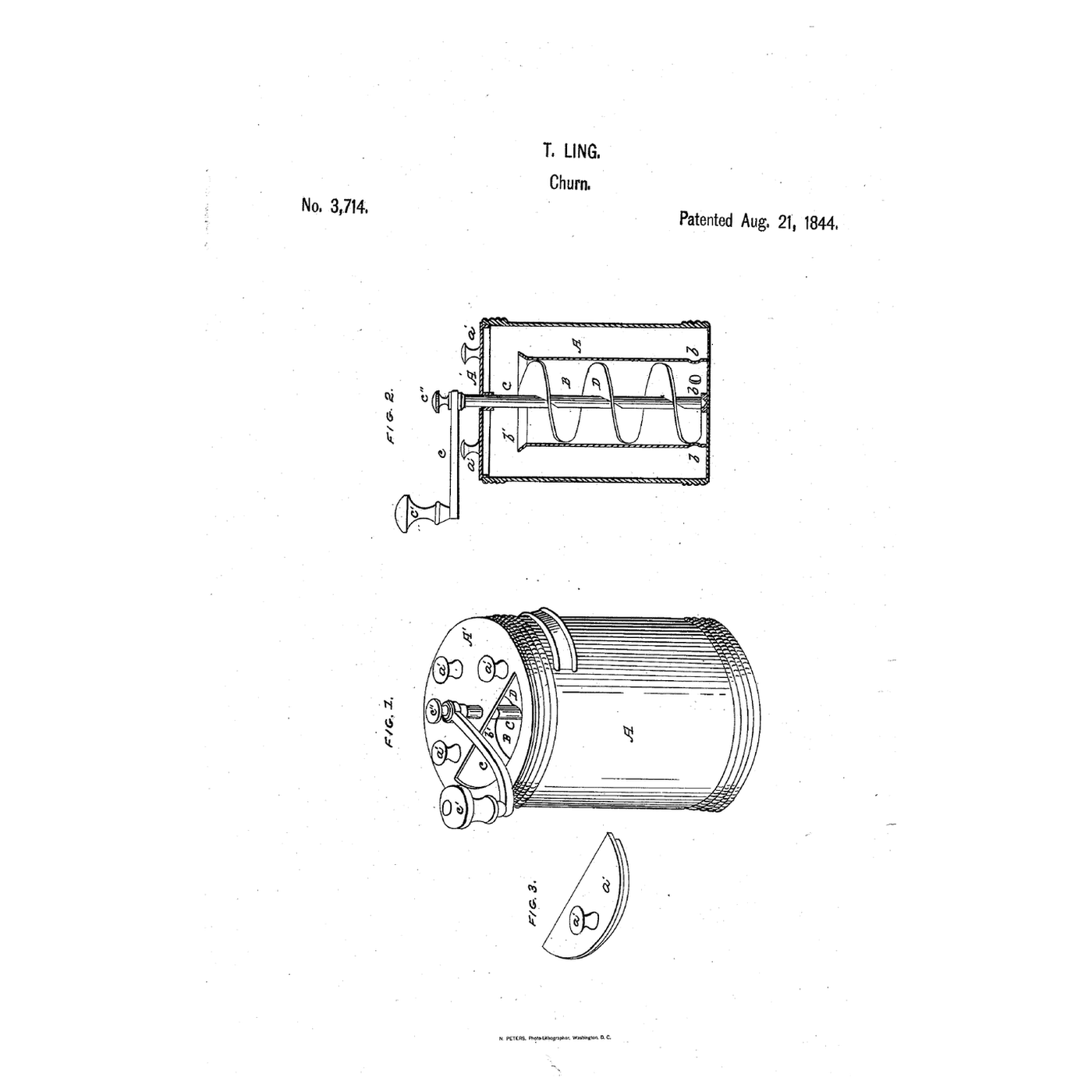
Screw-Lift Churn: An Archimedean Screw Keeps the Whole Body of Cream Moving
by Emma
FOOD & DRINKS
0
0
0
0
0
0
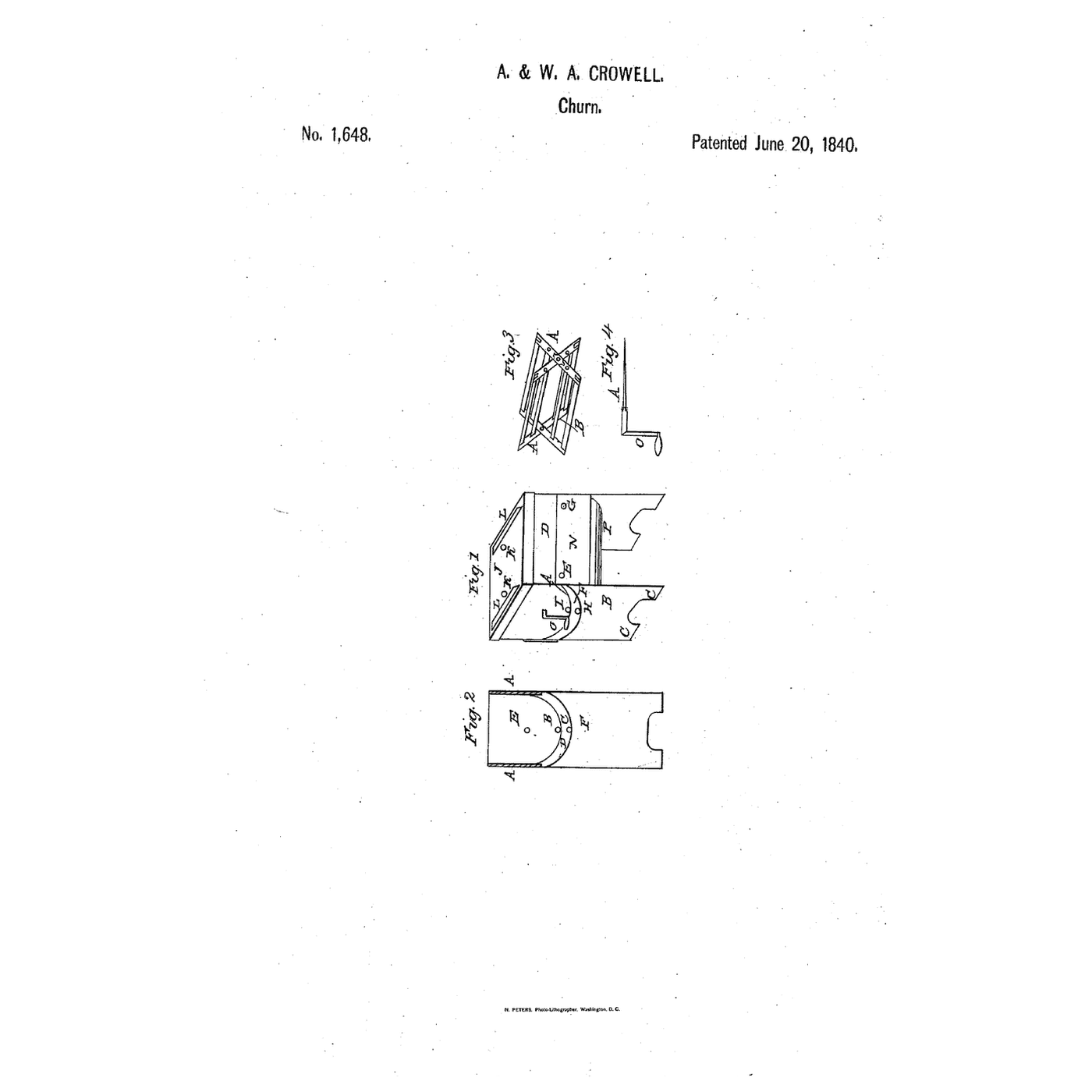
Water-Jacketed Churn: Hot or Cold Water Under a Metal Plate Tempers the Cream
by Karen
FOOD & DRINKS
0
0
0
0
0
0
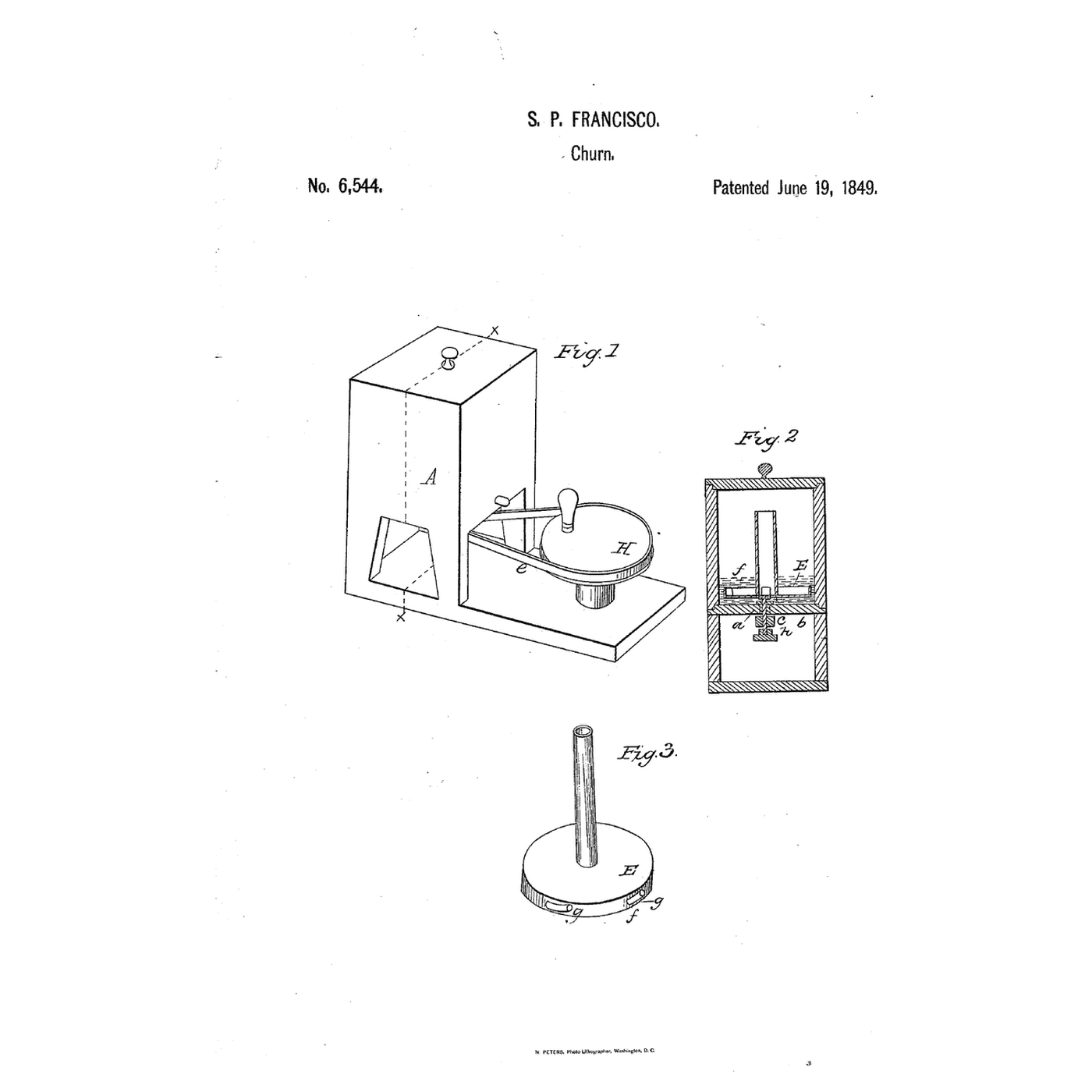
Tubular Disk Dasher Churn: A Wide Shallow Churn That Rolls the Butter Into Balls
by TheChef
FOOD & DRINKS
0
0
0
0
0
0
CC0 Public Domain
This blueprint is released under CC0. You are free to copy, modify, distribute, and use this work for any purpose, without asking permission.
Support the Maker by purchasing products through their Blueprint where they earn a Maker Commission set by Vendors, or create a new iteration of this Blueprint and include it as a connection in your own Blueprint to share revenue.