ART
BEAUTY & WELLNESS
CRAFT
CULTURE & HISTORY
ENTERTAINMENT
ENVIRONMENT
FOOD & DRINKS
REVERSE ENGINEERING
SCIENCES
SPORTS
TECHNOLOGY
WEARABLES
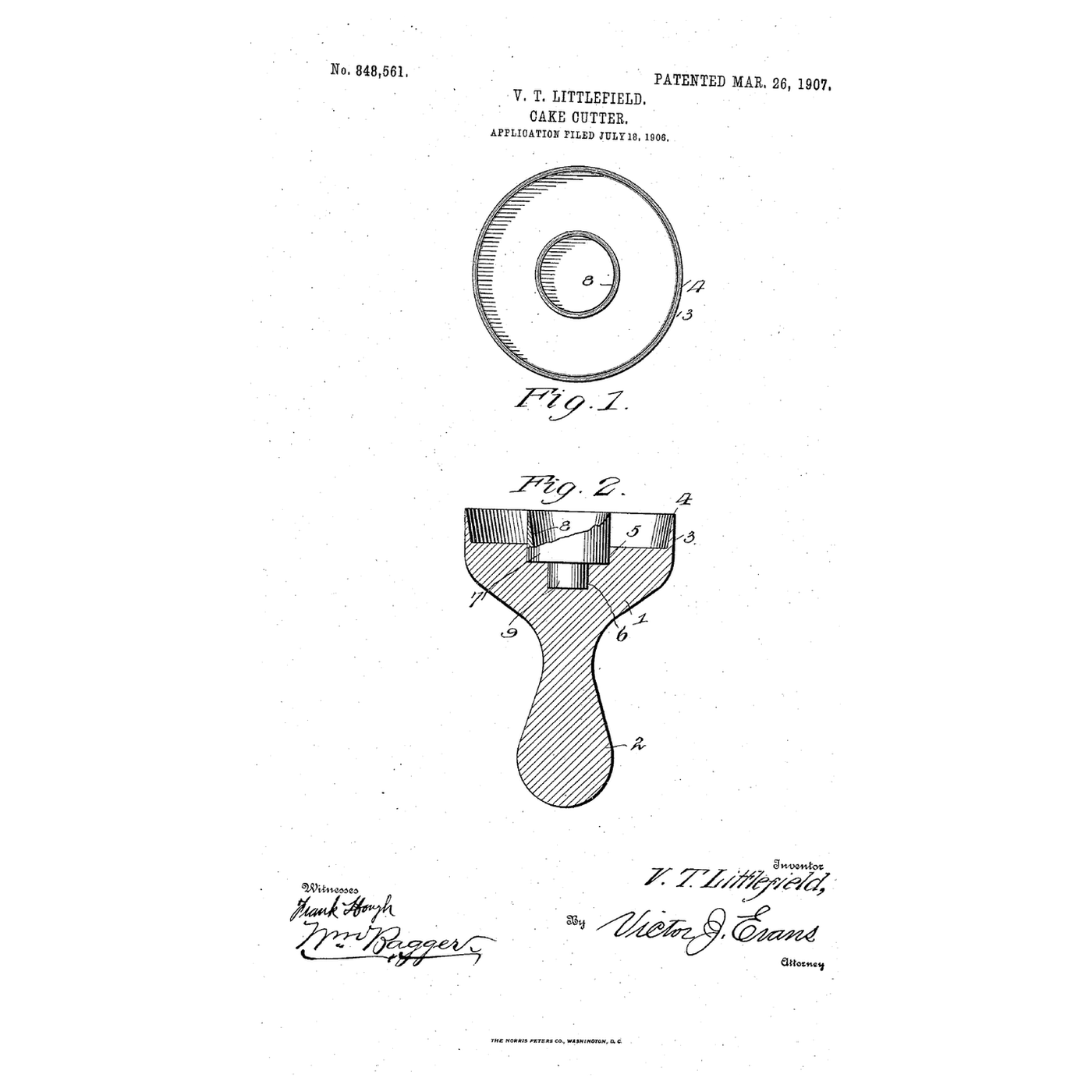


The Convertible Biscuit Cutter: Doughnuts With the Centre, Biscuits Without
A kitchen that makes both biscuits and doughnuts needs two cutters, or one that changes.
Vernon T. Littlefield of Bangor, Maine, received US 848,561, dated 26 March 1907, for a cake-cutter turned from hard wood, with a cutting rim and a socket in its face for a detachable centre cutter. With the centre cutter in, it cuts doughnuts; with it out, biscuits.
This rung works out what the centre cutter takes from each piece, then builds a convertible cutter on a wooden handle and cuts both from one sheet.
Beginner
About 2 hours
Instructions
1
1
The hole and the count
The hole and the count
Loading Jupyter Notebook...
2
2
Another doughnut cutter
Another doughnut cutter
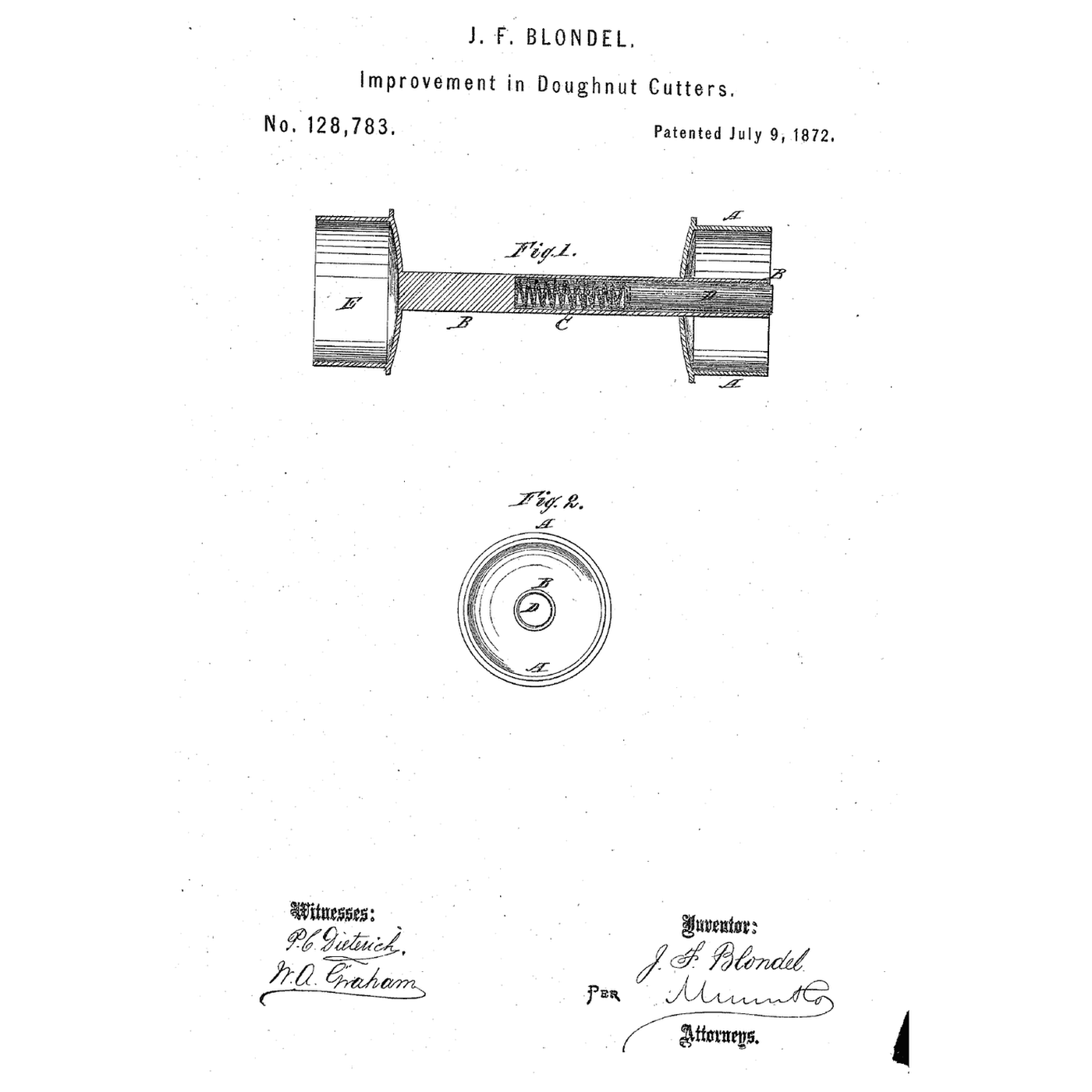
The embedded blueprint's doughnut cutter pushes the hole back out with a spring. Littlefield's centre cutter comes out altogether, turning the doughnut cutter into a biscuit cutter.
3
3
Read US 848,561
Read US 848,561
"This invention relates to devices for cutting cakes, biscuits, doughnuts, cookies, and the like from a sheet of dough".
"For the purpose of cutting doughnuts and the like the auxiliary cutter will be placed in position, as seen in the drawings, and will serve to cut from each piece of dough that is cut by the flange 3 a circular piece. For cutting biscuits and the like the auxiliary cutter is detached from the body of the main cutter, which is then used in the customary manner."
4
4
Build the cutter and cut doughnuts and biscuits
Build the cutter and cut doughnuts and biscuits
Cut a strip of tin 2.5 cm wide from a can, roll it into a 7 cm ring and fold the ends over each other. Leave four tabs on its top edge. Cut a disk of hardwood the ring's size, set the ring on it and screw the tabs down. Glue a length of dowel to the middle of the disk's top as the handle.
Drill a hole through the centre of the disk. Roll a second strip into a 2.5 cm ring, set it on a short piece of dowel that fits the hole snugly, and push the dowel into the hole from below: this is the centre cutter. File every cut edge smooth.
Roll out a dough and cut half the sheet with the centre cutter in and half with it out. Count the pieces from each half and weigh the holes.
Materials for this step:
 Tin Can1 piece
 Hardwood Board1 piece
 Wooden Dowel1 piece
 Wood Screws4 pieces
 Wood Glue1 piece
 All-Purpose Flour300 g
 Butter200 g
 Granulated Sugar100 g
Tools needed:
 Biscuit Cutter
 Doughnut Cutter
 Tin Snips
 Needle-Nose Pliers
 Coping Saw
 Cordless Drill
 Drill Bit Set
 Metal File
 Rolling Pin
 Digital Kitchen Scale
5
5
A cutter that sticks, tears or loses its centre
A cutter that sticks, tears or loses its centre
Convertible cutter troubleshooting.
Flow
Loading...
6
6
History and honest limits
History and honest limits
**Vernon T. Littlefield** of Bangor, Maine, filed US 848,561 on 18 July 1906; it was patented 26 March 1907. He turned the whole cutter from hard wood, which he preferred "on account of its cheapness, lightness, strength, and the ease with which it may be kept in a clean and sanitary condition". This rung makes the cutting edges from tin, which is easier to keep sharp.
**Honest limits.** The notebook assumes perfect honeycomb packing; by hand you will fit fewer. Sizes are examples. Your counts are the measurement.
Materials
8- 1 piecePlaceholder
- 1 piecePlaceholder
- 1 piecePlaceholder
- 4 piecesPlaceholder
- 1 piecePlaceholder
- 300 gPlaceholder
- 200 gPlaceholder
- 100 gPlaceholder
Tools Required
10- Placeholder
- Placeholder
- Placeholder
- Placeholder
- Placeholder
- 1 vendor sell this, none ship to you yetPlaceholder
- Placeholder
- Placeholder
- Placeholder
- Placeholder
Related Blueprints
These blueprints share knowledge with this one — techniques, materials, or principles that connect them in the learning graph.


CC0 Public Domain
This blueprint is released under CC0. You are free to copy, modify, distribute, and use this work for any purpose, without asking permission.
Support the Maker by purchasing products through their Blueprint where they earn a Maker Commission set by Vendors, or create a new iteration of this Blueprint and include it as a connection in your own Blueprint to share revenue.