ART
BEAUTY & WELLNESS
CRAFT
CULTURE & HISTORY
ENTERTAINMENT
ENVIRONMENT
FOOD & DRINKS
REVERSE ENGINEERING
SCIENCES
SPORTS
TECHNOLOGY
WEARABLES
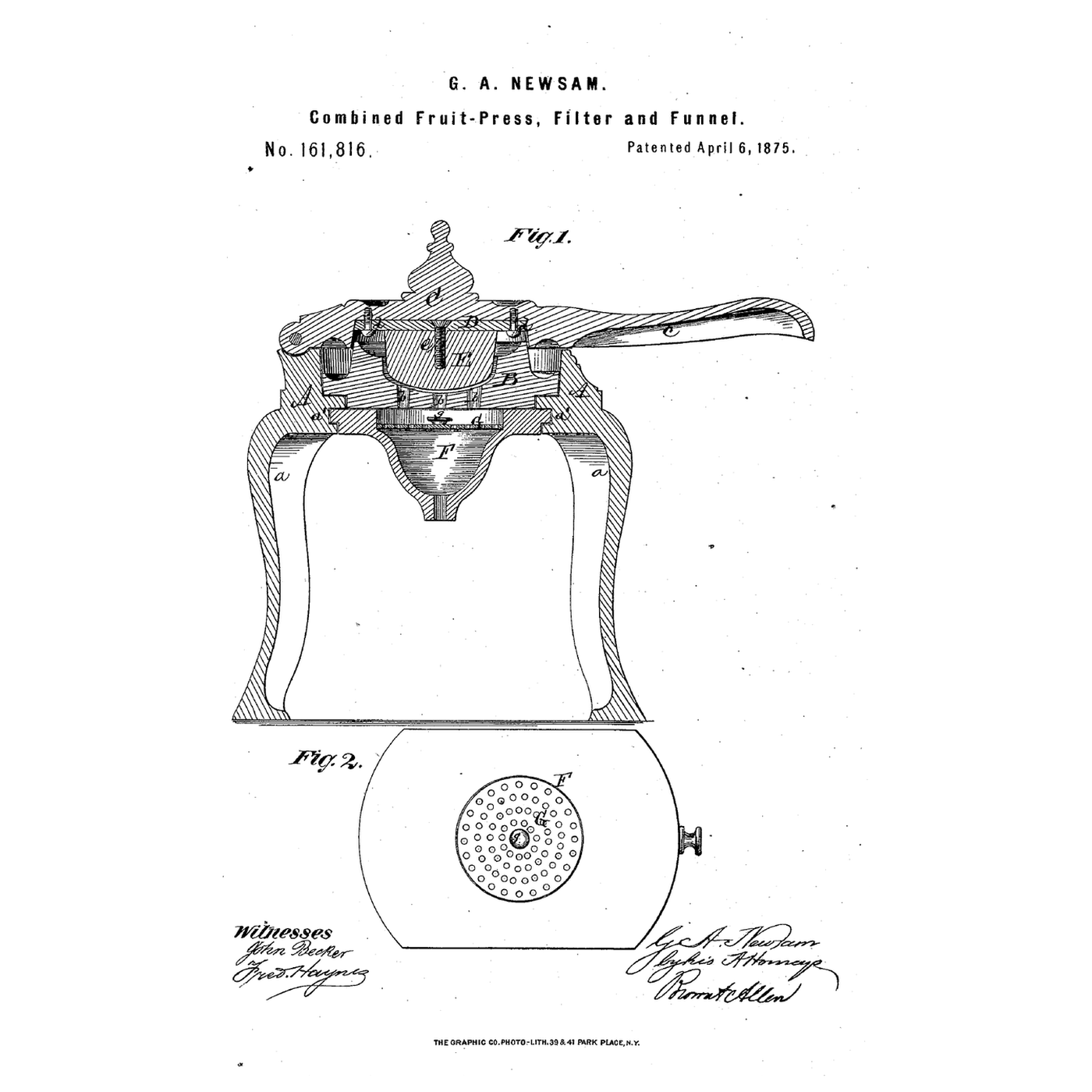


The Fruit Press With Filter and Funnel: Pressed, Strained and Poured in One
Pressed juice comes out full of seeds and pulp and has to be strained into another vessel.
George A. Newsam of Brooklyn received US 161,816, dated 6 April 1875, for a combined fruit-press, filter and funnel: a lever hinged to a frame drives a removable plunger into a perforated bowl, and beneath it a funnel carries a filter "which strains the same, allowing the juice to pass through, but arresting the seeds and pulp and retaining them on the upper side of the filter".
This rung works out how the lever multiplies the hand, then builds the press from board, a punched tin can, a hinge, a funnel and cheesecloth, and weighs the juice and the seeds it stops.
Beginner
About 3 hours
Instructions
1
1
Lever advantage
Lever advantage
Loading Jupyter Notebook...
2
2
Why the lever multiplies the hand
Why the lever multiplies the hand
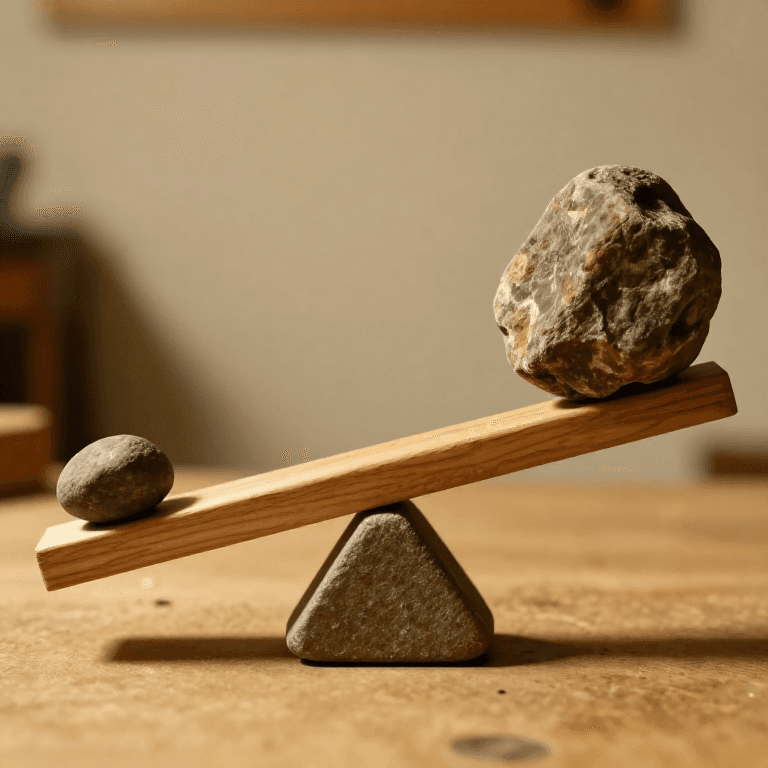
The embedded blueprint works out the lever law. Newsam's press puts the plunger close to the hinge so the hand's push is multiplied on the fruit.
3
3
Read US 161,816
Read US 161,816
"In the frame A rests the removable perforated bowl B, which may be of any suitable material, but preferably of porcelain or crockery-ware."
"The fruit to be pressed is placed in the bowl B, and pressure is applied thereto by the plunger or follower E, so as to express the juice and force it, together with the seeds and pulp, through the perforations b to the filter G, which strains the same, allowing the juice to pass through, but arresting the seeds and pulp and retaining them on the upper side of the filter, so that they may be removed by withdrawing the funnel after the juice has passed through it to a vessel placed for its reception."
4
4
Build the press and press a lemon
Build the press and press a lemon
**Frame.** Saw a top 30 × 12 cm from plywood and cut a hole in it with the hole saw that a clean tin can drops into and hangs by its rim. Screw a leg of hardwood board under each end, tall enough for a jug and funnel underneath.
**Bowl.** Punch holes about 3 mm across over the bottom of the can with a nail and hammer, from the inside out, so the burrs point down.
**Lever.** Saw a strip of hardwood board 35 cm long and hinge one end to the top beside the hole with the butt hinge. Cut a disc a little smaller than the can with the hole saw and screw it under the lever over the can: the plunger.
**Filter.** Line the kitchen funnel with cheesecloth and set it over the jug under the can.
**Test.** Weigh two lemons and halve them. Press two halves, cut face down, reading your push at the lever's end once with the spring scale. Weigh the juice and count the seeds the cheesecloth caught. Squeeze the other two halves by hand into a cup and count the seeds that reached it.
Materials for this step:
 Plywood Sheet1 piece
 Hardwood Board1 piece
 Tin Can1 piece
 Butt Hinge1 piece
 Wood Screws12 pieces
 Cheesecloth1 piece
 Lemon2 pieces
Tools needed:
 Hand Saw
 Hole Saw Kit
 Cordless Drill
 Drill Bit Set
 Screwdriver Set
 Nails
Nails Hammer
 Kitchen Funnel
 Measuring Jug
 Digital Kitchen Scale
 Force Meter (Spring Scale)
 Ruler
Ruler Kitchen Knife
5
5
A press that sticks, spills or lets seeds through
A press that sticks, spills or lets seeds through
Fruit press troubleshooting.
Flow
Loading...
6
6
History and honest limits
History and honest limits
**George A. Newsam** of Brooklyn, New York, filed US 161,816 on 18 February 1875; it is dated 6 April 1875. He preferred porcelain or crockery for the bowl and funnel, a plunger of wood, porcelain or other material held on by a concealed screw so it could be taken off for cleaning, and wrote that the press could be made small enough for a lemon or large enough for "a quantity of fruit of any kind".
**Honest limits.** A punched tin can stands in for the perforated porcelain bowl, cheesecloth for his filter, and board for his frame. The notebook ignores friction at the hinge; its push and distances are examples. Your juice weights and seed counts are the result.
Materials
7- 1 piecePlaceholder
- 1 piecePlaceholder
- 1 piecePlaceholder
- 1 piecePlaceholder
- 12 piecesPlaceholder
- 1 piecePlaceholder
- 2 piecesPlaceholder
Tools Required
13- Placeholder
- Placeholder
- 1 vendor sell this, none ship to you yetPlaceholder
- Placeholder
- Placeholder
- Placeholder
- Placeholder
- Placeholder
- Placeholder
- Placeholder
- Placeholder
- Placeholder
- Placeholder
Related Blueprints
These blueprints share knowledge with this one — techniques, materials, or principles that connect them in the learning graph.



CC0 Public Domain
This blueprint is released under CC0. You are free to copy, modify, distribute, and use this work for any purpose, without asking permission.
Support the Maker by purchasing products through their Blueprint where they earn a Maker Commission set by Vendors, or create a new iteration of this Blueprint and include it as a connection in your own Blueprint to share revenue.