ART
BEAUTY & WELLNESS
CRAFT
CULTURE & HISTORY
ENTERTAINMENT
ENVIRONMENT
FOOD & DRINKS
REVERSE ENGINEERING
SCIENCES
SPORTS
TECHNOLOGY
WEARABLES
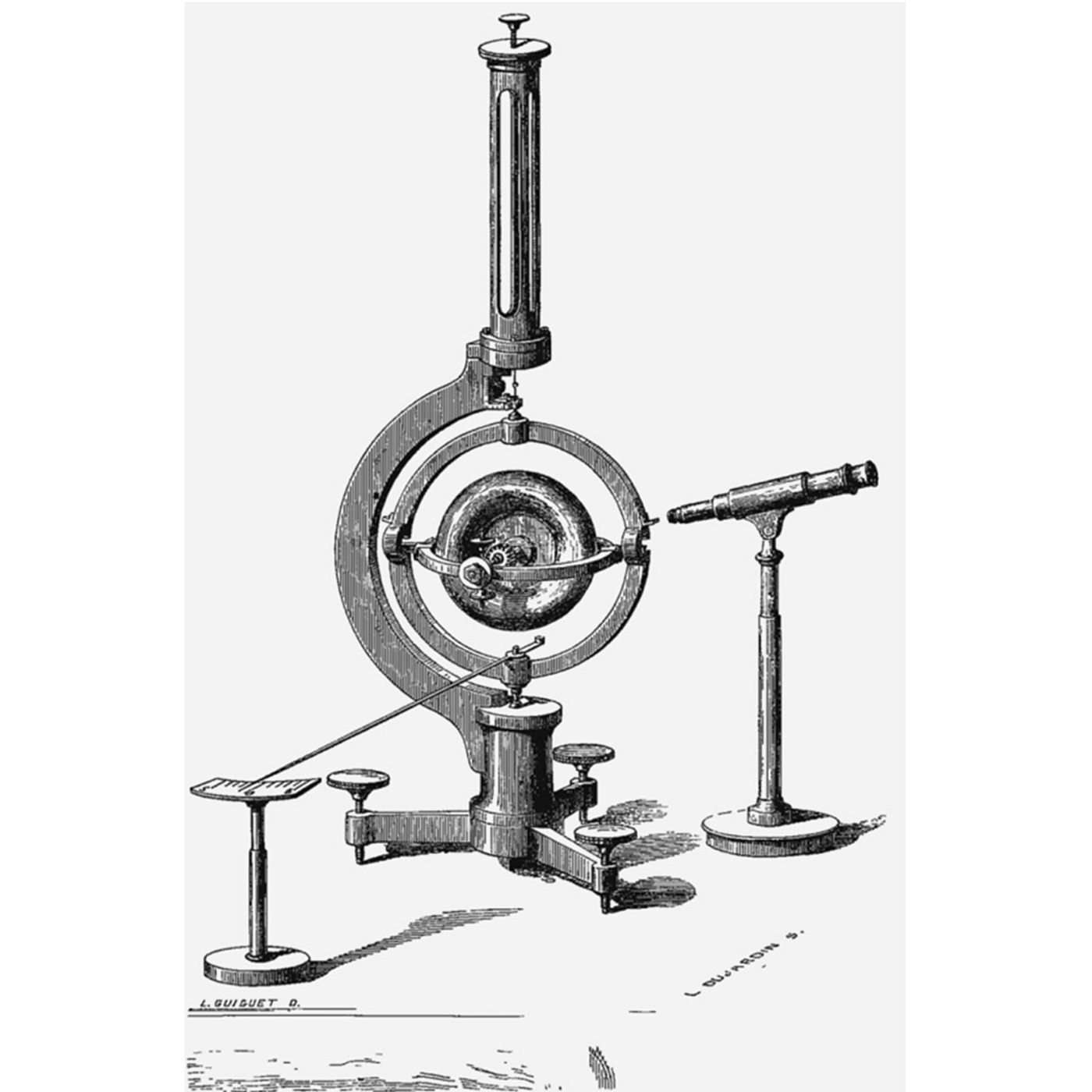

The Gyroscope: A Wheel That Refuses to Fall
A spinning top stands up only while it spins. Mount a heavy spinning wheel in rings so its axle is free to point anywhere, and it does something stranger: pushed down at one end, it swings sideways; left alone, its axle keeps the same direction in space while the world turns under it.
Johann Bohnenberger built such an instrument in 1812. Léon Foucault built his in 1852 to show the Earth's rotation without a pendulum, and named it the gyroscope — 'to view the turning'. It became the heart of compasses, autopilots and inertial navigation.
This rung works out precession from the spin and the torque, and measures it on a toy gyroscope.
Beginner
About 2 hours
Instructions
1
1
Angular momentum and precession
Angular momentum and precession
Loading Jupyter Notebook...
2
2
Spin that stands up
Spin that stands up
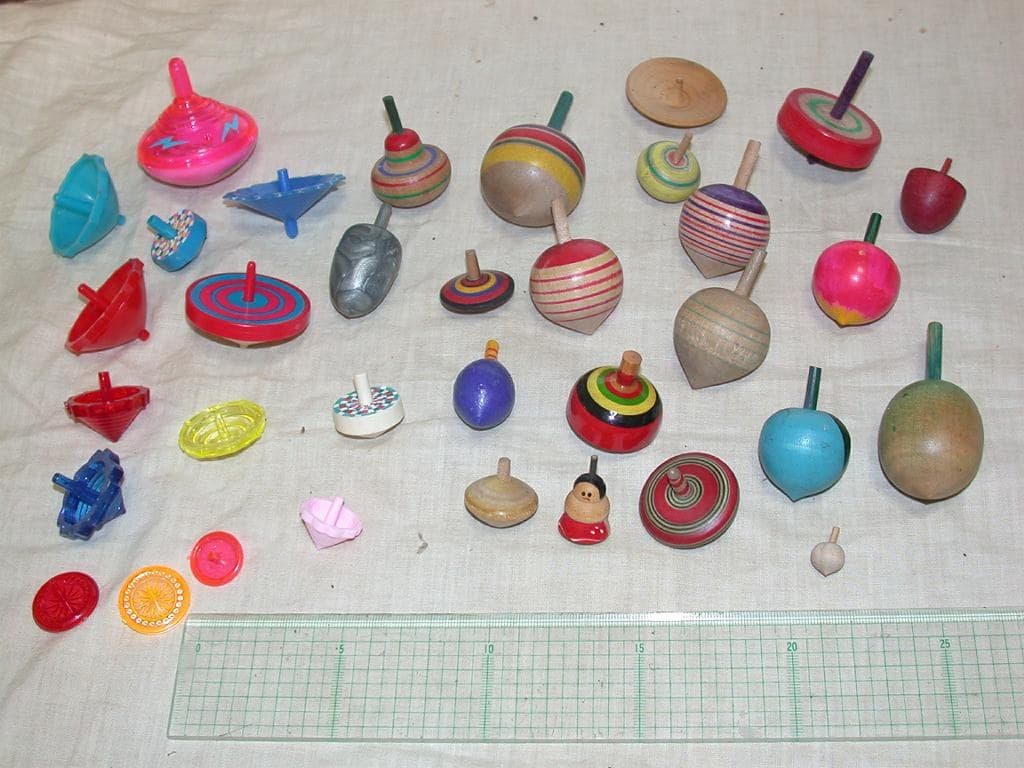
A top is a gyroscope without its rings. The embedded blueprint makes one and shows why it stands only while it spins.
3
3
Measure precession against spin
Measure precession against spin
Spin up a precision toy gyroscope with its pull string and set one end of its axle on the pedestal so it hangs horizontally. Time one full precession circuit with a stopwatch, and at the same moment read the rotor's spin with an optical tachometer (a strip of reflective tape on the rotor).
Repeat every few seconds as it slows. Plot precession rate against spin: the product of the two stays nearly constant, as $\Omega = mgr/(I\omega)$ says. Weigh the gyroscope, measure $r$ from pivot to rotor centre, and estimate $I$ from the rotor's mass and radius to check the constant.
Tools needed:
 Stopwatch
 Digital Tachometer
 Digital Kitchen Scale
 Digital Caliper 6-Inch
 Gyroscope
4
4
A gyroscope that will not behave
A gyroscope that will not behave
Toy gyroscope problems.
Flow
Loading...
5
5
History and honest limits
History and honest limits
**Johann Bohnenberger** described a gyroscope-like instrument in 1812. **Léon Foucault** built his in 1852, after his pendulum, to show the Earth's rotation, and coined the name. Gyrocompasses, gyro autopilots and inertial platforms followed in the twentieth century.
**Honest limits.** The precession formula assumes the spin is much faster than the precession and ignores friction and nutation. A toy gyroscope's bearings are too rough to show the Earth's rotation; Foucault's needed a very fast, very true rotor.
Tools Required
5- Placeholder
- Placeholder
- Placeholder
- Placeholder
- Placeholder
Related Blueprints
These blueprints share knowledge with this one — techniques, materials, or principles that connect them in the learning graph.
Spinning Top
by Spartan
Games
52
0
0
0
0
0
Building a Foucault Pendulum — Proving Earth Rotates with a Swinging Weight
by Astro
Space
106
0
0
0
0
0
Making a Stone Spindle Whorl — The Flywheel That Made Thread Possible
by Tex
Stoneworking
85
0
0
0
1
0
The Crank and the Flywheel: Smoothing One Bang in Two Turns
by Martin
Mechanics
36
0
0
0
0
0
CC0 Public Domain
This blueprint is released under CC0. You are free to copy, modify, distribute, and use this work for any purpose, without asking permission.
Support the Maker by purchasing products through their Blueprint where they earn a Maker Commission set by Vendors, or create a new iteration of this Blueprint and include it as a connection in your own Blueprint to share revenue.