ART
BEAUTY & WELLNESS
CRAFT
CULTURE & HISTORY
ENTERTAINMENT
ENVIRONMENT
FOOD & DRINKS
REVERSE ENGINEERING
SCIENCES
SPORTS
TECHNOLOGY
WEARABLES

The Hollow Rubber Stopper: Stretch It Thin to Put It In, and the Gas Seats It Tighter
A cork-wood stopper perishes, needs a mallet to drive it and a corkscrew to draw it, and must be wired down against the gas.
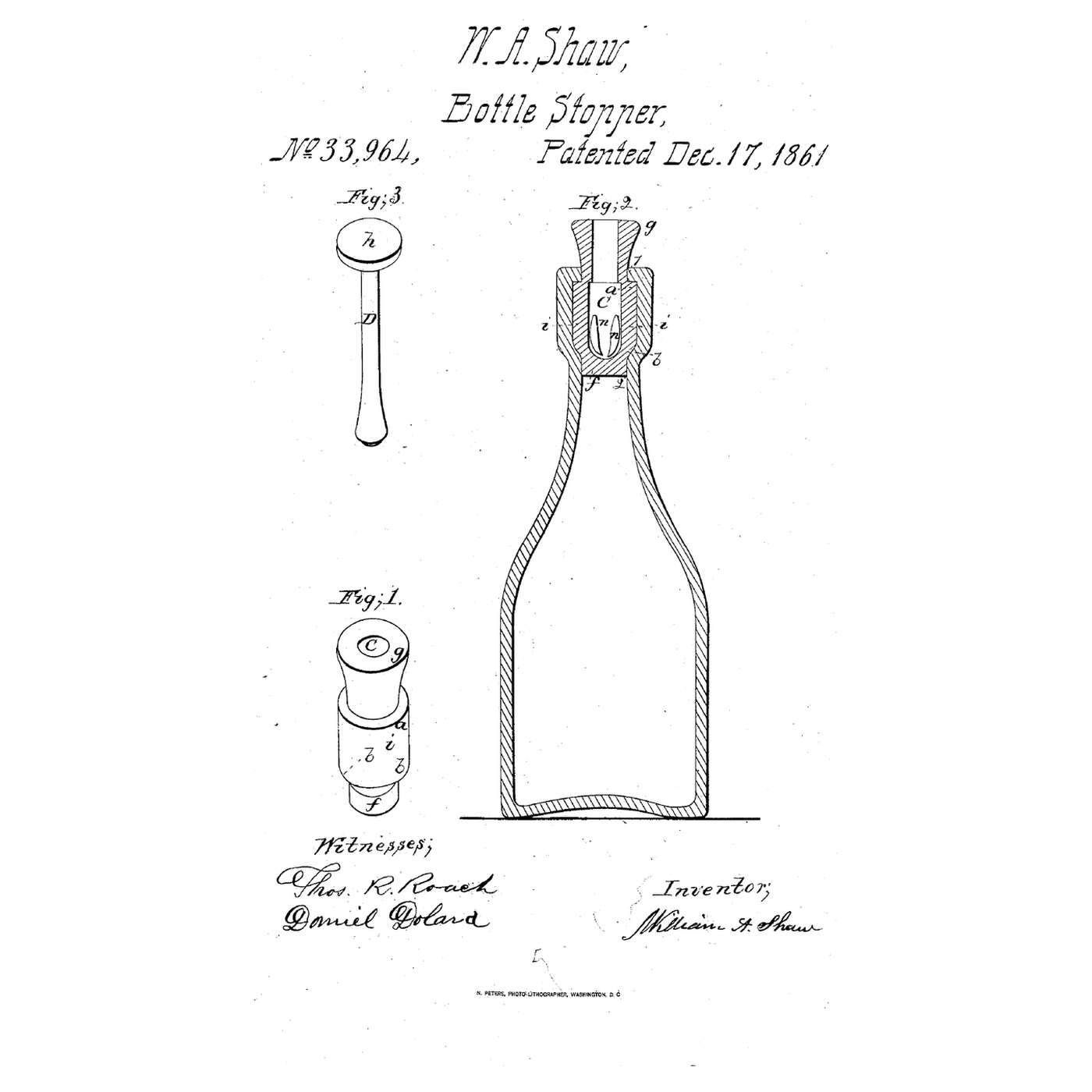
William A. Shaw of Boston received US 33,964, dated 17 December 1861, for "a hollow stopper of elastic gum having shoulders adapted to corresponding shoulders in the neck of the bottle, as will now be more fully described, so that pressure from within the bottle shall not drive out the stopper, but only force it more tightly against the sides of the neck." A rod pushed into the stopper's hollow stretches it thin enough to enter; drawn out, it lets the stopper swell into the neck; the stopper is taken out again by pulling its flared top by hand.
This rung works out how far the stopper must stretch, then casts one in silicone rubber, prints a neck with shoulders to match, and puts it under pressure.
Advanced
About 2 days, with curing
Instructions
1
1
Stretch to pass the mouth
Stretch to pass the mouth
Loading Jupyter Notebook...
2
2
Where the stopper comes from
Where the stopper comes from
The embedded blueprint vulcanizes rubber. Shaw's stopper is made of vulcanized rubber, elastic enough to stretch through the mouth and spring back.
3
3
Read US 33,964
Read US 33,964
"When the stopper is to be inserted in the bottle, it is first to be moistened by dipping it into water. An instrument, D, Fig. 3, made of wood, metal, or other suitable material is then inserted into the hole C, Fig. 2, in the stopper, which is placed over the mouth of the bottle, and on pressure being applied to the handle h of the instrument D the stopper is so elongated and consequently reduced in diameter that it enters the bottle freely."
"To withdraw the stopper it is simply necessary to pull the portion g by the hand, by which the body i is elongated, and is easily withdrawn through the mouth of the bottle."
4
4
Cast the stopper and seat it under pressure
Cast the stopper and seat it under pressure
**Neck.** Model a block 40 × 40 × 50 mm with a bore shaped like Shaw's neck: an 18 mm mouth, widening below to 22 mm as an upper shoulder, and narrowing again to 16 mm as a lower shoulder above a 10 mm hole into the bottle. Print it in PETG and epoxy a drilled carbonated-drink bottle cap under it, holes lined up.
**Mould.** Print a two-part mould for a stopper of the same shape as the bore, with a flared top above the mouth, a solid bottom and a hollow down its middle, formed by a 6 mm dowel core. Grease the mould and core with petroleum jelly.
**Cast.** Mix the silicone rubber in a mixing cup as its maker directs, pour it into the mould, and leave it to cure. Cut slits into the hollow's lower wall to make it bend more easily, as Shaw's depressions n did.
**Rod.** Round the end of a 6 mm dowel and glue a hardwood knob on the other end as the handle.
**Test.** Fit a snap-in tyre valve in the bottle's base. Wet the stopper, set it on the mouth, push the rod into its hollow until it slips in, and draw the rod out. Wearing safety glasses, pump the bottle in steps of 0.5 bar to 2 bar and watch the stopper. Let the air out and pull the stopper out by its top.
Materials for this step:
 PET Bottle (Carbonated Drink)1 piece
 PETG Filament1 piece
 Two-Part Epoxy1 piece
 Wooden Dowel0.3 meter
 Hardwood Block1 piece
 Wood Glue1 piece
Tools needed:
 FDM 3D Printer
 Graduated Mixing Cups
 Cordless Drill
 Drill Bit Set
 Kitchen Knife
 Bicycle Floor Pump
 Digital Caliper 6-Inch
 Leather Work Gloves
 Clear Safety Glasses
 Tire Valve
 Silicone Mould Rubber
 Petroleum Jelly
5
5
A stopper that will not go in, leaks or blows out
A stopper that will not go in, leaks or blows out
Hollow rubber stopper troubleshooting.
Flow
Loading...
6
6
History and honest limits
History and honest limits
**William A. Shaw** of Boston, Massachusetts, received US 33,964, dated 17 December 1861. His stopper had an upper shoulder a and a lower shoulder b that rested under shoulders 1 and 2 in the neck, a solid bottom f, and depressions n near its lower end to make it flexible. He listed its advantages: tight against gas, used again and again, put in by hand without mallet or breaker, and drawn by hand without a corkscrew. His claim is the hollow elastic stopper.
**Honest limits.** Cast silicone rubber stands in for his vulcanized rubber, and a printed PETG neck on a plastic bottle's cap for a glass neck with shoulders. The notebook treats the rubber as keeping its volume exactly; its diameters are examples. Your seated stopper is the result.
Materials
6- Placeholder
- 1 piecePlaceholder
- 1 piecePlaceholder
- 0.3 meterPlaceholder
- 1 piecePlaceholder
- 1 piecePlaceholder
Tools Required
12- Placeholder
- Placeholder
- 1 vendor sell this, none ship to you yetPlaceholder
- Placeholder
- Placeholder
- Placeholder
- Placeholder
- Placeholder
- Placeholder
- Placeholder
- Placeholder
- Placeholder
This blueprint makes

Related Blueprints
These blueprints share knowledge with this one — techniques, materials, or principles that connect them in the learning graph.
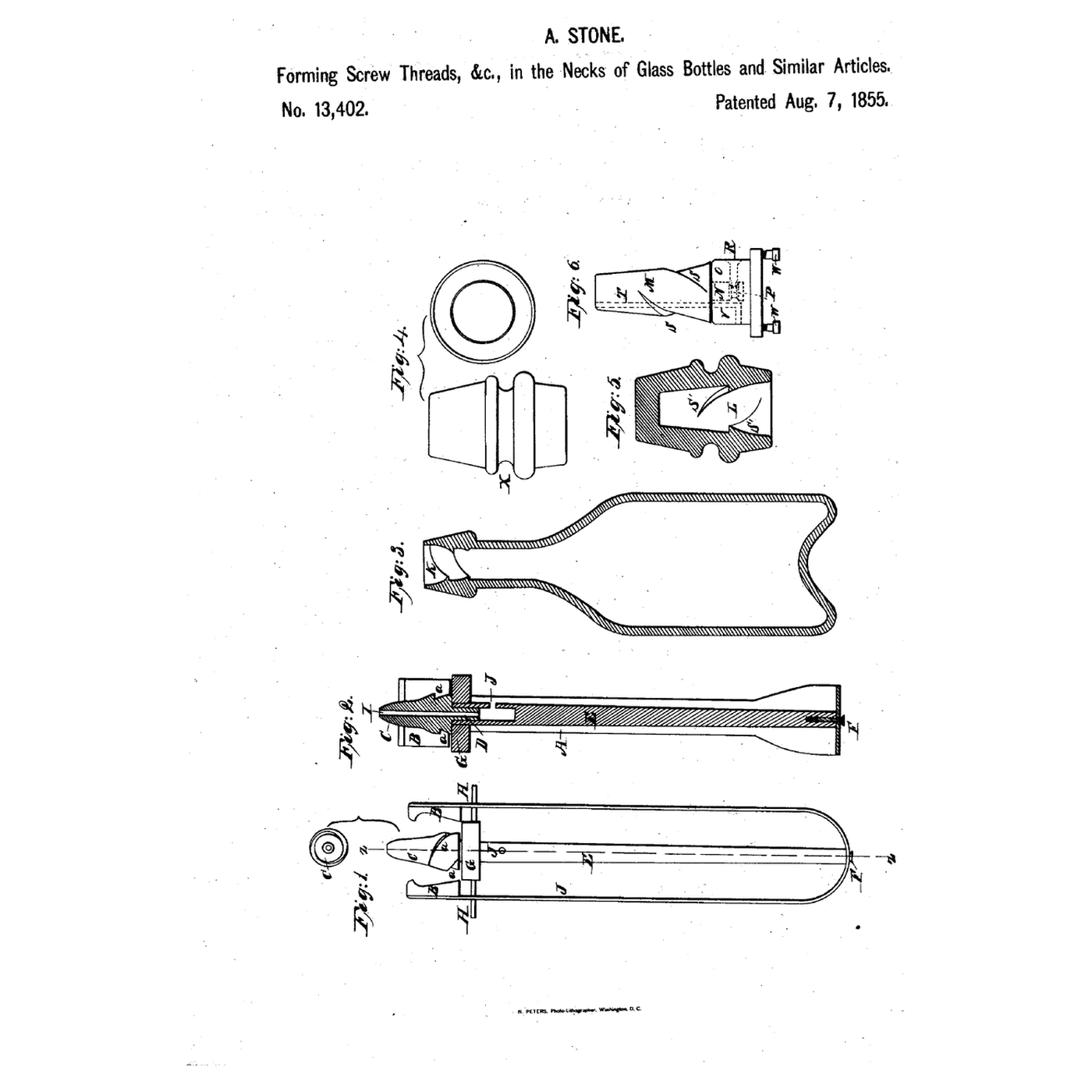
The Turning-Plug Thread Former: A Plug That Turns With the Bottle and Leaves a Screw in the Neck
by Mary
Pottery
38
0
0
0
0
0
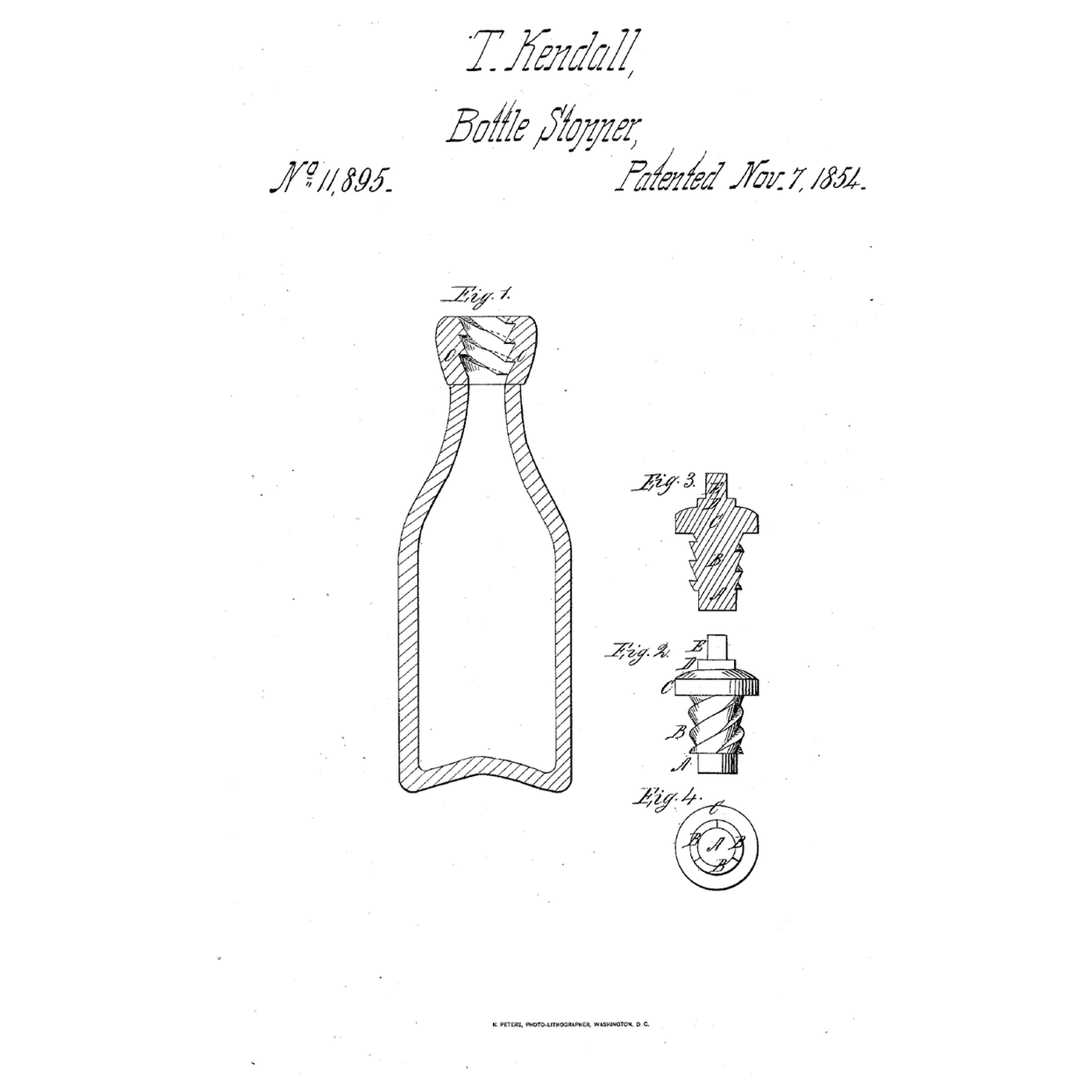
The Groove-Necked Bottle: Three Threads in the Neck That Hold the Cork
by Emma
Drinks
22
0
0
0
0
0
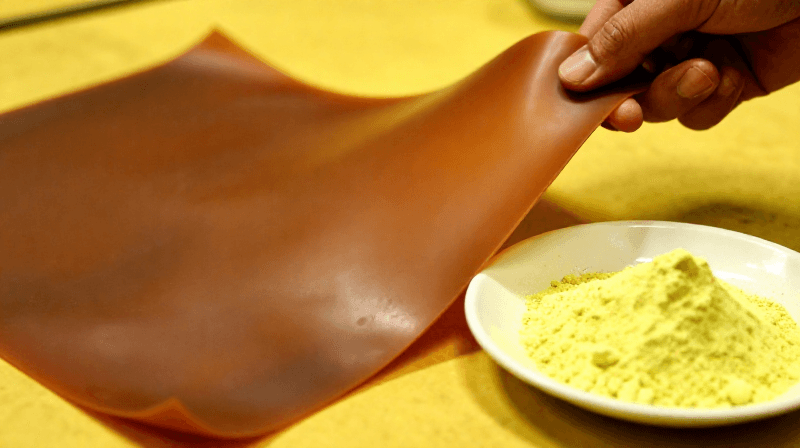
Vulcanizing Rubber with Sulfur — The Accidental Discovery That Put Tyres on the Road
by Charlie
Industrial
113
0
0
0
3
0
CC0 Public Domain
This blueprint is released under CC0. You are free to copy, modify, distribute, and use this work for any purpose, without asking permission.
Support the Maker by purchasing products through their Blueprint where they earn a Maker Commission set by Vendors, or create a new iteration of this Blueprint and include it as a connection in your own Blueprint to share revenue.