ART
BEAUTY & WELLNESS
CRAFT
CULTURE & HISTORY
ENTERTAINMENT
ENVIRONMENT
FOOD & DRINKS
REVERSE ENGINEERING
SCIENCES
SPORTS
TECHNOLOGY
WEARABLES


The Transom Lifter: A Notched Rod and an Arm Set at Forty-Five Degrees
Over many 19th-century doors sits a small window, the transom, that tilts open to let air through when the door is shut. It is out of reach, so a rod down the door frame works it.
Francis V. Phillips of Chicago, assignor to George H. Dayton, received US 243,079, dated 21 June 1881 (filed 5 April 1880), for fixtures "for opening, closing, and locking transom-windows". A notched rod locks on a projection held by a spring, so "the transom may be operated by one hand only"; the arm on the sash points down at about 45 degrees so the rod's end stays close to the frame; and since the sash falls open by its own weight, "the strain upon the rod may therefore be only that of tension".
This rung works out why 45 degrees, and the pull on the rod, then builds a small working model.
Intermediate
About 3 hours
Instructions
1
1
Arm angle, rod travel and pull
Arm angle, rod travel and pull
Loading Jupyter Notebook...
2
2
The door below the transom
The door below the transom
Two years earlier the door beneath got its bored-in knob latch. The embedded blueprint shows it.
3
3
Read US 243,079
Read US 243,079
"This invention relates to devices for opening, closing, and locking transom-windows". "A suitable handle, h, being formed on the bottom of the rod, the transom may be operated by one hand only by pulling the rod outward against the force of the spring s to disengage the notches n from the projection p, and then sliding the rod up or down, as may be desired. When the rod is released the spring throws it inward, and the projection p enters the nearest notch, fixedly holding said rod from further vertical movement."
"The lever thus secured to the center plate projects downward at an angle of about forty-five degrees, so that the extremities of its arc of movement in swinging the transom-sash from a vertical to a horizontal position will be equally distant from the frame." The upper eye has "an oblong aperture ... to permit the rod to move outward and inward as its end follows the arc".
"When the pivots of the transom-lights are external to the sash, as herein shown, the sash will naturally fall open by its own weight, and the rod R will act only to restrain its fall or to pull it shut. The strain upon the rod may therefore be only that of tension, wherefore it may be very light and inexpensive."
4
4
Build a working model
Build a working model
Make a small frame from pine strips and a plywood 'sash' that pivots on two screws at the middle of its sides. Screw a strip to the sash as the arm, set 45 degrees down with a protractor.
Use a dowel for the rod: file notches in it every 15 mm. Guide it with two screw eyes on the frame, the upper one opened into an oval so the rod can move in and out. At the lower eye, fix a small nail as the projection and a rubber band to press the rod onto it.
Work the sash open and shut, lifting the rod off the nail and letting it drop into a notch. Mark how far the rod's top moves sideways. Re-fix the arm level and repeat: compare with the notebook.
Materials for this step:
 Plywood Sheet1 piece
 Hardwood Dowels1 piece
 Wood Screws1 piece
Tools needed:
 Coping Saw
 Cordless Drill
 Drill Bit Set
 Protractor
 Screwdriver Set
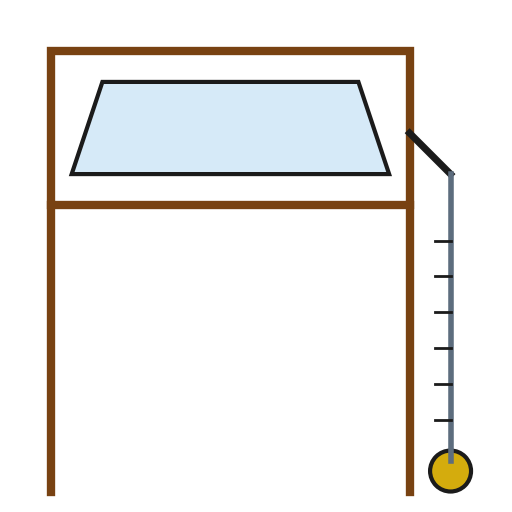 Transom Lifter
5
5
A transom that will not open, stay or shut
A transom that will not open, stay or shut
Transom lifter troubleshooting.
Flow
Loading...
6
6
History and honest limits
History and honest limits
**Francis V. Phillips** of Chicago, assignor to George H. Dayton, filed US 243,079 on 5 April 1880; it is dated 21 June 1881. He filed a second transom-lifter, US 243,613, the following year.
**Honest limits.** The patent gives no sizes. Arm length, sash mass and offset in the notebook are examples.
Materials
3- 1 piecePlaceholder
- 1 piecePlaceholder
- 1 piecePlaceholder
Tools Required
6- Placeholder
- 1 vendor sell this, none ship to you yetPlaceholder
- Placeholder
- Placeholder
- Placeholder
- Placeholder
This blueprint makes
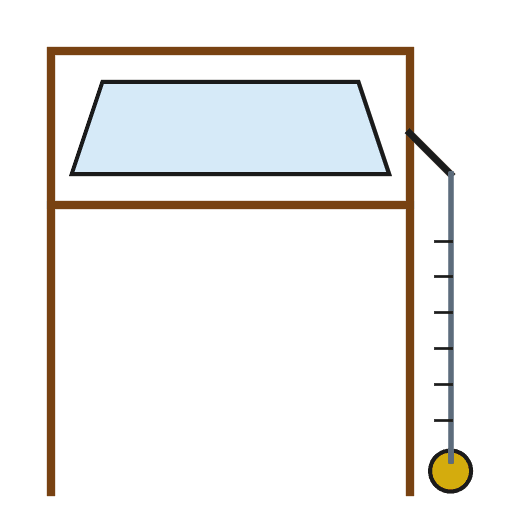
Related Blueprints
These blueprints share knowledge with this one — techniques, materials, or principles that connect them in the learning graph.
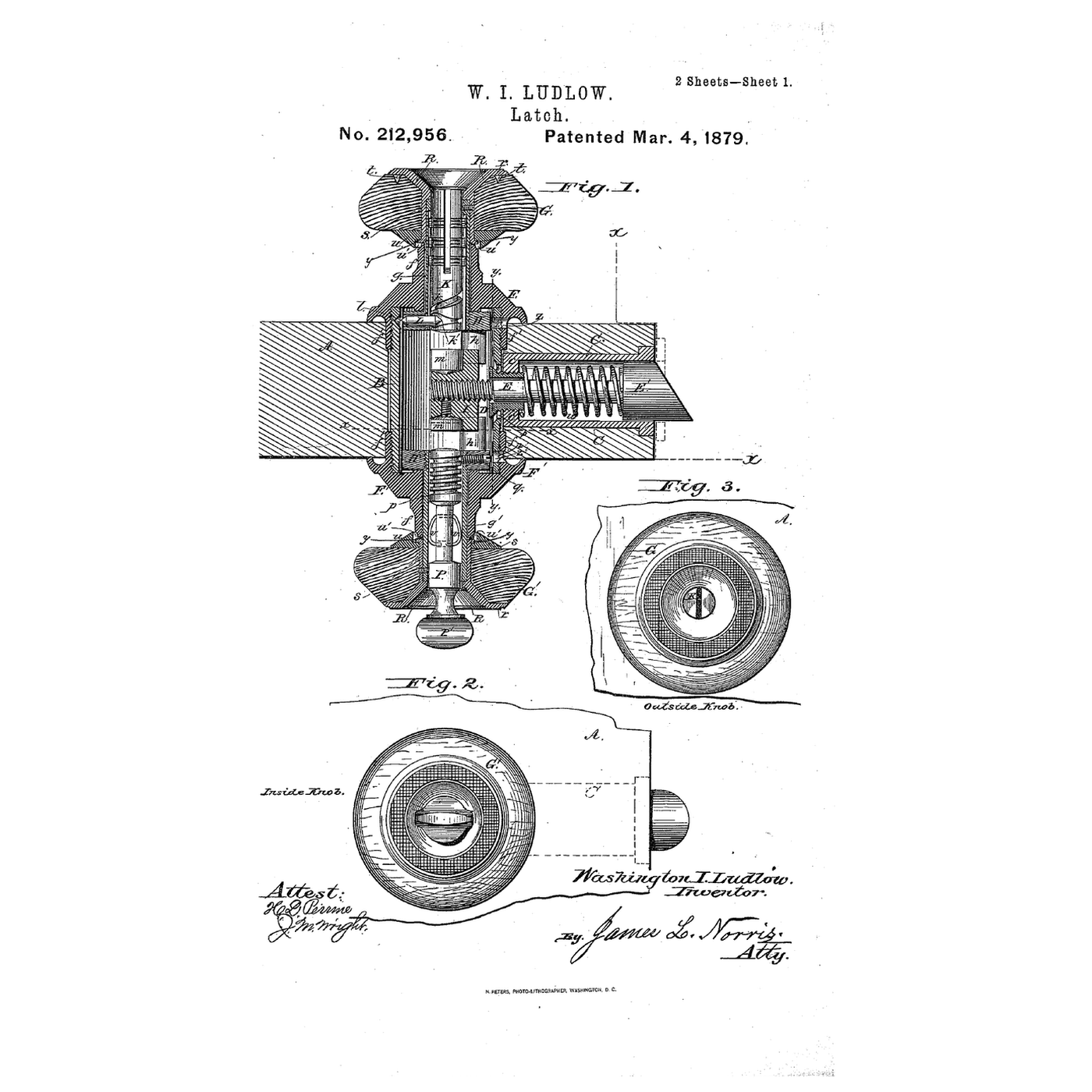
The Knob Latch: A Bored Hole, a Sprung Bolt and a Lug on Each Spindle
by Martin
Mechanics
11
0
0
0
0
0
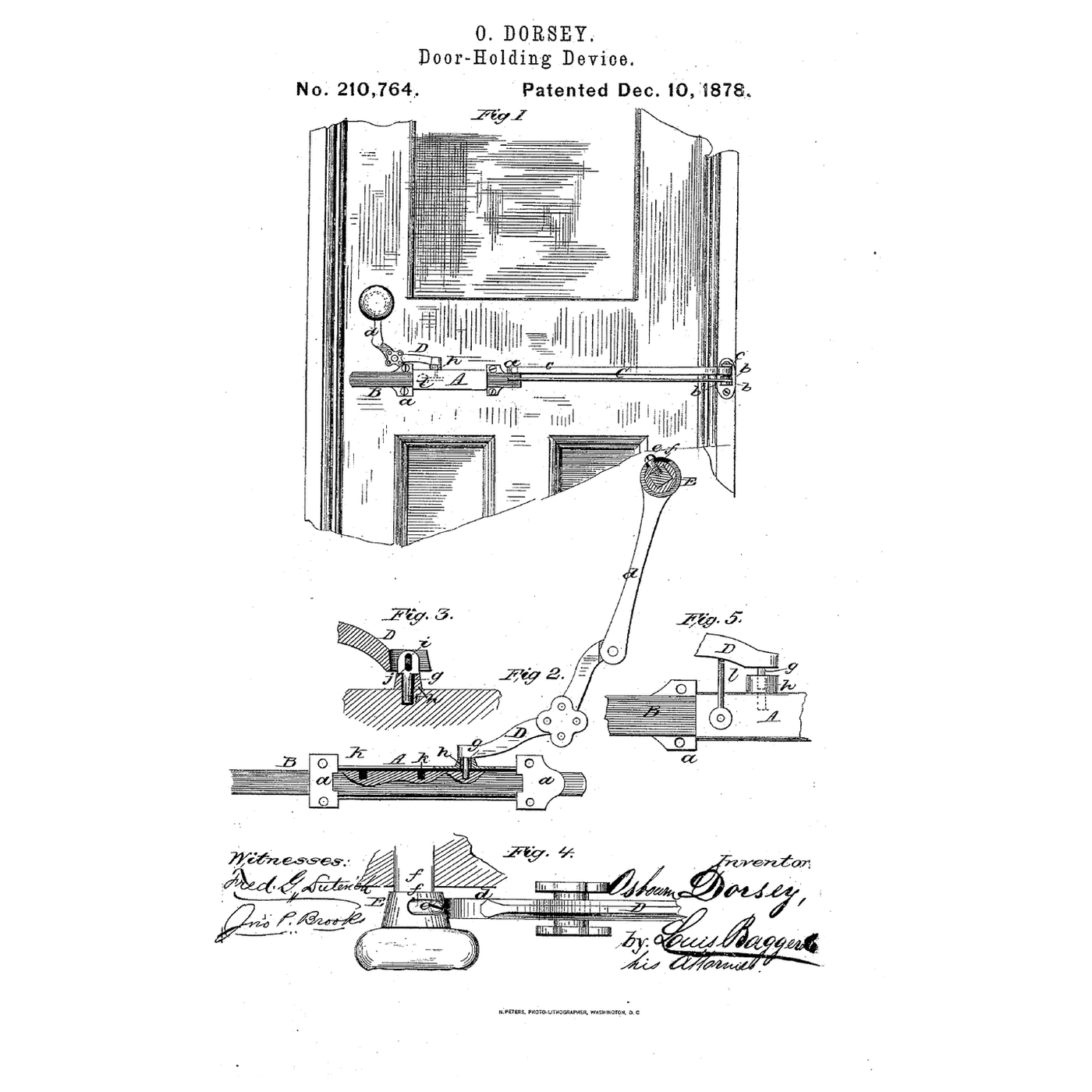
The Door Holder: A Notched Bar the Knob Unlocks
by Martin
Mechanics
40
0
0
0
0
0

The Law of the Lever — Archimedes' Balance of Weight and Distance
by Martin
Physics
63
0
0
0
1
0

Making Window Glass by the Crown Glass Method — Spinning Molten Glass into Flat Panes
by Forge
Glassworking
70
0
0
0
2
0
CC0 Public Domain
This blueprint is released under CC0. You are free to copy, modify, distribute, and use this work for any purpose, without asking permission.
Support the Maker by purchasing products through their Blueprint where they earn a Maker Commission set by Vendors, or create a new iteration of this Blueprint and include it as a connection in your own Blueprint to share revenue.